Views: 243 Author: U-Need Publish Time: 2026-10-14 Origin: Site
Content Menu
● What Are CNC Machined Engine Components?
>> Common Components and Their Machining Priorities
● Choosing Materials for Custom Engine Parts
>> Cast Iron
>> Steel and Other Specified Materials
● CNC Machining Processes Used for Engine Components
>> CNC Milling
>> CNC Turning
>> Honing and Other Finishing Processes
● Define Functional Tolerances Before Requesting a Quote
>> Distinguish Size From Geometry
>> Describe Surfaces by Their Intended Use
● A Practical Workflow From Prototype to Production
>> Step 1: Establish the Manufacturing Definition
>> Step 2: Review the Proposed Process
>> Step 3: Inspect Initial Samples
>> Step 4: Validate Assembly and Performance
>> Step 5: Establish Production Controls
● Illustrative Example: Sourcing a Custom Engine Cover
● How to Evaluate an Engine Component Machining Supplier
>> Ask Part-Specific Questions
>> Separate Prototype Evidence From Production Evidence
● Prepare a Clear Request for Quotation
● Conclusion: Build the Project Around Clear Requirements
>> What Engine Components Can Be CNC Machined?
>> Are CNC Machined Engine Parts Always Made From Billet?
>> What Tolerance Should I Specify?
>> Does CNC Machining Include Honing and Heat Treatment?
>> Is Production Approval Required for Every Order?
>> What Should I Send U-Need for a Quotation?
CNC machined engine components must do more than match a drawing. They need to fit correctly, support moving assemblies, maintain sealing interfaces, and meet the requirements of their operating environment.
For global brands, distributors, and manufacturers, sourcing these parts involves more than comparing prices. Material specifications, manufacturing routes, inspection methods, and production controls all influence whether a component is suitable for its intended application.
U-Need is a precision manufacturing partner in China offering custom precision parts machining, mold manufacturing, and sheet metal fabrication. Its service portfolio includes injection molds, stamping dies, cold-forging dies, laser cutting, bending, and stamping.
This guide explains how to approach engine component machining from an engineering and purchasing perspective. It also outlines the information buyers should prepare before requesting a quotation.

CNC machined engine components are parts whose specified features are produced using computer-controlled machining operations.
These operations can include milling, turning, drilling, and boring. Depending on the component, additional processes may be necessary to achieve the required surface condition or final geometry.
A CNC machined engine part is not necessarily manufactured entirely from solid stock. Engine blocks, for example, may begin as castings before machining establishes precision bores, mounting faces, and other functional features.
This distinction matters when comparing manufacturing proposals. Machining a prototype from billet and finishing a production casting are different routes, even when both target similar final dimensions.
| Component | Typical machining focus | Key purchasing consideration |
|---|---|---|
| Cylinder blocks | Bores, deck faces, mounting interfaces | Bore geometry and alignment |
| Cylinder heads | Mating faces, holes, accessible features | Sealing requirements and finishing scope |
| Engine covers | Flanges, pockets, fastener holes | Thin-wall geometry and sealing faces |
| Shafts and pins | Diameters, shoulders, grooves | Material condition and final finishing |
| Pump housings | Cavities, ports, mating surfaces | Cleanliness and testing requirements |
| Custom brackets | Mounting holes and locating features | Assembly alignment and fit |
The approved drawing should determine the final manufacturing and inspection requirements. A component name alone does not provide enough information for a reliable quotation.
Material selection should reflect the component's operating conditions.
Before choosing a grade, consider:
- Mechanical loading.
- Operating temperature.
- Weight requirements.
- Wear and corrosion exposure.
- Compatibility with mating components.
- Required treatments and finishing processes.
Avoid requesting only "aluminum" or "steel." These descriptions leave important engineering requirements undefined.
Aluminum alloys are widely used in automotive powertrain components, including engine blocks, heads, and covers. Sandvik Coromant's machining guidance addresses these applications and distinguishes aluminum machining from other engine-material requirements.
For procurement, specify the alloy designation, material condition, and applicable standard.
Also clarify whether the design requires wrought stock or a casting. A supplier should not substitute one material route for another without approval from the responsible design authority.
Cast iron remains an important engine-block material. Sandvik identifies strength, cost, and wear resistance as relevant considerations and discusses higher-strength cast iron alloys for commercial-vehicle applications.
The exact grade still matters. A generic cast iron specification does not adequately define a production requirement.
Where a design calls for steel or another alloy, identify its full designation and required condition.
Include any requirements for heat treatment, hardness, material documentation, or testing. These belong in the purchasing specification rather than being left to informal discussions after machining begins.
The best manufacturing route connects each important feature to an appropriate process and inspection method.
Instead of asking only which machines a supplier owns, ask how the proposed route will produce and verify your component.
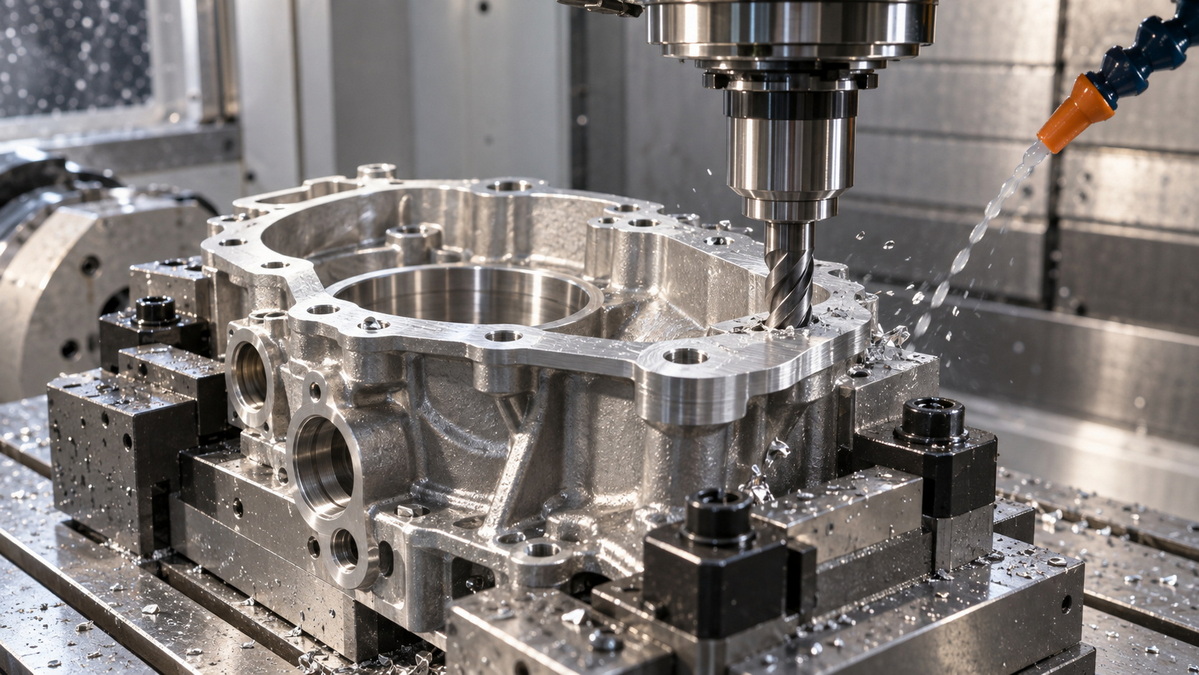
Milling creates features such as mounting faces, pockets, slots, and accessible cavities.
When reviewing a milling proposal, discuss how the part will be held and repositioned. Particular attention should go to features whose relationships must remain controlled across different setups.
For thin-wall components, ask the supplier to explain the planned workholding and inspection approach.
Turning produces rotational features such as diameters, shoulders, and grooves.
For shafts, pins, and similar parts, the quotation should distinguish machining from any subsequent treatment or finishing.
Clarify the condition in which final measurements must be taken. An inspection performed before a required downstream process may not represent the finished component.
Drilling creates holes, while boring refines existing bores to specified requirements.
Cylinder boring is a particularly demanding automotive operation because it combines tight tolerances with production requirements.
Do not describe a functional bore through diameter alone if the design also depends on geometric relationships or surface characteristics. Those requirements should appear on the controlled drawing.
Some engine surfaces require more than conventional machining.
MAHLE's engine-damage guidance explains that inadequate cylinder honing can interfere with oil retention and contribute to wear and sealing problems.
Where honing, grinding, coatings, or other finishing processes are necessary, include them explicitly in the scope. Do not assume a general machining quotation covers every operation needed for a service-ready component.
The starting point for a useful tolerance discussion is function.
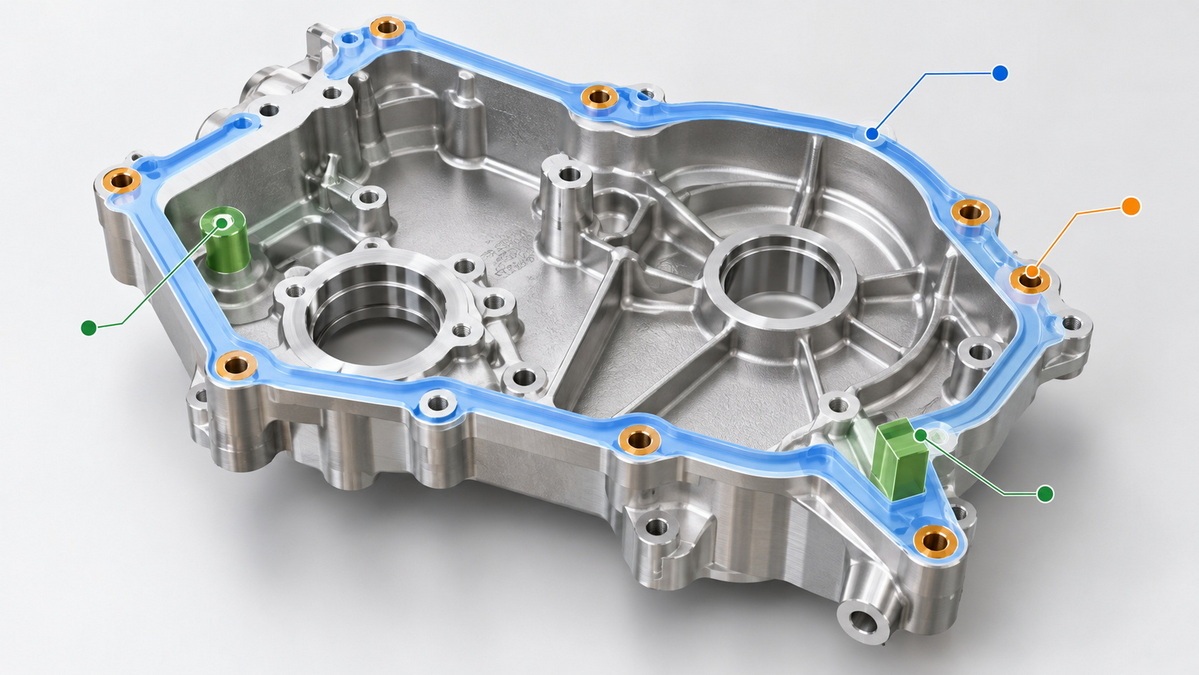
A dimension matters because it influences fit, alignment, sealing, movement, or another operating requirement. Applying tight tolerances everywhere does not communicate which features are most important.
Geometric dimensioning and tolerancing provides a structured way to express design intent, including form, orientation, location, and relationships between features.
A diameter requirement and a geometric requirement answer different questions.
Likewise, a thickness dimension does not automatically define the flatness of a sealing face.
During drawing review, identify:
- Features that locate the component in assembly.
- Surfaces that support a seal.
- Interfaces supporting rotating or sliding parts.
- Holes that establish alignment.
- Features with primarily cosmetic requirements.
The responsible engineer should then define the appropriate datums, tolerances, and acceptance criteria.
Avoid treating one roughness value as a complete specification for every surface.
Cylinder surfaces, sealing faces, bearing interfaces, and visible exterior surfaces serve different purposes.
For each critical surface, clarify:
1. The required finishing process, if prescribed.
2. The applicable surface specification.
3. The measurement or acceptance method.
4. Whether inspection occurs before or after treatment.
This helps prevent a supplier from meeting a general finish description while missing the actual functional requirement.
An acceptable prototype is useful evidence, but it does not establish that a production process will consistently produce conforming parts.
The automotive Production Part Approval Process addresses whether requirements are understood and whether production can consistently meet them under actual manufacturing conditions.
Even when formal approval documentation is not required, a staged workflow creates clearer responsibilities.
Provide a controlled drawing, corresponding model, material specification, and required treatments.
Identify critical characteristics and resolve conflicting information before production begins.
State which document governs if the model and drawing differ.
Ask the supplier to describe the material route, machining setups, finishing operations, and inspection points.
Clarify which operations are performed internally and which involve external providers.
Agree who is responsible for final conformity.
Review measured results against the drawing.
For critical features, request a report showing the requirement, measured result, and acceptance status.
Photographs can support communication, but they should not replace required dimensional evidence.
Dimensional conformity and operating suitability are separate questions.
Agree which party will perform fit checks, leak testing, durability evaluation, or other application-specific validation.
Do not leave these responsibilities undefined until parts arrive.
Before repeat orders, agree how material substitutions, drawing revisions, process changes, and nonconforming parts will be handled.
Where formal production approval applies, confirm the customer's submission requirements rather than assuming every project needs the same package.
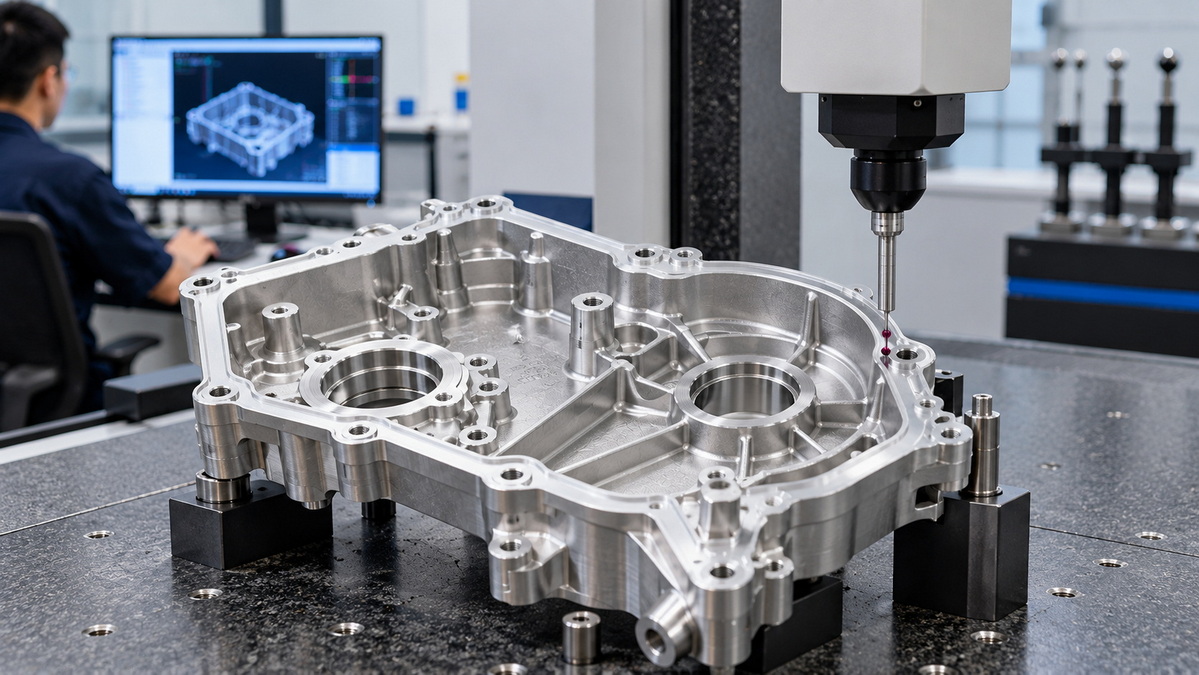
Consider a hypothetical aluminum engine cover with a thin wall, a sealing flange, and several mounting holes.
This is a planning example, not a reported customer project.
A basic inquiry might request "an aluminum cover with a smooth finish." That leaves the material, sealing requirements, dimensional priorities, and inspection scope unclear.
A stronger inquiry defines:
- The approved alloy and material condition.
- The sealing-face requirements.
- Hole locations relative to assembly datums.
- Cosmetic expectations separately from functional requirements.
- Any required leak test.
- Inspection records and packaging requirements.
The supplier can then review a defined component instead of interpreting a broad description.
The objective is not to add unnecessary paperwork. It is to make acceptance requirements visible before pricing and production.
Evaluate evidence relevant to your part rather than relying on broad statements about precision.
Useful questions include:
- Have you machined comparable materials and features?
- What manufacturing route do you propose?
- How will critical characteristics be inspected?
- Which finishing operations are included?
- What documentation can you provide?
- How are external processes controlled?
- Which changes require customer approval?
These questions reveal more than a general claim about achievable tolerances.
A sample demonstrates the condition of that sample.
For recurring production, discuss inspection frequency, material traceability, revision control, and handling of nonconforming parts.
The level of documentation should match contractual requirements and component risk.
Request evidence before relying on claims about certifications, inspection equipment, automotive approvals, or specialized processes.
U-Need's stated service portfolio provides a starting point for discussion. Suitability for an individual engine component should be confirmed through drawing review and agreement on the required manufacturing and quality scope.
A complete inquiry makes supplier responses easier to compare.
| RFQ item | Information to provide |
|---|---|
| Design files | Current model, dimensioned drawing, revision |
| Material | Grade, condition, governing specification |
| Quantity | Initial order and expected repeat demand |
| Critical features | Datums, tolerances, functional surfaces |
| Finishing | Treatments, coatings, honing, or grinding |
| Quality requirements | Reports, testing, approval documentation |
| Delivery | Dates, destination, packaging expectations |
Ask suppliers to identify exclusions.
Determine whether the quotation includes special tooling, material documents, external finishing, testing, and inspection records.
A lower price is not a meaningful comparison when suppliers quote different deliverables.
Successful sourcing of CNC machined engine components begins with a complete manufacturing definition.
Material identity, functional tolerances, finishing requirements, inspection evidence, and validation responsibilities should be agreed before production.
U-Need offers custom precision parts machining alongside mold manufacturing and sheet metal fabrication for global brands, distributors, and manufacturers.
Share your drawings, models, material requirements, quantities, and acceptance criteria with U-Need. Request a drawing-based review covering the proposed manufacturing route, inspection deliverables, quotation scope, and any requirements needing separate qualification.
CNC machining can produce precision features on blocks, heads, covers, housings, shafts, and other custom components. Suitability depends on the material, geometry, process route, and application requirements.
No. A component may begin as a casting or another prepared blank before machining establishes its final features. The appropriate route depends on the approved design and production requirements.
There is no universal tolerance for every engine component. Define requirements around fit, sealing, alignment, and operation. The responsible engineer should establish the relevant dimensional and geometric controls.
Not necessarily. These processes must be confirmed in the quotation scope. Buyers should identify required downstream operations and establish how the finished component will be inspected.
Requirements depend on the customer, contract, and application. Confirm whether formal approval documentation applies and what evidence must be submitted before production release.
Provide the current drawing and model, material specification, quantities, finishing requirements, critical characteristics, inspection expectations, and delivery details. Clearly distinguish mandatory requirements from preferences.
1.The original article used as the starting point is TOPS Precision's "A Complete Guide to CNC Machined Engine Components." Its full text could not be retrieved, so it should not be presented as independently verified support for every technical statement in the rewritten article. [topsbest-precision]
2.ASME's "Y14.5 — Dimensioning and Tolerancing" supports the discussion of geometric dimensioning, datum relationships, and communicating requirements for form, fit, and function. [asme]
3.Sandvik Coromant's "Machining of Automotive Engine Components" and cylinder-block machining guidance support the sections on engine manufacturing, material routes, precision bores, and machining priorities. [sandvik.coromant]
4.Sandvik Coromant's "Productive Aluminium Machining for Automotive Powertrains" provides application context for machining aluminum engine blocks, cylinder heads, and covers. [sandvik.coromant]
5.MAHLE Aftermarket's "Engine Components — Damage Scenarios" supports the explanation of cylinder honing, lubrication-related surface requirements, and potential consequences of inadequate finishing. [mahle-aftermarket]


