Views: 222 Author: Loretta Publish Time: 2025-12-26 Origin: Site
Content Menu
● What Is 3D Printing For Car Parts?
● Why 3D Printing Matters In Automotive Today
● Best Uses: 3D Printed Automotive Parts
● 3D Printing vs Traditional Manufacturing For Car Parts
>> Process Comparison For Automotive Parts
● Step‑By‑Step: How To 3D Print Automotive Parts
>> Key Steps From Idea To Part
● Materials For 3D Printed Car Parts
>> Common Automotive 3D Printing Materials
● Real‑World Applications And Case Examples
>> Typical Automotive Use Cases
● Design Best Practices For Reliable Automotive Parts
>> Key Automotive DfAM Guidelines
● When To Use 3D Printing vs CNC, Stamping, Or Molding
● Practical Tips For Brands, Wholesalers, And OEM Buyers
>> How To Collaborate Effectively
● How Professional Services Support 3D Printed Car Parts
>> Typical Professional Support
● Strong Call To Action For Automotive Buyers
● FAQs About 3D Printing Automotive And Car Parts
>> 1 – Are 3D printed car parts strong enough for real use?
>> 2 – Is 3D printing cheaper than injection molding?
>> 3 – What is the best 3D printing technology for car parts?
>> 4 – Can I 3D print replacement parts for older vehicles?
>> 5 – How long does it take from design to finished part?
3D printing automotive and car parts has become a strategic way for OEMs, aftermarket brands, and engineers to design, test, and produce components faster, cheaper, and with more flexibility than traditional methods. When combined with professional manufacturing services, it unlocks on‑demand spare parts, complex geometries, and lightweight structures that support modern vehicle design and maintenance.

3D printing (additive manufacturing) builds car parts layer by layer from a digital 3D model instead of cutting material away with traditional machining. This approach is used for prototypes, functional end-use parts, production tooling, and low-volume specialty components in the automotive industry.
- Reduced lead times for new designs and spare parts.
- Lower upfront tooling costs compared with injection molding or die casting for small batches.
- Freedom to create complex, lightweight geometries that are hard or impossible to machine.
For international buyers who need custom parts or flexible production, working with an experienced manufacturing partner that offers both 3D printing and traditional processes creates a more resilient supply chain.
Automotive OEMs and Tier suppliers are scaling 3D printing because it directly supports electrification, lightweighting, and faster product development. Internal additive manufacturing in the automotive sector already accounts for a significant portion of the global automotive AM market value, showing that major players are integrating it into their core operations.
- Digital spare parts: on‑demand printing helps reduce warehouse inventory and avoids obsolescence.
- Rapid design iteration: engineers can test multiple versions of a bracket, duct, or housing in days instead of weeks.
- Customization and low-volume runs: performance and specialty vehicles use 3D printing to personalize interiors and aerodynamic components.
When combined with CNC machining, metal stamping, plastic molding, and silicone molding, 3D printing becomes part of a hybrid manufacturing strategy that balances cost, volume, and performance.
3D printing works best where complexity is high, volumes are moderate to low, and agility is important. Many successful automotive applications fall into a few clear categories.
Typical automotive and car parts suitable for 3D printing:
- Interior components: dashboard brackets, HVAC connectors, switch panels, custom bezels, cup holders, and trim covers.
- Exterior accessories: grilles, badges, mirror caps, ducting, sensor mounts, and aerodynamic add-ons.
- Under‑hood and functional parts: air ducts, intake manifolds, fluid routing channels, and mounting brackets when compatible materials are used.
- Tooling and fixtures: assembly jigs, checking fixtures, and ergonomic aids for production lines.
For companies sourcing OEM or aftermarket parts, 3D printing is particularly valuable for low-volume SKUs, legacy parts, and design validation before investing in hard tooling.
The following table summarizes how 3D printing compares with injection molding and CNC machining for car parts.
Aspect | 3D Printing (Additive) | Injection Molding | CNC Machining |
Best volume range | Low to medium volumes, prototypes, customization. | Medium to very high volumes where tooling cost can be amortized. | Low to medium volumes, high-precision parts. |
Upfront tooling | No hard tooling; fast setup. | Requires expensive molds; long lead time to first parts. | No molds, but fixturing and programming required. |
Design flexibility | Excellent for complex and organic shapes. | Limited by parting lines, draft angles, and mold constraints. | Limited for internal channels and lattice structures. |
Per-part cost (low volume) | Competitive or lower due to no tooling. | Relatively high because tooling is spread over few parts. | Often higher due to material waste and machining time. |
Per-part cost (high vol.) | Higher than molding in mass production. | Lowest cost for large, stable product volumes. | Can be efficient for certain geometries but rarely beats molding at scale. |
Materials | Polymers, composites, metals; growing range. | Wide variety of thermoplastics and elastomers. | Metals, engineering plastics, high-strength alloys. |
Typical automotive use | Prototypes, jigs, fixtures, custom or niche parts. | High-volume interior and exterior plastic components. | Structural and precision metal parts, housings, and molds. |
In real projects, automotive brands often combine these processes—using 3D printing for development and low-volume parts, then transitioning mature, high-volume parts to molding or stamping once demand is stable.
A clear, repeatable workflow helps automotive teams move from idea to reliable printed parts with fewer issues and lower risk.
1. Define requirements and constraints
- Clarify function, loads, environment, and lifespan.
- Identify regulatory or OEM standards the part must satisfy.
2. Create or capture a 3D model
- Design the component in CAD with appropriate clearances and tolerances.
- Reverse‑engineer legacy parts using precise measurements or 3D scanning.
3. Optimize design for additive manufacturing
- Remove unnecessary mass and add fillets or ribs to improve strength‑to‑weight ratio.
- Check wall thickness and geometry against recommended limits for the selected process.
4. Select material and printing technology
- Match material to temperature, chemical exposure, and mechanical demands.
- Choose a process such as FDM, MJF, SLS, SLA, or metal printing based on accuracy, finish, and volume.
5. Prepare the file and print
- Export to STL or 3MF, set layer height, infill, supports, and orientation in the slicer.
- Produce pilot parts to verify functionality and fit.
6. Post-process and test
- Remove supports, smooth surfaces, and apply any coatings or paints.
- Validate fit, function, and durability on the vehicle or in a test rig.
For business buyers, partnering with a professional manufacturing team ensures many of these steps—especially design optimization and process selection—are supported by experienced engineers.
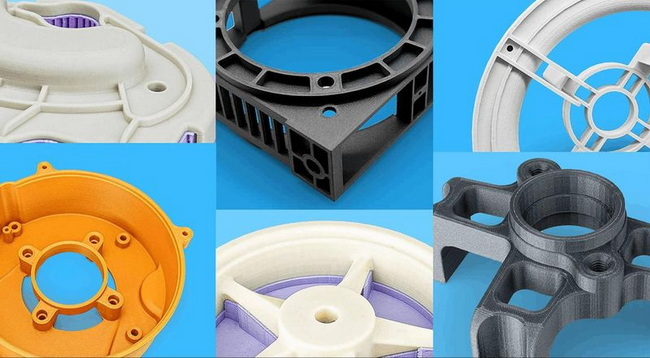
Choosing the right material is critical for safety, durability, and end-user satisfaction. Vehicle interiors, exteriors, and under‑hood environments all impose different requirements.
- ABS / ASA: Impact-resistant thermoplastics; ASA offers better UV stability, making it suitable for exterior covers and trims.
- Nylon (PA12, PA11): Tough, fatigue‑resistant materials widely used for brackets, clips, housings, and ducts.
- Fiber-reinforced polymers: Carbon or glass fiber‑filled materials deliver high stiffness and reduced weight for performance parts.
- Elastomers (TPU, TPE): Flexible materials ideal for seals, grommets, vibration-damping elements, and custom boots.
- Metals (aluminum, stainless steel, titanium): Used for high-strength brackets, powertrain components, and thermal management systems.
For many programs, 3D printing acts as a bridge between early design and full-scale production: prototypes are printed first, then finalized designs can be moved to molding, stamping, or machining when volumes justify tooling.
Automotive organizations apply 3D printing throughout development, production, and after‑sales service. These applications illustrate how additive manufacturing delivers real engineering and business value.
- Premium vehicles and EV platforms integrate printed brackets, clips, and interior elements to reduce weight and assembly complexity.
- Commercial vehicle and bus operators rely on printable digital spare parts to reduce inventory and shorten repair lead times.
- Motorsports and performance divisions use printed aerodynamic components, cooling ducts, and fixtures to iterate quickly during a season.
These examples show that 3D printing is a mature capability that fits both high-end applications and more standard automotive environments.
Good design dramatically improves print quality, reduces failures, and extends the working life of parts under real conditions.
- Align build orientation to follow primary load paths while minimizing support structures.
- Avoid sharp internal corners; use generous radii to reduce stress concentrations.
- Respect minimum wall thickness and feature size for the selected process and material.
- Integrate clips, cable channels, and labeling directly in the model to eliminate extra parts.
- Validate critical dimensions and interfaces with an initial sample before approving series production.
Collaboration between designers, engineers, and manufacturing partners ensures parts are optimized for both additive and any follow‑on operations such as machining or molding.
The most effective automotive programs match each part to the most suitable manufacturing process rather than relying on a single method.
Use 3D printing when:
- Volumes are low to medium and designs may need fast iteration.
- Parts include complex internal channels, lattices, or custom branding.
- You need jigs, fixtures, assembly aids, or replacement parts quickly without tooling.
Use CNC machining, metal stamping, plastic injection, or silicone molding when:
- Demand is high and geometry is stable over time, making tooling investments economical.
- Very tight tolerances, specific metal properties, or specialized surface finishes are required.
- Components must integrate seamlessly into an existing mass-production supply chain.
A hybrid approach—3D printing for early stages and niche parts, traditional processes for high‑volume components—often offers the best balance of cost, speed, and reliability.
Business buyers of automotive components need clear communication, robust quality control, and flexible capacity. A structured approach from inquiry to delivery supports better outcomes.
- Share clear requirements: volumes, materials, performance targets, certifications, and timelines.
- Request design feedback early to identify potential risks before production.
- Compare process options to avoid over‑specifying or under‑engineering a part.
- Plan for scaling so it is easy to move from prototypes to larger batches when demand grows.
Selecting a partner that offers 3D printing alongside CNC machining, plastic molding, silicone processing, and metal stamping helps create a coherent and scalable manufacturing strategy.
Specialized manufacturing providers help convert design concepts into repeatable, production-ready automotive parts. This is especially important when internal additive manufacturing resources are limited.
- Engineering guidance on design for additive, tolerances, and materials.
- Smooth transition from prototype quantities to stable production batches.
- Quality assurance through inspections, test reports, and documentation that match automotive expectations.
- Post-processing and assembly services aligned with brand or OEM standards.
These services give teams a reliable path from early ideas to fully validated, install-ready components.
If you are a brand owner, wholesaler, or OEM looking to accelerate development or secure more flexible production for automotive parts, now is the right time to leverage professional manufacturing support. A clear conversation around your current components and future product roadmap can unlock better designs and faster deliveries.
Ready to move your next automotive project forward with high‑precision, flexible manufacturing?
Share your drawings, 3D models, or part samples along with basic volume and performance requirements. Ask for expert recommendations on 3D printing, CNC machining, plastic molding, silicone production, and metal stamping so each component uses the most suitable process. Start with a focused pilot batch, validate quality and fit, then confidently scale up production with a partner committed to long‑term, reliable cooperation.
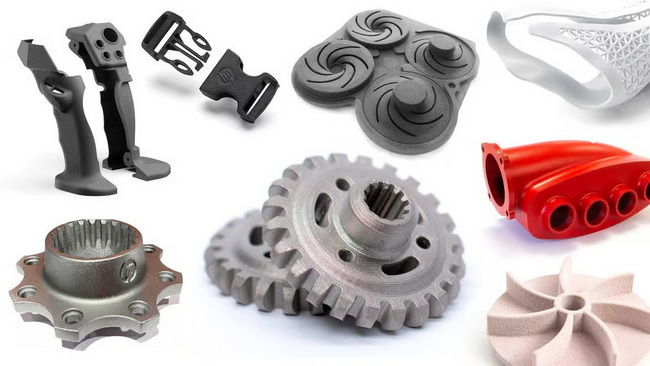
In many cases they are, provided the correct material, process, and design are chosen for the loads, temperature, and environment involved. Structural or safety-critical components should always be validated through simulation and physical testing before being approved for use.
For low to medium volumes or frequently changing designs, 3D printing often has a lower total cost because it avoids tooling and shortens lead times. For long-running, high-volume parts with stable designs, injection molding usually offers the lowest cost per piece despite higher upfront mold investments.
No single technology is best for all automotive applications, because each process has its own strengths. The optimal choice depends on required accuracy, surface finish, mechanical strength, heat resistance, and target production volume.
Yes, 3D printing is an excellent option for legacy, discontinued, or rare components where tooling no longer exists. Accurate measurements or 3D scans and a suitable material selection are essential to ensure correct fit and adequate durability.
Lead times vary with complexity, material, and process, but simple parts can often go from approved design to finished prints in a few days. Larger programs that require iterative testing or preparation for series production will naturally require more time for validation and planning.


