Views: 222 Author: Rebecca Publish Time: 2026-01-20 Origin: Site
Content Menu
● Abrasive Waterjet Cutting Basics
● Pure Waterjet Cutting Basics
● Side-by-Side Comparison: Abrasive vs Pure Waterjet
● Key Decision Factors for OEM Projects
● Advantages and Limitations of Abrasive Waterjet
● Advantages and Limitations of Pure Waterjet
● Real-World Application Cases
● 2025–2026 Trends in Waterjet Cutting
● Practical Selection Checklist for OEM Buyers
● Where Abrasive vs Pure Waterjet Fit in a Multi-Process OEM Strategy
● Call to Action: Choose the Right Waterjet Solution for Your Next Project
● FAQs About Abrasive vs Pure Waterjet Cutting
>> 1. Is abrasive waterjet always better than pure waterjet?
>> 2. How accurate is waterjet cutting compared with laser cutting?
>> 3. Does abrasive waterjet cutting leave a heat-affected zone?
>> 4. Which method is more environmentally friendly?
>> 5. How should OEM buyers choose between abrasive and pure waterjet for a new design?
Waterjet cutting uses an ultra-high-pressure jet of water, with or without abrasive particles, to cut materials without creating a heat-affected zone. Pressures often reach 60,000–90,000 PSI, allowing precise cutting of metals, plastics, glass, stone, composites, foams, and more.
Key advantages of waterjet cutting:
- No thermal distortion of parts because the process is effectively cold cutting.
- Flexible material capability, from soft rubber to hardened alloys, depending on whether abrasive is used.
- Smooth edges and low kerf, reducing or eliminating secondary finishing.
For OEM projects, this combination of precision and material flexibility makes waterjet a strong alternative or complement to laser cutting, plasma cutting, and traditional mechanical cutting.

Abrasive waterjet cutting mixes fine abrasive particles (typically garnet) into a high-velocity water stream, using the abrasive to erode the material. This method is designed for hard or thick materials that pure water alone cannot cut efficiently.
How abrasive waterjet works:
- High-pressure pump generates a water stream up to 60,000–90,000 PSI.
- Water passes through a small orifice, then enters a mixing chamber where garnet abrasive is drawn in.
- The mixture exits through a focusing nozzle, forming a powerful cutting jet that erodes the workpiece along the programmed path.
Typical materials for abrasive waterjet:
- Metals: stainless steel, aluminum, titanium, copper alloys, tool steel.
- Hard non-metals: stone, ceramics, glass, composites, carbon fiber laminates.
- Thick plate and structural components up to tens of millimeters or more.
Pure waterjet cutting uses only a very fine, high-pressure water stream without any abrasive. The cutting head has no mixing chamber; water exits directly after the orifice to form an ultra-thin jet.
How pure waterjet works:
- Ultra-high-pressure pump supplies water at up to 60,000–90,000 PSI.
- A tiny orifice focuses the jet into a narrow stream.
- The stream cuts by shear and erosion, with almost no mechanical load on the workpiece.
Typical materials for pure waterjet:
- Soft materials: foam, rubber, gasket sheets, fabrics, leather.
- Food products and sanitary packaging films.
- Thin, delicate non-metals where edge quality and minimal deformation matter.
Because there is no abrasive, pure waterjet causes almost no deformation on soft materials and maintains extremely clean edges.
The table below summarizes the core differences between abrasive and pure waterjet cutting for OEM buyers.
| Aspect | Abrasive waterjet | Pure waterjet |
|---|---|---|
| Cutting medium | High-pressure water plus abrasive grit (usually garnet) | High-pressure water only, no abrasive particles |
| Best for materials | Metals, stone, glass, ceramics, composites, thick rigid substrates | Foam, rubber, fabrics, thin plastics, food, delicate films |
| Typical thickness | Efficient on medium to very thick sections, including heavy plate | Best on thin to medium-thin soft materials |
| Edge quality | Smooth, near-net edges; may need light finishing on thick metals | Very fine kerf, excellent edges on soft materials |
| Precision | High precision; suitable for tight tolerances on hard materials | Extremely high precision on soft or thin materials; very low kerf width |
| Cutting speed | Higher speeds on hard materials due to abrasive action | Slower for hard materials; efficient on soft substrates |
| Operating cost | Higher: abrasive consumption, disposal, nozzle wear | Lower: no abrasive, less wear and simpler maintenance |
| Cleanliness | Abrasive sludge to collect and dispose of | Very clean; mainly water management, minimal solid waste |
| Environmental profile | Cold cutting; abrasive waste must be managed responsibly | Strong sustainability profile; low waste and recyclable water options |
This comparison shows that abrasive waterjet dominates when strength and thickness are the priority, while pure waterjet shines where cleanliness, delicacy, and low operating cost are more important than brute cutting power.
When choosing between abrasive and pure waterjet cutting, OEM buyers should evaluate several practical decision factors instead of focusing only on the cutting principle.
1. Material type and thickness
- For thick metals and hard non-metals, abrasive waterjet is usually mandatory.
- For soft, compressible, or hygienic materials, pure waterjet avoids deformation and contamination.
2. Tolerance and edge requirements
- High-tolerance structural parts in metal often favor abrasive waterjet with calibrated cutting parameters.
- Ultra-fine kerf and cosmetic edges on films, rubber, and foam often favor pure waterjet.
3. Volume and cost per part
- Abrasive waterjet offers good cost per part on mixed-material, medium-volume jobs, but abrasive media is a major running cost.
- Pure waterjet has lower consumable costs, making it attractive for continuous cutting of soft materials in packaging and food lines.
4. Cleanliness and regulatory constraints
- For food, pharma, or sanitary packaging, avoiding abrasive contamination is critical, so pure waterjet is preferred.
- For industrial parts, abrasive waste can be managed with proper collection and disposal systems.
Advantages of abrasive waterjet
- Wide material capability: Handles almost any engineering material, including difficult alloys and composites.
- Thick-section cutting: Can cut thick plate and large structural components that challenge other processes.
- Good precision and edge quality: Tight tolerances with minimal heat and low distortion.
Limitations to consider
- Higher operating cost due to abrasive purchase, handling, and disposal.
- More complex maintenance: Abrasive accelerates nozzle wear and requires slurry management systems.
- Potential residue: Some processes need post-cut cleaning to remove residual abrasive particles.
For high-precision metal and composite parts where alternative cold-cutting options are limited, the benefits of abrasive waterjet usually outweigh these drawbacks.
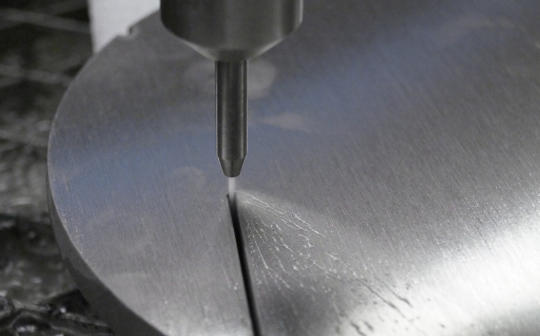
Advantages of pure waterjet
- Ultra-clean process: No abrasive means no grit contamination, especially important for hygienic or aesthetic products.
- Low mechanical load: Minimal distortion of soft materials like foam, rubber, or thin films.
- Lower consumable and maintenance cost: Fewer wear parts and no abrasive to buy or dispose.
Limitations to consider
- Restricted material range: Struggles with hard or thick materials; cutting them can be very slow or impractical.
- Limited thickness capability: Best suited for relatively thin substrates.
- Niche applications: Often specialized for packaging, textiles, food, and seals rather than general metal fabrication.
When cleanliness, gentle handling, and running cost are more important than cutting hard metals, pure waterjet becomes the optimal choice.
Adding practical cases helps OEM buyers visualize where each method fits best.
Case 1 – Stainless steel brackets for industrial machinery
- Material: 6–20 mm stainless steel plate.
- Requirements: High strength, accurate holes and profiles, minimal heat effect.
- Recommended process: Abrasive waterjet offers precise, heat-free cutting with acceptable edge finish and fast turnaround.
Case 2 – Automotive interior foam and gasket sets
- Material: PU foam and rubber gasket sheet.
- Requirements: Clean edges, zero compression marks, high nesting for material savings.
- Recommended process: Pure waterjet avoids deformation, delivering consistent edges even on complex shapes.
Case 3 – Food industry conveyor products
- Material: Frozen or semi-processed food items and packaging films.
- Requirements: Hygienic cutting, no blade contamination, flexible product shapes.
- Recommended process: Pure waterjet integrated with automated lines, ensuring hygienic, residue-free cutting.
Understanding current trends helps ensure your process choice remains competitive over the life of your product.
Key industry trends include:
- Market growth: The global waterjet cutting machine market is projected to grow steadily through 2030 and beyond.
- Rise of abrasive systems: Abrasive platforms account for the majority of market revenue thanks to their dominance in metal and composite cutting.
- Sustainability focus: Manufacturers are optimizing water recycling and abrasive reuse to reduce environmental impact.
- Automation and 3D cutting: Robotic and 3D waterjet systems are expanding capabilities for complex parts, especially in aerospace and automotive.
For OEM buyers, choosing suppliers that invest in modern, energy-efficient waterjet systems can improve both cost and environmental performance over time.
To quickly decide between abrasive and pure waterjet cutting for a new project, use the following step-by-step checklist.
1. Define your material and thickness
- Hard, thick, structural → lean toward abrasive waterjet.
- Soft, compressible, hygienic → lean toward pure waterjet.
2. Set tolerance and edge requirements
- Tight tolerances on hard materials → abrasive with optimized parameters.
- Ultra-fine kerf on soft materials → pure waterjet.
3. Estimate volumes and budget
- Mixed materials, moderate runs → abrasive often most economical overall.
- Continuous cutting of soft materials → pure waterjet minimizes consumables.
4. Check cleanliness or regulatory needs
- Food, medical, cleanroom → pure waterjet, no abrasive contamination.
- Industrial parts → abrasive with proper waste management is acceptable.
5. Discuss with your OEM partner
- Share CAD files, material specs, tolerance targets, and annual volumes.
- Ask for process-based quotations comparing abrasive vs pure options where feasible.
Modern OEM projects rarely rely on a single process; instead, they combine cutting, machining, molding, and stamping to optimize cost and performance. In this context, waterjet cutting often serves as the front-end shaping operation before CNC machining, bending, or molding.
Typical integration patterns:
- Abrasive waterjet + CNC machining: Rough profiling of thick metal plates, followed by CNC milling or turning for precision features such as threads and tight bores.
- Pure waterjet + molding or die cutting: Clean cutting of foam inserts, seals, or packaging cavities that accompany plastic or metal assemblies.
- Waterjet + metal stamping: Pre-cut flat patterns or prototype blanks before investing in hard stamping dies for high-volume runs.
Choosing a supplier that offers multiple processes under one roof can simplify your supply chain and improve design-for-manufacturing feedback.
Selecting between abrasive and pure waterjet cutting is ultimately about matching process capabilities with your material, tolerance, cleanliness, and cost targets. An experienced OEM partner that also offers CNC machining, plastics and silicone processing, and metal stamping can evaluate your full product lifecycle and recommend the most efficient combination of technologies.
If you are planning a new project involving custom metal parts, plastic or silicone components, or precise soft-material cutting, share your drawings, material specifications, and expected volumes with your manufacturing partner to receive process-optimized quotations and DFM suggestions tailored to your needs.
Contact us to get more information!
No. Abrasive waterjet is better for hard, thick materials and structural parts, while pure waterjet is better for soft, delicate, or sanitary materials where cleanliness and low deformation are critical.
Waterjet cutting can achieve high precision and tight tolerances, with pure waterjet having very low kerf on soft materials, though lasers may still offer finer tolerances in some thin-sheet metal applications. The advantage of waterjet is that it does this without heat-affected zones or thermal distortion.
Abrasive waterjet is considered a cold cutting process; any heat generated is quickly dissipated by the water, so the material typically shows no measurable heat-affected zone. This is a major benefit over thermal cutting methods like laser or plasma.
Pure waterjet generally has the edge because it uses no abrasive and generates minimal solid waste, especially when water is recycled. Abrasive waterjet can also be sustainable when abrasive recycling and responsible waste management are implemented.
Start with your material type and thickness, then define tolerance, cleanliness, and volume targets, and finally discuss options with your OEM partner to compare cost and performance across both methods. This structured approach ensures the cutting process supports both your technical and commercial goals.
1. https://www.rapiddirect.com/blog/abrasive-vs-pure-waterjet-cutting/
2. https://www.techniwaterjet.com/abrasive-vs-pure-water-jet-cutting/
3. https://www.aquajetservices.com/blog/abrasive-vs-pure-waterjet-cutting/
4. https://www.fictiv.com/articles/abrasive-vs-pure-waterjet-sheet-metal-cutting-which-is-better
5. https://www.tuofamachining.com/news/abrasive_vs_pure_waterjet_cutting_which_is_better-207378.html
6. https://machineshop.directory/blog/7-waterjet-cutting-trends-2024-2025/
7. https://www.factmr.com/report/4564/waterjet-cutting-machine-market
8. https://smartbuy.alibaba.com/buyingguides/water-jet-cutting-machines-prices/


