Views: 222 Author: Rebecca Publish Time: 2026-01-20 Origin: Site
Content Menu
● What Is ABS Acetone Smoothing?
● Why Smooth ABS With Acetone?
● How Acetone Interacts With ABS
● Safety Essentials for ABS Acetone Smoothing
● Method 1: Brushing With Liquid Acetone
● Method 2: Acetone Vapor Bath
>> Building a Simple Smoothing Chamber
>> Running the Vapor Smoothing Process
● Monitoring and Controlling the Smoothing Process
● Finishing and Post-treatment After Smoothing
● Design and Printing Tips for Better Smoothing Results
● Alternatives to ABS Acetone Smoothing
● Practical Best Practices for Consistent Results
● Action-Oriented Conclusion and Call to Action
● FAQs: Addressing Common Concerns
>> 1. Is it possible to vapor smooth PLA and PETG?
>> 2. How long does the smoothing process take?
>> 3. Can I over-smooth my ABS part? How do I prevent it?
>> 4. Does acetone affect the strength of ABS?
>> 5. How can I ensure an even finish?
ABS acetone smoothing is one of the most effective ways to turn rough, layer-lined ABS prints into glossy, professional-looking parts that resemble injection-molded components. When applied with proper safety measures and process control, it can significantly improve both aesthetics and functional performance of ABS parts.

ABS acetone smoothing is a chemical surface-finishing technique that uses liquid or vaporized acetone to partially dissolve the outer skin of ABS prints. After a short exposure and controlled drying, visible layer lines fade, and the part gains a smoother, more uniform surface with improved continuity.
This method works best for thermoplastics that are compatible with acetone, particularly ABS and ASA. It is not suitable for materials such as PLA and PETG, which require other finishing approaches.
Smoothing ABS with acetone offers a fast route from “3D-printed look” to a near “injection-molded” finish without investing in tooling.
Key benefits include:
- Elimination of visible layer lines and print artifacts.
- Reduced surface roughness, which can benefit aerodynamics, fluid flow, cleaning, and sealing.
- Better adhesion for paint, coatings, and labels thanks to a sealed, uniform surface.
- Reduction of micro gaps and pinholes, improving performance for housings, containers, and simple fluid-handling parts.
If the process is too aggressive, it can soften sharp details, round critical edges, and reduce dimensional accuracy. Controlling time, temperature, and acetone concentration is therefore essential.
Acrylonitrile butadiene styrene (ABS) is a thermoplastic polymer that is soluble in certain ketones, including acetone. When acetone contacts ABS, it softens and partially dissolves the outermost layer of the plastic, creating a very thin slurry on the surface.
As acetone evaporates, polymer chains in this softened surface re-settle and “reflow,” closing small gaps and smoothing out the visible peaks and valleys formed by the layer-by-layer printing process. Done correctly, this yields a smooth, glossy skin while keeping the core structure and geometry largely intact.
Because acetone is highly flammable and produces strong fumes, safety is a critical part of any ABS smoothing workflow.
Important precautions:
- Work in a well-ventilated area or near local exhaust to avoid inhaling concentrated vapors.
- Keep acetone away from open flames, sparks, and hot surfaces.
- Use protective equipment such as safety glasses or goggles, chemical-resistant gloves, and long-sleeved clothing.
- Store acetone in a tightly sealed container away from heat sources, and dispose of used acetone according to local regulations.
- Keep a suitable fire extinguisher nearby when working with larger quantities.
A stable, uncluttered workspace and careful handling of containers help reduce spill and fire risks during the smoothing process.
Before you start, prepare all required materials and tools to keep the process controlled and repeatable.
Recommended items:
- High-purity acetone (ideally 99% or higher).
- Safety equipment: chemical-resistant gloves, safety glasses or goggles, respirator or mask suitable for organic vapors, long sleeves.
- A transparent or semi-transparent container with a tight-fitting lid for vapor smoothing.
- A non-reactive stand or raised platform (e.g., metal plate, wire rack, or plate covered with aluminum foil).
- Paper towels or tissues to hold and evaporate acetone inside the chamber.
- One or more brushes for localized application when needed.
Selecting good-quality ABS filament that responds predictably to acetone can also make the results more consistent.
Brushing is a simple and flexible method for smoothing local areas, small parts, and fine details.
Step-by-step brushing process:
1. Pour a small amount of acetone into a stable, shallow container.
2. Choose a fine-tipped brush for small features or a flat brush for broader faces.
3. Dip just the tip of the brush into acetone and spread a thin, even layer over the target surfaces.
4. Work quickly with light strokes to avoid pooling and streaks.
5. Allow the part to dry completely, then evaluate and repeat if necessary.
Advantages:
- Good local control over where and how much smoothing occurs.
- Minimal equipment and short setup time.
Limitations:
- Higher risk of brush marks and uneven gloss on larger parts.
- Possible over-application on thin features, which can cause deformation.
- More acetone consumption if treating a large surface area.
The acetone vapor bath is often preferred when you need a uniform, glossy finish on larger or more complex parts.
To create a basic vapor smoothing setup:
- Use a metal or glass container large enough to hold the part with some clearance.
- Place a raised, non-reactive platform at the bottom so the part does not touch any pooled liquid.
- Line the inner walls or corners with paper towels or tissues that will be soaked in acetone.
- Use a lid that can sit securely on top without fully sealing pressure inside.
Follow these steps for a controlled vapor bath:
1. Place the ABS part on the raised platform inside the container.
2. Soak the paper towels with a small amount of acetone and press them against the inner walls.
3. Put the lid on top to trap the vapors while still allowing extremely slight venting.
4. Let the chamber sit while vapors build and wet the part's surface. Typical times range from about 10 minutes to an hour depending on size, geometry, and desired smoothness.
5. Monitor progress visually through the transparent wall or lid.
6. Once the target smoothness is reached, carefully remove the lid and take out the part without touching the softened surface.
7. Allow the part to dry thoroughly in a ventilated area until it is completely rigid and free of solvent odor.
Pros:
- Very even smoothing across the surface, with a uniform, glossy appearance.
- No direct liquid contact, lowering the risk of runs and streaks.
- Suitable for complex shapes and medium batches.
Cons:
- Requires careful control of exposure time; over-smoothing can blur small details and soften edges.
- Unsafe if the chamber is heated or placed near ignition sources.
- Needs continuous supervision during operation.
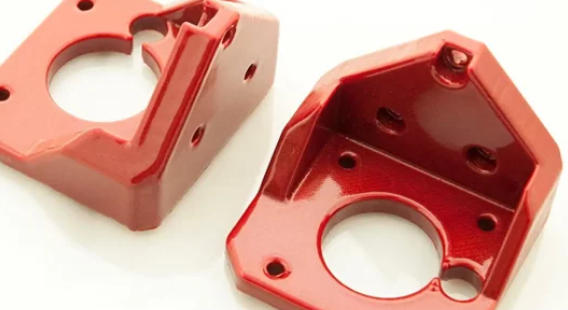
Successful acetone smoothing depends on close monitoring and gentle adjustments.
Control tips:
- Always start with a shorter exposure time; you can extend it based on test results.
- Use test pieces similar to your final part to determine a “baseline” time and acetone amount.
- Check the surface every few minutes if possible, especially when trying a new filament or geometry.
- Avoid moving or touching the part while the surface is soft, as fingerprints and dents are easy to imprint.
For some setups, a slightly elevated ambient temperature can speed up vapor formation, but any added heat must be applied with extreme caution and at a safe distance from solvent vapors.
Once the part has been smoothed and removed from the chamber, allow it to cure fully before additional finishing steps.
Good practices after smoothing:
- Place the part on a clean, stable surface in a well-ventilated area.
- Leave it undisturbed until the skin is firm and no longer tacky.
- For glossy parts, you can leave the surface as-is or lightly polish to adjust the sheen.
- For matte or painted finishes, follow up with fine sanding, primer, and then paint or coatings.
Any small support marks, hanger holes, or surface defects can be filled with suitable fillers, sanded, and, if needed, re-smoothed or painted for a high-end cosmetic result.
Thoughtful design and printing settings make acetone smoothing safer and more predictable.
Useful design and process guidelines:
- Use moderate layer heights to balance print time and surface quality.
- Increase wall thickness in critical regions to prevent collapse or warping when the surface softens.
- Avoid extremely fine raised details or sharp micro features that may disappear after smoothing.
- Orient the part so that visually important surfaces are as clean as possible from supports.
- Choose filaments that are specifically recommended for acetone smoothing when available.
Combining these design choices with a consistent smoothing routine helps produce parts with reliable and repeatable visual quality.
Some applications may require finishing methods that do not involve solvent exposure.
Common alternatives include:
- Sanding: Gradually smoothing the surface with sandpaper from coarse to fine grit. This is effective but labor-intensive, especially on complex shapes.
- Polishing: Using a liquid polish and cloth after sanding to achieve a higher gloss without chemicals like acetone.
- Other mechanical or media-based methods: Techniques such as blasting or tumbling can be used in certain environments to obtain a uniform surface.
These options can be combined with acetone smoothing or used alone, depending on the material, safety requirements, and finish expectations.
To achieve consistent, repeatable results, treat acetone smoothing as a controlled process, not a one-off experiment.
Implementation tips:
- Record the acetone amount, exposure time, filament type, and part thickness for each test.
- Standardize your chamber setup and work sequence once you find parameters that work well.
- Inspect parts visually for gloss level, uniformity, and any loss of sharp details before using or shipping them.
- For series production or frequent use, develop written instructions that can be followed by operators to reduce variation.
These practices help ensure that every smoothed ABS part meets the same visual and functional standards.
ABS acetone smoothing is a powerful way to transform standard FDM prints into smooth, high-quality components that look and feel close to molded parts. With the right safety practices, controlled processes, and thoughtful design choices, you can achieve stable, repeatable results that meet demanding visual and functional requirements.
If you are a brand owner, wholesaler, or manufacturer looking for stable quality and consistent visual finishes at scale, consider working with a professional OEM partner that can integrate ABS 3D printing, acetone vapor smoothing, precision machining, plastic and silicone molding, and metal stamping in one workflow. Contact U-NEED today to discuss your drawings, materials, tolerances, and finishing requirements, and get tailored ABS acetone smoothing and full-process OEM support for your next project.
Contact us to get more information!
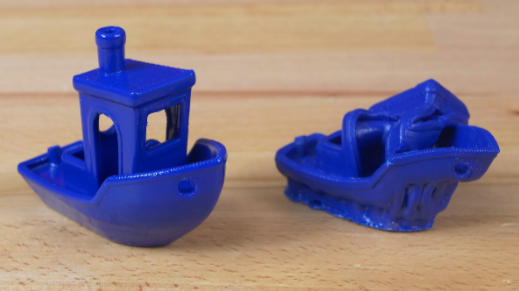
No, PLA and PETG generally cannot be vapor smoothed with acetone. They have good chemical resistance to ketones, so acetone and common alcohols have little effect. For these materials, manual sanding and other non-acetone finishing techniques remain the most reliable options.
The duration depends on part size, geometry, acetone amount, and the level of smoothness you need. Smaller, simple parts may smooth in 10–20 minutes, while larger or more complex prints may require significantly longer. Starting with shorter times and extending as needed helps avoid over-smoothing.
Yes, excessive exposure can soften walls, deform geometry, and erase fine details. To prevent this, monitor the process closely, use test pieces, and check progress periodically through the transparent chamber. Keep a timer running and stop the process as soon as you reach the desired surface.
Acetone primarily changes the outer surface, but aggressive or repeated smoothing can reduce horizontal strength and alter critical dimensions. At the same time, improved bonding between layers can enhance vertical strength in some cases. If structural performance is critical, test your smoothed parts under realistic loads.
An even finish requires controlled acetone exposure and consistent application. In a vapor bath, make sure vapor can circulate around the entire part and that the part is not touching wet surfaces. For brushing, use thin coats and smooth strokes. After smoothing, allow the part to dry fully to stabilize the gloss and surface texture.
1. https://www.rapiddirect.com/blog/abs-acetone-smoothing/
2. https://www.teamrapidtooling.com/blog/abs-acetone-smoothing-the-complete-guide/
3. https://www.dekmake.com/abs-acetone-smoothing/
4. https://www.3dsourced.com/rigid-ink/acetone-vapor-smooth-3d-prints-abs-asa/
5. https://smalltown3d.com/abs-and-asa-101-how-to-acetone-vapor-smooth-safely/
6. https://www.fictiv.com/articles/how-to-finish-3d-printed-parts


