Views: 222 Author: Rebecca Publish Time: 2026-01-26 Origin: Site
Content Menu
● Acetal vs Delrin: Quick Technical Summary
>> Key Material Comparison Table
● What Is Acetal (POM) and How Does It Work?
>> Types of Acetal: Copolymer vs Homopolymer
● What Is Delrin and Why Is It Different?
>> Main Delrin Grades and Their Uses
● Is Delrin the Same as Acetal?
● Acetal Copolymer vs Delrin: Detailed Property Comparison
>> 1. Composition and Crystal Structure
>> 2. Hardness and Wear Resistance
>> 3. Chemical Resistance and Moisture Behavior
>> 5. Flexural and Tensile Strength
>> 6. Porosity and Hygiene-Critical Applications
● When to Choose Delrin vs Acetal in Real Projects
>> Choose Acetal Copolymer When…
● Common Applications for Acetal and Delrin
● Design and Processing Tips for Acetal and Delrin
>> 1. Temperature and Flammability Limits
>> 3. Injection Molding Considerations
● Outsourcing Acetal and Delrin Parts to a Professional OEM Partner
● Action-Oriented Conclusion: Plan Your Next Acetal or Delrin Project
>> (1) What kind of plastic is POM (acetal)?
>> (2) Is Delrin stronger than nylon?
>> (3) What is the strongest common plastic used in engineering?
>> (4) Can acetal and Delrin be used in food-contact applications?
>> (5) Are acetal and Delrin suitable for high-temperature environments?
Choosing between acetal and Delrin can strongly influence the performance, cost, and reliability of plastic parts in real applications. This guide explains the key differences, typical use cases, and practical selection rules so you can specify the right material for your next project.

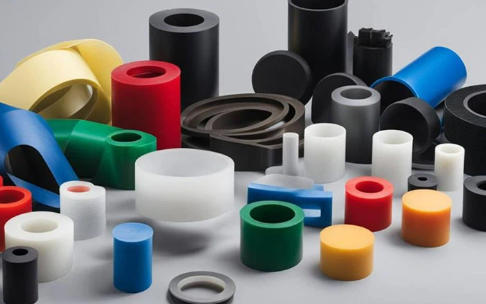
Acetal is a family of polyoxymethylene (POM) engineering plastics known for high stiffness, low friction, and excellent dimensional stability. It is widely used in precision mechanical parts as a cost-effective alternative to metals in machining, injection molding, and other processes.
Delrin is the trade name for an acetal homopolymer developed as a high-performance grade within the broader POM family. Compared with standard acetal copolymers, Delrin offers higher mechanical strength and slightly better wear performance, making it suitable for demanding structural and load-bearing parts.
The table below gives a concise technical overview to help you quickly compare acetal copolymer and Delrin homopolymer.
| Parameter | Acetal Copolymer (POM-C) | Delrin Homopolymer (POM-H) |
|---|---|---|
| Polymer structure | Copolymer POM with added comonomers | Homopolymer POM with repeating CH2O units |
| Typical hardness (Shore D) | Around 85 Shore D | Around 86 Shore D |
| Yield strength (approx.) | About 9,500 psi | About 11,000 psi |
| Tensile strength (approx.) | About 12,000 psi | About 13,000 psi |
| Temperature range (continuous) | Up to about 100 °C | About −40 °C to 120 °C |
| Short-term peak temperature | Up to about 140 °C | Up to about 175 °C (short term) |
| Chemical resistance | Better resistance to hot water, caustics | Good overall, less resistant to strong caustics |
| Porosity | Non-porous interior | Centerline porosity possible |
| Friction and wear | Low friction, good wear | Very low friction, excellent wear |
| Cost level | Lower, economical POM solution | Higher due to branding and performance |
Use this table as a first filter before going deeper into application-specific considerations.
Acetal, also known as polyacetal or polyformaldehyde, is a semi-crystalline thermoplastic built from repeating CH2O units. Thanks to its stiffness and machinability, it often replaces metals in light-duty mechanical components, reducing part weight and cost.
Acetal plastics, whether copolymer or homopolymer, share several important properties:
- High strength and rigidity suitable for many load-bearing parts.
- Low coefficient of friction, ideal for sliding and rotating components.
- Low water absorption that supports dimensional stability in humid environments.
- Good electrical resistivity, useful for insulators and electrical connectors.
- Heat resistance appropriate for a wide range of industrial applications.
- Recyclability, since they melt in the 162–175 °C range and can be remolded.
There are two main structural types of acetal.
- Acetal copolymer (POM-C):
Contains different monomer units along the chain, which improves chemical resistance, dimensional stability, and resistance to hot water and caustic media. Common trade names include Celcon, Duracon, Hostaform, and Ultraform.
- Acetal homopolymer (POM-H, including Delrin):
Maintains a constant repeating CH2O structure, resulting in higher crystallinity, stiffness, and strength. Delrin is the most well-known homopolymer grade and is widely used in machined and molded precision components.
Several hybrid acetal grades combine aspects of both copolymers and homopolymers and are optimized for specific performance requirements.
Delrin is a high-performance acetal homopolymer optimized for strength, stiffness, and fatigue resistance. Its polymer chains consist of regular CH2O repeating units whose length and structure can be adjusted to fine-tune mechanical performance.
Compared with typical acetal copolymers, Delrin usually offers enhanced performance in several areas:
- High tensile strength and impact strength for dynamic mechanical parts.
- High stiffness and flexural modulus at room and elevated temperatures.
- Very low coefficient of friction and excellent wear behavior.
- Strong creep resistance under long-term loads.
- High electrical resistivity suitable for electrical and electronic components.
- Good machinability and recyclability as a thermoplastic.
One important aspect is Delrin's tendency to have centerline porosity, a lower-density core with microscopic voids. This can allow gases or liquids to penetrate and may limit its suitability in critical fluid-handling or hygienic applications.
Different Delrin grades target specific performance needs:
- Delrin 150:
Offers high mechanical strength, exceptional rigidity, and high natural lubricity, making it a good choice for long-term wear components at elevated temperatures.
- Delrin AF 100 (PTFE filled):
Includes PTFE to enhance natural lubricity and wear resistance in sliding mechanisms.
- Delrin 30% glass-filled:
Reinforced with glass fibers for excellent impact resistance and suitability in parts exposed to continuous mechanical stress.
- Delrin AF DE588 (PTFE fibers):
Contains a higher PTFE fiber content for very high rigidity and durability, even in demanding environments such as certain marine or defense applications.
These grades are all highly machinable, which makes Delrin popular for CNC milling, turning, and rapid prototyping.
Delrin is not the same as generic acetal. It is a specific acetal homopolymer grade within the wider POM family.
In practice:
- “Acetal” usually refers to the broader POM family, often meaning acetal copolymer by default.
- “Delrin” refers specifically to a branded homopolymer variant with higher strength and stiffness.
Therefore, the more accurate comparison is acetal copolymer vs Delrin homopolymer, rather than treating them as unrelated plastics.
This section examines the performance differences that matter most when choosing a material for real projects.
- Delrin is a homopolymer, built from a single repeating CH2O unit, which creates a highly crystalline structure and raises stiffness and strength.
- Acetal copolymer includes additional monomers that disrupt crystallinity slightly, lowering stiffness but increasing stability against certain chemicals and thermal conditions.
This structural difference drives many of the mechanical and chemical contrasts between the two materials.
The hardness of Delrin and acetal copolymer is close, but the difference can be important in high-wear environments.
- Delrin has a typical hardness around 86 Shore D with very low friction and strong abrasion resistance.
- Acetal copolymer has a hardness around 85 Shore D and still offers good wear resistance, but usually slightly below that of Delrin in severe sliding or impact conditions.
For parts that experience continuous sliding or repeated impact, Delrin often provides longer service life.
Chemical resistance is one of the key differentiators:
- Acetal copolymer provides better resistance to hot water and strong caustic solutions with high pH values.
- Delrin has good general chemical resistance but is less robust against strong caustics and repeated exposure to hot water.
If parts are used in food processing, medical environments, or systems undergoing frequent chemical cleaning, acetal copolymer is usually a more reliable choice.
Temperature capability determines whether a material can maintain its properties in the intended operating environment.
- Delrin generally works from about −40 °C up to around 120 °C, and withstands short-term peaks approaching 175 °C.
- Acetal copolymer typically offers continuous service up to about 100 °C, with short-term exposure up to around 140 °C.
Neither material is suitable for continuous high-temperature exposure well above 90 °C or for long-term immersion in hot water above about 60 °C.
Delrin's main advantage is its superior mechanical strength.
- Acetal copolymer has yield strength around 9,500 psi and tensile strength around 12,000 psi.
- Delrin has yield strength around 11,000 psi and tensile strength around 13,000 psi.
Both materials are capable for many structural applications, but Delrin is preferred where higher loads and fatigue resistance are critical.
Delrin can exhibit centerline porosity, which introduces microscopic voids inside the material. These voids can trap liquids, gases, or contaminants.
Acetal copolymer usually has a solid, non-porous cross-section, making it more suitable for:
- Fluid-handling components such as valves and manifolds.
- Food-contact parts that must resist fluid ingress.
- Medical device components where cleanability and hygiene are important.
Acetal copolymer is usually a cost-effective POM solution, often chosen in price-sensitive applications that do not require maximum performance. Delrin typically costs more, reflecting its brand value and higher mechanical properties.
For high-volume parts with moderate mechanical demands, acetal copolymer often offers the best balance between performance and cost. For demanding load-bearing or high-wear parts, the extra cost of Delrin can be justified by better reliability.
This section translates material differences into practical selection rules that engineers and buyers can apply directly.
- Parts carry heavy or sustained loads.
Delrin's higher strength and stiffness help prevent deformation and premature failure.
- There is frequent impact or shock.
Gears, cams, and levers that experience repeated impacts benefit from Delrin's fatigue resistance.
- Friction and wear are critical.
Sliding mechanisms, bearings, or wear pads can run longer with Delrin thanks to its very low friction and excellent abrasion resistance.
- You need maximum stiffness in compact geometries.
Thin walls, small features, or highly loaded sections benefit from Delrin's higher modulus.
- Chemical resistance is a priority.
Parts exposed to hot water, caustic cleaners, or aggressive process fluids often perform better with acetal copolymer.
- Porosity cannot be tolerated.
Components in fluid systems, food equipment, or hygienic applications should use non-porous acetal copolymer to reduce contamination risk.
- Dimensional stability and moisture resistance matter.
Copolymers hold dimensions well in humid or intermittently wet conditions.
- Cost optimization is essential.
For large quantities of parts with moderate loads, acetal copolymer usually provides adequate performance at lower material cost.
Acetal and Delrin are widely used across automotive, consumer goods, industrial equipment, and electrical components. They share many application areas, but the specific choice depends on load, environment, and regulatory needs.
Typical applications include:
- Precision gears, sprockets, and timing components.
- Bearings, bushings, rollers, and sliding guides.
- Fittings, manifolds, and valves in fluid-handling systems.
- Electrical insulators, connectors, switches, and housings.
- Structural parts in automotive mechanisms and construction devices.
- Consumer product mechanisms such as latches, hinges, and snap-fit parts.
They are suitable for injection molding, CNC machining, and rapid prototyping, which supports both low-volume development and mass production.
Both acetal and Delrin should not be used in continuous applications above roughly 90 °C. Long-term immersion in hot water above about 60 °C should also be avoided.
Neither material is appropriate in applications requiring high flammability ratings, since both are considered highly flammable compared with certain specialized engineering plastics.
Acetal and Delrin are easy to machine and are common choices for CNC prototypes and functional test parts.
- Use sharp cutting tools to reduce heat and prevent surface melting.
- Plan for thermal expansion and select tolerances accordingly.
- Consider Delrin for small or thin parts where stiffness during machining is important.
Both materials are widely used in injection molding.
- Acetal copolymer is often preferred for parts that must withstand cleaning, hot water, or chemically aggressive environments.
- Delrin's high flow can be useful for thin walls, fine features, and complex geometries, especially in high-precision components.
Proper mold design and process control are essential to maintain dimensional accuracy, surface quality, and consistent mechanical properties.
For overseas brand owners, wholesalers, and product manufacturers, working with an experienced OEM partner can help transform a design into stable, repeatable production. A capable partner should support you from material selection to mass production, covering CNC machining, plastic product manufacturing, silicone product manufacturing, and metal stamping in a coordinated workflow.
When evaluating a manufacturing partner for acetal and Delrin parts, consider whether they can:
- Provide engineering support on material choice based on load, environment, and regulatory requirements.
- Offer precision machining and molding with tight tolerances on POM materials.
- Implement strict quality control and inspection procedures.
- Support both prototype quantities and full-scale production.
- Help optimize part design for cost, manufacturability, and performance.
Such integrated support can reduce project risk, shorten time to market, and improve the overall reliability of your plastic components.
If you are preparing a new project and still deciding between acetal copolymer and Delrin, now is the right time to evaluate your real operating conditions and performance targets. Clarify your load requirements, temperature range, chemical environment, hygiene expectations, and budget, then share your drawings and specifications with a professional OEM partner for technical feedback and cost analysis. By turning these requirements into a detailed manufacturing plan, you can move quickly from concept to stable, repeatable production with the most suitable POM material for your application.
Contact us to get more information!
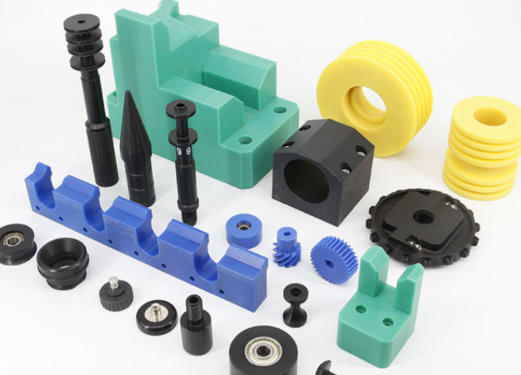
POM, commonly called acetal, is a semi-crystalline engineering thermoplastic with a highly organized molecular structure and a sharp melting point. It exists mainly as homopolymer and copolymer grades, each offering a different balance of strength, chemical resistance, and processability.
Nylon generally has higher tensile strength than Delrin in many standard grades, but Delrin provides very high stiffness, low friction, and excellent fatigue resistance. In practice, both materials are widely used for gears, bearings, and other mechanical components with overlapping application ranges.
Polycarbonate is often considered one of the strongest common engineering plastics because of its very high impact resistance and toughness. However, the “strongest” choice in a specific project depends on the combination of load, temperature, environment, and cost.
Acetal copolymer is usually preferred for food and beverage applications because it is non-porous and more resistant to hot water and caustic cleaning agents. Delrin's possible centerline porosity can limit its use where fluid absorption, contamination, or strict hygiene requirements are critical.
Neither acetal nor Delrin is suitable for continuous service at very high temperatures far above 90 °C or for long-term immersion in hot water above about 60 °C. For applications that demand stable performance at elevated temperatures, other high-temperature engineering plastics are usually more appropriate.


