Views: 222 Author: Rebecca Publish Time: 2026-01-30 Origin: Site
Content Menu
● What Is Alodine Finish (Chromate Conversion Coating)?
● Key Benefits of Alodine for Precision Machined Aluminum
● How Alodine Works: Basic Principle
● Common Alodine Types and Color Classes
● Step-by-Step Alodine Finishing Process
● Design Considerations for CNC Precision Parts With Alodine
● Alodine vs Anodizing for Precision Machined Aluminum
>> Alodine and Anodizing for CNC Aluminum Parts
● Typical Applications of Alodine Finish
>> CNC Precision Machined Aluminum Parts
>> Aerospace and Defense Components
>> Automotive and Transportation Systems
>> Electronics and Industrial Equipment
● Environmental and Regulatory Considerations
● Practical Checklist: When to Choose Alodine for Your CNC Parts
● Example: Alodine on OEM Electronics Enclosure
● How U-NEED Supports Alodine-Finished CNC Parts
● Call to Action: Start Your Alodine CNC Project With U-NEED
● FAQs About Alodine Finish for Precision Machined Parts
>> 1. What metals can receive Alodine finish?
>> 2. Does Alodine change the dimensions of CNC machined parts?
>> 3. Can Alodine-treated parts be painted or powder coated?
>> 4. Is Alodine safe and environmentally compliant?
>> 5. How do I choose between Alodine and anodizing for my parts?
Alodine finish (chromate conversion coating) is one of the most critical surface treatments for aluminum and aluminum alloy CNC parts used in aerospace, automotive, electronics, and industrial equipment. It offers corrosion protection, paint adhesion, and electrical conductivity while preserving tight tolerances, making it ideal for precision machined components and OEM projects.

Alodine finish, also known as chromate conversion coating or chem film, is a thin, chemically generated protective layer formed when aluminum or other reactive metals react with a chromate-based solution. The process converts the surface metal into a stable oxide-chromate film that provides corrosion resistance, improves paint adhesion, and maintains electrical conductivity.
The typical Alodine coating thickness ranges from about 0.5 to 4 microns (0.00002 to 0.00016 inches), so it does not significantly alter part dimensions or critical fits in CNC machined parts. Because of this minimal build-up, designers can apply Alodine after machining without reworking tolerances, which is especially important for high-precision OEM assemblies such as housings, connectors, and brackets.
For CNC aluminum parts and OEM assemblies, Alodine finishing offers a balanced combination of functional and economic advantages.
- Corrosion resistance: The chromate conversion layer passivates the surface and helps protect against moisture, salt spray, and mild chemicals in service.
- Minimal impact on tolerances: The coating is extremely thin, so it preserves tight dimensional requirements for precision machined features, threads, and mating surfaces.
- Improved paint and primer adhesion: The slightly roughened, chemically active surface significantly boosts coating adhesion, which extends the life of paints and primers.
- Electrical conductivity: Unlike many thick oxide coatings, Alodine can maintain surface conductivity, which is critical for grounding, EMI shielding, and electrical continuity.
- Cost-effective processing: Alodine operates at or near room temperature, with short cycle times and relatively simple equipment, making it economical for high-volume OEM runs.
- Uniform coverage on complex geometries: Conversion coatings can reach into internal threads, recesses, and thin-wall sections, providing consistent protection without bridging or buildup.
Chromate conversion coating is a controlled chemical reaction between the metal surface and a chromate-containing solution. During treatment, the native oxide and a thin layer of base metal dissolve slightly, and new mixed oxides and chromate compounds re-precipitate and bond to the surface, forming an integral protective film.
This film acts as a barrier against corrosive agents and can exhibit self-healing behavior: trapped chromate ions may migrate to micro-defects and help re-passivate local damage sites over time. For OEM components in demanding environments, this characteristic can improve long-term reliability compared with untreated aluminum surfaces.
Several Alodine formulations are available to meet different performance, appearance, and regulatory requirements. Selecting the right type helps align corrosion resistance, conductivity, and environmental compliance for each project.
- Hexavalent chromium (Type I): Traditional Alodine systems use hexavalent chromium (Cr⁶⁺), offering strong corrosion resistance and robust self-healing behavior.
- Trivalent / chromium-free (Type II): Newer formulations are based on trivalent chromium or chromium-free chemistries to meet modern environmental regulations.
- Clear / colorless: Very thin, nearly transparent coatings that maximize electrical conductivity while still providing basic corrosion protection.
- Light yellow to golden: Thicker films with better corrosion resistance and a visually distinctive yellow-gold color widely seen in aerospace and military hardware.
For precision OEM parts, clear coatings are often used on electrical contact surfaces, while golden coatings are preferred where enhanced corrosion resistance and visual inspection are important.
While different facilities may customize their lines, a typical Alodine process for CNC machined aluminum parts includes several controlled stages.
1. Degreasing and cleaning
- Remove machining oils, coolants, and fingerprints via alkaline cleaning or solvent degreasing.
- Proper cleaning is essential because residual contamination prevents uniform conversion film formation.
2. Rinsing
- Rinse thoroughly with water to remove cleaning agents and avoid chemical carry-over into subsequent baths.
3. Etching (optional, depending on spec)
- Lightly etch the aluminum surface to remove the natural oxide layer and create a fresh, active surface for conversion.
- This step can also help even out minor surface imperfections for a more consistent final appearance.
4. Deoxidizing / desmutting
- Apply a deoxidizing solution to strip residual oxides, smut, and alloying element residues.
- A chemically clean, uniform substrate is critical for coating adhesion and performance.
5. Alodine application (immersion, spray, or brush)
- Immerse parts in the Alodine bath or apply by spray/brush according to specified dwell time and temperature.
- During this step, chromate compounds react with the aluminum to form the conversion film; color and thickness depend on time, concentration, and temperature.
6. Final rinse and drying
- Rinse carefully to remove residual chemicals without damaging the newly formed film.
- Dry with hot air or ovens; overheating should be avoided to prevent film damage or discoloration.
Proper design and engineering decisions ensure that Alodine finishing supports both performance and manufacturability for precision components.
- Tight tolerances and fits: Because Alodine thickness is extremely low, most fits, threads, and precision bores do not need tolerance changes, which simplifies drawing preparation.
- Complex geometries: Conversion coatings can reach into blind holes, internal channels, and thin-wall regions, offering full coverage where plating or thick coatings may struggle.
- Masking requirements: Some areas such as certain contact surfaces or interference fits may require masking, depending on specification and downstream processes.
- Surface roughness: Pre-machined surface finish affects appearance and coating uniformity; fine finishes typically yield more consistent color and performance.
- Post-treatment operations: Abrasive operations after Alodine, such as heavy polishing or aggressive cleaning, can damage or remove the film and should be minimized or re-qualified.
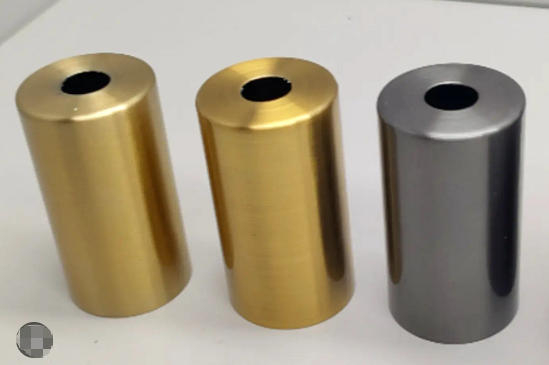
Both Alodine and anodizing are widely used for aluminum CNC components, but they serve different priorities in OEM design.
| Aspect | Alodine (Chromate Conversion) | Anodizing (Oxide Coating) |
|---|---|---|
| Basic principle | Chemical conversion film formed from reaction with a chromate solution. | Electrochemical process that thickens the natural aluminum oxide layer. |
| Typical thickness | About 0.5–4 μm, extremely thin. | Often 5–25 μm or more depending on type. |
| Dimensional impact | Negligible, ideal for tight tolerances and precision fits. | Noticeable; designers must account for buildup in bores, threads, and mating surfaces. |
| Corrosion resistance | Moderate; good for many industrial environments. | Higher; especially with hard anodizing and sealing for harsh or marine conditions. |
| Wear resistance | Limited improvement over bare aluminum. | Significant improvement; hard anodizing provides very high wear and abrasion resistance. |
| Electrical conductivity | Largely retained; suitable for grounding and EMI shielding. | Greatly reduced; oxide layer acts as an electrical insulator. |
| Paint adhesion | Very good primer base for paints and powder coats. | Also good, especially with properly prepared and sealed surfaces. |
| Appearance | Clear to yellow/gold, matte or slightly iridescent. | Wide color options, decorative finishes, matte or glossy. |
| Cost and cycle time | Generally lower cost and faster processing. | Higher cost, more process steps and energy use. |
For high-precision electronic housings, brackets, and connectors where dimensional stability and conductivity are priorities, Alodine is usually more suitable. For parts exposed to heavy wear, abrasion, or extreme corrosion, such as off-road or marine components, anodizing or hard anodizing may be a better choice.
Alodine is used in a wide range of industries where aluminum and aluminum alloys are common in CNC machining and sheet metal fabrication.
Alodine is especially valuable for CNC milled and turned aluminum parts that require tight tolerances and stable fits over the product lifetime. These include frames, heat sinks, brackets, housings, and structural components that must resist corrosion and support downstream painting or powder coating.
The aerospace industry has long relied on chromate conversion coatings for structural and non-structural aluminum parts such as panels, brackets, and avionics housings. The combination of moderate corrosion resistance, low weight impact, and preserved electrical conductivity aligns well with aerospace performance requirements.
In automotive and commercial vehicle applications, Alodine is used on brackets, chassis components, and electrical housings that need corrosion protection without adding significant thickness. When combined with paints or powder coatings, the conversion layer helps extend coating life under road salt, humidity, and vibration.
For industrial control panels, communication devices, and power equipment, Alodine coatings help maintain electrical continuity while protecting aluminum enclosures from environmental degradation. This is especially important for grounding paths and EMI shielding surfaces where insulating coatings would be unacceptable.
Traditional hexavalent chromium-based Alodine systems offer high performance but raise environmental and worker-safety concerns. Many regions and industries now impose strict limits or bans on Cr⁶⁺ compounds under various regulations.
To address this, manufacturers increasingly adopt trivalent or chromium-free chem film systems that provide comparable corrosion resistance while significantly reducing toxicity. OEM buyers should confirm whether their supplier uses hexavalent or trivalent chemistries and ensure that the selected process meets project-specific environmental and certification requirements.
When developing new aluminum components or optimizing existing designs, engineers and sourcing teams can use the following quick checklist to decide whether Alodine is a good fit.
Choose Alodine finishing when:
- You require tight tolerances and cannot allow significant dimensional change from the coating.
- Electrical conductivity must be maintained for grounding, shielding, or low-resistance paths.
- Moderate corrosion resistance is sufficient, especially when combined with paint or powder coatings.
- You want a cost-effective and relatively fast finishing process suitable for high-volume production.
- Parts feature complex geometries where uniform coating coverage is important.
Consider alternative finishes, such as anodizing, plating, or painting, when you need maximum wear resistance, very high corrosion protection in extreme environments, or specific decorative appearances with bright colors.
Imagine an aluminum CNC-machined enclosure for an industrial controller installed in a humid, high-vibration factory environment. The design must provide corrosion protection, maintain good electrical contact between the cover and base for EMI shielding, and support branded powder coating.
By applying Alodine before painting, the enclosure gains a thin, conductive, corrosion-resistant layer that improves powder coat adhesion and protects any exposed edges or mounting holes where paint may chip. The overall result is a more reliable, long-lasting product that meets OEM performance and aesthetic requirements without sacrificing tight tolerances on gasket grooves, mounting bosses, and connector openings.
As a Chinese OEM manufacturer specializing in high-precision machined parts, plastic products, silicone parts, and metal stamping, U-NEED can integrate Alodine finishing into complete part manufacturing workflows for overseas brands, wholesalers, and producers. By coordinating CNC machining, surface preparation, and conversion coating under one system, we help customers control cost, lead time, and quality across the entire project.
Our engineering team can assist with material selection, tolerance optimization, and drawing notes to ensure that Alodine specifications align with functional and regulatory requirements in your target markets. Whether you need small-batch prototypes or large-volume production runs, we can provide stable, repeatable Alodine finishing compatible with subsequent painting, powder coating, or assembly operations.
If you are planning a new aluminum CNC machining project and need corrosion-resistant, paint-ready, and electrically conductive parts, Alodine finishing can be a highly effective solution. Share your 3D models, drawings, and technical requirements with U-NEED, and our engineering team will recommend the most suitable material, Alodine type, and production route for your application.
Contact us today through our online inquiry form or email to discuss your OEM CNC machining, plastic molding, silicone, and metal stamping requirements, and let U-NEED help you bring reliable, market-ready components to global customers faster.
Contact us to get more information!
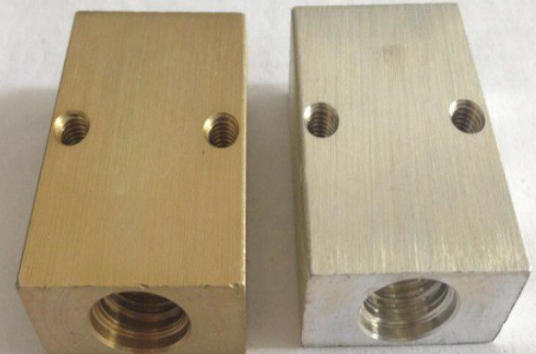
Alodine is most commonly used on aluminum and aluminum alloys, but chromate conversion coatings can also be applied to other metals such as magnesium, zinc, and certain steels with appropriate formulations. For CNC parts, aluminum alloys remain the primary candidates because they benefit most from the balance of corrosion resistance, conductivity, and dimensional stability.
Alodine coatings are extremely thin, generally in the range of about 0.5–4 microns, so dimensional change is usually negligible for most fits and precision features. This makes Alodine ideal for tight-tolerance bores, threads, and mating surfaces, where thicker coatings could cause interference or require tolerance adjustments.
Yes, one of the key advantages of Alodine is that it significantly improves paint and powder coat adhesion compared with bare aluminum. The conversion film serves as a chemically compatible primer layer, helping coatings resist peeling, blistering, and under-film corrosion in demanding environments.
Traditional hexavalent chromium-based Alodine systems pose environmental and health risks and are increasingly restricted by regulations in many regions. Many finishers now offer trivalent or chromium-free chem film alternatives that provide comparable corrosion resistance with reduced toxicity, so OEMs should specify compliant systems for global products.
Choose Alodine when you need minimal thickness, preserved electrical conductivity, and a cost-effective way to prepare parts for painting or moderate corrosion environments. Choose anodizing when maximum wear resistance, thick oxide protection, and decorative color finishes are more important than conductivity and tight dimensional control.
1. https://www.rapiddirect.com/blog/alodine-finish-guide-to-for-precision-machined-parts/
2. https://www.machining-custom.com/blog/alodine-coating-finish.html
3. https://www.machining-custom.com/blog/alodine-vs-anodized.html
4. https://okdor.com/alodine-finish/
5. https://tirapid.com/chem-film/
6. https://jiga.io/articles/alodining-vs-anodizing/
7. https://en.wikipedia.org/wiki/Chromate_conversion_coating
8. https://www.beskamold.com/alodine-vs-anodize/
9. https://www.rapiddirect.com/surface-finish/alodine-finish-services/


