Views: 222 Author: Loretta Publish Time: 2025-12-24 Origin: Site
Content Menu
● Where Anodized Aluminum Is Used
● How the Aluminum Anodizing Process Works
>> Cleaning and Surface Preparation
>> Pre-treatment: Etching and De-smutting
>> Electrolytic Anodizing Stage
● Anodized vs Non-Anodized Aluminum
● Anodizing vs Other Surface Finishes
● Best Aluminum Alloys for Anodizing
● Design Guidelines for Anodized Parts
● Quality Checks and Verification
● Maintenance of Anodized Aluminum
● Recent Practices and Standards
● Real-World Use Cases and Issues
● Choosing an Anodizing Partner with Integrated OEM Capabilities
● Turn Your Designs into Durable, Anodized Products
● FAQs About Aluminum Anodizing
>> 1. What makes anodized aluminum so corrosion-resistant?
>> 2. How should Type II and Type III anodizing be selected?
>> 3. Does anodizing affect part dimensions?
>> 4. Is anodized aluminum electrically conductive?
>> 5. How long can anodized aluminum last outdoors?
Aluminum anodizing is an electrochemical surface treatment that converts the outer layer of aluminum into a hard, corrosion-resistant aluminum oxide coating, making parts more durable, attractive, and easier to maintain. This in-depth guide explains how aluminum anodizing works, its main process types, design and quality tips, and how to choose the right anodizing service partner for demanding industrial applications.[1]

Aluminum anodizing is a controlled oxidation process that uses an acid bath and direct current to grow a dense aluminum oxide layer that is integral to the base metal, not just a superficial coating. This layer improves wear resistance, corrosion resistance, electrical insulation, and colorability while retaining aluminum's low weight and formability.[1]
Key characteristics of anodized aluminum:[1]
- Much higher surface hardness than bare aluminum
- Greatly improved corrosion resistance in marine, outdoor, and industrial environments
- Stable, long-lasting colors that do not peel or flake like paint or powder
- Good adhesion base for secondary coatings, adhesives, or Teflon-type impregnation
For non-ferrous metals like aluminum, magnesium, and titanium, anodizing is widely regarded as a go-to finish when both performance and appearance are critical.[1]
Anodizing delivers a combination of mechanical and visual benefits that is difficult to match with many other surface finishes. For engineers and purchasing teams, it offers a practical way to extend service life while enhancing product aesthetics.[1]
Main advantages:[1]
- Corrosion resistance: The aluminum oxide barrier protects against moisture, salt spray, chemicals, and UV.
- Wear and scratch resistance: Harder surfaces resist abrasion and everyday handling damage.
- Electrical insulation: The oxide film is non-conductive, useful for housings and isolation surfaces.
- Aesthetic flexibility: Clear, black, and many dyed colors with matte, satin, bright, or brushed textures.
- Dimensional stability: The coating is thin and tightly bonded, so it will not chip or delaminate under normal use.
Compared with paint or powder coating, anodized aluminum typically offers better long-term color stability and adhesion, especially in UV-rich and chemically aggressive environments.[1]
Because anodizing preserves aluminum's low weight while strengthening the surface, it is widely adopted in high-value sectors. These applications range from structural components to decorative consumer products.[1]
Typical applications by industry:[1]
- Aerospace: Structural panels, internal cabin components, and hardware requiring low weight and corrosion resistance.
- Automotive: Trim, wheels, fuel caps, interior accents, and under-hood components exposed to heat, salt, and debris.
- Architecture: Facades, window frames, curtain walls, and decorative panels that must keep color and finish for many years.
- Consumer electronics: Laptop bodies, phone housings, audio equipment, and accessories where feel and scratch resistance matter.
- Medical: Instrument handles, trays, and housings that need cleanable, biocompatible surfaces.
In many of these fields, anodizing is specified directly in product and surface finish requirements to ensure consistent performance.[1]
Aluminum anodizing follows a multi-step workflow designed to clean the surface, grow a controlled oxide layer, optionally add color, and then seal the pores. Each stage influences the final appearance and performance of the part.[1]
A clean, uniform surface is essential for consistent results across a batch. Any contamination left on the part can produce visible defects and variable coating thickness.[1]
Typical steps:[1]
- Degreasing to remove oils, cutting fluids, and fingerprints
- Alkaline or acidic cleaning to eliminate remaining contaminants
- Mechanical preparation such as sanding, grinding, bead blasting, or polishing to define the baseline texture
Inadequate cleaning is a common cause of uneven color, poor adhesion, and patchy thickness, especially on complex geometries.[1]
Pre-treatment refines the aluminum surface further and improves overall appearance. It also helps reduce visible defects that might show through thin anodic coatings.[1]
Typical elements:[1]
- Etching to remove the natural oxide layer and micro-defects, usually leaving a matte finish
- De-smutting to dissolve residual alloying elements such as copper or silicon that remain after etching
Choosing the right pre-treatment sequence helps control whether the final result appears bright, satin, or more heavily matte.[1]
The core of the process is the electrochemical conversion of aluminum into aluminum oxide. Process control at this stage directly affects thickness, hardness, and porosity.[1]
Key points:[1]
- The aluminum part is the anode, and a conductive material such as aluminum or stainless steel serves as the cathode.
- Both are immersed in an acid electrolyte, typically based on sulfuric acid for general use or chromic acid for specific applications.
- Direct current passes through the bath, causing aluminum atoms at the surface to react with oxygen ions and form aluminum oxide.
Layer growth depends on bath temperature, acid concentration, current density, and time, so stable operating parameters are essential for repeatability.[1]
The fresh anodic layer is porous and can be colored using several techniques. This flexibility allows products to match brand colors or design language.[1]
Common methods:[1]
- Dyeing in organic dye baths to create a wide color spectrum
- Electrolytic coloring with metal salts for light-fast bronze-to-black tones
- Integral coloring that combines anodizing and coloring in a single step for robust dark finishes
- Interference coloring using enlarged pores and special metal deposits for iridescent effects
Color consistency across batches depends on alloy composition, layer thickness, bath chemistry, and process control.[1]
Sealing is critical to locking in color and maximizing corrosion resistance. Without effective sealing, the coating remains more vulnerable to staining and corrosion.[1]
Typical options:[1]
- Hot water sealing near boiling, which hydrates the oxide and closes the pores
- Mid-temperature and cold sealing systems that use nickel-based compounds to achieve lower-temperature closure
Well-sealed coatings show significantly better resistance to environmental attack and dye bleed-out over time.[1]
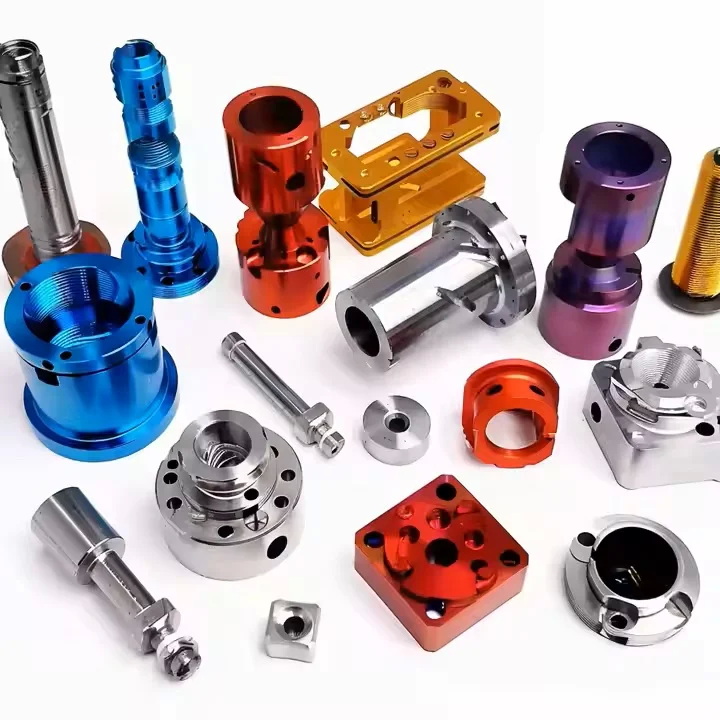
Different anodizing types are often grouped by electrolyte and coating thickness. This categorization helps engineers align finishes with technical requirements.[1]
Each type offers a distinct balance of thickness, hardness, and appearance.[1]
Anodizing type | Typical thickness | Color flexibility | Key properties | Typical applications |
Type I (Chromic acid) | Thin coatings often under 7.5 µm | Limited, usually gray tones | Thin protection with minimal dimensional change | Aerospace components and precision parts |
Type II (Sulfuric acid) | Medium thickness up to around 25 µm | Very wide color range via dyes | Balance of durability and aesthetics, very common | Consumer products, electronics, architecture, general industrial parts |
Type III (Hardcoat) | Thick coatings that can exceed 50 µm | Limited, usually gray to black | Very high hardness and wear resistance | Hydraulic components, heavy duty machinery, defense and marine hardware |
Type selection should reflect required wear life, color options, dimensional tolerance, and cost level for each project.[1]
Choosing anodized aluminum instead of bare aluminum has clear technical implications for durability and long-term appearance. This difference is especially visible in outdoor and high-touch situations.[1]
Main contrasts:[1]
- Non-anodized aluminum forms a thin, naturally occurring oxide with limited corrosion resistance.
- Anodized aluminum has a thicker, engineered oxide that offers significantly better protection against humidity, salt, and chemicals.
- Anodized surfaces resist scratches and handling damage more effectively.
- Bare aluminum is more likely to discolor, stain, and gall in sliding or mating applications.
For components in marine, aerospace, structural, and consumer-facing products, anodizing is often treated as a standard requirement rather than a luxury option.[1]
When specifying surface finishes, anodizing is often compared with powder coating and electroplating. Understanding the differences helps teams select the most suitable process.[1]
Characteristic | Anodizing | Powder coating | Electroplating |
Process type | Electrochemical conversion of surface oxide | Electrostatic dry powder plus heat curing | Electrolytic deposition of metals |
Bond to substrate | Integral oxide, part of the metal | Polymer layer on top of surface | Metallic layer on top of surface |
Typical thickness | From very thin up to hardcoat ranges | Moderate, usually tens of micrometers | Wide thickness range depending on metal |
Corrosion resistance | Excellent with proper sealing | Good; may chip or crack under impact | Good to excellent, depending on metal and thickness |
Color range | Natural plus broad dye colors | Very wide palette and textures | Mainly metallic hues |
UV and color stability | Very good, especially with suitable coloring | Good, may chalk or fade over time | Generally good for many decorative metals |
Typical uses | Aerospace, architecture, electronics, precision parts | Outdoor furniture, appliances, exposed consumer items | Jewelry, connectors, decorative trims, wear surfaces |
For aluminum components that need thin, hard, integrated protection with optional color control, anodizing often provides the most efficient balance of performance and cost.[1]
Different alloy series respond differently to anodizing due to their alloying elements. Understanding this behavior reduces the risk of unexpected results.[1]
General tendencies:[1]
- 1000 series: Very high corrosion resistance and excellent response, with clear, translucent coatings.
- 3000 series: Good formability and corrosion resistance, producing uniform films.
- 5000 series: Strong and corrosion-resistant, especially in marine environments, with further gains from anodizing.
- 6000 series: Widely used in architectural profiles and automotive parts, anodizing well with stable appearance.
- 7000 series: High-strength alloys that benefit from improved corrosion resistance and surface hardness.
Discussing alloy choice and finish requirements early in the design process helps avoid color variation or coating non-uniformity.[1]
Designing parts with anodizing in mind simplifies production and quality control. Small changes in geometry and tolerances can prevent costly issues later.[1]
Key considerations:[1]
- Dimensional changes: Anodic layers grow partly outward and partly inward, so tight-tolerance features may need machining allowance or post-anodize sizing.
- Edges and sharp corners: Very sharp features can lead to thin or burnt areas, especially in hardcoat, so small radii help achieve uniform coverage.
- Masking zones: Areas that must remain conductive or uncoated should be identified clearly for masking or alternate treatments.
- Combined coatings: Anodizing can be paired with paints, lubricious films, or selected plating to tune performance.
Upfront design for manufacturability helps align coating thickness, tolerances, and functional demands.[1]
Robust quality checks confirm that anodized parts meet functional and cosmetic requirements. This is particularly important in safety-critical or regulated industries.[1]
Useful checks:[1]
- Visual inspection for uniform color, texture, and absence of streaks or stains
- Simple scratch or wear checks to compare resistance against bare aluminum
- Coating thickness measurement using appropriate gauges
- Electrical resistance checks to confirm insulating behavior where required
Documented quality procedures and repeatable metrics provide confidence when parts are deployed in demanding environments.[1]
Anodized surfaces are fundamentally low-maintenance, yet a few simple practices can extend their service life further.[1]
Recommendations:[1]
- Clean with mild detergents and soft cloths or non-abrasive pads.
- Avoid strong acids, strong alkalis, and aggressive abrasive cleaners.
- Rinse thoroughly with clean water after washing, especially for outdoor architectural elements.
With basic care, anodized aluminum can keep both its structural performance and visual appeal over extended service periods.[1]
Modern anodizing operations operate under more rigorous process and environmental expectations than in the past. Awareness of these practices supports better supplier selection.[1]
Highlights:[1]
- Tighter control of bath temperature, voltage, and current density for stable thickness and hardness.
- Planned bath maintenance programs covering filtration, contamination limits, and chemistry balance.
- Reference to recognized anodic coating standards where appropriate.
- Emphasis on waste handling and reduced use of more hazardous chemistries.
These trends favor suppliers with strong process discipline and clear quality documentation.[1]
Field experience offers practical guidance when setting expectations for anodized components. Patterns from industry help engineers avoid common mistakes.[1]
Examples:[1]
- Industrial components with hard surfaces that show significantly reduced wear compared with untreated aluminum.
- Marine hardware that retains function and appearance over long exposure to saltwater and weather.
- Cases where overly thin coatings or poor sealing lead to premature wear or staining in demanding environments.
Linking coating specifications to actual service conditions ensures that parts meet life-cycle and branding goals.[1]
When anodizing forms part of a broader OEM project, the choice of manufacturing partner affects overall quality, cost, and lead time. Integrated capabilities typically provide smoother execution.[1]
Important aspects:[1]
- Availability of multiple anodizing types with controlled thickness and repeatable color
- Experience with the specific aluminum alloys and component shapes involved
- Proven quality systems and documented process controls
- In-house machining, plastics, silicone, and metal stamping to manage tolerances before finishing
- Ability to support prototypes, pilot runs, and mass production with consistent results
A partner that combines precision manufacturing with stable finishing capacity can support both day-to-day orders and long-term product roadmaps.[1]
If you are planning new aluminum components or updating existing product lines, this is the right moment to align design, material selection, and surface treatment. By working with a professional OEM team that understands aluminum anodizing and related manufacturing processes, you can improve part durability, refine visual appearance, and control overall cost more effectively. Share your drawings, target performance requirements, and annual volumes, and request a tailored consultation and quotation to move from concept to reliable, anodized production parts with confidence.[1]
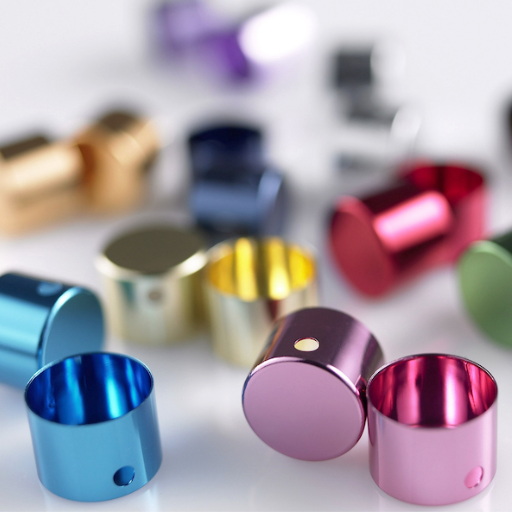
Anodizing builds a stable aluminum oxide barrier that isolates the base metal from moisture, oxygen, and contaminants, so corrosion progresses much more slowly than on untreated aluminum.[1]
Type II offers versatile color options and good durability for general environments, while Type III is more suitable when very high wear resistance and thicker coatings are necessary.[1]
Yes, anodizing grows a layer that extends both into and above the original surface, so important dimensions may need allowances, especially for sliding fits and precision assemblies.[1]
The oxide coating is electrically insulating, so surfaces become non-conductive, but the underlying aluminum remains conductive where the coating is absent or removed.[1]
With appropriate type selection, proper sealing, and routine cleaning, anodized aluminum can maintain its appearance and corrosion resistance for many years in typical outdoor conditions.[1]


