Views: 222 Author: Rebecca Publish Time: 2026-01-30 Origin: Site
Content Menu
● What Is the Aluminum Extrusion Process?
>> Key benefits of aluminum extrusion
● Direct vs Indirect Aluminum Extrusion
>> Indirect aluminum extrusion
● Step‑by‑Step Aluminum Extrusion Process (Hot Extrusion)
>> Step 1: Prepare and preheat the extrusion die
>> Step 2: Cut and preheat the aluminum billet
>> Step 3: Transfer billet to the extrusion press
>> Step 4: Apply pressure and fill the container
>> Step 5: Material flows through the die and forms the profile
>> Step 6: Quenching and controlled cooling
>> Step 7: Stretching and straightening
● Post‑Extrusion Heat Treatment and Surface Finishing
>> Heat treatment (ageing and tempering)
● Aluminum Extrusion Process vs Other Manufacturing Methods
● Key Aluminum Extrusion Alloys and Tempers
● Applications of Aluminum Extrusions in Modern Industries
>> Construction and infrastructure
>> Automotive and transportation
>> Renewable energy and electronics
● 2025–2030 Market Trends in Aluminum Extrusion
>> Market growth and demand outlook
>> Technology and process innovations
● Practical Design Tips for Aluminum Extrusion Profiles
>> Design guidelines for better extrudability
>> Tolerance and quality considerations
● How U-NEED Integrates Aluminum Extrusion With CNC, Plastics, Silicone, and Stamping
● How to Select the Right Aluminum Extrusion OEM Partner
>> Checklist for evaluating an extrusion supplier
● Call to Action: Start Your Next Aluminum Extrusion Project With U-NEED
● FAQs About the Aluminum Extrusion Process
>> 1. What is aluminum extrusion used for?
>> 2. How do I choose between direct and indirect extrusion?
>> 3. Which aluminum alloys are best for extrusion?
>> 4. What tolerances can aluminum extrusions achieve?
>> 5. How can I reduce the cost of aluminum extrusion parts?
Aluminum extrusion is a core manufacturing process for turning aluminum billets into custom profiles used in construction, automotive, electronics, consumer products, and industrial equipment. For overseas brands, wholesalers, and manufacturers working with Chinese OEM partners like U-NEED, understanding the aluminum extrusion process helps you design better parts, control cost, and secure consistent quality from prototype to mass production.

Aluminum extrusion is the process of forcing a heated aluminum billet through a shaped die to create long profiles with a constant cross‑section, such as frames, channels, tubes, and complex custom shapes. The combination of low weight, high strength, corrosion resistance, and design flexibility makes extruded aluminum a preferred choice across modern lightweight and sustainable product designs.
- High strength‑to‑weight ratio for structural and semi‑structural parts.
- Excellent corrosion resistance for outdoor and marine environments.
- Design freedom for complex, multi‑cavity or functional profiles.
- Good thermal and electrical conductivity for heat sinks and busbars.
- Easy to machine, cut, drill, tap, and finish after extrusion.
Understanding direct and indirect aluminum extrusion helps you choose the right process for your project's tolerance, surface finish, and cost targets.
In direct extrusion, the ram pushes the billet directly toward a stationary die at the opposite end of the container. The billet moves relative to the container, generating higher friction but allowing flexible production on standard presses.
Typical features of direct extrusion:
- Commonly used for solid, hollow, and semi‑hollow profiles.
- Well suited for medium to high production volumes.
- Slightly higher die wear and container friction.
- Very wide range of industry applications.
In indirect extrusion, the billet remains stationary while the die assembly moves towards it, forcing material through the die in the opposite direction. This reduces friction between billet and container and can result in better surface finish and more uniform material flow.
Typical features of indirect extrusion:
- Reduced friction, lower extrusion force, and improved die life.
- Better dimensional consistency along long profiles.
- Often used for thin‑walled and high‑precision profiles.
- Equipment is more complex and less common than direct presses.
Most industrial aluminum profiles are made by hot extrusion, where billet and die are heated to controlled temperatures for stable metal flow.
- A round steel die is designed and machined to match the target cross‑section.
- The die is preheated to around 450–500 °C to promote even metal flow and extend die life.
- After preheating, the die is installed in the extrusion press and aligned.
- A cylindrical billet is cut from an aluminum log to a suitable length for the press.
- The billet is heated in an oven to about 400–500 °C so it becomes malleable but remains solid.
- Lubricant or release agent is applied to the billet and to the ram to prevent sticking.
- The preheated billet is transferred mechanically into the container of the extrusion press.
- Centering and alignment are controlled to ensure uniform pressure on the billet.
- The container may also be preheated to maintain thermal consistency during extrusion.
- A hydraulic ram applies very high force on the billet.
- The soft billet material is pushed forward and expands to fill the container walls.
- Metal flow becomes constrained so that it is forced to exit only through the die opening.
- The billet metal contacts the die and flows through the designed opening.
- The extruded aluminum emerges with the full cross‑sectional shape and moves along the runout table.
- A puller may grip the profile and guide it to prevent bending or distortion.
- As the extrusion exits, it is cooled using a water bath, mist, or air fans to control mechanical properties.
- Proper quenching reduces residual stresses and helps achieve the specified temper.
- Cooling must be uniform across the profile to avoid warping or surface defects.
- After cooling to a safe temperature, the long profile is stretched to correct twist and bow.
- Typical stretching is in the range of a few percent of length to achieve straightness and dimensional stability.
- Profiles are visually inspected for surface defects during or after this stage.
- Straightened extrusions are cut into standard stock lengths or to specific customer lengths.
- Sawing parameters are adjusted to protect surface finish and minimize burrs.
- Off‑cuts can be collected and recycled back into billet production.
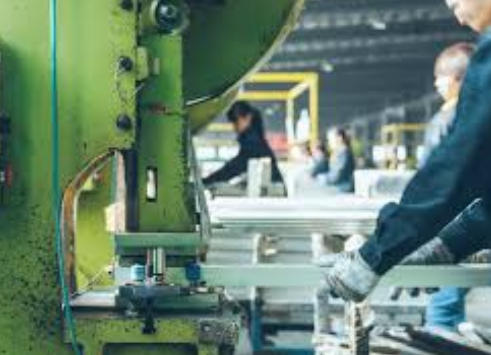
Post‑extrusion processes are essential for achieving final strength, appearance, and durability.
- Artificial ageing ovens bring extrusions to controlled temperatures over time to reach tempers such as T5 or T6.
- Heat treatment significantly increases yield strength and hardness for structural parts.
- Proper process control ensures consistent mechanical properties from batch to batch.
Common finishing methods for aluminum extrusions include:
- Anodizing: Electrochemical process that grows a controlled oxide layer for corrosion resistance, color, and improved adhesion.
- Powder coating: Thermoset or thermoplastic powder baked onto the surface for durable color and texture.
- Mechanical finishes: Brushing, polishing, bead blasting for decorative or functional surfaces.
- Electroplating or painting: Used for special appearance or additional protection requirements.
When planning OEM projects, you often need to decide between aluminum extrusion, CNC machining, die casting, or sheet fabrication.
| Aspect | Aluminum extrusion | CNC machining from solid | Die casting |
|---|---|---|---|
| Best for | Long, constant cross‑section profiles | Complex 3D shapes, tight tolerances | High‑volume net‑shape parts |
| Tooling cost | Medium (dies) | Low–medium (cutting tools, fixtures) | High (steel molds) |
| Material use | Good, can integrate multiple features in one profile | Lower, more material removed as chips | Good for near‑net shapes |
| Typical volume | Medium to very high | Prototype to medium | High volume, stable demand |
| Design flexibility | High for 2D cross‑sections | Very high for 3D geometry | Medium; complex molds increase cost |
For many structural frames, rails, and housings, using a custom extruded profile plus secondary CNC machining is more cost‑effective than fully machining from plate or bar.
Selecting the right alloy‑temper combination is critical to balancing formability, strength, corrosion resistance, and cost.
- 6000 series (such as 6060, 6061, 6063): Widely used for general structural and architectural profiles due to good extrudability and corrosion resistance.
- 7000 series (such as 7005, 7020): Higher strength for demanding structural or transportation applications, with more stringent process control.
- 1000 and 3000 series: Used where high corrosion resistance and conductivity matter, such as busbars and heat exchangers.
- Tempers like T4, T5, T6 and others define the post‑extrusion heat treatment condition and final mechanical properties.
- Higher‑strength tempers such as T6 require precise quenching and ageing cycles.
- Drawings and specifications should state both alloy and temper to avoid ambiguity.
Aluminum extrusion demand continues to grow across sectors as companies push for lighter, more efficient products.
- Used for window and door frames, curtain walls, roofing systems, and structural glazing.
- Lightweight profiles allow longer spans and innovative façade designs while reducing structural load.
- Urbanization and infrastructure investment keep construction as a leading end‑use segment.
- Car makers use extruded aluminum in crash management systems, battery enclosures, chassis parts, and body structures.
- Lightweight extrusions help improve fuel efficiency and extend electric vehicle driving range.
- Many vehicle platforms now integrate larger percentages of aluminum components.
- Solar panel frames, mounting systems, and inverter housings rely heavily on extruded profiles.
- Heat sinks for power electronics and LED lighting use extruded fins for thermal management.
- Growth in renewable energy and electrification continues to strengthen extrusion demand.
Several macro‑trends are reshaping the aluminum extrusion market and technology roadmap.
- The global aluminum extrusion market is expected to expand steadily through 2030, driven by construction, automotive, machinery, and energy applications.
- Mill‑finished extrusions hold a large share because they are cost‑effective and suitable for many structural and functional uses.
- Electric vehicles, renewable energy, and lightweight machinery are major demand drivers.
- Smarter press controls, in‑line monitoring, and automation are enhancing consistency and throughput.
- Advanced dies and lubricants reduce friction, lower energy consumption, and extend die life.
- Data‑driven process optimization supports better traceability and quality assurance for demanding programs.
Thoughtful profile design can significantly lower cost and improve performance when working with OEM partners like U-NEED.
- Keep wall thickness as uniform as possible to promote even metal flow and reduce distortion.
- Avoid extremely thin walls or sharp transitions unless they are essential.
- Use generous radii on internal and external corners to help metal flow and improve die life.
- Combine features such as channels, slots, and screw bosses into one profile instead of assembling many pieces.
- Define critical dimensions and tolerances clearly in technical drawings, and separate them from non‑critical features.
- For very tight tolerances, plan for post‑extrusion CNC machining of interfaces and functional surfaces.
- Discuss straightness, twist, and surface finish requirements early with your supplier.
For overseas buyers, the most efficient projects often combine aluminum extrusion with secondary machining and complementary materials.
At U-NEED, OEM customers typically follow a flow such as:
1. Use aluminum extrusion for structural frames, rails, enclosures, and heat‑dissipating sections.
2. Apply CNC machining for precision holes, threads, mating surfaces, and tight‑tolerance features.
3. Add plastic injection or silicone molding for handles, seals, gaskets, overmolded grips, and cosmetic housings.
4. Use metal stamping for brackets, clips, mounting plates, and reinforcing inserts.
By managing these processes under one OEM roof in China, buyers can reduce supplier count, simplify logistics, and accelerate product launches while maintaining strong cost control and consistent quality across metal and plastic parts.
A capable OEM partner can make the difference between delays and a smooth launch of your aluminum‑based product line.
- Proven experience with your target industries, such as automotive, consumer products, or industrial equipment.
- Ability to provide design for manufacturability feedback on profile geometry and tolerances.
- In‑house or closely integrated capabilities for CNC machining, surface finishing, and assembly.
- Robust quality system, including material traceability, dimensional inspection, and functional testing.
- Clear communication, fast quotation cycles, and transparent lead times for samples and production.
For brands, wholesalers, and manufacturers looking to consolidate metal and plastic sourcing, U-NEED can support aluminum extrusion in combination with high‑precision machining, plastic and silicone manufacturing, and metal stamping to deliver complete, ready‑for‑assembly components.
If you are planning a new aluminum extrusion project or looking to optimize an existing product line, partnering with an experienced OEM will reduce risk and total cost. Share your drawings, 3D models, or initial concepts with U-NEED, and our engineering team will review your aluminum profiles, recommend design improvements, and propose a complete manufacturing solution that integrates extrusion, CNC machining, plastic and silicone parts, and metal stamping for your global markets. Contact U-NEED today to discuss your project and receive a tailored quotation and technical review.
Contact us to get more information!
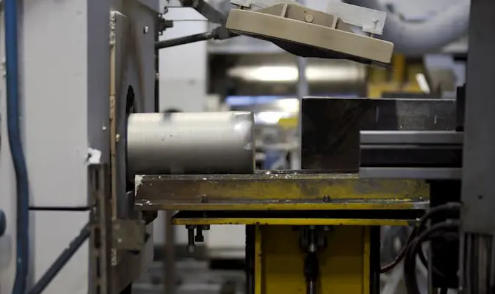
Aluminum extrusion is widely used for frames, rails, structural supports, heat sinks, enclosures, and decorative trims in construction, automotive, electronics, consumer products, and industrial equipment.
Direct extrusion is suitable for most general‑purpose profiles and offers flexible, cost‑effective production, while indirect extrusion is preferred when very uniform material flow and better surface finish are required on long or thin‑walled profiles.
Common choices include 6000 series alloys such as 6060, 6061, and 6063, which balance extrudability, strength, corrosion resistance, and cost. For demanding structural applications, 7000 series alloys are selected when higher strength is needed.
Standard extrusion tolerances are suitable for many structural and architectural applications. Tight tolerance surfaces or precision interfaces are often finished by secondary CNC machining after extrusion to achieve exact fit and function.
Costs can be reduced by keeping wall thicknesses consistent, simplifying cross‑sections, integrating multiple functions into one profile, choosing widely used alloys and finishes, and working with an OEM partner that can combine extrusion with machining, stamping, and plastic or silicone parts in a single integrated supply chain.
1. https://www.rapiddirect.com/blog/aluminum-extrusion-process/
2. https://www.gabrian.com/what-is-aluminum-extrusion-process/
3. https://waykenrm.com/blogs/aluminum-extrusion/
4. https://plextrusions.com/extrusion-blog/the-extrusion-industry-in-2025-innovations-trends-and-opportunities
5. https://www.coherentmarketinsights.com/market-insight/aluminum-extrusion-market-3017
6. https://www.jih-i.com/guide-to-aluminum-extrusion-process-and-advantages
7. https://www.hordrt.com/default/a-comprehensive-guide-to-understanding-aluminum-extrusions/
8. https://www.technavio.com/report/aluminum-extrusion-market-industry-analysis
9. https://www.rapiddirect.com/services/aluminum-extrusion/


