Views: 222 Author: Rebecca Publish Time: 2026-01-16 Origin: Site
Content Menu
● What Is CNC Machining Today?
● Why Use CNC Machining for OEM Parts?
>> High Precision and Consistency
>> Speed from Prototype to Production
>> Cost Effectiveness at Scale
>> Broad Material and Finishing Options
● How CNC Machining Works (Simple Overview)
>> 2. CAM Programming and Toolpath Generation
>> 3. Machine Setup and Fixturing
>> 4. CNC Machining Operations
>> 5. Inspection and Quality Validation
● UPTIVE Advanced Manufacturing
>> Why UPTIVE Stands Out for CNC Machining
● Other Top CNC Machining and Machine Tool Brands
>> Hardinge
>> MAG (FFG)
>> DMG Mori
>> Amada
>> Xometry
>> EMAG Group
>> Protolabs
>> Makino
● How to Choose the Best CNC Machining Company
>> Experience, Reliability, and Certifications
>> Services, Materials, and Scalability
● Common Limitations and Misconceptions About CNC Machining
● Practical Tips for Evaluating CNC Machining Suppliers
● Take the Next Step With the Right CNC Partner
● FAQs About CNC Machining Companies
>> 1. Which company is best for CNC machining?
>> 2. Is CNC machining wasteful?
>> 3. What materials cannot be CNC machined?
>> 4. When is CNC machining better than 3D printing?
>> 5. What certifications should a CNC machining company have?
CNC machining companies in 2025 are no longer just machine shops but strategic manufacturing partners that combine high precision machining, rapid prototyping, and flexible production to support demanding global supply chains. This guide ranks and reviews leading CNC machining companies worldwide, explains key selection criteria, and offers practical tips to help overseas brands, wholesalers, and manufacturers choose the right OEM partner.

CNC machining is a subtractive manufacturing process where computer controlled tools remove material from metal, plastic, or composite stock to create highly precise parts directly from CAD data. Modern CNC machining integrates multi axis milling, turning, grinding, and automation to deliver complex geometries with tight tolerances for aerospace, automotive, medical, electronics, and industrial applications.
Key characteristics of modern CNC machining include:
- CAD and CAM driven workflows using programmable codes for repeatable accuracy.
- Multi axis equipment, from 3 axis to 5 axis and Swiss turning, for complex features and undercuts.
- Wide material coverage, including aluminum, stainless steel, titanium, tool steels, brass, engineering plastics, and composites.
For OEM brands and manufacturers, CNC machining is a strategic way to transform designs into reliable, production ready components. Compared with purely manual or low precision methods, it offers a powerful balance of accuracy, flexibility, and total cost of ownership.
Many aerospace, automotive, and medical applications demand tight tolerances, which are routinely achievable with quality CNC setups. Automated code execution reduces operator variation across batches and helps maintain dimensional stability from prototype through full production.
CNC prototyping makes it possible to validate form, fit, and function in days instead of weeks. Once a design is proven, the same programs and process knowledge can be applied to low, medium, and high volume production, shortening the overall product development cycle.
Large, simple plates, brackets, and linear parts are often more economical via CNC machining compared with tooling intensive processes, especially at low to medium volumes. Early CNC prototypes also help detect design flaws before mass production, reducing rework and scrap.
Optimized toolpaths generated from CAD models minimize unnecessary cuts and off cuts, lowering scrap rates and improving material utilization. This can support both cost reduction and sustainability goals across the supply chain.
CNC machining supports a wide range of metals and plastics and can be combined with surface treatments such as bead blasting, polishing, coating, painting, and specialized finishes. This makes it suitable for both functional engineering parts and visible, cosmetic components.
Although CNC machining involves advanced engineering, the basic workflow is straightforward for OEM buyers.
Engineers create a 3D CAD model and define specifications such as tolerances, surface finishes, materials, and inspection requirements. Clear engineering drawings and data sets help ensure that the machining company understands the functional intent of each feature.
CAM software converts the CAD model into programs that specify tool movements, spindle speeds, feed rates, and auxiliary actions. These programs tell the machines how to machine each feature, which tools to use, and in which sequence.
Technicians set up workholding, tools, and offsets to ensure the workpiece is rigidly clamped and aligned for precise machining. Good fixturing and setup practices are critical for achieving consistent tolerances across multiple parts.
Operations such as milling, turning, drilling, tapping, and grinding are executed automatically following the programmed toolpaths. Multi axis machines can access complex surfaces and geometries in fewer setups, which improves accuracy and reduces cycle time.
Parts are inspected with gauges, measuring tools, and coordinate measuring machines to confirm dimensional and surface requirements. Inspection data can be recorded and analyzed to support traceability and continuous improvement.
UPTIVE Advanced Manufacturing is positioned as a full stack advanced manufacturing partner that combines CNC machining, 3D printing, sheet metal fabrication, and injection molding. This makes it suitable for customers who want a single vendor to handle both prototyping and production.
- Locations across the United States and Mexico with strong coverage for North American buyers.
- Support from early prototyping to low, medium, and high volume production.
- Capabilities spanning CNC milling, CNC turning, CNC prototyping, additive manufacturing, sheet metal fabrication, injection tooling and molding, and post processing.
- Multi axis milling from 3 axis to 5 axis and 2 to 8 axis turning including Swiss turning for complex features.
- Ability to machine metals and plastics ranging from Teflon and engineering polymers to titanium and composite materials.
- Post processing options such as bead blasting, polishing, smoothing, painting, specialized coatings, and hardware installation for production ready parts.
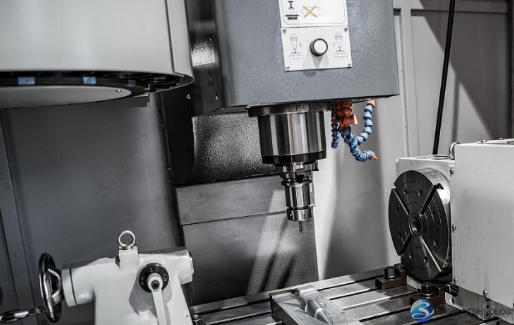
These companies are widely recognized for their CNC machine tools or comprehensive machining services, making them important benchmarks when comparing potential partners.
Haas Automation manufactures vertical and horizontal machining centers, CNC lathes, rotary tables, and 5 axis machines that are popular for cost effective production. Its equipment is used in education, job shops, and OEM environments around the world.
Capabilities include parts production, tooling, workholding, and 5 axis solutions supported by a global service and support network.
Hardinge provides advanced metal cutting solutions and workholding for industries such as aerospace, automotive, medical, and energy. Its product line includes CNC lathes, mills, grinders, and a broad portfolio of collets, chucks, and fixtures.
The company also offers services such as feasibility studies, CNC programming support, technical assistance, and training.
MAG, part of the Fair Friend Group, supplies machine tools and production systems for milling, honing, and automated machining cells. It focuses on turnkey systems where machine tools, fixtures, and automation are delivered as a complete solution.
Customers use MAG solutions to build high throughput lines for automotive and industrial components.
DMG Mori is a global leader in high precision cutting machine tools, including CNC lathes, milling machines, and multi tasking centers. Its machines are widely used in aerospace, automotive, medical, and tool and mold applications.
The company supports customers through installation, maintenance, training, and digital services that enhance machine utilization.
Amada focuses on cutting and fabrication equipment for sheet metal, including band saws, structural steel machines, grinding machines, and fabrication systems. It also supplies tooling and industrial fluids such as hydraulic oil and cutting oil.
This combination allows customers to build integrated sheet metal processing lines from cutting to finishing.
Mazak designs and manufactures multi tasking machines, 5 axis machining centers, turning centers, and laser cutting systems. Its portfolio supports a wide range of parts machining processes, from simple turned components to complex multi surface parts.
Mazak also provides programming and setup support, production planning assistance, and tool management solutions.
Okuma delivers lathes, machining centers, multitasking machines, and grinders, combined with its proprietary CNC control systems. The company offers 5 axis machining centers and automation packages aimed at smart, connected manufacturing environments.
Its solutions serve aerospace, automotive, medical, and energy customers that require stable, long term production.
Xometry operates an online marketplace that connects customers to a distributed network of CNC machining shops and other manufacturing providers. Users can upload CAD files, receive instant quotes, and order parts in various materials and quantities.
Beyond CNC machining, Xometry supports laser cutting, sheet metal fabrication, injection molding, and urethane casting, covering the full product life cycle from design to production.
EMAG designs machine tools for turning, grinding, gear cutting, and machining centers with a strong focus on the automotive, aerospace, and energy sectors. Its equipment supports processes from shaft machining to gear production and laser welding.
This specialization makes EMAG an important partner for drivetrain and powertrain components.
Protolabs offers rapid manufacturing services for low volume, custom parts via CNC machining, 3D printing, sheet metal fabrication, and injection molding. It is widely used for prototypes and short run production during product development.
Its digital ordering platform and standardized processes help achieve quick turnaround times for both plastic and metal parts.
Makino manufactures premium CNC machines and provides engineering services to address small part machining challenges and high precision applications. Its machine range includes horizontal and vertical machining centers, 4 axis and 5 axis machines, and graphite machining systems.
Makino also supports customers with process development, training, and service throughout the equipment lifecycle.
Selecting the right CNC machining partner is a decision that affects quality, lead time, and total cost for OEM projects. A structured approach makes it easier to compare suppliers across regions and technologies.
A credible CNC machining company should combine experienced engineers, robust equipment, and formal quality systems. When evaluating a supplier, consider industry experience, reference projects, and how long the company has supported similar applications.
Recognized certifications such as ISO 9001 and AS9100 for aerospace or ISO 13485 for medical indicate mature quality management systems. Customer feedback, case studies, and references are helpful indicators of real world reliability.
An ideal partner supports the full product lifecycle, from prototyping to mass production, across the materials you use. This includes CNC milling, turning, prototyping, finishing, and, where needed, sheet metal, plastic molding, or assembly.
Check that the supplier can process your preferred materials and can scale from small pilot batches to larger orders without compromising quality or lead times. This flexibility is especially important for growing brands and new product launches.
Lowest unit price rarely equals best value for OEM programs. Consider the relationship between cost, quality, and risk by reviewing scrap rates, potential returns, and warranty exposure.
Engineering support that reduces design mistakes and speeds time to market adds value beyond the initial quote. Reliable logistics, clear documentation, and responsive communication also contribute to total cost and long term performance.
Even though CNC machining is versatile, not every material or geometry is ideal for this process.
Certain hardened steels, exotic titanium alloys, and highly abrasive materials can be difficult or uneconomical to machine. In these cases, special tooling, alternative processes, or design changes may be required.
CNC machining is generally less wasteful than many manual methods, but it still produces chips and scrap that must be handled responsibly. For very high volume, simple plastic parts, injection molding often provides a lower unit cost once tooling has been amortized, while CNC machining remains strong for flexible, lower volume production.
When shortlisting CNC machining companies for OEM projects, a clear checklist helps avoid costly mistakes and keeps comparisons objective.
Use this simple seven step checklist:
1. Clarify requirements
Define volumes, materials, tolerances, finishes, and any critical features that affect performance or safety.
2. Check technical fit
Confirm the supplier's equipment list, maximum part size, tolerance capabilities, and inspection tools to ensure they match your needs.
3. Review quality systems
Ask about certifications, process controls, inspection plans, and documentation practices, including how non conformities are handled.
4. Request manufacturability feedback
A strong partner will proactively suggest design optimizations that improve machinability, reduce cycle time, and lower cost.
5. Evaluate communication and response time
Fast, clear responses to requests for quotation and engineering questions are essential for smooth project execution.
6. Assess scalability and lead time
Verify typical lead times for prototypes, small batches, and larger orders, and ask how the supplier manages priority changes.
7. Start with a pilot project
Use a trial order to validate dimensional accuracy, surface finish, packaging, and logistics performance before committing to larger volumes.
Choosing the right CNC machining company is a key step in securing stable quality, reliable lead times, and competitive costs for your products. Whether you are a brand owner, wholesaler, or manufacturer, partnering with an experienced OEM supplier for precision mechanical parts, plastic components, silicone products, or metal stamped parts can significantly strengthen your supply chain. If you are ready to turn your CAD designs into high quality production parts and build a long term manufacturing partnership, contact our team today to discuss your project requirements and request a customized CNC machining solution.
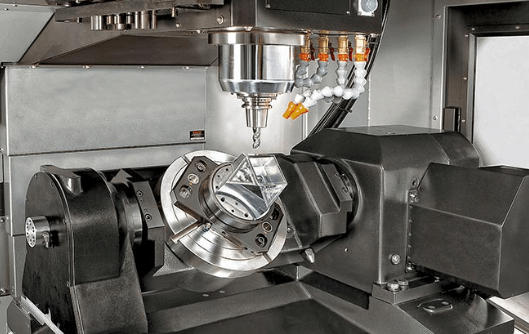
The best CNC machining company is the one that aligns with your industry, tolerance requirements, volumes, and materials while offering reliable quality, responsive support, and competitive total cost. Different companies specialize in different sectors, so the most suitable choice depends on your specific project needs and expectations.
CNC machining is generally less wasteful than many manual methods because it uses optimized toolpaths and programmable processes to remove only the material that is needed. However, chips and off cuts are still produced and should be recycled or disposed of properly according to environmental and regulatory requirements.
Most common engineering metals and plastics can be CNC machined, including aluminum, stainless steel, brass, and many engineering polymers. Very hard, abrasive, or heat sensitive materials, such as some hardened steels, special titanium alloys, and exotic metal composites, can be difficult or uneconomical to machine and may require alternative processes or specialized equipment.
CNC machining is typically the better choice when you need tight tolerances, high structural strength, excellent surface finishes, or when working with metals and engineering plastics at low to medium volume. It is also advantageous for parts that must match established material specifications, such as certain aerospace and automotive components.
Commonly requested certifications include ISO 9001 for general quality management and AS9100 for aerospace applications. For medical devices, ISO 13485 is often required. Depending on your industry, you may also need environmental, safety, or sector specific approvals that demonstrate robust process control and compliance.
1. https://uptivemfg.com/best-cnc-machining-companies/
2. https://uptivemfg.com/solutions/cnc-machining/
3. https://cncmachines.com/best-cnc-machine-brand-2025
4. https://quickparts.com/best-online-cnc-machining-services-usa/
5. https://www.yumeihardware.com/blog/best-10-cnc-machining-companies-in-the-world/
6. https://www.partmfg.com/cnc-machining-companies/
7. https://tirapid.com/cnc-machining-china/


