Views: 222 Author: Rebecca Publish Time: 2026-01-15 Origin: Site
Content Menu
● What Is Wall Thickness in 3D Printing
● Minimum, Recommended, and Maximum Wall Thickness
● Recommended Wall Thickness by Material
>> Typical Wall Thickness Recommendations
● How to Choose Wall Thickness by Application
>> Visual Models and Prototypes
>> Functional and Mechanical Parts
>> Heavy Duty Industrial Parts
● Design Factors That Influence Wall Thickness
>> Support Structures and Overhangs
>> Adjacent Walls and Geometry Consistency
● Process Specific Wall Thickness Tips
● Cura Wall Thickness and Shell Settings
● Common Wall Thickness Problems and Solutions
>> Cracks and Layer Separation
● Practical Workflow to Select Wall Thickness
● Professional Support for Advanced Parts
● FAQs: 3D Printing Wall Thickness
>> 1. What is a good wall thickness for PLA
>> 2. Can I print walls thinner than 0.8 mm
>> 3. How does infill affect the wall thickness I need
>> 4. Why do my thick parts warp more than thin parts
>> 5. How should I set wall thickness in Cura with a 0.4 mm nozzle
Choosing the right wall thickness is one of the most important decisions in 3D printing if you care about part strength, accuracy, surface quality, and cost control. When the walls are too thin, parts crack, warp, or break; when they are too thick, you waste material, time, and may even introduce internal stresses that cause failures.
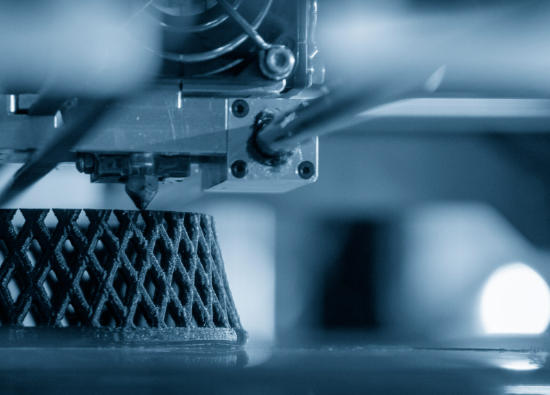
In 3D printing, wall thickness, also called shell thickness, is the distance between the outer surface of a part and its inner surface or hollow region.
For FDM parts, wall thickness is usually defined by the number of perimeters, or wall lines, multiplied by the nozzle diameter.
For resin and powder based processes, wall thickness is a designed geometry value that must exceed the technology's minimum printable thickness to avoid fragile walls.
Most slicing software such as Cura lets you set wall thickness in millimeters or by wall line count, and a common default is 1.2 mm, which equals 3 walls with a 0.4 mm nozzle.
Optimizing wall thickness directly impacts print reliability, mechanical performance, and cost.
- Strength and durability: Too thin walls can crack during printing, post processing, or in use, while properly sized walls help parts resist bending, impact, and fatigue.
- Dimensional stability: Uneven or excessive thickness can cause internal stress, warping, and curling, especially in materials like ABS and Nylon.
- Material and time efficiency: Correct wall thickness reduces material usage and print time while preserving performance, which is critical in production environments.
Most reliable design rules combine a technology level rule with a nozzle or feature level rule.
For FDM:
- Minimum wall thickness is typically about 2 times the nozzle diameter, for example 0.8 mm with a 0.4 mm nozzle.
- A practical recommended range for functional parts is 1.2–3.0 mm, depending on loads and size.
For resin printers such as SLA and DLP:
- Very fine details can go down to about 0.4–0.5 mm, but 0.8–1.5 mm is safer for functional features.
For SLS Nylon:
- Vertical walls around 0.7–1.0 mm are typical minimum values, while thicker walls are advisable for unsupported or load bearing features.
Walls thicker than about 4–5 mm often bring diminishing strength gains while increasing the risk of internal stresses, especially in FDM.
| Material / Type | Typical Minimum (mm) | Practical Recommended Range (mm) | Notes |
|---|---|---|---|
| PLA | 0.8–1.0 | 1.5–3.0 | Good stiffness and low warping, suitable for general prototypes. |
| ABS | 0.8–1.0 | 1.5–3.0 | Needs thicker, more uniform walls to reduce warping and cracking. |
| PETG | 1.0 | 1.5–3.0 | Tough and slightly flexible, good for functional parts. |
| Nylon PA | 0.8–1.0 | 1.5–3.0 | Strong but warp prone, avoid sudden jumps in wall thickness. |
| TPU flexible | 1.5–2.0 | 2.0–4.0 | Needs thicker walls to maintain shape while staying flexible. |
| Standard resin | 0.5–0.8 | 1.0–2.0 | Very fine features possible, avoid ultra thin large panels. |
| Engineering resin | 0.8–1.0 | 1.5–3.0 | Designed for functional components, follow supplier datasheet. |
| SLS Nylon | 0.7–1.0 | 1.2–3.0 | Good for production, thin but continuous walls are feasible. |
| Metals DMLS or SLM | 0.8–1.0 | 1.5–3.0+ | Thicker walls may be needed for heavy loads or machining allowance. |
These values are general guidelines. Always check the machine vendor's and material supplier's design rules for final validation.
For cosmetic models and early prototypes, lower wall thickness can save significant time and material.
- Use walls around 1.0–1.5 mm for PLA or resin when the part has no structural function.
- Set infill low, for example 5–15 percent, and let the shell define appearance, which is often enough for trade shows and fit checks.
Functional parts need thicker, more consistent walls and correct infill to withstand loads.
- Start with 1.5–3.0 mm walls for PLA, ABS, PETG, or Nylon in lightly loaded applications.
- For brackets, housings, and fixtures, consider 3.0–4.0 mm walls and higher infill, such as 30–50 percent or more, when loads or impacts are significant.
In industrial jigs, clamps, and production tooling, wall thickness must be matched to both load and material.
- A common range is 3.0–5.0 mm or higher for walls with infill above 50 percent or even solid where failure is unacceptable.
- When wall thickness exceeds about 5 mm, consider switching to a stronger material or adding ribs instead of making uniform blocks, to avoid stress and print failures.
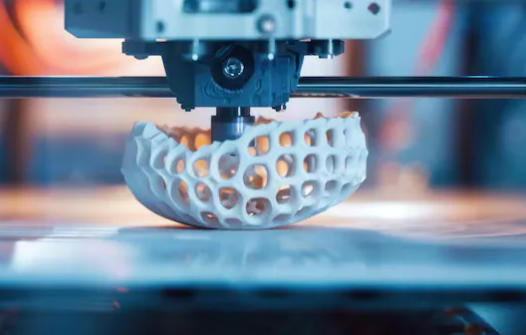
When you scale models, wall thickness does not always scale logically.
- Scaling a model down can reduce wall thickness below the minimum printable value, causing holes, missing walls, or fragile features.
- For small parts, manually re thicken thin features to meet minimums. For large parts, you may reduce thickness or hollow internal regions to avoid excess weight.
Overhangs and thin features often rely on supports to print successfully.
- Thin, unsupported walls are more likely to wobble, warp, or break during printing. Giving them slightly higher thickness, for example from 0.8 to 1.2 mm, can greatly improve stability.
- For long, tall, thin walls, consider adding ribs or partial supports and orienting the part so that the wall height, not width, is printed in the strongest axis.
Sudden transitions from thin to thick regions create thermal stress concentration, especially in FDM thermoplastics.
- Keep neighboring wall segments within about 60–70 percent of each other's thickness to reduce stress and cracking.
- Use fillets and internal radii instead of sharp corners so stress is distributed more evenly across the geometry.
FDM wall thickness should always be related to nozzle diameter and layer height.
- Use wall thickness equal to 2–4 times nozzle diameter, for example 0.8–1.6 mm for a 0.4 mm nozzle, as a baseline.
- Avoid values that are not a multiple of nozzle size, as this leads to irregular extrusion paths and weaker walls.
Resin printers can produce very fine walls, but thin, large panels are fragile.
- For small, detailed parts, 0.4–0.8 mm walls are possible. For functional parts, 1.0–2.0 mm is safer.
- Pay attention to drain holes in hollow parts to prevent trapped resin and pressure that may crack thin walls.
Powder based technologies require sufficient wall thickness to ensure full sintering or melting.
- SLS Nylon vertical walls can be as thin as 0.7–1.0 mm, while more demanding geometries should be thicker for reliability.
- Metal processes such as DMLS usually require 1–2 mm minimum walls, with thicker sections where loads or machining are involved.
In Cura, shell behavior is controlled mainly by Wall Thickness and Wall Line Count.
Follow these basic configuration steps in Cura:
1. Open your model and switch to Custom mode to access advanced settings.
2. Under Shell, set either:
- Wall Thickness, for example 1.2 mm for a 0.4 mm nozzle, or
- Wall Line Count, for example 3 for three perimeters.
3. Keep wall thickness a multiple of nozzle diameter so each wall line is fully extruded and adheres properly.
4. Adjust Top or Bottom Thickness so it equals at least 3–5 layer heights for a solid skin, for example 0.6–1.0 mm with 0.2 mm layers.
For many everyday prints, a 1.2 mm wall thickness and 20–30 percent infill offer a good balance between strength and speed.
Warping occurs when layers cool at different rates and corners pull away from the build plate.
- Common causes include excessive or uneven wall thickness, poor bed adhesion, and high shrink materials like ABS.
- Helpful measures include using brims or rafts, maintaining an enclosure, choosing consistent wall thickness, and avoiding unnecessarily massive, solid sections.
Curling is often visible at edges or thin tips that cool too quickly.
- Reduce cooling fan speed for materials prone to curling, and avoid ultra thin, unsupported edges at the top of parts.
- Add small chamfers or radii at edges to distribute heat and stress more evenly.
Cracks along layer lines often appear where thick sections meet thin ones.
- Design walls with gradual transitions or internal radii instead of abrupt thickness jumps.
- For ABS and Nylon, increase printing temperature and keep the build chamber warm to reduce stress and improve interlayer bonding.
Use the following simple workflow to choose an optimal wall thickness for your project.
1. Define the part purpose
- Visual only: 1.0–1.5 mm walls and low infill.
- Functional or load bearing: 1.5–4.0 mm walls and moderate to high infill.
2. Check printer technology and material
- Confirm minimum wall thickness from manufacturer tables for your printer and filament or resin.
- Ensure all designed walls stay above minimum with a safety margin, for example plus 0.2–0.5 mm.
3. Match walls to nozzle settings
- Choose wall thickness as a multiple of nozzle diameter, such as 0.8, 1.2, or 1.6 mm for a 0.4 mm nozzle.
- Verify that Cura's wall settings match your 3D model design where thickness is critical.
4. Review geometry and transitions
- Avoid sudden changes from very thin to very thick sections and use fillets and internal radii.
- Reinforce long thin walls with ribs instead of simply thickening them everywhere.
5. Prototype and adjust
- Print small test coupons with the same wall settings and infill to validate strength before full production.
- Refine wall thickness based on actual performance and feedback from real use.
When a project moves beyond simple prototypes, working with a professional manufacturing partner helps avoid failure and costly rework.
A full service provider can evaluate wall thickness together with tolerances, machining allowances, inserts, and post processing steps. For assemblies that combine 3D printed, CNC machined, plastic, silicone, and stamped metal parts, expert design for manufacturing feedback ensures that each process has appropriate wall thickness and feature sizes.
A practical wall thickness for PLA is 1.5–3.0 mm for most functional parts. For visual models and prototypes that are not heavily loaded, 1.0–1.5 mm is usually sufficient.
Some printers and materials can handle 0.4–0.6 mm walls for very small features, but reliability drops sharply and such parts are easy to break. For production, 0.8 mm is a safer minimum.
Higher infill increases internal support and can allow slightly thinner walls in some cases, but shell thickness still carries a large portion of the load. For most applications, 1.2–2.0 mm walls are recommended even with relatively high infill densities.
Very thick walls retain more heat and cool unevenly, creating internal stresses that cause warping or cracking, particularly in ABS and Nylon. Consistent wall thickness and controlled cooling, combined with suitable build plate adhesion and enclosure, help minimize this effect.
With a 0.4 mm nozzle, use wall thickness values like 0.8, 1.2, or 1.6 mm, which correspond to 2, 3, or 4 perimeters. Combine these settings with adequate top and bottom thickness and appropriate infill for your specific application.
1. https://www.rapiddirect.com/blog/3d-printing-wall-thickness/
2. https://formlabs.com/blog/minimum-wall-thickness-3d-printing/
3. https://www.raise3d.com/blog/3d-printing-wall-thickness/
4. https://sinterit.com/3d-printing-guide/design-for-3d-printing/wall-thickness-3d-print/
5. https://www.unionfab.com/blog/2024/09/3d-printing-wall-thickness
6. https://jlc3dp.com/help/article/3D-Printing-Design-Guideline
7. https://amfg.ai/2018/07/23/tpu-3d-printing-guide/
8. https://mandarin3d.com/blog/wall-thickness-guide-minimum-and-optimal-measurements
9. https://bcn3d.com/bcn3d-x-flowalistik-slicing-guide-3-wall-thickness/
10. https://www.hubs.com/knowledge-base/pla-vs-abs-whats-difference/
11. https://www.unionfab.com/blog/2025/02/nylon-3d-printing/


