Views: 222 Author: Loretta Publish Time: 2025-12-21 Origin: Site
Content Menu
● What Is CNC Machining in China?
● Why Overseas Buyers Choose CNC Machining China
● Core CNC Machining Services in China
>> Rapid Prototyping and Low-Volume Production
>> Value-Added and Multi-Process Services
● Common Materials for CNC Machining China
● Representative CNC Machining China Companies (2025)
>> Major CNC & Manufacturing Providers in China
● How to Select a CNC Machining China Partner
>> Technical and Quality Evaluation
>> Commercial and Supply Chain Factors
● Steps to Launch a CNC Machining Project in China
>> From RFQ to Approved Samples
>> From Samples to Stable Production
● Design Tips for Better CNC Machining Results
>> Optimize for Manufacturability
>> Coordinate Surface Finishing Early
● Start Your CNC Machining China Project
>> Q1. Are CNC machining China suppliers suitable for high-precision parts?
>> Q2. Which industries commonly use CNC machining services in China?
>> Q3. How quickly can I receive CNC prototypes from China?
>> Q4. What information should be included in an RFQ to a Chinese CNC supplier?
>> Q5. Can one Chinese supplier handle machining and other processes like molding or casting?
CNC machining in China has become a global hub for precision metal and plastic components used in aerospace, automotive, medical, electronics, and industrial sectors. For overseas OEM buyers, brands, and wholesalers, choosing the right CNC machining partner in China directly affects product quality, lead time, and project risk.[1]

CNC machining in China refers to computer-controlled milling, turning, drilling, and grinding processes used to produce parts with tight tolerances and consistent quality. Many Chinese factories combine 3-axis, 4-axis, and 5-axis CNC machines with secondary operations such as surface finishing, assembly, and inspection to offer complete manufacturing solutions.[1][2]
Compared with many Western markets, Chinese CNC manufacturers typically provide shorter lead times and lower machining costs while still following international quality standards and ISO-based management systems. This balance of speed, price, and capability keeps China attractive for rapid prototyping and low-volume production worldwide.[2][1]
For overseas brands, importers, and manufacturers, CNC machining China offers several practical advantages that are especially valuable for projects with frequent design changes or tight budgets. These advantages help companies improve competitiveness without compromising engineering requirements.[1]
- Cost efficiency: Lower overall labor and operating costs in China reduce part prices while maintaining required tolerances and finishes.[1][2]
- Broad process coverage: Many factories offer CNC machining, injection molding, sheet metal fabrication, die casting, and 3D printing within one network.[1]
- Rapid prototyping and small batches: Specialized suppliers deliver prototypes and low-volume runs with lead times often around 7-10 days for simple projects.[1]
- Export experience: Leading Chinese manufacturers handle export packing, documentation, and logistics for global customers in North America, Europe, and Asia.[1]
When managed correctly, CNC machining China becomes a strategic extension of local supply chains, combining domestic engineering with offshore production capacity.[1]
Chinese CNC manufacturers provide a wide range of machining and related services that support both prototypes and mass production. Understanding these services makes it easier to match suppliers to your project needs.[1]
Most established factories in China operate multiple types of CNC equipment to support different geometries and volumes. Common capabilities include:[2][1]
- 3-axis, 4-axis, and 5-axis CNC milling for housings, brackets, precision plates, and complex surfaces
- CNC turning and mill-turn centers for shafts, bushings, rings, and rotational parts with controlled concentricity
- Swiss-type CNC turning for small, high-precision components in electronics, medical, and instrumentation fields[2]
Advanced workshops are able to hold very tight tolerances on critical features, depending on material, part size, and inspection requirements.[1]
Many CNC machining China providers focus on rapid prototyping and low-volume manufacturing to support product development cycles. Typical service offerings include:[1]
- Functional prototypes made directly from 3D CAD files in metals or plastics
- Bridge production runs that connect prototype stages to large-scale manufacturing
- Mixed workflows that combine CNC machining, vacuum casting, and additive manufacturing for faster validation
These services are ideal for startups, design consultancies, and OEM engineering teams that require fast iterations with production-grade materials.[1]
To help buyers reduce supplier numbers, many factories offer additional processes and downstream services alongside CNC machining. These often include:[1]
- Injection molding, die casting, and sheet metal fabrication in combination with CNC
- Surface treatments such as anodizing, painting, powder coating, plating, and bead blasting
- Assembly, labeling, and export-ready packaging for finished components
This integrated approach allows customers to receive ready-to-install parts instead of coordinating multiple vendors for machining and finishing.[1]
Chinese CNC suppliers machine a wide variety of metals and plastics, enabling engineers to balance performance, cost, and manufacturability. Choosing the correct material at the beginning of a project is essential for long-term reliability.[2][1]
- Aluminum alloys (e.g., 6061, 7075): Lightweight, corrosion-resistant, and easy to machine, widely used for structural parts and housings.[2][1]
- Stainless steels (e.g., 304, 316, 316L): Suitable for medical, food equipment, and marine environments where corrosion resistance is critical.[3][1]
- Carbon and alloy steels: Applied in automotive, machinery, and industrial tooling that demand strength and wear resistance.
- Copper, brass, and bronze: Selected for electrical conductivity, heat transfer, and decorative components.
- Titanium alloys: Used in aerospace and medical parts; some Chinese factories specialize in stable titanium machining for complex geometries.[4][1]
- ABS, PC, PMMA: Common for prototype housings, covers, and optical components where aesthetics and dimensional stability matter.[1]
- Nylon, POM, PEEK: Preferred for high-performance engineering applications such as gears, rollers, and wear parts.
- Specialty plastics and composites: Chosen when chemical resistance, low friction, or specific regulatory compliance is needed.
Working with suppliers experienced in both metals and plastics simplifies projects that combine structural and cosmetic components in one assembly.[1]
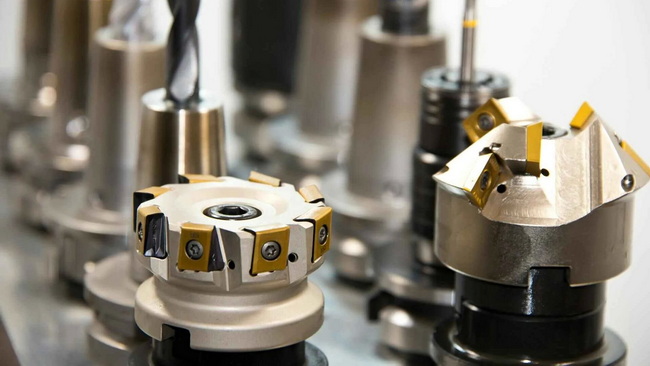
A number of recognized CNC machining and rapid manufacturing companies serve international customers from key industrial regions in China. The table below summarizes some typical providers and their focus areas, with U-Need Precision Machinery Co., Ltd. highlighted first as a one-stop OEM partner.
# | Location | Company name | Approx. employees | Main specialties | Website |
1 | Dongguan, Guangdong | U-Need Precision Machinery Co., Ltd. | 51-200 | High-precision CNC machined parts, plastic products, silicone products, metal stamping, OEM services for overseas brands and wholesalers | https://www.uneedprecisionmachine.com |
2 | Shenzhen, Guangdong | RapidDirect Co., Ltd | 201-500 | CNC machining, injection molding, sheet metal, 3D printing, custom manufacturing | https://rapiddirect.com |
3 | Shenzhen, Guangdong | WayKen Rapid Manufacturing | 51-200 | Rapid prototyping, CNC machining, 5-axis machining, injection molding, low-volume production | https://www.waykenrm.com |
4 | Zhongshan, Guangdong | TiRapid Machining | 51-200 | CNC machining, rapid prototypes, automotive parts, 5-axis CNC, surface finishing | https://tirapid.com |
5 | Dongguan, Guangdong | Gensun Precision Machining Co., Ltd | 51-200 | CNC machining, turning, milling, metal fabrication, precision casting | http://www.china-machining.com |
6 | Dongguan, Guangdong | Runsom Precision Co., Ltd | 11-50 | CNC milling, turning, injection molding, die casting, precision custom parts | https://www.runsom.com |
7 | Zhongshan, Guangdong | 3E Rapid Prototyping Limited (3ERP) | 11-50 | Rapid prototyping, CNC milling & turning, rapid tooling, die casting | https://www.3erp.com |
8 | Zhongshan, Guangdong | Nice Rapid | 51-200 | CNC machining, rapid tooling, injection molding, 3D printing, silicone molding | https://www.nicerapid.com |
9 | Shenzhen / Dongguan | HLH Prototypes Co Ltd | 201-500 | CNC machining, prototyping, SLA/SLS, vacuum casting, injection molding | https://www.hlhprototypes.com |
10 | Shenzhen, Guangdong | KAIAO Rapid Manufacturing Co., Ltd | 51-200 | Rapid CNC machining, vacuum casting, 3D printing, sheet metal, die casting | http://www.kaiao-rprt.com |
11 | Hangzhou, Zhejiang | PCBWay | 501-1,000 | PCB prototyping, PCB assembly, CNC machining, 3D printing | https://www.pcbway.com |
These examples show the diversity of the CNC machining China market, from one-stop OEM partners like U-Need to digital platforms and specialized rapid prototyping firms.[1]
Selecting a suitable CNC machining partner in China requires structured evaluation of technical, quality, and commercial aspects. A clear checklist helps reduce risk and ensures stable cooperation.[1]
Key points to review include:
- Equipment and capacity: Type and quantity of milling, turning, and multi-axis machines, plus availability of finishing and inspection equipment.[2][1]
- Material expertise: Proven experience machining your chosen metals and plastics, including any special alloys or high-performance polymers.[1]
- Quality management: ISO 9001 or similar certification, documented procedures, and the use of CMM, optical measuring equipment, or other precision inspection tools.[1]
Beyond capability, overseas OEM buyers should also look at several commercial aspects. Important considerations include:[1]
- Lead time and flexibility for prototypes and production orders
- Transparency of pricing, including machining, material, finishing, and logistics
- Communication quality with English-speaking engineers or project managers
- Experience with export packing, customs documentation, and international shipping routes
A repeatable workflow simplifies cooperation with Chinese CNC suppliers from quotation to mass production.[1]
1. Prepare detailed 3D and 2D drawings with materials, quantities, tolerances, and surface finish requirements.
2. Send RFQs to a short list of qualified suppliers and compare quotations on cost, lead time, and inspection scope.
3. Place a trial or prototype order to evaluate dimensional accuracy, surface quality, packaging, and delivery performance.
4. Approve samples based on your internal testing and agree on inspection standards for future batches.
Once samples meet expectations, buyers can gradually ramp up volumes while monitoring quality and communication. Documented change control, non-conformance reporting, and regular feedback help maintain stable production over the long term.[1]
Good design practice makes CNC machining in China more efficient and cost-effective without sacrificing functionality.[1]
- Avoid extremely deep narrow pockets and very thin walls where possible.
- Use standard hole sizes and thread specifications to reduce special tooling.
- Apply tight tolerances only where essential to reduce machining time and inspection cost.
Discuss surface finishing requirements such as anodizing, polishing, or coating at the quotation stage. This allows the supplier to plan fixtures, masking, and processing steps that maintain critical dimensions after finishing.
CNC machining China offers a combination of precision, speed, and competitive cost that continues to attract overseas brands, wholesalers, and OEM manufacturers. By using clear drawings, structured supplier selection, and disciplined quality control, buyers can build a reliable and scalable supply chain for both prototypes and mass-produced parts.[1]
If you are planning new metal or plastic components, now is the right time to send your RFQ, discuss DFM with a capable Chinese CNC supplier, and move from design to finished parts with confidence. Clearly define your part specifications and target markets, then reach out to U-Need Precision Machinery Co., Ltd. or other qualified CNC machining China partners to accelerate your next product launch and strengthen your global manufacturing strategy.
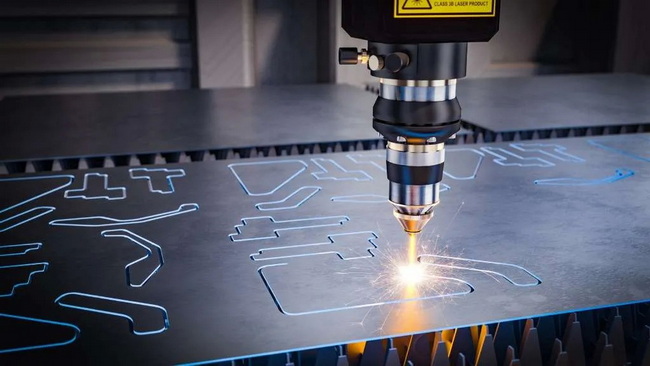
Many CNC machining China suppliers operate modern facilities with multi-axis machines, CMM inspection, and ISO-based quality systems, making them suitable for high-precision parts when drawings and requirements are clear.[2][1]
Typical industries include aerospace, automotive, medical devices, industrial machinery, consumer electronics, and robotics, all of which rely heavily on precision machined components and rapid prototyping.[1]
Lead times depend on complexity and quantity, but many rapid manufacturing providers in China can ship CNC prototypes or small batches in roughly 7-10 days, excluding international transport.[1]
A complete RFQ should contain 3D and 2D drawings, material type, quantity, tolerances, surface finish requirements, inspection level, and any special standards such as environmental or industry regulations.[1]
Yes, many integrated manufacturers in China combine CNC machining with injection molding, die casting, sheet metal fabrication, and 3D printing, allowing buyers to manage multi-process projects through a single partner.[1]
[1](https://www.china-machining.com/services/cnc-machining/)
[2](https://cncmachiningchina.com)
[3](https://www.youtube.com/watch?v=P_kCKlEAWSY)
[4](https://www.youtube.com/watch?v=CVKT49IvJz0)


