Views: 222 Author: Rebecca Publish Time: 2026-01-03 Origin: Site
Content Menu
● Key Material Properties of Onyx
>> Mechanical and Thermal Performance
>> Surface Finish, Dimensional Stability, and Chemical Resistance
● Onyx, Onyx FR, and Onyx ESD: Variants Compared
>> Onyx ESD (Electrostatic Discharge Safe)
● Compatible Markforged 3D Printers and Continuous Fiber Reinforcement
>> Markforged Printers That Use Onyx
>> Onyx with Continuous Fiber for Near‑Aluminum Strength
● Typical Applications of Markforged Onyx in Industry
>> Tooling, Jigs, and Fixtures
>> Functional Prototypes and End‑Use Parts
● Design and Printing Best Practices for Onyx
>> Design Guidelines and Wall Strategies
>> Printing Environment and Post‑Processing
● New Section – Onyx vs Traditional Engineering Plastics and Metals
>> Performance Comparison Table
● New Section – Real‑World Use Scenarios and OEM Case Concepts
● New Section – How U‑NEED Can Turn Onyx Prototypes into Production Parts
>> From Onyx Designs to CNC, Plastic, and Stamping Production
● Optimized Call to Action for OEM Buyers
● Frequently Asked Questions About Markforged Onyx
>> 1. What is Markforged Onyx made of?
>> 2. How strong is Onyx compared with ABS?
>> 3. When should I choose Onyx instead of metal?
>> 4. What are Onyx FR and Onyx ESD used for?
>> 5. Can Onyx parts be combined with CNC machining?
Markforged Onyx is a composite filament that blends a tough nylon matrix with chopped carbon fiber to create a material that is stronger, stiffer, and more heat‑resistant than standard engineering plastics like ABS. It is widely used on Markforged composite printers to produce functional prototypes, jigs and fixtures, and end‑use parts that need high strength, dimensional stability, and a professional matte black finish.[1][3][2]

Markforged Onyx is a PA6‑based nylon copolymer reinforced with chopped carbon fiber, tuned specifically for Markforged composite 3D printers. This combination delivers a high‑strength thermoplastic with excellent heat resistance, chemical resistance, and a smooth matte surface that hides print lines.[4][3][2]
Unlike standard nylon filaments, Onyx is engineered as the base matrix in Markforged's continuous fiber reinforcement system, meaning it can be printed alone or combined with long fibers such as carbon fiber, Kevlar, or fiberglass for near‑aluminum strength.[5][4]
Markforged Onyx is designed to bridge the gap between polymer 3D printing and metal machining, providing mechanical and environmental performance suitable for industrial use.[4][2]
Onyx parts are significantly stronger and stiffer than parts printed with ABS or unfilled nylon. The chopped carbon fiber increases flexural strength and stiffness, enabling lightweight parts that can withstand substantial loads and repeated use in production environments.[3][2][5]
The material also exhibits excellent thermal stability, with heat deflection temperatures that support use near hot equipment, under‑hood environments, and other elevated‑temperature conditions when properly designed.[6][3]
Onyx produces a matte black, low‑gloss surface that looks like an injection‑molded plastic, reducing or eliminating the need for post‑processing in many customer‑facing applications. The carbon‑filled nylon formulation provides dimensional stability and reduced warping compared with standard nylon, which is critical for precision fixtures, housings, and mating components.[7][6][2][5]
In addition, Onyx offers good resistance to common chemicals, oils, and many industrial fluids, making it suitable for shop‑floor tooling and parts used in demanding environments.[8][4]
Markforged offers several Onyx‑based materials tailored to different industries and regulatory requirements. Choosing the right Onyx variant ensures compliance, reliability, and safety in critical applications.[9][1]
Standard Onyx is the general‑purpose nylon‑carbon fiber composite used for most mechanical parts and functional prototypes. It delivers a strong balance of strength, stiffness, surface quality, and ease of printing for tooling, fixtures, housings, brackets, and low‑volume production parts.[1][3][4]
Onyx FR is a flame‑retardant version of Onyx that meets UL94 V‑0 requirements, making it suitable for aerospace, automotive, and transportation applications where fire safety is essential. Engineers use Onyx FR for interior components, electrical enclosures, and cable management parts that must self‑extinguish and limit flame spread.[2][1]
Onyx ESD is formulated to provide controlled surface resistivity for electrostatic dissipation in electronics manufacturing and assembly environments. Typical applications include ESD‑safe trays, fixtures, nests, and tooling used to handle PCBs, sensors, and other sensitive components without damaging them through static discharge.[9][8][2]
| Onyx variant | Core feature | Typical industries | Example applications |
|---|---|---|---|
| Onyx | High strength, stiffness, matte finish | General manufacturing, tooling | Brackets, jigs, fixtures, machine covers |
| Onyx FR | UL94 V‑0 flame retardancy | Aerospace, automotive, rail | Interior panels, cable guides, safety housings |
| Onyx ESD | Controlled electrostatic dissipation | Electronics, semiconductor | PCB handling trays, test fixtures, assembly nests |
This table helps engineers quickly match the correct Onyx material to their industry and compliance needs.[1][9]
Onyx is designed for specific Markforged composite 3D printers and can also act as the matrix for continuous fiber reinforcement.[10][4]
Onyx is available for Markforged printers such as FX20, X7, X5, X3, Mark Two, Onyx Pro, and Onyx One, depending on spool size and configuration. Each platform targets different use cases, from desktop prototyping to large‑format industrial production with high throughput.[11][3][10]
Some Onyx spool sizes (for example, 3200 cc) are only compatible with industrial systems like FX20 due to their physical size and mass, so it is important to verify compatibility before purchasing material.[12][10]
Onyx can be printed alone or reinforced with continuous carbon fiber, Kevlar, or fiberglass, placing long fibers in critical load paths inside the part. When combined with continuous carbon fiber, Onyx‑based composite parts can reach strength and stiffness comparable to aluminum, enabling metal‑replacement applications that remain lightweight and corrosion‑resistant.[5][4][2]
This architecture is ideal for highly loaded tooling, robotic end‑effectors, structural brackets, and production fixtures where traditional plastics would creep, deform, or fail prematurely.[8][4]
Markforged Onyx is used across many industries as a bridge between prototyping and production, especially where metal is over‑specified or too costly.[8][1]
Many manufacturers 3D print custom jigs, fixtures, and workholding devices in Onyx to support CNC machining, assembly, welding, and inspection processes. The material provides enough rigidity and heat resistance to survive daily shop‑floor use while avoiding the lead time and cost of machined metal fixtures.[4][8]
Onyx's matte surface and dimensional stability also make it valuable for CMM fixtures, gauge blocks, and locator nests, where repeatable positioning and minimal warping are crucial.[2][5]
Onyx is widely used for functional prototypes that must endure mechanical testing, temperature cycling, and assembly trials without failing prematurely. Because the material's surface resembles injection‑molded plastic, it is also suitable for low‑volume end‑use parts and customer‑facing assemblies when tooling investment is not justified.[7][1][8]
In sectors such as aerospace, automotive, automation, and consumer products, engineers rely on Onyx for brackets, housings, sensor mounts, and replacement parts that must balance strength, weight, and aesthetics.[3][8]
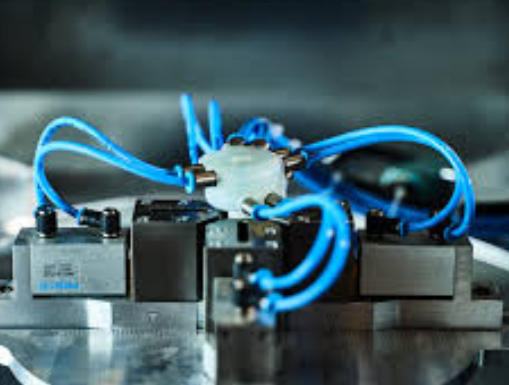
To obtain consistent results with Markforged Onyx, it is important to follow good design, preparation, and printing practices tailored to nylon‑carbon fiber composites.[5][2]
Because Onyx parts derive their stiffness from both the nylon matrix and the chopped carbon fiber, proper wall thickness, infill, and ribbing are essential. Designers should:[2][5]
- Use generous fillets and radii at stress concentrations to reduce cracking.[2]
- Orient parts so that load paths align with stronger print directions where possible.[5]
- Avoid extremely thin walls without reinforcement, or add ribs and gussets to maintain stiffness.[2]
When continuous fiber reinforcement is planned, critical load paths should be clearly defined so that fibers can be routed along the primary stress directions inside the part.[4][5]
Onyx prints best in a controlled environment with managed humidity, since nylon‑based materials can absorb moisture over time. Keeping spools dry improves surface quality, layer bonding, and dimensional accuracy, especially on tightly toleranced parts.[5][2]
Most Onyx parts require minimal post‑processing, often limited to light support removal or minor sanding thanks to the smooth matte finish. When needed, holes and critical features can be re‑machined or reamed after printing, especially when combining Onyx with CNC machining in a hybrid workflow.[6][7][4][5]
To decide when Markforged Onyx is the right choice, engineers often compare it with conventional materials like ABS, standard nylon, and aluminum.[3][2]
| Material | Relative strength & stiffness | Heat / chemical resistance | Surface finish | Typical use case |
|---|---|---|---|---|
| ABS | Baseline; lower than Onyx | Moderate heat, moderate chemicals | Semi‑gloss, visible layers | Basic prototypes, non‑critical housings |
| Standard nylon | Tough but more flexible | Good chemical, moderate heat | Smooth but more warping | Flexible components, hinges, clips |
| Onyx | 1.4× stronger and stiffer than ABS | Excellent heat and chemical resistance | Matte black, near‑molded look | Tooling, fixtures, functional prototypes, end‑use parts |
| Onyx + continuous carbon fiber | Comparable to aluminum in stiffness and strength | Very high, depends on design | Matte composite look | Metal replacement in structural parts |
This comparison highlights where Onyx and fiber‑reinforced composites can replace heavier metals or brittle plastics while maintaining performance and reducing cost.[4][2]
Many manufacturers now treat Markforged Onyx as a standard material for rapid, production‑grade parts, especially in hybrid workflows that combine 3D printing with CNC machining and stamping.[8][4]
- Automation and robotics: Onyx is used for custom grippers, end‑effectors, and sensor mounts on robots, where weight must be minimized while maintaining stiffness.[8][4]
- Electronics manufacturing: Onyx ESD supports safe handling of PCBs and chips with ESD trays, nests, and covers that protect sensitive components during assembly and testing.[9][8]
- Vehicle and aerospace interiors: Onyx FR is selected for interior brackets, covers, and cable routing components that must meet flame‑retardant standards and survive vibration.[1][2]
For overseas OEM buyers, using Onyx as part of a design‑for‑manufacture strategy allows rapid validation of form, fit, and function before committing to metal tooling or mass production.[1][8]
While Markforged Onyx is excellent for functional prototypes and short‑run parts, many projects eventually require cost‑effective mass production in metals, plastics, or silicone. U‑NEED, as a Chinese OEM manufacturer, can help bridge this gap for international customers.[8]
Using validated Onyx prototypes, U‑NEED can:
- Convert proven Onyx 3D printed designs into CNC‑machined metal components with tight tolerances for long‑term durability.
- Develop injection‑molded plastic and silicone versions of Onyx parts for high‑volume production, maintaining functional performance while reducing unit cost.
- Engineer metal stamping dies to reproduce sheet‑metal brackets, clips, and shields initially prototyped in Onyx, optimizing for both strength and production speed.
This hybrid approach allows OEM brands and wholesalers to move seamlessly from 3D printed validation to scalable manufacturing without redesigning from scratch.[8]
Engineers who read about Markforged Onyx typically need a partner to turn their validated designs into reliable, repeatable products. A clear, targeted CTA should speak directly to this need.[8]
If your team is using Markforged Onyx to validate functional prototypes or production tooling, but you need scalable OEM manufacturing, U‑NEED can help transform your designs into precision machined, molded, silicone, or metal‑stamped components with consistent quality. Contact U‑NEED today to share your Onyx models, discuss tolerances and materials, and receive a fast, no‑obligation quotation for global OEM production.[8]
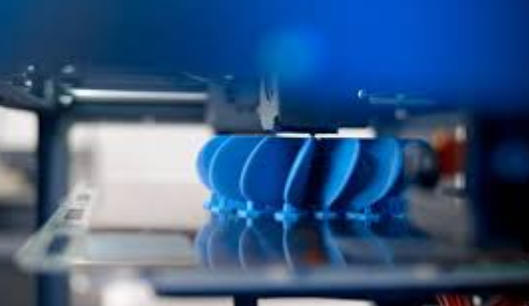
Markforged Onyx is a nylon‑based filament (PA6 copolymer) reinforced with chopped carbon fiber, engineered to deliver high strength, stiffness, and a smooth matte black finish.[1][2]
Onyx is approximately 1.4 times stronger and stiffer than ABS, offering greater flexural strength and rigidity while maintaining toughness suitable for demanding industrial applications.[3][2]
Onyx is ideal when a part needs high stiffness and durability but does not require full metal properties, such as jigs, fixtures, mounts, and low‑volume end‑use parts where weight reduction and faster turnaround are priorities.[4][8]
Onyx FR is used where flame retardancy and UL94 V‑0 compliance are required, while Onyx ESD is chosen for electrostatic discharge protection in electronics manufacturing and assembly environments.[9][1]
Yes, many manufacturers 3D print parts in Onyx and then CNC‑machine critical features such as precision bores or sealing surfaces, or later shift to full CNC, molding, or stamping production once the design is validated.[5][4]
[1](https://uptivemfg.com/3d-printing-material-spotlight-markforged-onyx/)
[2](https://addinor.eu/articles/material-guide-markforged-onyx/)
[3](https://www.matterhackers.com/store/l/markforged-onyx-filament/sk/MUJD90ET)
[4](https://agile-manufacturing.com/markforged-composite-materials/)
[5](https://www.mark3d.com/en/markforged-onyx-printing-material/)
[6](https://3dprint.com/139546/markforged-onyx-material/)
[7](https://www.additive-x.com/shop/catalog/product/view/_ignore_category/1/id/1113/s/markforged-onyx/)
[8](https://www.3dpartsunlimited.com/blog-post/onyx-material-for-the-markforged/)
[9](https://www.additive-x.com/blog/introducing-markforged-onyx-esd-for-x3-x5-and-x7-machines)
[10](https://www.mark3d.com/de/en/product/markforged-onyx-filament-basismaterial-3200-cm%C2%B3-rolle/)
[11](https://www.mlc-cad.com/markforged/materials/)
[12](https://www.mark3d.com/en/printing-materials/)
[13](https://www.youtube.com/watch?v=Oyb7wUHlPbI)
[14](https://www.youtube.com/watch?v=lL8XSCJ8WcU)
[15](https://www.scribd.com/document/740354650/Introducing-Our-New-Markforged-Material-Onyx)
[16](https://center3dprint.com/en/shop/fdm-materials/durable-plastic/nylon-for-3d/markforged-onyx-800-cc-filament)
[17](https://toms3d.org/2017/01/16/maximum-fiber-markforgeds-onyx-carbon/)
[18](https://pubs.aip.org/aip/acp/article/3161/1/020342/3310803/A-comprehensive-review-of-Markforged-Onyx)
[19](https://www.3axis.us/matetials/markforged-materials.pdf)
[20](https://www.chiefdelphi.com/t/markforged-onyx-nylonx-applications/186817)


