Views: 222 Author: Rebecca Publish Time: 2026-01-09 Origin: Site
Content Menu
● What Is Polypropylene for 3D Printing?
● Target Keywords and Search Intent
● Key Material Properties of Polypropylene
● Advantages of 3D Printing with Polypropylene
● Challenges and Limitations of Polypropylene 3D Printing
● Process Options: Filament vs Powder PP
>> FDM/FFF Polypropylene Filament
>> SLS and MJF Polypropylene Powder
● Typical Applications of Polypropylene 3D Printing
>> Industrial and Mechanical Components
>> Automotive and Transportation
>> Medical and Consumer Products
● Polypropylene vs ABS vs PETG (Key Differences)
>> Mechanical and Thermal Comparison
● Practical Design Guidelines for Polypropylene Parts
● Print Settings and Process Best Practices
● Sustainability and Polypropylene in Additive Manufacturing
● Where to Use 3D‑Printed PP vs Traditional Manufacturing
● How U-NEED Supports Polypropylene Projects End‑to‑End
● Call to Action: Turn Polypropylene Designs into Scalable OEM Production
● Frequently Asked Questions about Polypropylene 3D Printing
>> 1. Is polypropylene hard to 3D print?
>> 2. When should I choose PP instead of ABS or PETG?
>> 3. Can 3D‑printed PP be used for final production parts?
>> 4. Is polypropylene safe for food or medical applications?
>> 5. How does U-NEED fit into a polypropylene development project?
Polypropylene (PP) is a lightweight, chemically resistant 3D printing material that enables durable, flexible, and watertight parts for demanding industrial applications. When paired with an experienced OEM partner like U-NEED, polypropylene prototypes can be transitioned into stable CNC machining, plastic molding, silicone, and metal-stamped production for overseas brands and manufacturers.[1][2][3]

Polypropylene is a semi-crystalline thermoplastic widely used in injection molding that has expanded into 3D printing as filament and powder for industrial applications. In additive manufacturing, it is valued for a high strength-to-weight ratio, fatigue resistance, and excellent chemical stability.[1][4][2][3]
For 3D printing, PP is available as:
- FDM/FFF filament for desktop and industrial printers.[5][4]
- Powder for SLS and MJF processes used in professional service bureaus.[6][3]
Because 3D‑printed PP behaves similarly to injection‑molded PP, it is ideal for functional prototypes that later move into mass production using conventional manufacturing.[2][6]
To maximize SEO and align with buyer intent, this article targets the primary keyword “polypropylene 3D printing material” and related long‑tail phrases such as:
- Polypropylene 3D printing properties
- PP 3D printing applications
- How to 3D print polypropylene
- Polypropylene vs ABS vs PETG
- Polypropylene material for functional prototypes
These phrases reflect how engineers and buyers search when choosing materials and evaluating OEM partners for real industrial projects.[4][7]
Polypropylene combines low density, flexibility, and fatigue resistance, making it unique among 3D printing polymers.[5][2]
Core physical and mechanical properties
- Low density (≈0.84–0.93 g/cm³): Enables very lightweight parts compared with many other plastics.[3][6]
- Tensile strength ≈21 MPa (SLS PP): Suitable for functional parts that need toughness but not extreme stiffness.[4][6]
- High elongation at break and ductility: Parts can bend or twist without cracking, supporting hinges and snap-fits.[2][6]
Chemical and environmental performance
- Excellent chemical resistance to many acids, bases, and solvents.[1][4]
- Very low moisture absorption, allowing watertight components and stable properties in humid environments.[3][2]
- Good electrical insulation, making PP useful in housings and components near electronics.[8][1]
These combined properties allow polypropylene to operate where rigid, brittle materials like PLA would fail.[5][2]
Compared with more common filaments, PP offers several high‑value benefits for design engineers and OEM buyers.[4][5]
- Lightweight construction: Ideal for components in automotive, consumer goods, and wearables where weight reduction is critical.[2][3]
- Living hinges and moving features: Fatigue resistance supports parts that flex millions of times without failure.[5][4]
- Chemically resistant containers: Suitable for tanks, caps, and housings exposed to detergents, fuels, or cleaning agents.[1][2]
- Waterproof parts: Low moisture absorption and good layer bonding allow watertight applications when printed correctly.[3][1]
- Recyclability and sustainability: PP is widely recycled, supporting manufacturers with sustainability goals.[1][2]
For overseas brands that plan to move from prototypes to injection‑molded or stamped assemblies, using PP for early 3D printing helps keep material behavior consistent across development stages.[6][2]
Despite its advantages, polypropylene is more demanding to print than PLA or PETG and requires careful process control.[2][5]
Common challenges include:
- Poor bed adhesion and warping: PP tends to shrink during cooling, causing edges to lift off the build plate.[4][5]
- Layer bonding sensitivity: Inconsistent temperatures or drafts can reduce interlayer adhesion and part strength.[3][2]
- Printer compatibility: Not all printers support PP due to bed surface requirements and filament handling.[8][5]
Experienced partners mitigate these problems by optimizing bed surface, enclosure, and print parameters before scaling to larger batches.[5][2]
Different 3D printing technologies handle polypropylene in distinct ways, each with specific strengths.[9][3]
Filament‑based PP is widely available and suitable for rapid prototype iterations.[2][5]
- Pros: Lower equipment cost, quick iteration, easy design changes.[7][5]
- Cons: More susceptible to warping, limited part size without enclosures, surface finish depends heavily on tuning.[4][5]
Powder‑bed processes such as SLS and MJF use PP powders to deliver near‑isotropic parts and smoother surfaces.[6][3]
- Pros: Better mechanical uniformity, high elongation at break, accurate thin walls, and complex geometries.[9][6]
- Cons: Higher production cost, typically used through industrial service providers and OEM partners.[9][3]
Choosing between filament and powder PP depends on application, required quantities, and the plan to transition to CNC, molding, or stamping later.[9][3]
Polypropylene is widely used across general industrial, automotive, medical, consumer, and packaging sectors.[9][2]
- Functional housings and covers exposed to oils or cleaning fluids.[4][2]
- Fluid-handling parts such as connectors, valves, and reservoirs.[10][9]
- Flexible jigs, fixtures, and semi‑rigid tooling that require impact resistance.[2][4]
- Lightweight brackets and clips that must flex during assembly and use.[11][2]
- Interior trim prototypes that need chemical resistance to cleaners and disinfectants.[11][2]
- Packaging concepts, caps, and closures requiring repeated opening and closing.[10][2]
- Prototypes for household goods that will later be mass‑produced via injection molding.[9][2]
Because PP is already common in injection‑molded parts, 3D‑printed PP is ideal when the final product will also use polypropylene in volume production.[6][2]
Engineers often compare polypropylene with ABS and PETG when choosing a functional material for 3D printing.[7][4]
| Property / Material | Polypropylene (PP) | ABS | PETG |
|---|---|---|---|
| Density (g/cm³) | ≈0.84–0.93 | ≈1.04 | ≈1.27 |
| Heat deflection temp (°C) | ≈64.1 | ≈86.6 | ≈76.2 |
| Flexural strength (MPa) | ≈9.4 | ≈21.5 | ≈50 |
| Impact / fatigue | Excellent fatigue, high impact | Good impact, lower fatigue | Good impact |
| Chemical resistance | Very high | Moderate | Good |
From this comparison, PP is the best choice when low weight, fatigue resistance, and chemical stability matter more than stiffness or temperature resistance.[7][4]
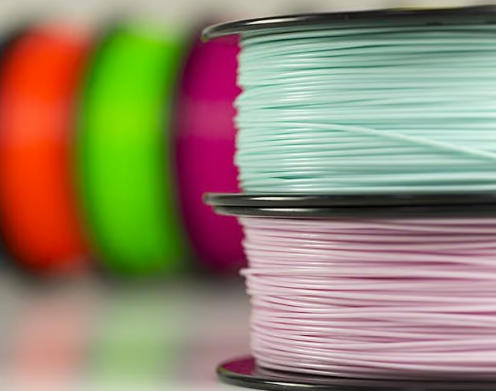
Designing specifically for polypropylene 3D printing helps minimize warping and ensure reliable OEM‑grade components.[5][2]
Key modeling tips:
1. Use consistent wall thickness where possible to reduce uneven shrinkage.[7][5]
2. Avoid extremely sharp internal corners; apply fillets to distribute stress.[5][2]
3. For living hinges, use thin, uniform sections and maintain hinge lengths that distribute bending load.[4][2]
4. Include generous lead‑in chamfers on snap‑fits to reduce insertion stress.[2][5]
When planning future molding or stamping, design rules should align with the intended mass‑production process so that prototypes translate smoothly into tooling.[9][2]
Effective printing of polypropylene depends on controlled temperatures and adhesion strategies.[5][2]
Recommended practices for filament PP:
- Use a heated bed and PP‑compatible surface (PP sheet, PP tape, or specialty adhesive).[2][5]
- Print with brims or rafts to combat edge lifting and warping.[1][5]
- Minimize part cooling, especially for larger parts, and consider an enclosed build chamber.[8][5]
- Tune print speed and retraction to avoid stringing while maintaining strong layer bonding.[12][5]
For powder‑based PP, process parameters are usually managed by the service provider, but design and packing strategies still influence final quality and cost.[6][3]
Polypropylene offers clear sustainability advantages relative to many 3D printing materials.[1][2]
- PP is widely recycled and can often be integrated into existing recycling streams.[1][2]
- Lightweight PP parts reduce material use and shipping weight, supporting lower lifecycle emissions.[3][2]
- As additive manufacturing grows, recyclable polymers like PP support circular manufacturing initiatives.[3][1]
For overseas brands with ESG or corporate sustainability targets, specifying recyclable PP in prototypes and production parts helps align engineering decisions with sustainability goals.[3][2]
A practical question for engineers is when to use 3D‑printed polypropylene and when to move into CNC machining, molding, silicone, or metal stamping.[9][2]
3D‑printed PP is ideal when:
- Validating fit, function, and ergonomics before committing to tooling.[3][2]
- Producing small batches of customized or low‑volume components.[7][9]
- Testing chemical resistance and fatigue performance in real environments at low cost.[4][2]
Once design is stable, conventional processes such as CNC machining of metal components, plastic molding, silicone molding, and metal stamping provide better unit cost for high volumes.[9]
U-NEED is a China‑based OEM manufacturer specializing in precision machining, plastic product manufacturing, silicone product manufacturing, and metal stamping for overseas brands, wholesalers, and producers. While 3D printing is a powerful development tool, most international buyers ultimately require scalable, reliable production that meets strict quality and delivery requirements.[13][9]
U-NEED can support polypropylene‑related projects by:
- Using PP prototypes as a reference to design injection molds, silicone tools, or stamped assemblies.[2][9]
- Combining metal CNC parts, plastic PP elements, and silicone components into complete assemblies for OEM clients.
- Advising on which parts should remain plastic, which should be metal, and how to optimize cost and performance for each component.[9]
This integrated approach helps overseas brands move from concept to stable OEM production without changing partners at each stage.
Polypropylene 3D printing is an excellent way to validate durable, chemically resistant, and lightweight parts before investing in full‑scale production. To turn those validated designs into reliable batches of machined, molded, silicone, and metal‑stamped products, working with a manufacturing partner that understands both prototyping and mass production is essential.[1][9][2]
If you are an overseas brand, wholesaler, or manufacturer looking to develop polypropylene components or assemblies:
- Share your 3D models, PP prototypes, and technical requirements with U-NEED.
- Discuss the best path to production: CNC machining, plastic molding, silicone tooling, metal stamping, or a hybrid approach.[9]
- Collaborate on cost‑effective, high‑precision OEM production that maintains the performance advantages of polypropylene in your final products.[9]
Contact U-NEED today to transform your polypropylene concepts into robust, production‑ready components for global markets.
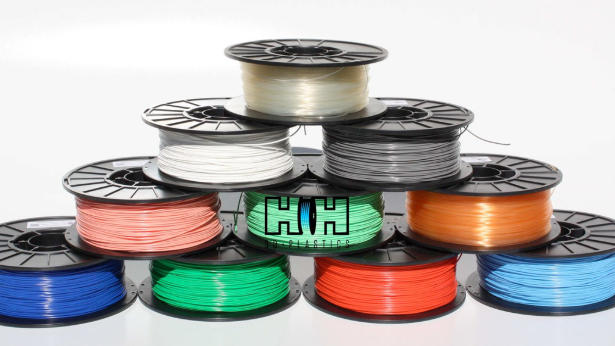
Polypropylene is more challenging to print than PLA because it shrinks during cooling, which can cause warping and poor bed adhesion. With a heated bed, PP‑compatible surfaces, and tuned settings, it is possible to achieve reliable, functional PP parts.[5][4][2]
Choose PP when you need lightweight, chemically resistant, and fatigue‑resistant parts that will flex repeatedly in service. ABS or PETG may be better when higher stiffness or heat resistance is more important than weight or flexibility.[7][4]
Yes, in many cases 3D‑printed PP parts are suitable as end‑use components, especially in low‑volume or customized applications. For higher volumes, designs validated in 3D‑printed PP are often transitioned to injection molding or other mass‑production processes.[6][9][2]
Polypropylene is commonly used in food packaging and certain medical devices because of its chemical resistance and low moisture absorption. For regulated applications, you must confirm material grade, certification, and processing conditions with your manufacturing partner.[8][9][2]
U-NEED can take your polypropylene 3D‑printed prototypes or design files and convert them into high‑precision machined, molded, silicone, or metal‑stamped production parts. This allows overseas brands and wholesalers to move from development to OEM production using a single integrated manufacturing partner.[9]
[1](https://uptivemfg.com/3d-printing-material-spotlight-polypropylene/)
[2](https://vshaper.com/blog/polypropylene-filament-for-3d-printing)
[3](https://formlabs.com/blog/polypropylene-3d-printing/)
[4](https://www.xometry.com/resources/3d-printing/pp-3d-printing-filament/)
[5](https://www.simplify3d.com/resources/materials-guide/polypropylene/)
[6](https://www.materialise.com/en/industrial/3d-printing-materials/polypropylene-pp)
[7](https://all3dp.com/1/polypropylene-3d-printing-pp-ultimate-guide/)
[8](https://help.prusa3d.com/article/polypropylene-pp_167126)
[9](https://www.protolabs.com/services/3d-printing/plastic/polypropylene/)
[10](https://www.formfutura.com/filaments/pp)
[11](https://www.raise3d.com/filaments/pp/)
[12](https://www.reddit.com/r/BambuLab/comments/146504x/does_anyone_have_experience_with_polypropylene/)
[13](https://www.moldmakingtechnology.com/news/rapid-manufacturing-providers-merge-to-create-uptive-brand-)
[14](https://www.perplexity.ai/search/bf14a77f-d532-4d76-a354-c0d5bedde224)
[15](https://www.facebook.com/uptivemfg/videos/uptive-manufacturings-3d-printing-material-tpu/487675320525193/)
[16](https://uptivemfg.com/materials/polymer-prototyping/)
[17](https://sinterit.com/blog/research-development/polypropylene-in-3d-printing-part-1/)
[18](https://www.youtube.com/watch?v=yRw2mC_6A00)
[19](https://www.3dxtech.com/collections/polypropylene-pp)
[20](https://uptivemfg.com/category/solutions/additive-manufacturing/hp-multi-jet-fusion-mjf/)
[21](https://www.youtube.com/watch?v=ww9ci36uC4U)


