Views: 222 Author: Rebecca Publish Time: 2026-01-20 Origin: Site
Content Menu
● Overview of sheet metal welding methods
● Stick welding for sheet metal
● Plasma arc welding in sheet metal fabrication
● Laser and electron beam welding for sheet metal
● Gas (oxy‑fuel) welding for sheet metal
● Sheet metal positions and weldability
>> Horizontal, vertical, and overhead
● Joint types in sheet metal welding
● Practical tips for welding thin sheet metal
>> Tip 1: Select appropriate filler metals
>> Tip 2: Use skip (stitch) welding
>> Tip 4: Use small wire diameter and electrodes
>> Tip 6: Use high‑argon shielding gas blends
>> Tip 7: Ensure tight fit‑up and good joint design
● Method selection guide for OEM sheet metal welding
● 2025–2026 trends in sheet metal welding
● How OEM buyers should choose a sheet metal welding partner
● Call to action for OEM projects
● FAQ:
>> 1: What is the best welding method for thin sheet metal?
>> 2: How thin can sheet metal be welded?
>> 3: How can I avoid warping when welding sheet metal?
>> 4: What shielding gas should I use for sheet metal welding?
>> 5: When is laser welding a better choice than MIG or TIG?
Sheet metal welding is a core process in sheet metal fabrication, turning flat cut blanks into rigid, leak‑tight, and aesthetic structures for automotive, aerospace, electronics, and industrial equipment. For overseas OEM buyers working with Chinese manufacturers, choosing the right sheet metal welding method and applying the correct process controls directly affects part strength, cosmetic quality, and total cost.

Sheet metal welding is the process of joining thin metal sheets (often 0.5–6 mm thick) using a high‑energy heat source that melts and fuses the joint, with or without filler metal. The goal is to create strong, dimensionally stable joints while minimizing distortion, burn‑through, and cosmetic defects on thin gauge material.
Typical sheet metals include:
- Mild and low‑carbon steel
- Stainless steel
- Aluminum and aluminum alloys
- Galvanized steel and coated steel
These materials appear widely in HVAC enclosures, automotive body panels, appliance housings, battery boxes, and structural brackets for OEM products.
For modern sheet metal fabrication, the most widely used welding processes are:
- MIG welding (GMAW)
- TIG welding (GTAW)
- Stick welding (SMAW)
- Spot / resistance welding
- Plasma arc welding
- Laser and electron beam welding
- Gas welding (oxy‑fuel)
Each method offers a different balance of speed, ease of use, equipment cost, precision, and suitability for thin gauges.
MIG welding (Gas Metal Arc Welding, GMAW) uses a continuous solid wire electrode and shielding gas fed through a gun into the weld pool, where the molten wire forms the joint. The shielding gas (often argon–CO₂ blends) protects the weld from atmospheric contamination, reducing porosity and oxidation.
Key characteristics:
- Best for: mild steel, stainless steel, and aluminum sheet metal
- Advantages:
- High deposition rate and fast travel speed
- Easier to learn than TIG, suitable for many operators
- Good productivity for medium to high volumes
- Limitations:
- Higher heat input than TIG, so more risk of warping on very thin sheets
- Spatter and cleanup can affect cosmetic surfaces
For thin sheet metal, it is recommended to use small wire diameters such as 0.023–0.030 in and lower heat input to reduce distortion and burn‑through.
TIG welding (Gas Tungsten Arc Welding, GTAW) uses a non‑consumable tungsten electrode and shielding gas (typically pure argon or argon‑helium) to create a stable arc, with filler rod added manually when required. TIG is highly controllable and is often chosen when weld appearance and precision are critical.
Key characteristics:
- Best for: thin non‑ferrous sheet metals like aluminum, titanium, magnesium, copper, and stainless steel
- Advantages:
- Very clean, precise welds with minimal spatter
- Excellent control over heat input and bead profile
- Ideal for visible seams, pressure‑tight joints, and critical applications
- Limitations:
- Slower than MIG, so less productive for heavy‑volume jobs
- Requires greater operator skill
TIG welding is widely recognized as one of the best processes for welding very thin sheet metal, often down to 0.6 mm or even lower with experienced operators.
Stick welding (Shielded Metal Arc Welding, SMAW) uses a consumable electrode coated in flux, with an electric current creating an arc between the rod and the workpiece. As the flux burns, it forms a protective slag and gas shield over the weld pool.
Key characteristics:
- Best for: structural steel, heavier sheet, on‑site or outdoor welding
- Advantages:
- Portable, rugged equipment with no need for gas cylinders
- Performs well in outdoor or windy environments
- Suitable for construction, shipbuilding, and repair work
- Limitations:
- Higher heat input and spatter make it less ideal for very thin sheet
- More post‑weld cleanup due to slag removal
For thin sheet metal welding, stick is generally used only when other processes are not practical, or when welding more robust sections and structural components.
Plasma arc welding is similar to TIG welding but constricts the arc through a small orifice, creating a high‑temperature plasma jet that produces deep, narrow welds. The process can be either autogenous (no filler) or use filler metal depending on the application.
Key characteristics:
- Best for: high‑precision welds on stainless steel and other alloys, especially in automated production
- Advantages:
- Narrow, deep penetration and high travel speed
- Small heat‑affected zone (HAZ), reducing distortion on thin sheet
- Works well with automation and robotic systems
- Limitations:
- Higher equipment cost and setup complexity
- Best suited to specialized or high‑volume applications
Plasma welding is often used in industries like aerospace, medical, and high‑end industrial equipment where precision and repeatability are crucial.
Laser welding uses a focused laser beam to melt and fuse the joint line, while electron beam welding uses a high‑energy electron beam in a vacuum chamber. Both processes deliver extremely high energy densities and narrow welds.
Key characteristics:
- Best for: thin stainless steel and aluminum sheet, battery components, precision enclosures, and high‑value assemblies
- Advantages:
- Very low heat input and minimal distortion
- High welding speeds, ideal for automation and mass production
- Capable of welding small, intricate features with excellent cosmetic finish
- Limitations:
- Expensive capital equipment and fixturing
- Electron beam welding requires vacuum chambers, limiting part size and adding complexity
Laser and electron beam welding are commonly selected for safety‑critical and high‑precision OEM parts in automotive, medical devices, and electronics, especially when high throughput is required.
Gas welding (oxy‑fuel or oxy‑acetylene) uses the heat of a flame produced by burning fuel gas and oxygen to melt the joint, sometimes with filler rod. Although many modern shops prioritize arc and laser processes, gas welding remains useful in certain repair and fabrication scenarios.
Key characteristics:
- Best for: pipes and tubes, HVAC duct repair, on‑site maintenance, and situations where electricity is unavailable
- Advantages:
- Portable, economical, and electricity‑free
- Can weld both ferrous and non‑ferrous metals
- Limitations:
- Wide heat‑affected zone and slower speed
- Not ideal for high‑precision or high‑volume sheet metal production
Gas welding is often used as a support process in fabrication shops rather than the primary production welding method.
Understanding welding positions helps engineers design joints that are feasible and cost‑effective in production.
Flat position welding occurs when the joint lies horizontally and the welder works from above, allowing gravity to assist molten metal flow. MIG and TIG welding typically perform best in this position, enabling consistent bead shape and penetration.
- Horizontal: The joint runs horizontally on a vertical plane or at the junction of a horizontal and vertical surface. Stick welding is often preferred when access makes MIG or TIG difficult.
- Vertical: Welding occurs on an upright surface, and the welder must control the molten pool to prevent sagging. Stick welding or carefully tuned MIG is typically used.
- Overhead: The joint is above the welder, making it one of the most challenging positions due to gravity pulling the molten metal downward. Stick welding is frequently used, with small weld puddles and controlled travel speed.
Where possible, experienced fabricators will design fixturing so that critical sheet metal welds can be made in the flat or horizontal position to improve quality and reduce cost.
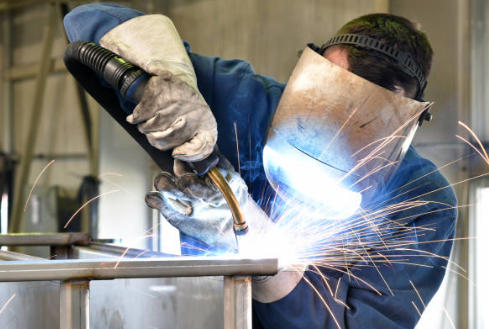
Proper joint design is essential to control distortion, achieve required strength, and minimize rework.
Common joint types:
- Butt joint: Two sheets aligned edge‑to‑edge, often requiring edge preparation for full penetration and strength.
- Lap joint: One sheet overlaps another, ideal when welding materials of different thickness or when extra strength and sealing are required.
- T‑joint: One sheet meets another at 90 degrees, forming a “T”, commonly used for brackets, frames, and tubular structures.
- Corner joint: Sheets meet at their edges to form an “L” shaped corner, often used for boxes and enclosures.
- Edge joint: Sheets are placed side by side and welded along one common edge, usually where flanged edges are present.
Good joint design considers gap control, material thickness, welding access, and expected loads, as well as cosmetic and sealing requirements.
Welding thin sheet metal (below about 2 mm) requires tight control of heat input and fit‑up to avoid burn‑through and distortion.
Using filler wire or rod thinner than the base sheet helps reduce heat input and improve control. For example, a 0.6 mm wire is often recommended for a 1 mm sheet. Matching the filler composition to the base material reduces cracking and corrosion issues.
Skip welding, also called stitch welding, uses short, intermittent welds spaced along the joint, allowing the metal to cool between passes.
Basic skip welding pattern:
- Weld a short section
- Move to another area and weld
- Allow both zones to cool
- Return to fill the skipped sections
This technique distributes heat more evenly and significantly reduces warping on thin sheet metal panels.
Tack welds are small temporary welds used to hold sheets in correct alignment before final welding.
Best practices:
- Keep sheets closely butted, with a small gap
- Place tacks at regular intervals along the joint
- After alignment is stable, join the tacks with short welds
Tack welding reduces joint movement, minimizes distortion, and helps prevent burn‑through.
For MIG welding, small diameter solid wires such as 0.023–0.024 in allow lower current and better control of heat input. When using stick welding, electrodes smaller than 1/8 in reduce burn‑through risk and help maintain a tight arc on thin sheet.
Copper or aluminum backing bars (also called chill bars) are clamped behind the joint to conduct heat away from the weld zone.
Benefits:
- Faster cooling and reduced distortion
- Less risk of holes and burn‑through
- Improved bead profile and support on open‑root joints
Good contact between the backing bar and workpiece is essential for effective heat transfer.
High‑argon shielding gas mixtures, such as 75% argon / 25% CO₂ for MIG, reduce heat input and improve arc stability. For TIG and aluminum MIG welding, pure argon is often recommended to achieve clean, stable arcs and minimize oxidation.
Thin sheet metal leaves little margin for error, so fit‑up must be tight with minimal gaps. It is often better to spend more time on accurate cutting, bending, and fixturing than to try to correct poor fit‑up with additional welding.
The table below summarizes how common sheet metal welding methods compare on key criteria for OEM projects.
| Welding method | Typical sheet thickness range | Speed / productivity | Distortion risk | Equipment cost | Typical OEM applications |
|---|---|---|---|---|---|
| MIG (GMAW) | About 1–10 mm sheet | High for general fabrication | Medium; must control heat on thin sheet | Moderate | Automotive panels, frames, general enclosures |
| TIG (GTAW) | About 0.6–6 mm sheet | Lower than MIG | Low, with excellent control | Moderate | Aerospace, medical, food equipment, visible seams |
| Stick (SMAW) | More than 2–3 mm sheet | Medium | Higher on thin sheet | Low | Construction, shipbuilding, heavy brackets |
| Plasma arc | About 0.5–6 mm sheet | High in automated setups | Low due to concentrated arc | High | High‑precision stainless and specialty alloys |
| Laser welding | About 0.2–4 mm sheet | Very high with automation | Very low, minimal HAZ | High to very high | Battery packs, electronic enclosures, precision assemblies |
| Gas welding | More than 1.5 mm sheet | Low | Medium–high | Low | Pipework, HVAC, repair and maintenance |
Sheet metal fabrication is rapidly evolving with automation, robotics, and smart process control, especially in high‑volume OEM production.
Key trends:
- Robotic MIG, TIG, and laser welding cells with adaptive sensing that automatically adjust speed, current, and torch angle based on material thickness and joint position
- Digital workflows connecting laser cutting, bending, and welding, using simulation to validate weld sequences and minimize distortion before production
- Hybrid manufacturing that combines metal 3D printing with sheet metal welding and bending for faster prototypes and reduced tooling costs
For overseas OEM buyers, working with a supplier that adopts these technologies can lead to shorter lead times, better weld quality, and increased design flexibility.
When selecting a sheet metal welding supplier for your OEM parts, consider the following criteria:
- Process capability: Ability to perform MIG, TIG, spot, and laser welding on your specific materials and thickness ranges.
- Quality systems: Robust inspection methods and documented welding procedures, including pre‑qualified welding procedure specifications where appropriate.
- Experience with similar applications: Previous projects in your industry and a proven track record for similar materials, thicknesses, and geometries.
- DFM support: Capability to review your drawings, recommend joint improvements, and suggest suitable welding methods to control distortion and cost.
- Capacity and lead time: Sufficient equipment and manpower to support prototypes, pilot runs, and mass production with consistent delivery.
Working with an integrated OEM partner that offers CNC machining, sheet metal fabrication, stamping, and plastic or silicone molding alongside welding simplifies the supply chain and improves coordination on complex assemblies.
Reliable sheet metal welding is critical if you are developing enclosures, brackets, frames, or complex assemblies that must meet strict tolerances and cosmetic standards in global markets. If you need an OEM partner in China that can combine precision CNC machining, sheet metal fabrication, metal stamping, and plastic or silicone components in one integrated solution, U‑NEED is ready to support your project from initial design through to mass production.
Send your 2D drawings, 3D models, target quantities, and quality requirements to the U‑NEED engineering team and request free DFM feedback together with a detailed quotation. With the right welding process and a capable manufacturer, your sheet metal parts can achieve better performance, shorter lead time, and more competitive total cost in demanding international applications.
Contact us to get more information!
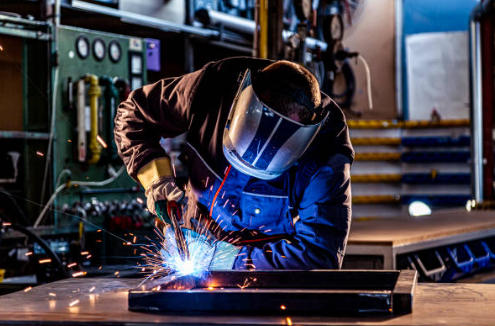
For very thin sheet metal, TIG welding is often preferred because it offers precise control over heat input and produces clean welds with minimal spatter. Well‑tuned MIG welding with small wire and carefully controlled parameters can also work effectively for slightly thicker sheet.
With suitable equipment and skilled operators, MIG welding can usually handle sheet thicknesses down to around 0.8 mm, while TIG welding can go to about 0.6 mm or even thinner. At these thicknesses, using techniques such as skip welding, backing bars, and tight fit‑up is essential to avoid burn‑through.
To reduce warping, use short welds, skip welding patterns, and tack welds to balance heat and keep the joint aligned. Backing bars, smaller filler diameters, lower current, and balanced welding sequences also help to limit distortion and residual stresses.
For MIG welding carbon steel sheet metal, a common choice is 75 percent argon and 25 percent CO₂, which offers good arc stability and controlled heat input. TIG welding typically uses pure argon, and aluminum welding usually also relies on high‑purity argon for a stable, clean arc.
Laser welding is a strong choice when you need very low distortion, high welding speed, and excellent cosmetic quality on thin stainless or aluminum sheet. It is especially attractive for high‑volume automated production lines where the higher equipment cost is offset by throughput and quality advantages.
1. https://www.rapiddirect.com/blog/6-ways-for-sheet-metal-welding/
2. https://www.3erp.com/blog/sheet-metal-welding-methods/
3. https://waykenrm.com/blogs/sheet-metal-welding/
4. https://wholesale.yeswelder.com/blog/welding-sheet-metal/
5. https://www.approvedsheetmetal.com/blog/guide-to-welding-sheet-metal-parts
6. https://levstal.com/blog/sheet-metal-welding/
7. https://www.zhswjx.com/news/best-welding-for-sheet-metal-methods/
8. https://www.choongngaiengineering.com/top-5-trends-shaping-sheet-metal-fabrication-in-2025


