Views: 222 Author: Rebecca Publish Time: 2026-01-22 Origin: Site
Germany has long been a leader in precision engineering and industrial manufacturing. From automotive components to aerospace structures, German companies are recognized worldwide for their innovation, durability, and efficiency. Among the many manufacturing technologies that Germany excels in, cold forging stands out as one of the most advanced. The process of cold forging allows manufacturers to create complex, high-strength metal components with exceptional surface finishes and dimensional accuracy—ideal for demanding industries like energy, electronics, and transport.
In this article, we explore the landscape of Top Cold Forging Tools Manufacturers and Suppliers in Germany, examining their strengths, specializations, and contributions to global supply chains. Whether you are an importer, OEM partner, or equipment manufacturer looking for reliable forging solutions, understanding Germany's industrial ecosystem will help you identify the best resources and partners for your production needs.

Cold forging is a metal forming process performed at or near room temperature, in contrast to hot forging which operates at elevated temperatures. The method reshapes metal blanks into desired geometries using dies and mechanical pressure without melting the material.
- High strength and durability: Materials retain or even improve their mechanical properties due to strain hardening.
- Superior surface finish: Components require minimal post-processing.
- Exceptional dimensional accuracy: This makes cold-forged parts ideal for precision machinery.
- Cost efficiency: Lower energy consumption compared to hot forging.
- Material utilization: Close-to-net shaping reduces waste and optimizes production yield.
These advantages make cold forging particularly attractive for industries such as automotive, electronics, hardware tools, and industrial machinery. Consequently, Germany—renowned for precision engineering—has become home to many world-class cold forging tool manufacturers and suppliers.
Germany's industrial structure combines technological excellence, automation, and quality standards. Companies in the cold forging sector benefit from the country's advanced metallurgical research, skilled workforce, and strong engineering tradition.
Several key attributes define the German approach to cold forging tools manufacturing:
1. Precision engineering culture: Every detail, from tool steel composition to die design, is exhaustively optimized.
2. Automation and innovation: Integration of CNC technology, robotics, and smart inspection systems ensures consistent quality.
3. Sustainability focus: German suppliers prioritize energy-efficient production and recyclable materials.
4. Global collaboration: Many manufacturers provide OEM and ODM services to global partners, offering customized forging solutions.
Schuler Group, headquartered in Göppingen, is one of Germany's most recognized forming technology companies. With over 180 years of experience, Schuler specializes in metal forming systems, including high-performance cold forging presses and die systems.
Core competencies:
- Cold forging press systems for automotive and aerospace applications.
- Custom tooling for large-volume production.
- Integration of Industry 4.0 technologies for predictive maintenance and data-driven manufacturing.
Their wide global presence makes them one of the Top Cold Forging Tools Manufacturers and Suppliers in Germany, serving OEMs worldwide.
Hasco Metalltechnik focuses on precision tool manufacturing and forging die systems. The company is renowned for its meticulous craftsmanship and material consistency.
Notable features:
- Production of cold forging dies, punches, and forming tools.
- Expertise in wear-resistant coatings.
- OEM service for international machinery manufacturers.
Hasco's constant investment in quality inspection systems has made it a trusted partner for clients demanding long-lasting forging tools.
Böllhoff is a leading supplier of fasteners and joining systems, with a deep history in cold forging technology. The company's cold forging division produces a vast assortment of customized fastening tools and solutions used across automotive and construction industries.
Highlights:
- In-house toolmaking with cold forging optimization.
- Precision fastener systems and connection technologies.
- Global network supporting both standard and OEM-specific requirements.
Their extensive experience in fastener engineering ensures their inclusion among the Top Cold Forging Tools Manufacturers and Suppliers in Germany.
Hirschvogel is one of Europe's largest forging technology providers, producing high-strength components for powertrains, chassis, and engines. The company's expertise in both hot and cold forging positions it at the forefront of innovation.
Distinctive capabilities:
- Fully automated cold forging systems.
- Advanced simulation technology for tool design.
- Customized toolmaking services tailored to client requirements.
Their commitment to R&D and digital integration makes them a prime partner for OEMs seeking reliable forging tools and components.
Located in Bestwig, Lieb specializes in progressive tooling and precision cold forging systems. Their product portfolio spans multi-stage forging dies, tool modules, and die sets for complex part production.
Advantages:
- Expertise in compact tooling systems.
- CAD/CAM-assisted design for tight-tolerance tools.
- Focus on rapid prototyping and cost reduction.
Their dedication to quality precision contributes strongly to Germany's reputation in cold forging innovation.
WAFIOS is a world-renowned machinery manufacturer providing solutions for wire and tube processing. Its forging tool division serves clients who require tooling for fasteners, nuts, and specialty metal parts.
Key strengths:
- Superior tool material selection.
- Advanced thermal and surface treatments for die longevity.
- Comprehensive technical support and training.
As one of the Top Cold Forging Tools Manufacturers and Suppliers in Germany, WAFIOS continues to set new standards in forming tool design and durability.
EJOT focuses on cold-formed fasteners and assembly technology. The company operates multiple facilities in Germany where cold forging plays a central role in production.
Why they stand out:
- Internal cold forging tool shop.
- OEM services for automotive and building industries.
- Emphasis on lightweight, high-strength materials.
EJOT's tool engineering expertise contributes directly to product consistency, reinforcing the company's global reputation for excellence.
Otto Fuchs is a century-old name in forging and extrusion technologies. The company manufactures specialized cold forging dies, tools, and components for aerospace, automotive, and energy applications.
Specialization areas:
- Complex geometry tool solutions.
- Forging die optimization using FEM analysis.
- Precision machining and long-life dies.
Their high-tech facilities and global partnerships secure Otto Fuchs a leading position among Top Cold Forging Tools Manufacturers and Suppliers in Germany.
Karl Klink has earned recognition for its customized cold forging tool systems used in gear and transmission part production. Their precision-ground tools are crucial for advanced automotive manufacturing.
Product lineup:
- Cold forging dies, punches, and forming tools.
- Reconditioning and repair services.
- Integration with automated press systems.
Their emphasis on process innovation enables efficiency and consistent quality, making them a dependable partner for heavy-duty forging applications.
Gedia is another renowned player in the cold forging domain, mainly serving automotive OEMs. Apart from forming components, they also offer specialized tooling solutions aligned with lightweight technology trends.
Capabilities:
- Comprehensive tool production department.
- Simulation-based design and optimization.
- Cooperation with high-end steel suppliers for die materials.
Their intensive R&D efforts place them among Germany's most future-ready forging companies.
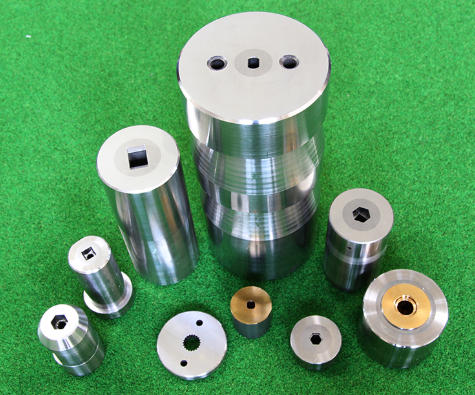
When selecting a German supplier for cold forging tools, several criteria can guide your decision:
1. Technical capability: Evaluate the supplier's ability to meet specific project requirements, including material hardness, tolerance, and shape complexity.
2. Quality assurance: Certified suppliers (ISO 9001, IATF 16949) provide traceability and consistent output.
3. Customization: OEM and ODM flexibility is vital for brand-specific projects.
4. Lead time and logistics: Local and export capabilities determine delivery efficiency.
5. After-sales support: Technical consultation and reconditioning services ensure long-term performance.
German suppliers often excel in all these aspects, reflecting the nation's industrial excellence and commitment to precision manufacturing.
Cold forging tools designed and produced by these German companies support diverse industries such as:
- Automotive mechanical components (bolts, shafts, gears)
- Aerospace precision fittings and structural fasteners
- Electrical and electronic housings
- Industrial machinery parts
- Consumer products requiring high precision
Each sector benefits from the combination of material optimization, surface finish stability, and consistent accuracy that cold forging provides.
Germany's cold forging sector continues to evolve, integrating new materials, digital design methods, and sustainable practices.
Emerging trends include:
- Smart tool monitoring: Sensors within dies enable predictive maintenance.
- Hybrid forming technologies: Merging cold forging with extrusion or additive manufacturing.
- AI-assisted tool design: Computational modeling accelerates R&D.
- Eco-friendly lubricants and coatings: Reducing friction and environmental impact.
- Miniaturization: Development of micro-forging tools for compact components.
These developments ensure that German suppliers remain leaders in global forging innovation, delivering cost-effective and reliable tooling solutions.
Germany's dominance in precision engineering makes it a natural hub for cold forging tool production. Through a combination of advanced material science, process control, and manufacturing culture, these companies consistently deliver world-class tools for industries across the globe. Whether you seek OEM solutions, high-performance dies, or large-scale forging system integration, the Top Cold Forging Tools Manufacturers and Suppliers in Germany remain unmatched for reliability and innovation.
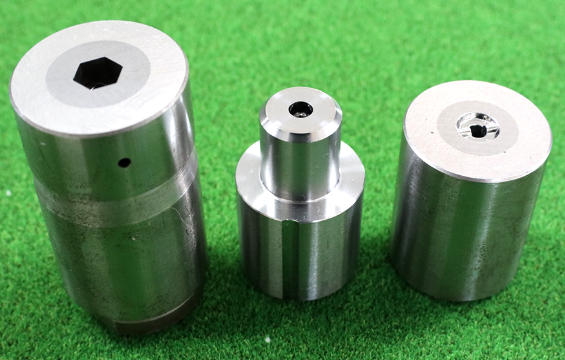
Cold forging tools are widely used in automotive, aerospace, construction, electronics, and machinery sectors. These industries rely on cold forging for its strength, precision, and surface quality.
German suppliers implement strict quality management systems, using advanced material testing, simulation analysis, and surface treatment technologies to maintain consistent tool longevity and performance.
Yes. Most of the Top Cold Forging Tools Manufacturers and Suppliers in Germany provide OEM and ODM customization to match international clients' project specifications and branding requirements.
Common materials include tool steels such as H13, SKD61, and powder metallurgy steel, often with surface coatings like PVD or nitriding to enhance wear resistance and tool life.
German manufacturers combine cutting-edge technology, deep metallurgical knowledge, and reliable quality assurance systems. Their tools demonstrate superior durability, precision, and cost efficiency over time.


