Views: 222 Author: Rebecca Publish Time: 2026-01-30 Origin: Site
Content Menu
● What Are Alloy Steel and Carbon Steel?
● Key Applications of Alloy Steel
>> Types of Carbon Steel by Carbon Content
● Key Applications of Carbon Steel
● Alloy Steel vs Carbon Steel: Side‑by‑Side Comparison
>> Material Property and Performance Comparison
● Practical Material Selection for CNC Machining and OEM Parts
● Real‑World Use Cases: When OEMs Prefer Alloy Steel vs Carbon Steel
● Step‑by‑Step Material Selection Checklist for Your Next Project
● Tensile Strength and Performance Benchmarks
● When to Work with a Professional OEM Machining Partner
● FAQs About Alloy Steel vs Carbon Steel
>> 1. Which is better: alloy steel or carbon steel?
>> 2. Which one is stronger: alloy steel or carbon steel?
>> 3. Is alloy steel the same as carbon steel?
>> 4. Which material is easier to weld for OEM production?
>> 5. How should I choose between alloy steel and carbon steel for CNC machined parts?
Selecting the right steel is one of the most critical decisions in CNC machining, metal stamping, and product design, especially for demanding international OEM projects. This guide explains alloy steel vs carbon steel in practical engineering language so that buyers, engineers, and sourcing managers can confidently choose the best material for their specific applications.

Alloy steel is steel that contains iron, carbon, and additional alloying elements such as chromium, nickel, molybdenum, vanadium, manganese, and others to obtain targeted mechanical and corrosion‑resistance properties. These elements can significantly improve strength, hardness, toughness, wear resistance, and sometimes machinability compared with plain carbon steel.
Common alloying elements and their main effects include:
- Cobalt – increases hardness, wear resistance, and toughness.
- Manganese – strengthens surface hardness and impact resistance, improves resistance to strain.
- Chromium – improves toughness, wear resistance, and hardness, and is crucial for corrosion resistance.
- Molybdenum – increases resistance to heat and shock, enhances high‑temperature strength.
- Nickel – improves strength and toughness and enhances corrosion resistance.
- Vanadium – boosts strength and toughness and improves shock and corrosion resistance.
- Tungsten – increases strength and toughness and enhances corrosion resistance.
- Chromium‑vanadium combinations – deliver high tensile strength with good formability and cuttability.
These characteristics make alloy steel a high‑performance material for demanding parts subjected to high loads, wear, or harsh environments.
Alloy steels are often divided into low‑alloy and high‑alloy grades based on the total percentage of alloying elements, typically from about 1% up to 50%.
- High‑alloy steel
High‑alloy steels contain a higher proportion of alloying elements. The most common example is stainless steel, which usually contains at least about 12% chromium. The chromium forms a thin passive oxide film on the surface, which protects the steel from corrosion and oxidation. High‑alloy steels are usually more expensive and are widely used in automotive, industrial equipment, and applications where corrosion resistance is critical.
- Low‑alloy steel
Low‑alloy steels typically contain 1–5% alloying elements, with composition tuned for specific strength, toughness, and hardenability requirements. They are common in large‑diameter flanges, studding outlets, and seamless rolled ring forgings, as well as many structural and machinery components.
Because of its high strength, toughness, and wear resistance, alloy steel is widely used across multiple industries.
Typical applications include:
- Structural components – girders, structural sections, heavy‑duty frames.
- Automotive – gears, shafts, axles, suspension components.
- Aerospace – structural parts, landing gear, critical fasteners.
- Shipbuilding – propeller shafts, high‑strength fasteners.
- Railway and mining – rails, wheels, wear parts, drilling and cutting tools.
- Machinery – bars, rods, screws, bolts, nails, wires, and tooling components.
In CNC machining and OEM projects, alloy steel is ideal when you need high performance, long service life, and resistance to heavy loads, cyclic stresses, or aggressive environments.
Carbon steel is steel in which carbon is the primary alloying element, with only small amounts of other elements. It generally offers a higher carbon content, lower melting point, good strength, and good durability, often at a lower cost than many alloy steels and some stainless steels. Carbon steels account for the majority of everyday steel applications in construction, fabrication, and machinery.
Carbon steels are typically classified into low‑carbon, medium‑carbon, and high‑carbon grades based on carbon percentage.
- Low‑carbon steel (mild steel)
- Carbon content: less than 0.25%.
- Characteristics: relatively soft, weaker than higher‑carbon grades, but very ductile, easily welded, easy to machine, and cost‑effective.
- Typical uses: general fabrication, welded structures, low‑stress components.
- Medium‑carbon steel
- Carbon content: 0.25–0.6%, manganese content around 0.6–1.65%.
- Characteristics: higher strength than low‑carbon steel but reduced ductility and toughness; properties can be improved significantly with heat treatment.
- Typical uses: automotive parts, axles, forgings, and higher‑load components.
- High‑carbon steel
- Carbon content: 0.6–1.25%, manganese 0.3–0.9%.
- Characteristics: very hard, high wear resistance, low ductility, usually used in the hardened and tempered condition.
- Typical uses: cutting tools, springs, dies, and high‑wear parts.
Due to its versatility and cost‑effectiveness, carbon steel is widely used in structural and pressure‑bearing applications.
Common uses include:
- Shipbuilding – hulls, structural frames, internal structures.
- Pipes and pressure vessels – oil and gas pipelines, process piping, and tanks.
- Construction – beams, columns, rebar, plates, and structural elements.
- Automotive – body panels, wheels, crankshafts, gears, and various components.
- General machinery – shafts, fasteners, brackets, and welded structures.
For many OEM products, carbon steel is a practical choice where cost, weldability, and formability outweigh the need for extreme performance or exceptional corrosion resistance.
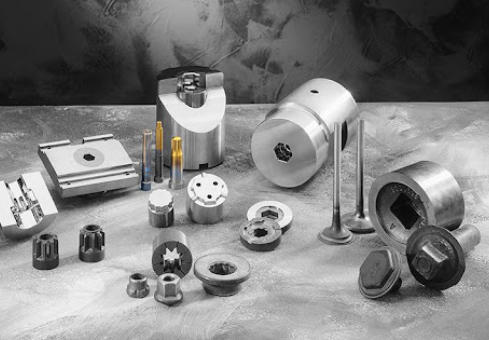
The following table summarizes the most important differences between alloy steel and carbon steel from a practical engineering perspective.
| Property / Aspect | Alloy Steel | Carbon Steel |
|---|---|---|
| Main composition | Iron + carbon + significant alloying elements such as Cr, Ni, Mo, V, etc. | Iron + carbon with minimal other elements |
| Corrosion resistance | Good to excellent, especially in high‑alloy and stainless grades | Generally poor; requires coatings or protection in corrosive environments |
| Hardness | Often lower in base state, but can be very high after proper alloy design and heat treatment | High hardness in high‑carbon grades; harder than many low‑alloy steels in as‑rolled state |
| Strength | Can achieve very high strength depending on alloying and heat treatment, often in the 758–1882 MPa range | Good strength, approximately 450 MPa for low‑carbon and around 965 MPa for high‑carbon steels |
| Toughness | Can be tailored; some alloys optimized for toughness, others for hardness | Low‑carbon grades are relatively tough, while high‑carbon grades are strong but less tough |
| Malleability / formability | Often reduced by multiple alloying elements; may require controlled forming | Good malleability, especially in low‑carbon steels, making them easy to bend and form |
| Weldability | Generally more difficult to weld, especially at higher alloy contents | Usually high weldability, particularly for low‑carbon steels |
| Ductility | Many alloy steels offer higher ductility than high‑carbon steel, depending on composition and condition | Ductility decreases as carbon content increases; high‑carbon steels are relatively brittle |
| Cost | Typically more expensive due to alloying elements and processing | Usually inexpensive, with price rising alongside carbon content and processing complexity |
| Typical CNC / OEM use | High‑load, high‑wear, or high‑temperature components where performance is critical | Cost‑sensitive parts, welded structures, and general mechanical components |
When choosing between alloy steel vs carbon steel for CNC machining, metal stamping, or assembled products, focus on the actual application requirements rather than only the initial material price.
Key considerations include:
1. Mechanical load and wear
- For high loads, repeated impacts, or abrasive wear, alloy steel is usually preferable, especially in combination with appropriate heat treatment.
- For moderate loads and non‑critical components, carbon steel is often sufficient and more economical.
2. Operating environment
- If the part will face corrosive media, moisture, or outdoor exposure, a high‑alloy or stainless steel grade is often necessary to avoid frequent replacement.
- For indoor, dry, or protected environments, coated or painted carbon steel can perform well at lower cost.
3. Forming and welding requirements
- For complex stamping, bending, or high‑volume welding, low‑carbon steel offers excellent formability and weldability.
- Some alloy steels are more challenging to weld and may require specialized processes and pre‑ or post‑heat treatment.
4. Tolerance and precision in machining
- For high‑precision CNC machining, both alloy and carbon steels can be used, but alloy steels often maintain dimensional stability at higher loads and temperatures.
- Low‑carbon steels are easy to machine but may not offer the same long‑term dimensional stability under stress as certain alloy steels.
5. Lifecycle cost rather than unit price
- Although alloy steel is more expensive per kilogram, its longer service life and reduced downtime can lower total cost of ownership for critical components.
- For non‑critical parts or short‑life products, carbon steel often provides the best overall balance.
To make the choice clearer, here are common scenarios where engineers and purchasing teams decide between alloy and carbon steel.
- Automotive suspension and drivetrain parts
- Requirement: high fatigue strength, impact resistance, and long service life.
- Choice: alloy steel (often low‑alloy, heat‑treated) for shafts, gears, and suspension links.
- General structural frames and brackets
- Requirement: reliable load capacity, simple welding, competitive cost.
- Choice: low‑carbon steel for welded frames, brackets, and supports.
- High‑pressure piping and flanges
- Requirement: resistance to stress, pressure cycles, and sometimes elevated temperature.
- Choice: low‑alloy steel for large‑diameter flanges and pressure parts, carbon steel for standard pipes and vessels with controlled corrosion.
- Cutting tools, springs, and dies
- Requirement: high hardness and wear resistance.
- Choice: high‑carbon steel or special tool alloy steels, selected according to required hardness and durability.
These examples show how performance targets, environment, and cost together determine the most suitable material family.
Use this simple workflow when deciding between alloy steel vs carbon steel for CNC machining and stamping projects.
1. Define the working conditions
Describe operating temperature, load type (static, dynamic, impact), and the environment (dry, humid, chemical, outdoor).
2. Set performance priorities
Decide which factors matter most: strength, toughness, corrosion resistance, weldability, or material cost.
3. Shortlist material families
- If corrosion resistance and high performance are top priorities, shortlist alloy steels (including stainless grades).
- If weldability and cost are key, shortlist carbon steels first.
4. Check manufacturability
Verify whether the chosen material can be machined, stamped, formed, and welded with your supplier's existing equipment and processes.
5. Evaluate lifecycle cost
Compare expected service life, maintenance, and replacement frequency instead of focusing only on the initial material cost.
6. Validate with prototypes
Start with a small prototype batch to verify performance in real operating conditions before mass production.
This structured approach helps you avoid both over‑engineering and under‑engineering and supports smoother mass production.
For engineers, quantitative data is essential when comparing alloy steel vs carbon steel.
- Low‑carbon steel
- Typical tensile strength: around 450 MPa, suitable for general structural applications and welded constructions.
- High‑carbon steel
- Typical tensile strength: about 965 MPa, offering high hardness and wear resistance for tools, springs, and high‑wear components.
- Alloy steel
- Typical tensile strength range: approximately 758–1882 MPa, depending on alloy design and heat treatment.
These values show why alloy steel is often selected for critical, high‑stress components, while carbon steel remains the workhorse for general structures and cost‑sensitive parts.
For international brand owners, wholesalers, and manufacturers, working with an experienced machining partner is essential to get the full benefit from the correct material choice.
A strong OEM partner should be able to:
- Review your drawings and application conditions in detail.
- Recommend suitable alloy steel or carbon steel grades that balance performance and cost.
- Provide CNC machining, plastic molding, silicone molding, and metal stamping so you can consolidate suppliers and simplify project management.
- Offer Design for Manufacturability (DFM) feedback, prototype trials, and stable mass production quality, with strict quality control at every stage.
With the right partner, you can transform a material decision into a long‑term advantage in product reliability and total cost.
Contact us to get more information!
There is no universal “best” choice, because each material family is designed for different priorities. Alloy steel is usually favored when high strength, high temperature resistance, or better corrosion resistance are required, while carbon steel is preferred for cost‑sensitive, weldable, and general structural applications.
Typical low‑carbon steel has a tensile strength of about 450 MPa, and high‑carbon steel around 965 MPa. Many alloy steels can reach tensile strengths from roughly 758 MPa up to over 1800 MPa, depending on grade and heat treatment, so in many cases alloy steels are stronger.
No, these are two different material categories. Carbon steel consists mainly of iron and carbon with small additions of other elements, while alloy steel includes significant amounts of other alloying elements such as chromium, nickel, molybdenum, and vanadium, which modify the physical and chemical properties of the steel.
In most situations, carbon steel, especially low‑carbon steel, is easier to weld and more tolerant of standard welding processes. Many alloy steels require more precise control of pre‑heating, interpass temperature, and post‑weld heat treatment to avoid cracking and to maintain their designed properties.
First, clarify load level, environment, expected service life, and budget. For high‑stress, high‑temperature, or corrosive environments, alloy steel is usually more suitable. For cost‑effective, welded, and general mechanical parts, carbon steel is often the starting point, and specific grades can be selected based on detailed performance requirements.


