Views: 222 Author: Rebecca Publish Time: 2026-01-30 Origin: Site
Content Menu
● What Is Aluminum Die Casting
>> Key Benefits of Aluminum Die Casting
>> Why Aluminum Is Often Preferred
● The Role of DFM in Aluminum Die Casting
>> Why Early DFM Review Matters
● Core Aluminum Die Casting Design Tips
>> 1. Choose Suitable Aluminum Alloys
>> 3. Define a Clear Parting Line Strategy
>> 4. Apply Adequate Draft Angles
>> 5. Design with Ejector Pins in Mind
>> 6. Use Fillets and Radii Correctly
>> 8. Design Bosses for Strength and Flow
>> 9. Use Ribs for Stiffness, Not Bulk
>> 10. Plan Holes and Windows Carefully
>> 12. Select Appropriate Assembly Options
● Design Workflow for Aluminum Die Casting
● Common Aluminum Die Casting Defects and How Design Helps
● Finishing and Post-Processing for Aluminum Die Cast Parts
>> Common Post-Processing Steps
● Aluminum Die Casting Design Parameters Overview
● Turn Your Aluminum Die Casting Design into Reliable Production Parts
● FAQs About Aluminum Die Casting Design
>> 1. What is the minimum wall thickness for aluminum die casting
>> 2. Why is draft angle important in aluminum die casting
>> 3. How can I reduce porosity in aluminum die cast parts
>> 4. Are undercuts always bad in die casting design
>> 5. Which finishing options work best for aluminum die cast parts
Aluminum die casting is one of the most efficient ways to produce high-precision metal parts with complex geometry at scale for automotive, electronics, and industrial applications. When you combine robust design-for-manufacturing (DFM) principles with the right alloy, tooling strategy, and manufacturing partner, you can cut cost, improve yield, and reduce time to market.

Aluminum die casting is a process where molten aluminum alloy is injected into a steel mold (die) under high pressure, then solidified to form near-net-shape parts with tight tolerances. This process has been used for decades to produce intricate components with repeatable accuracy and limited secondary machining.
- High dimensional accuracy and repeatability for complex features and thin walls.
- Good mechanical properties and a favorable strength-to-weight ratio for lightweight designs.
- Excellent heat and corrosion resistance for demanding environments.
- Multiple finishing options, including anodizing, electroplating, chrome plating, polishing, and powder coating.
Engineers often select aluminum because it is lightweight yet strong enough for structural and semi-structural components. Its castability and fluidity allow designers to integrate multiple functions into one consolidated part, reducing assemblies, fasteners, and overall system complexity.
Design for Manufacturing (DFM) is the systematic optimization of part geometry to make production easier, more reliable, and more cost-efficient. In aluminum die casting, DFM focuses on wall thickness, draft, ribs, bosses, ejection strategy, and alloy selection to achieve stable quality and low scrap rates.
- Identifies potential casting defects and tooling risks before you invest in tooling.
- Reduces redesign loops, tooling corrections, and late engineering changes.
- Balances performance requirements with realistic manufacturability and cost constraints.
Professional manufacturers usually perform a DFM review before die fabrication to protect budgets and delivery schedules.
The following guidelines help you design aluminum die cast parts that are manufacturable, robust, and economical.
Different aluminum alloys offer different levels of strength, ductility, thermal behavior, and castability. Common high-pressure die casting alloys such as A380, A383, and A413 are widely used because they provide good strength at elevated temperatures, corrosion resistance, electrical and thermal conductivity, and dimensional stability.
Practical suggestions:
- Select alloys with good fluidity for thin-walled or highly detailed parts.
- Use alloys with higher strength and temperature resistance for under-the-hood or power electronics applications.
Uniform wall thickness is a critical design factor in aluminum die casting. Uniform walls support smooth metal flow and consistent solidification, which reduces internal stress and common defects.
- Avoid abrupt transitions between thick and thin areas by using radii or fillets to create gradual changes.
- Very thick walls can increase selective cooling, porosity, and part weight.
- Extremely thin walls risk warping and incomplete filling due to limited stiffness and poor flow.
Typical recommended wall thickness ranges are about 0.0787–0.1737 in for aluminum die cast parts, while some designs can go as low as 0.020 in depending on part size, structure, and use case.
The parting line is where the moving and fixed halves of the die meet. Poor parting line planning can complicate tooling, increase flash, and raise both casting and tooling costs.
Best practices:
- Plan parting lines early and avoid placing critical functional or cosmetic features directly on the line.
- Consider the visual impact of parting lines on external surfaces and plan post-processing when needed.
Draft is the taper applied to vertical surfaces to ensure smooth ejection of the solidified casting. Without proper draft, parts may stick to the die, damage surfaces, or stress the tooling during ejection.
- Typical draft angles of 1–2 degrees are sufficient for many surfaces, depending on alloy, wall thickness, and surface depth.
- Surfaces perpendicular to the parting line and core features must receive special attention for safe release.
Ejector pins push the casting out of the die after solidification and shrinkage cause the part to grip the tool. Poor pin placement can distort thin sections or mark visible surfaces.
Guidelines:
- Place ejector pins on robust features such as bosses and ribs instead of thin walls.
- Avoid using cosmetic surfaces as ejector contact areas to prevent visible marks.
Fillets (internal rounded corners) and radii (external rounded edges) promote smoother metal flow and reduce turbulence inside the cavity. They also help reduce stress concentrations, which improves structural integrity.
- Add fillets where two surfaces intersect to avoid sharp corners and internal corners that trap stress.
- Apply suitable draft to filleted regions that are perpendicular to the parting line to support clean ejection.
Undercuts often require slide cores or secondary machining, which increases cost and tooling complexity. Designers should remove unnecessary undercuts when possible.
When undercuts are unavoidable:
- Keep external undercuts to a minimum because they usually require side cores.
- Avoid placing undercuts under bosses, which can obstruct ejection and create stress points.
- Consider secondary machining with suitable tool shapes when geometry cannot be simplified.
Bosses typically function as mounting points and stand-offs. Poor boss design can cause filling issues and localized defects.
- Apply sufficient draft and use generous fillets around bosses to support metal flow.
- Maintain uniform wall thickness around bosses to reduce porosity and shrinkage defects.
Ribs increase stiffness without adding too much mass, making them preferable to simple wall thickening. However, excessive or poorly arranged ribs can concentrate stress and cause problems.
- Combine ribs with hollow sections to achieve strength while saving material.
- Avoid using too many ribs in small regions to reduce the risk of cracking or incomplete filling.
Holes and windows are common in electronic housings, connectors, and panels. Poor design of openings can lead to ejection difficulties or incomplete filling.
- Apply adequate draft on holes and windows for smooth ejection.
- Use smaller windows rather than a few large openings, which can disturb metal flow and weaken the part.
- For products with many small holes, such as keypads or electronic fronts, review core-pin and ejection strategies early.
All molten metals shrink during cooling and solidification, and aluminum alloys are no exception. Designers need to anticipate shrinkage to prevent porosity, dimensional variation, and warping.
Mitigation strategies:
- Use thinner sections and hollow cores where possible, since thick areas shrink more and trap porosity.
- Add squeeze pins in localized zones to control shrinkage porosity.
- Integrate flat and vertical ribs to stabilize walls and reduce deformation.
Assembly methods should be defined early because they influence bosses, holes, wall thickness, and local reinforcement. Common assembly methods for aluminum die castings include threading, fastening, welding, cored holes, and injected metal assembly.
When choosing assembly methods:
- Consider long-term reliability, service conditions, and maintenance requirements.
- Match hole sizes, boss geometry, and support features to the chosen fastening or joining method.
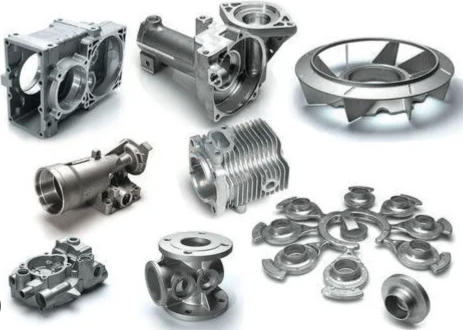
A structured workflow helps design and manufacturing teams collaborate efficiently from concept through production.
1. Define requirements: load cases, target weight, operating environment, and cosmetic expectations.
2. Select alloy and process parameters according to performance and cost goals.
3. Build an initial 3D model with carefully planned wall thickness, draft, and parting lines.
4. Run a DFM review to identify risk areas such as thick sections, undercuts, and ejection challenges.
5. Refine the geometry based on DFM feedback, adding ribs, fillets, and assembly features where needed.
6. Finalize die design, gating, and overflows to ensure stable filling, venting, and cooling.
This iterative workflow reduces late-stage surprises and improves first-shot success in tool trials.
Good design significantly lowers the risk of typical casting defects that lead to rework and scrap.
Typical issues include:
- Porosity caused by trapped air or shrinkage in thick sections.
- Warping from uneven cooling or inconsistent wall thickness.
- Misruns and cold shuts from poor flow paths or overly thin sections.
How design reduces defects:
- Uniform wall thickness and optimized gating help control porosity and cold shuts.
- Strategic rib placement and well-chosen fillets minimize stress and warpage.
- Adequate draft angles and well-placed ejector pins protect surfaces during ejection.
Finishing improves functionality, durability, and aesthetics of aluminum die cast parts. Different applications demand different surface treatments and post-processing routes.
- Anodizing for better corrosion resistance and controlled color.
- Electroplating and chrome plating for decorative and protective surfaces.
- Powder coating and painting for strong color retention and surface protection.
- Polishing or shot blasting to adjust surface roughness and visual appearance.
- Precision machining of critical interfaces, threads, and sealing surfaces.
- Deburring and edge conditioning to remove sharp features and improve handling safety.
- Functional testing and inspections to confirm dimensional and cosmetic requirements.
| Design Aspect | Key Guideline or Typical Range | Purpose |
|---|---|---|
| Wall thickness | Around 0.0787–0.1737 in, possible down to 0.020 in in some designs | Balances flow, stiffness, and weight. |
| Draft angle | About 1–2 degrees on many surfaces | Enables reliable ejection without damaging the part. |
| Boss design | Uniform walls with fillets and adequate draft | Improves metal flow and lowers porosity. |
| Ribs | Use instead of thicker walls, avoid clustering | Increases stiffness without excessive mass. |
| Undercuts | Minimize and avoid under bosses | Reduces tooling complexity and ejection risk. |
A robust design only creates value when it can be translated into stable, repeatable production. By combining solid DFM principles with an experienced OEM manufacturing partner, you can move from CAD model to mass production with fewer iterations and lower risk.
If you are working on new aluminum die cast parts or optimizing existing designs and need support with alloy selection, wall thickness optimization, draft angles, ribs, bosses, or finishing routes, our U-NEED engineering team can help. Share your 3D files and requirements with us, and we will provide professional DFM feedback, cost-effective process planning, and end-to-end OEM production services for your aluminum die casting projects.
Contact us to get more information!
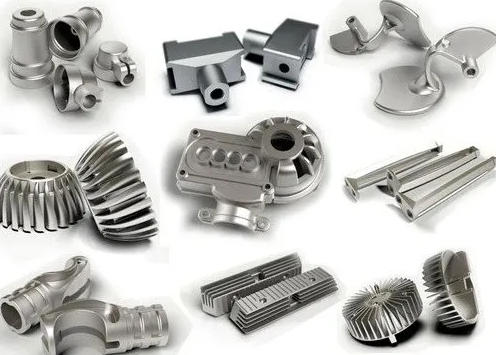
Typical aluminum die cast parts use wall thicknesses in the range of about 0.0787–0.1737 in, and some designs can reach as low as 0.020 in when geometry and alloy permit.
Draft angle helps the solidified part release from the die without sticking, which protects both the casting and the tooling and reduces the risk of surface damage.
You can reduce porosity by specifying uniform wall thickness, designing appropriate gating, using thinner sections where possible, and adding squeeze pins or ribs in critical regions.
Undercuts are not always bad, but they increase tooling complexity and cost. Designers should limit undercuts and avoid placing them under bosses or in zones that are difficult to eject.
Popular options include anodizing, electroplating, chrome plating, powder coating, and polishing, chosen based on corrosion resistance, appearance, and functional requirements.


