Views: 222 Author: Rebecca Publish Time: 2026-01-06 Origin: Site
Content Menu
● Brief History and Evolution of Bed Milling
● Core Structure of a Bed Milling Machine
● How Does a Bed Milling Machine Work?
● Types of Bed Milling Machines
>> Conventional bed milling machines
>> Small and compact bed mills
● 4 Core Advantages of Bed Milling
>> Exceptional rigidity and stability
>> Powerful heavy‑cutting capability
>> Long‑term cost effectiveness
● Bed Milling vs Vertical Machining Centers (VMCs)
● Suitable Materials for Bed Milling
● Practical Machining Tips for Bed Milling
● Real‑World Bed Milling Applications
● Bed Milling vs Knee Mills and Planer Mills
● How OEM Buyers Should Specify Bed Milling Projects
● Why Work With a Chinese OEM Partner for Bed Milling
● Call to Action: Partner With U‑NEED for Bed Milling and OEM Manufacturing
● Frequently Asked Questions (FAQ)
>> (1) Is bed milling always better than using a VMC?
>> (2) What tolerances can a bed milling machine typically achieve?
>> (3) Can bed milling be used for prototype and small‑batch production?
>> (4) Which industries most often rely on bed milling?
>> (5) How do I know if my part is a good fit for bed milling?
Bed milling is a high‑rigidity CNC machining method designed to handle large, heavy workpieces with excellent dimensional accuracy and surface quality. For overseas brands, wholesalers, and manufacturers working with Chinese OEM partners like U‑NEED, understanding bed milling helps you choose the right process for molds, fixtures, frames, and other high‑precision components.[1]
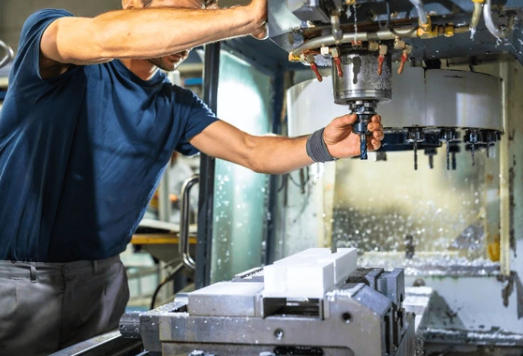
A bed milling machine is a milling machine where the worktable is fixed or has limited movement while the spindle head moves along multiple axes, usually X, Y, and Z. Because the workpiece remains stable on a rigid bed, the machine can perform heavy‑duty cutting with reduced vibration and improved accuracy compared with many traditional vertical knee mills.[1]
In a typical bed type milling machine, the bed provides a large, rigid base for the table and workpiece, the spindle head travels along the bed and column to position the cutting tool, and the CNC control coordinates motion, speed, and tool paths for complex geometries. This structure makes CNC bed milling ideal for large molds, machine bases, and structural components where stability and repeatability are critical.[1]
Bed milling machines have evolved alongside modern manufacturing demands for bigger, more precise parts. Early bed type mills were introduced to machine large metal components with higher stability than knee‑type vertical mills and later gained adoption in mold making, automotive, and heavy machinery.[1]
With the integration of CNC systems, automatic tool changers, and digital probing, bed milling became a flexible, high‑precision solution for aerospace, energy, and high‑tech industries. Today's machines combine traditional rigidity with advanced control features such as multi‑axis interpolation, tool life monitoring, and adaptive feed control.[1]
A bed milling machine is built around a robust mechanical architecture designed to resist deflection during heavy cutting. The bed, usually made from high‑strength cast iron, forms a solid base for the table and column and can support very heavy workpieces through wide surfaces and T‑slots.[1]
The column and spindle head provide vertical and transverse motion, and high‑power spindles with large bearings help maintain stiffness during high‑torque cuts. Precision guideways or linear rails, along with automatic lubrication and a modern control system, ensure accurate and repeatable positioning on all axes.[1]
During bed milling, the workpiece is clamped securely on the fixed table while the spindle head and saddle move relative to the part. The X‑axis provides longitudinal movement, the Y‑axis moves horizontally across the part width, and the Z‑axis controls vertical depth for drilling and milling operations.[1]
CNC programs define tool paths, spindle speeds, feeds, and tool changes, enabling complex pockets, faces, and profiles to be machined in fewer setups. Because the workpiece does not move significantly, vibration is minimized, which improves surface finish, dimensional accuracy, and tool life during heavy cuts.[1]
Different bed milling configurations serve different production needs, from simple heavy cuts to complex CNC profiling.[1]
Conventional bed mills are manually operated with basic power feeds and are suitable for straightforward facing, slotting, and drilling on large workpieces. They are often used in maintenance shops and small job shops that handle heavy parts but do not require full automation.[1]
CNC bed milling machines use numerical control to automate axis movement, spindle control, and tool changes. They are ideal for high‑precision, repeatable production of complex geometries and multi‑face features in aerospace, automotive, and mold manufacturing.[1]
Small or compact bed mills are designed for medium‑sized parts and lighter loads while still benefiting from a rigid bed structure. They are commonly selected for prototyping, small‑batch runs, and training environments where footprint and budget are limited.[1]
Heavy‑duty bed mills are large machines equipped with long tables, high‑torque spindles, and robust guideways to handle multi‑ton components. They are used for machining engine blocks, large molds, structural beams, and machine tool beds without sacrificing accuracy.[1]
Bed milling offers a combination of rigidity, capacity, and accuracy that is difficult to match with many other vertical configurations.[1]
The fixed worktable and massive bed provide a stable base, significantly reducing deflection and vibration during heavy cuts. This rigidity enables consistent tolerances, better surface finishes, and improved repeatability over long production runs.[1]
Bed mills often use high‑torque spindles and strong feed drives, making them suitable for tough materials such as alloy steels, titanium, and hardened cast iron. The structure allows aggressive depths of cut and feeds while maintaining tool engagement and dimensional control.[1]
The wide, heavy bed and robust table design allow multi‑ton workpieces to be clamped securely without distortion. This makes bed milling ideal for large molds, frames, bases, and other components that exceed the capacity of many vertical machining centers and knee mills.[1]
Although bed milling machines often require a higher initial investment, their long service life, lower vibration‑related maintenance, and higher productivity give a strong total cost of ownership. For OEM buyers, using suppliers with bed mills can reduce machining steps, fixturing changes, and scrap rates on large parts.[1]
Both bed milling machines and vertical machining centers are used for milling operations, but they are optimized for different tasks.[1]
| Factor | Bed milling machine | Vertical Machining Center (VMC) |
|---|---|---|
| Motion method | Fixed or limited‑travel table with a moving spindle head along bed and column. library | Moving table with a spindle fixed on a vertical column. library |
| Rigidity | Very high rigidity, ideal for heavy‑duty cuts on large or thick sections. library | High rigidity for moderate‑size parts but often less stable with very heavy workpieces. library |
| Speed and flexibility | Optimized for stability and torque rather than extreme rapid motions. library | Often higher rapid traverse rates and faster tool changes, suitable for high‑mix, small parts. library |
| Typical applications | Large molds, machine beds, structural frames, engine blocks. library | Small precision components, housings, medical parts, and high‑volume production. library |
| Investment and footprint | Higher investment and larger footprint but excellent durability and capacity. library | Lower initial cost for small machines and compact footprint. library |
Many advanced workshops use both bed mills and VMCs, choosing bed milling when large size, heavy cuts, or extreme rigidity are required and VMCs when speed and flexibility are more important.[1]
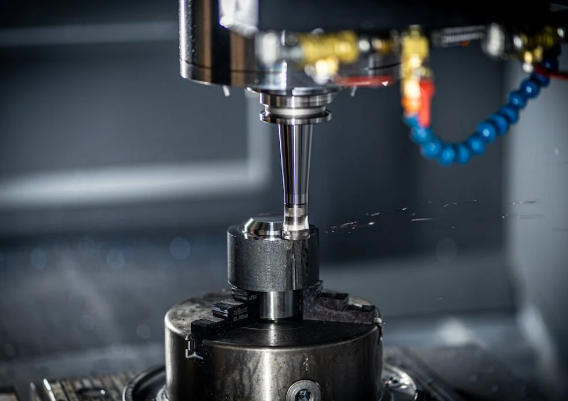
CNC bed milling can handle a wide range of metals and alloys, especially when parts are large or heavy.[1]
Steel is common for heavy machinery components, automotive frames, and industrial fixtures, and benefits from the rigidity of bed type machines at slower cutting speeds with robust tooling. Aluminum alloys can be machined at higher speeds, and the large table of a bed mill is valuable for long extrusions, plates, and large housings when chip evacuation is well managed.[1]
Titanium requires rigid setups, positive tool engagement, and optimized feeds and speeds, making bed milling attractive for long or deep cuts in aerospace and high‑performance components. Copper and brass, often used in electrical and decorative parts, respond well to sharp tools and fine feeds on a stable bed to deliver smooth surface finishes.[1]
Cast iron is frequently machined on bed mills for machine bases, engine blocks, and large housings, where high stability minimizes chatter and edge chipping. This material mix makes bed milling a versatile choice for many OEM sectors.[1]
Well‑planned process parameters unlock the full potential of a bed type milling machine. Coated carbide tools or high‑performance inserts are recommended for high‑strength steels and titanium to improve wear resistance and heat control.[1]
Spindle speeds, feed rates, and depths of cut should be tuned for each material rather than copied from smaller machines, since bed mills can often handle deeper cuts safely. Reliable coolant and lubrication, robust workpiece clamping, and tool paths that minimize long overhangs all contribute to better accuracy and tool life.[1]
Bed milling plays a critical role in many industrial sectors that require large or heavy parts. In aerospace, bed mills are used for structural braces, brackets, and mounting interfaces that must maintain alignment over long distances under high loads.[1]
Automotive and commercial vehicle manufacturers use bed milling for engine blocks, gearbox housings, and subframes, taking advantage of high load capacity and torque on cast iron and aluminum castings. Mold and die shops rely on bed mills for deep cavities and heavy inserts in injection molds, die‑casting tools, and stamping dies.[1]
Industrial machinery and energy sectors use bed milling for machine tool beds, large frames, and energy equipment components where long, flat, and parallel surfaces are essential. In all these cases, the combination of large travel, high rigidity, and strong fixturing is a decisive benefit.[1]
Comparing bed milling with classic machine types like knee mills and planer mills helps clarify the best use cases. Knee mills, with a vertically adjustable knee carrying the table, are flexible and affordable but lack the structural rigidity and load capacity of bed type machines for very heavy parts.[1]
Planer‑type mills use a moving table that carries the workpiece under a fixed or semi‑fixed bridge and are excellent for extremely long or large parts. However, they are usually more complex and expensive, making CNC bed milling a more practical solution for many medium‑to‑large components.[1]
For a wide range of OEM applications, bed milling provides a balance between capacity, rigidity, investment, and flexibility.[1]
From an OEM buyer's perspective, specifying the job correctly is critical to getting accurate quotes and reliable results from a bed milling service provider. It is helpful to provide 3D CAD models and fully dimensioned 2D drawings with clear tolerances and datum references.[1]
Material grade, required heat treatment, surface finish specifications, expected quantities, and any special inspection standards should be included in the RFQ. This information allows the supplier to select suitable machines, fixtures, and cutting strategies and to estimate lead time and cost more precisely.[1]
For overseas brands, wholesalers, and manufacturers, working with a Chinese OEM such as U‑NEED can provide a strong balance of cost, quality, and flexibility when it comes to bed milling and related processes. Many Chinese OEMs combine bed milling with turning, grinding, plastic and silicone molding, and metal stamping, which simplifies multi‑process projects.[1]
Scalable production from prototype to batch manufacturing and engineering support for design‑for‑manufacturing help reduce development risk and cost. For complex, heavy, or large components, partnering with an OEM factory that understands bed type milling and integrated machining workflows is often more effective than relying on small in‑house equipment.[1]
If your project involves large, heavy, or tight‑tolerance components, working with a partner that understands bed milling and integrated manufacturing is essential for success. U‑NEED, a China‑based OEM specializing in high‑precision machined parts, plastic products, silicone products, and metal stamping, can combine bed milling with other processes to deliver complete, cost‑effective solutions for overseas brands, wholesalers, and manufacturers.[1]
You can prepare your drawings and 3D models, clarify materials and tolerances, and contact U‑NEED to discuss the best process route for your parts, including bed milling where it delivers real advantages. By partnering with U‑NEED, you gain access to an experienced engineering and production team that helps you reduce technical risk, control cost, and accelerate time‑to‑market for your next OEM project.[1]
Bed milling is superior mainly for large, heavy, or long parts that need higher rigidity and load capacity, while VMCs are often more suitable for smaller, high‑mix components.[1]
Modern CNC bed milling machines can hold tight tolerances on large parts comparable to those of quality vertical machining centers when the setup and process are properly optimized.[1]
Yes, bed milling is suitable for prototypes and small batches, especially when the parts are physically large or require heavy cuts that smaller machines cannot handle efficiently.[1]
Industries that frequently rely on bed milling include mold and die, heavy machinery, automotive and commercial vehicles, aerospace structures, and energy equipment manufacturing.[1]
A part is a strong candidate for bed milling if it is large or heavy, requires deep cavities or long flat surfaces, uses tough metals, or demands stable tolerances across a big envelope.[1]


