Views: 222 Author: Rebecca Publish Time: 2026-01-06 Origin: Site
Content Menu
● What Is Sheet Metal Bending and Forming?[1][3]
>> Why Bending and Forming Matter in OEM Production[7][2]
● Core Sheet Metal Bending Methods[6][7]
>> Air Bending, Bottoming, and Coining[3][6]
>> U‑Bending, Z‑Bending, and Special Forms[8][9]
● Design Fundamentals: Bend Allowance, K‑Factor, and Springback[3][7]
>> Bend Allowance and Bend Deduction[3]
>> K‑Factor, Inside Radius, and Springback[6][3]
● Materials and Thickness Selection[5][7]
>> Common Sheet Materials for Bending[5][7]
>> Thickness Range and Bending Limits[9][3]
● Advanced CNC Bending and Forming Technology[13][12]
>> CNC Press Brakes and Automated Panel Benders[15][11]
>> Quality Control and Smart Bending[13][11]
● Common Defects in Bending and How to Avoid Them[16][3]
>> Typical Bending Defects[16][3]
>> Practical Prevention Strategies[10][16]
● Latest Trends in Sheet Metal Bending and Forming (2024–2025)[4][12]
>> Automation, Robotics, and Digital Workflows[13][14]
>> Sustainability and Lightweight Design[17][12]
● How Bending Integrates into Complete Sheet Metal Fabrication[2][5]
>> From Cutting to Bending, Welding, and Finishing[2][5]
>> Typical Applications and Industries[5][2]
● Targeted Call to Action for OEM Buyers and Partners[4][2]
● FAQs About Sheet Metal Bending and Forming[1][9]
>> Q1: What is the difference between bending and forming in sheet metal processing?
>> Q2: How should I choose the right bending method for my part?
>> Q3: What causes cracking during sheet metal bending?
>> Q4: How accurate can CNC sheet metal bending be?
>> Q5: Why is design‑for‑manufacturing important for bent sheet metal parts?
Sheet metal bending and forming are core processes that transform flat metal sheets into precise three‑dimensional parts for industrial and consumer applications. By combining the right methods, materials, and process controls, OEM buyers can achieve consistent quality, optimized costs, and reliable delivery across global supply chains.[3][4][1][2]
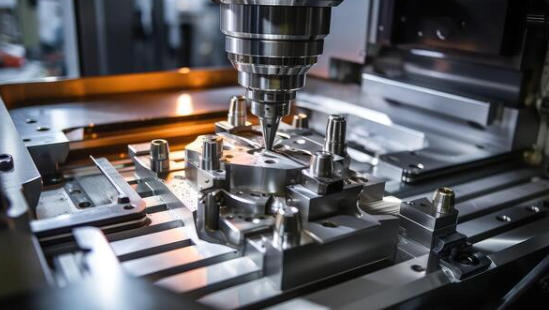
Sheet metal bending and forming use external force to plastically deform a flat sheet along a controlled line or curve so that it reaches a specified angle, radius, or shape without removing material. In modern OEM manufacturing, these operations complement cutting, welding, and finishing to convert 2D blanks into high‑precision functional parts used in automotive, aerospace, electronics, and industrial equipment.[5][2][3][1]
During bending, the sheet is placed between a punch and a die on a press brake or panel bender and loaded with a calculated tonnage until it reaches the programmed geometry. The final result depends on material properties, sheet thickness, tooling geometry, and process parameters, so engineers must consider bend allowance, springback, and method selection during design.[6][3][1]
High‑precision bending and forming are essential for OEMs that require repeatable, tight‑tolerance sheet metal components. When properly engineered, these processes reduce secondary machining, shorten lead times, and minimize scrap, which directly improves cost and supply reliability for brand owners and manufacturers.[4][2][7][1]
Different bending methods provide distinct combinations of accuracy, flexibility, and cost efficiency. Selecting the right method for each part is critical to achieving consistent quality and competitive pricing in OEM projects.[7][6]
- Air bending
Air bending occurs when the punch drives the sheet only partway into a V‑die so that the final angle is controlled mainly by punch stroke depth. This method offers high flexibility and fewer tool changes over a wide thickness range, but angle accuracy and springback are more sensitive to material variations.[3][6][7]
- Bottoming (V‑bending)
Bottoming presses the sheet fully into the V‑die, and the die angle largely determines the bend angle. It provides higher angle accuracy and reduced springback compared with air bending, but requires dedicated tooling for each angle, which raises setup cost for frequent changeovers.[6][7]
- Coining
Coining applies higher pressure to compress the material at the bend line, slightly thinning it and almost eliminating springback. This method achieves very tight tolerances and excellent repeatability for small or complex parts, but it increases tool wear and is less economical for thicker materials or low‑volume production.[7][6]
- U‑bending and channel bending
U‑bending forms channel shapes using U‑shaped tooling and is common for brackets, rails, and enclosures. Process control must maintain uniform depth and minimize distortion in narrow flanges or long channels.[10][2][6]
- Z‑bending and step bending
Z‑bending produces step profiles with two offset bends in opposite directions and is widely used for mounting plates and covers. In CNC sheet metal fabrication, these bends are often executed as successive V‑bends with precise positioning to ensure accurate offsets.[5][8][7]
- Roll bending and radius forming
Roll bending uses sets of rollers to gradually curve the sheet to large radii without sharp corners. This method is ideal for long parts and cylindrical or arc‑shaped components that are difficult or inefficient to produce on a standard press brake.[9][7]
Effective design for sheet metal bending depends on understanding how the material deforms and recovers during and after loading. Key design parameters such as bend allowance, K‑factor, and springback directly influence flat pattern accuracy and final geometry.[7][3]
Bend allowance is used to calculate the developed length of the sheet so that the flat pattern produces the correct final dimensions after bending. If bend allowance or bend deduction is incorrect, holes, slots, and edges will shift and cause assembly problems or rework.[7][3]
Practical rules include:[10][3]
- Keep holes and cutouts at least 2.5 × material thickness away from the bend line.
- Use relief cuts near tight bends to allow material flow and reduce tearing at corners.
The K‑factor describes the location of the neutral axis during bending and is critical for accurate flat pattern calculations and force estimation. In many applications, designers select an inside bend radius at least equal to the material thickness to reduce cracking and maintain structural strength.[6][3][7]
Springback is the elastic recovery that opens the bend angle after unloading. Different materials exhibit different springback behavior, so CNC press brakes use angle compensation, over‑bending, and feedback systems to keep angles within specification.[11][3][6]
Material and thickness choices influence not only part performance but also bending feasibility and total cost. Matching the design with the correct material and thickness reduces defects and improves overall manufacturability.[9][5][7]
- Carbon steel
Carbon steel provides good formability and cost effectiveness and is widely used for structural parts, brackets, and general industrial housings.[9][5]
- Stainless steel
Stainless steel offers corrosion resistance and higher strength for food equipment, medical devices, and outdoor products, but it requires higher bending forces and closer control of springback.[5][7]
- Aluminum alloys
Aluminum alloys deliver low weight and corrosion resistance for automotive and aerospace parts but can be sensitive to small bend radii and require careful parameter selection.[12][7]
Typical press brake configurations handle materials from approximately 0.5 mm to 20 mm, depending on machine capacity and tooling. Very thin sheets can wrinkle or mark easily, while thicker plates demand higher tonnage and larger radii, which can limit design flexibility.[9][3]
Digital control and automation are redefining how factories manage sheet metal bending for complex and high‑mix orders. These technologies support fast setup, consistent quality, and scalable production for global OEM customers.[14][4][12][13]
Modern CNC press brakes use servo or hybrid drives, multi‑axis backgauges, and offline programming to reduce setup times and increase repeatability. Automated panel bending systems further enhance productivity by clamping and rotating panels automatically, which is particularly effective for cabinets, covers, and multi‑bend sheet assemblies.[11][13][15][7]
These systems connect with CAD, CAM, and manufacturing execution platforms so that bend programs are generated directly from 3D models. This integration reduces manual input errors and keeps bending aligned with upstream cutting and downstream welding and finishing operations.[4][12][13]
Advanced bending cells use sensors and angle‑measurement systems to monitor and correct deviations during production. Features such as automatic crowning, thickness detection, and real‑time angle measurement compensate for material and machine variability to maintain tight tolerances.[11][13][6]
Industry 4.0 platforms capture detailed process data for each batch, enabling traceability, predictive maintenance, and ongoing optimization of cycle times and scrap rates. This data‑driven approach supports the quality and compliance requirements of automotive, aerospace, and high‑reliability electronics industries.[12][14][4]
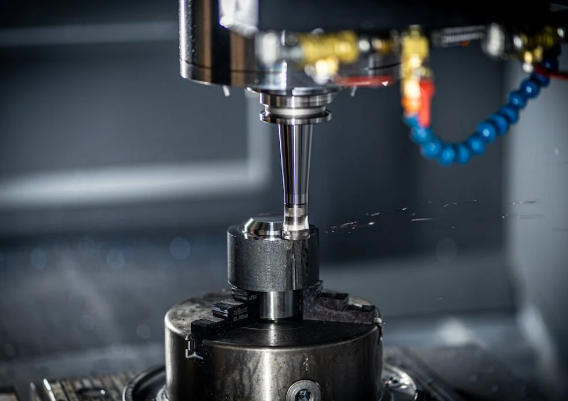
Even with modern equipment, bending defects can occur if design and process conditions are not well controlled. Understanding typical issues and their root causes helps prevent quality problems and rework.[16][10][3]
Common defects include:[16][3]
- Cracking at the outer radius due to excessive strain, hard materials, or too small an inside radius.
- Wrinkling along the inner radius or in flanges when compressive forces exceed the material's capacity.
- Excessive springback, which leads to angles that are too open for proper assembly.
- Surface scratches, tool marks, or dents caused by unsuitable tooling or insufficient surface protection.[10][16]
To improve quality and reduce these defects, engineering and production teams can:[10][16]
1. Increase inside bend radius or select more formable alloys for tight bends.[16][3]
2. Introduce relief cuts and optimize flange geometry to prevent wrinkling and tearing.[3][10]
3. Choose suitable bending methods, such as bottoming or coining, and apply angle compensation to control springback.[6][16]
4. Protect critical surfaces with films or soft tooling to minimize cosmetic damage on visible parts.[9][10]
The sheet metal fabrication and forming market is evolving rapidly under the influence of automation, digitalization, and sustainability targets. OEM buyers benefit from these trends through improved quality, efficiency, and transparency across their supply chains.[14][12][4]
Manufacturers are adopting robots for loading, unloading, and post‑bending handling to support lights‑out operation and stable throughput. Combined with digital twins, advanced scheduling, and integrated CAD/CAM, these systems enable simulation of bending sequences, optimization of setups, and better workload balancing.[12][14][4][13]
Automation is also helping factories cope with labor shortages while maintaining competitive pricing and flexibility. For OEM customers, this means shorter lead times, improved repeatability, and the ability to support high‑mix, low‑volume orders more economically.[14][4]
Sustainability objectives are shaping material choices, part geometries, and fabrication strategies. Lightweight alloys, optimized designs, and material‑efficient nesting patterns reduce material usage and energy consumption during production and transportation.[17][4][12]
Accurate bending and forming also help minimize scrap by achieving specification on the first pass and by enabling tighter nesting of flat patterns. For international buyers, this contributes to more sustainable and compliant supply chains aligned with corporate ESG frameworks.[4][12][9]
Bending is one link in a broader sheet metal fabrication workflow that includes cutting, forming, assembly, and finishing. Coordinating these stages is essential for stable quality and efficient production.[2][5][7][9]
A typical end‑to‑end process includes:[2][5]
1. Cutting: Laser cutting, turret punching, or shearing produce flat blanks with required contours and holes.[4][2]
2. Bending and forming: Press brakes or panel benders create the required angles, radii, and profiles.[11][2]
3. Assembly: Welding, riveting, or mechanical fastening join bent parts into frames, housings, or subassemblies.[2][9]
4. Surface finishing: Processes such as anodizing, powder coating, and brushing provide corrosion resistance and appearance.[2][9]
Close coordination across these stages reduces dimensional conflicts and ensures that design updates are correctly reflected in both flat patterns and bending programs.[7][9]
Precision sheet metal bending is widely used in:[5][2]
- Electrical cabinets, server racks, and control boxes
- Automotive brackets, shields, and chassis components
- HVAC and appliance housings
- Aerospace and rail interior structures
OEMs in these sectors look for partners that can manage complex bills of materials, maintain documentation, and deliver consistent quality across production runs and markets.[4][2]
For overseas brands, wholesalers, and manufacturers, selecting a professional sheet metal bending and forming supplier is a strategic decision that affects product quality, delivery reliability, and total cost. A partner with advanced CNC equipment, systematic quality control, and integrated services covering cutting, bending, stamping, machining, and finishing can help streamline your entire product lifecycle.[9][2][4]
If you are planning a new OEM project or seeking to optimize existing sheet metal components, consider collaborating with a specialist capable of rapid quotation, design‑for‑manufacturing support, flexible order quantities, and stable export logistics. Share your drawings, 3D models, or samples to receive a tailored sheet metal bending and forming solution that aligns with your technical requirements, budget, and delivery schedule.[11][2][4]
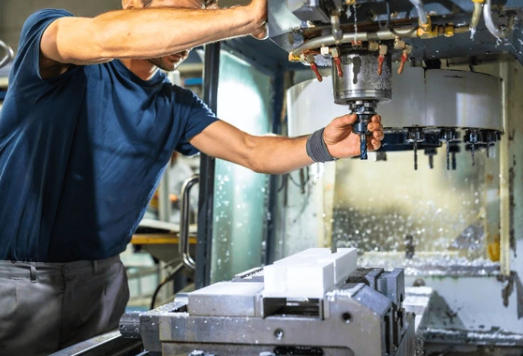
Bending usually means creating a defined angle along a straight line, while forming covers a broader set of operations such as flanging, embossing, and curving into complex 3D shapes. In practice, both terms are often used together to describe shape‑changing processes applied to sheet metal parts.[1][5][9]
The choice depends on required accuracy, production volume, material, and cost targets. Air bending offers flexibility and reduced tooling, while bottoming or coining is better suited to high‑precision components with strict tolerances.[6][7]
Cracking is often caused by a small inside radius, bending across the grain, or high strain on hard or brittle materials. Selecting suitable alloys, adjusting bend radii, and optimizing grain direction can significantly reduce cracking risk.[16][3]
Modern CNC press brakes and panel benders can typically maintain angles within about ±1° for air bending and even tighter for bottoming and coining, depending on tooling and material. With laser angle measurement and automatic crowning, high‑end systems consistently achieve the tolerances required by demanding OEM applications.[11][6]
Design‑for‑manufacturing ensures that bend radii, flange lengths, hole locations, and tolerances match realistic process capabilities. Early DFM analysis reduces redesign cycles, improves yield, and lowers total cost throughout the product lifecycle.[3][7][9]
[1](https://jlccnc.com/blog/bending-forming-sheet-metal)
[2](https://jlccnc.com/sheet-metal-fabrication)
[3](https://www.makerverse.com/resources/sheet-metal/bending-basics-for-sheet-metal-fabrication/)
[4](https://www.precedenceresearch.com/sheet-metal-fabrication-services-market)
[5](https://jlccnc.com/blog/sheet-metal-types-processes)
[6](https://xometry.pro/en/articles/sheet-metal-bending-design-tips/)
[7](https://www.komaspec.com/about-us/blog/guide-to-sheet-metal-bending/)
[8](https://jlccnc.com/blog/z-vs-u-bending-sheet-metal)
[9](https://impactfab.com/the-ultimate-guide-for-sheet-metal-forming)
[10](https://metalscut4u.com/blog/post/how-to-bend-sheet-metal.html)
[11](https://www.metalworkshp.com/capabilities/cnc-forming/)
[12](https://www.woodwardfab.com/blog/sheet-metal-fabrication-trends-2024/)
[13](https://valleymetalworks.com/blog/metal-fabrication-trends-for-2025-embracing-innovation-and-precision/)
[14](https://www.metalformingmagazine.com/article/?%2Fmanagement%2Fsoftware%2F2025-trends-in-metal-fabrication)
[15](https://www.jecompanies.com/blog/advantagesofcncsheetmetalforming)
[16](https://jlccnc.com/blog/sheet-metal-bending-defects)
[17](https://www.sphericalinsights.com/blogs/emerging-trends-in-the-metal-stamping-market-for-2024)


