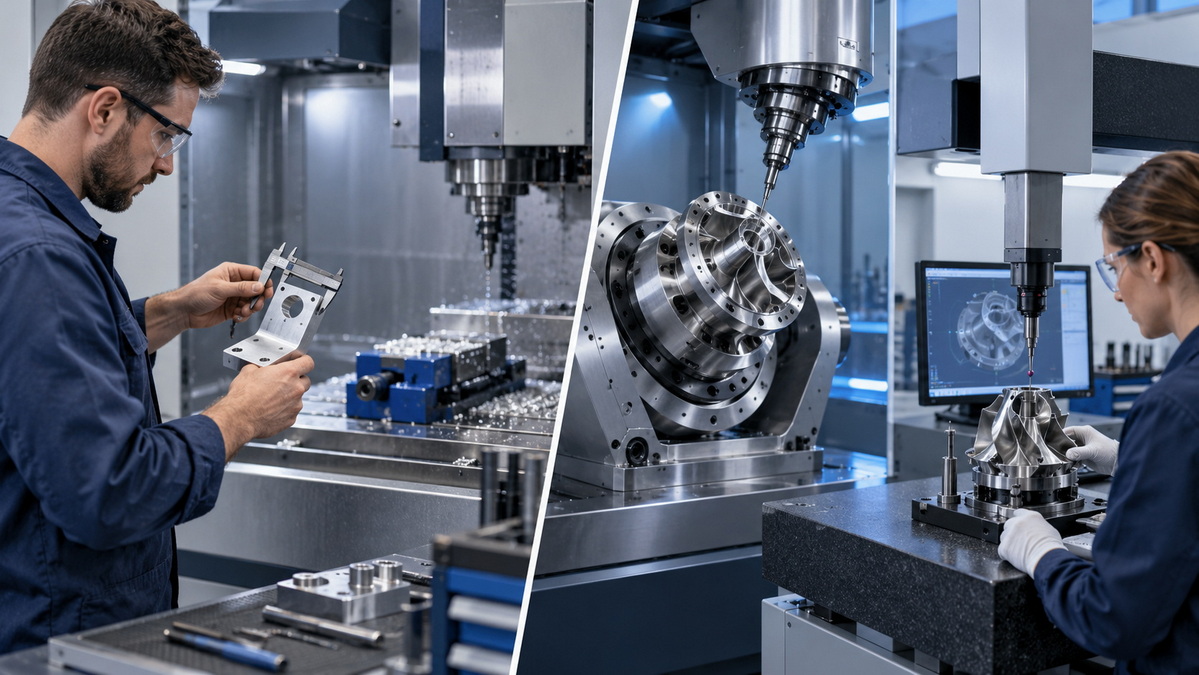
From 1 piece to mass production, our one-stop custom services ensure a worry-free experience for you.
Help Center

Custom Online Laser Cutting Services

Precise laser cut parts for rapid prototyping and production. Free laser cutting quote with DFM review within 1 day. Lead time as fast as 3-5 days.
Start A Laesr Cutting Quote
Drag and drop file or click to upload
ZIP,RAR,TXT,XLSX,XLS,DOCX,DOC,PDF,GIF,JPEG,JPG
All uploads are secure and confidential.
/01
 
High Quality 
Parts
 
Our advanced laser cutting machines deliver precision in every project. Our rigorous quality control ensures that your custom metal parts match exact specifications, giving you flawless results for every order.
 
/02
 
Fast 
Lead  Time
 
You'll experience industry-leading speed in project delivery. Our efficient online system and streamlined production processes minimize wait times, enabling you to receive laser cut parts faster and stay ahead in your market.
/03
 
Engineering
Support
 
Our engineering team transforms design challenges into achievable solutions. We provide hands-on support, ensuring your custom laser cutting projects benefit from the best technical advice and design optimization for superior results.

What is 

Laser Cutting

Laser cutting is a precise and efficient manufacturing process that uses a high-powered laser beam to cut materials into custom shapes and designs. This technology is ideal for creating intricate parts and components with high accuracy and clean finishes.

At RapidDirect, our custom online laser cutting services cater to a wide range of materials including various metals, plastics, and even woods, ensuring versatility for all your project needs. Whether you require a single prototype, low or high-volume production runs, our capabilities support it all with ease. We utilize advanced laser cutters that can handle complex designs and deliver consistently high-quality results.

To streamline your experience, RapidDirect offers an instant quoting system that accepts multiple 3D CAD file formats. Simply upload your design to receive a real-time quote and move seamlessly from design to production, optimizing both time and cost. Our comprehensive online sheet metal laser cutting service combines speed, precision, and accessibility to meet your manufacturing requirements effectively.

Types of Laser Cutters at RapidDirect _____ 

Our laser cutting shop features advanced machinery capable of handling a variety of 
materials with high precision and efficiency.

Fiber Laser Cutting

Fiber laser cutters at RapidDirect provide exceptional precision with minimal setup time, making them suitable for cutting reflective metals. They offer high energy efficiency and fast cutting speeds, essential for both high-volume and custom metal laser cutting projects.
 

CO2 Laser Cutting

Our CO2 laser cutters are highly effective in processing a wide range of materials including metals, plastics, and woods. With a fine laser beam, CO2 technology ensures clean cuts and intricate detailing, enhancing the quality of your laser cut parts.
 

Nd:Yag Laser Cutting

Nd:Yag laser cutters are renowned for their high power and capability to cut through thick and hard materials. At RapidDirect, we deploy Nd:Yag lasers for tasks that demand extreme precision and deep cutting, well-suited for complex industrial and design challenges.
 
Laser Cutting Materials
as-machined-finish

Metals
Metals such as aluminum, stainless steel, and brass are known for their durability, high strength, and excellent corrosion resistance. These properties make them ideal for both structural applications and detailed aesthetic pieces.
as-machined-finish

Metals
Metals such as aluminum, stainless steel, and brass are known for their durability, high strength, and excellent corrosion resistance. These properties make them ideal for both structural applications and detailed aesthetic pieces.
Polishing

Metals
Metals such as aluminum, stainless steel, and brass are known for their durability, high strength, and excellent corrosion resistance. These properties make them ideal for both structural applications and detailed aesthetic pieces.

RapidDirect
Laser Cutting Capabilities ________

Our custom laser cutting services follow international industry standards and market trends to offer premium laser cutting parts to our customers.
  Description
Maximum Part Size 10 mm (0.40 in.)
Minimum Part Size 2X material thickness with a minimum of 1 mm (0.04 in.)
Distance Dimensions Our laser cutting standards depend on ISO 2768-c. Typical size: +/- 0.2 mm (0.008 in.) for length, width, diameter and location.
Maximum Material 
Thickness
Carbon steel < 25 mm (0.98 in.), Stainless steel < 15 mm (0.59 in.), Aluminum < 15 mm (0.59 in.) , Copper < 12.7 mm (0.5 in.)
Kerf (slit size) About 0.5 mm (0.02 in.)
Edge Condition Laser cut edges have matte and vertical lines.
Laser Sources CO2 and fiber lasers. Up to 10 kW.
Reapability +/- 0.05 mm (0.002 in.)
Positioning Accuracy +/- 0.10 mm (0.004 in.)
Lead Time 5-7 days

Explore RapidDirect
Laser Cutting Shop

insert-molding-vs-overmolding
Discover the precision of the RapidDirect laser cutting shop, where modern technology meets skilled work. Our shop houses seven high-tech laser cutters, each with a capacity of 3000*1500, able to cut up to 30mm thick plates with a precision of ±0.01mm. This allows us to work with a wide variety of materials, from metals to plastics and woods, ensuring top-quality results for every project.

Take a closer look at our operations by watching our video tour. See how our laser cutting services bring precision and efficiency to each custom project, demonstrating our dedication to excellence.
700+
Sets of Machine
120+
Countries Shipped
2000+
Customers Served
Advantages of Laser Cutting
The advantages of using laser cutting technology are significant and beneficial across various manufacturing settings:
Precision and Accuracy: Offers exceptional cutting accuracy and consistency, perfect for intricate designs and complex patterns. This precision reduces waste and increases efficiency during the production process.
Versatility: Capable of cutting a variety of materials including metals, plastics, and woods, laser cutting is adaptable for different industry needs. It handles various material thicknesses and complexities without the need for tool changes.
Speed: One of the fastest cutting methods available, it significantly reduces production times. Its speed makes it ideal for both large scale production runs and rapid prototyping, contributing to faster project completion.
Clean Cuts and Smooth Finish: Produces clean, sealed edges that require little to no finishing work, thus minimizing post-processing steps. This not only speeds up production but also enhances the aesthetic quality of the final products.
Reduced Contamination: As a non-contact process, there is minimal risk of material contamination, which is crucial for industries where purity is essential, such as in electronics or medical devices.
Energy Efficiency: Modern laser cutting machines are designed to be energy efficient, which reduces operational costs and supports sustainability efforts in manufacturing practices.
Applications of Laser Cutting
Laser cutting technology is extensively used to fabricate a diverse range of parts, each benefiting from the precision and versatility this method offers:
Precision and Accuracy: Offers exceptional cutting accuracy and consistency, perfect for intricate designs and complex patterns. This precision reduces waste and increases efficiency during the production process.
Versatility: Capable of cutting a variety of materials including metals, plastics, and woods, laser cutting is adaptable for different industry needs. It handles various material thicknesses and complexities without the need for tool changes.
Speed: One of the fastest cutting methods available, it significantly reduces production times. Its speed makes it ideal for both large scale production runs and rapid prototyping, contributing to faster project completion.
Clean Cuts and Smooth Finish: Produces clean, sealed edges that require little to no finishing work, thus minimizing post-processing steps. This not only speeds up production but also enhances the aesthetic quality of the final products.
Reduced Contamination: As a non-contact process, there is minimal risk of material contamination, which is crucial for industries where purity is essential, such as in electronics or medical devices.
Energy Efficiency: Modern laser cutting machines are designed to be energy efficient, which reduces operational costs and supports sustainability efforts in manufacturing practices.
FAQs _____
  • How do I get started with my sheet metal project?

    Starting a sheet metal project is straightforward and efficient with RapidDirect. First, prepare a detailed design of your part or component. If you’re unsure about the specifications, our team of experienced engineers is ready to assist you in optimizing your design for fabrication.

    Next, upload your design files directly to our online quoting system. Here, you can easily configure part specifications such as material selection, thickness, and finishing options. Once submitted, you will receive a customized quote based on your project’s requirements.

    After you approve the quote, we’ll begin the fabrication process. Our advanced machinery and skilled technicians ensure precision and quality. You’ll be updated throughout the process, from manufacturing to the final delivery of your parts.
  • How long does it take to receive my custom parts?

    The lead time for receiving your custom sheet metal parts depends on several factors including the complexity of the parts, the quantity ordered, and the specific fabrication processes required. For simple parts, we can often deliver within as little as 3 days from the time your order is placed and the design is confirmed.

    For more complex assemblies or larger volumes, the production time will be extended accordingly. Once you submit your design through our online quoting system, we provide an estimated delivery timeline along with your quote. This estimate takes into account the current workload in our fabrication facilities and the specific requirements of your project. 

    We strive to minimize turnaround time without compromising on quality, ensuring you receive your parts as quickly as possible while maintaining the highest standards of fabrication.
  • How much does sheet metal fabrication cost?

    The cost of sheet metal fabrication varies widely based on several factors including the complexity of the parts, the type of material used, the quantity of parts, and the specific fabrication processes required. For straightforward, simple parts, the cost can be quite competitive, especially when leveraging our efficient production techniques and advanced machinery.

    To get a specific cost estimate, we encourage you to use our easy-to-use online quoting system. Here, you can upload your design files, select materials, specify quantities, and choose finishing options. Our system will provide you with a detailed quote reflecting the precise cost of your project.

    For larger or more complex orders, costs will adjust based on additional processing and labor required. Our goal is always to offer the best value, combining cost-effectiveness with high-quality results.
  • Is there a minimum order quantity for fabrication services?

    At RapidDirect, we support projects of all sizes. We accommodate both small and large production runs, offering our services for everything from a single prototype to mass production. Importantly, we do not enforce a strict minimum order quantity. This flexibility allows customers, whether startups or large corporations, to leverage our sheet metal fabrication services tailored to their specific needs and scales.
  • What’s K factor in sheet metal?

    The K factor in sheet metal fabrication is a crucial value that influences the accuracy of bend allowances when calculating the flat length of a sheet before bending. Essentially, the K factor represents the ratio of the neutral axis’ location to the material thickness. During bending, the inner surface of the metal compresses while the outer surface stretches, but the neutral axis remains unstressed.

    Determining the correct K factor is vital because it directly affects how much the sheet metal will stretch during bending. Typically, the K factor value ranges between 0.3 and 0.5, depending on the material and the type of bending being performed. Accurately calculating this factor ensures that the bent sheet metal parts fit precisely as designed, maintaining dimensional integrity and functionality.
  • What is the difference between sheet metal and plate metal?

    The primary difference between sheet metal and plate metal lies in their thickness and applications. Sheet metal is typically defined as metal formed into thin and flat pieces that range in thickness from about 0.006 inches to 0.25 inches. Due to its malleability, sheet metal is commonly used in applications requiring precise bending and shaping such as automotive bodies, aircraft panels, and household appliances.

    On the other hand, plate metal is thicker, generally starting from 0.25 inches and going up to several inches. Plate metal is used in applications where durability and robustness are more critical, such as in constructing buildings, bridges, and heavy machinery. The thicker nature of plate metal makes it ideal for structural applications where high strength and resistance to deformation are necessary.
Try RapidDirect
now, for free
U-Need Precision Machinery Co., Ltd.
  +86 0769 23225585
 +86 15916761371
  contact@uneedpm.com
  Room 401-1, Building 4, SongHuZhiGu Research Center, No.6 Minfu Road, Liaobu Town, Dongguan City, Guangdong Province, China
523425

CAPABILITIES

RESOURCES

ABOUT

Subscribe
Copyright © U-Need Precision Machinery Co., Ltd. All rights reserved.     Privacy Policy  Sitemap