Views: 222 Author: Rebecca Publish Time: 2026-01-25 Origin: Site
Content Menu
● What Are Sheet Metal Bending and Forming Defects?
● Key Causes of Sheet Metal Bending Defects
● 1. Cracks and Fractures at the Bend
>> Solutions to Prevent Cracks
● 2. Springback in Sheet Metal Forming
● 3. Wrinkling on Inside Radius or Flanges
● 4. Surface Scratches, Galling, and Die Marks
>> How to Maintain Clean Surfaces
● 5. Dimensional Inaccuracy and Poor Angle Control
>> How to Improve Dimensional Accuracy
● Quick Reference Table: Common Sheet Metal Bending and Forming Defects
● 6. Design Best Practices to Prevent Sheet Metal Defects
● 7. Process Control and Quality Assurance on the Shop Floor
>> Recommended Process Controls
● 8. When to Involve an OEM Manufacturing Partner
● Clear Call to Action: Work With U NEED for Reliable, Defect Controlled Production
● FAQs About Sheet Metal Bending Defects
>> 1. What is the most common sheet metal bending defect?
>> 2. How can I choose the right bend radius to avoid cracking?
>> 3. Why do my parts look scratched even when dimensions are correct?
>> 4. Can springback be completely eliminated?
>> 5. What information should I send to an OEM partner to reduce defects?
Sheet metal bending defects and sheet metal forming defects can quietly destroy yield, push projects off schedule, and erode profit if you do not control them. For OEM brands, wholesalers, and manufacturers outsourcing to partners in China, understanding these issues is critical to getting consistent, high quality metal parts.
In this guide, you will learn the most common sheet metal defects, their root causes, and proven corrective actions, plus process checklists, design tips, and quality practices you can immediately apply in your own projects.

Sheet metal bending and forming defects are unwanted changes in geometry, surface quality, or dimensions that occur when a flat sheet is bent or formed into shape. These include cracking, wrinkling, springback, surface damage, and dimensional inaccuracies that affect fit, function, or appearance.
From an OEM or buyer perspective, these defects in sheet metal parts drive up scrap, rework, and logistics costs, especially when discovered after assembly or finishing. Working with an experienced manufacturing partner that understands these mechanisms and prevents them at the source is therefore essential.
The root causes of sheet metal bending defects typically fall into four main categories: material, product design, process setup, and tooling.
- Material: Low ductility, incorrect temper, uncontrolled thickness, or bending against grain.
- Product design: Too small bend radius, long unsupported flanges, unrealistic tolerances.
- Process setup: Poor press brake calibration, wrong K factor, improper blank holder force.
- Tooling: Worn dies, incorrect V die opening, poor lubrication, unsuitable punch angle.
Understanding which category is driving the defect is the first step to a robust fix instead of relying on trial and error adjustments.
Cracking along the bend line is one of the most severe sheet metal bending defects, because it compromises structural integrity and often forces complete rejection of the part.
- Inside bend radius too small for the material and thickness.
- Bending parallel to the rolling grain direction instead of perpendicular.
- Low ductility alloys or overly hard tempers such as hard aluminum or cold rolled steel.
- Over bending beyond the material formability limit.
- Increase the inside bend radius to reduce stress concentration at the bend line.
- Rotate blanks so bending is perpendicular to the rolling grain direction whenever possible.
- Select a more ductile material or temper when tight bends are required in critical areas.
- Consider pre heating or annealing brittle metals before forming demanding geometries.
For example, when bending high strength steel for an enclosure, specifying a slightly larger radius and changing the grain orientation in the flat pattern can eliminate recurrent cracking without changing the overall design envelope.
Springback is a typical sheet metal forming defect where the part relaxes after bending and the final angle deviates from the target, such as programming 90 degrees but measuring 92 degrees. It is especially common in high tensile materials.
- Elastic recovery of the material after removal of forming pressure.
- Incorrect punch or die angle for the material and thickness.
- Underestimating material stiffness during process development.
- Overbend slightly so the part springs back into the desired angle.
- Use bottoming or coining dies to plastically deform more of the cross section and lock in the angle.
- Optimize tooling geometry, including punch angle and die opening, according to material behavior.
- Run short validation runs and record data; once compensation is defined, repeatability becomes highly stable.
For high volume OEM parts, incorporating measured springback into the flat pattern and the press brake program greatly reduces downstream adjustment and rework.
Wrinkling may not always break the part, but it immediately downgrades perceived quality and can interfere with assemblies, sealing surfaces, or mating components.
- Compressive forces pushing excess material toward the inside of the bend.
- Flanges that are too long and remain unsupported during forming.
- Inadequate die design that allows uncontrolled material flow along the bend.
- Shorten flange length or redesign geometry to reduce free, unsupported material.
- Use stiffer dies or restraining features to guide sheet flow during bending.
- Increase blank holder force in forming operations to keep the sheet flat and taut.
When wrinkles appear on decorative covers or cosmetic panels, they usually indicate insufficient process support and restraint rather than a fundamental material problem.
Surface defects are critical for visible parts or components that will be anodized, painted, or plated. Even when dimensions are correct, scratches and galling can render parts unacceptable for end customers.
- Dirty or worn tooling that transfers scratches and small dents to the part.
- Little or no lubrication on high pressure contact surfaces.
- Direct metal to metal contact under high contact pressure.
- Clean and polish dies on a defined schedule; a scratched die produces scratched parts.
- Apply proper lubricants that match the specific material and forming operation.
- Use harder tool coatings such as nitriding or TiN to minimize sticking, galling, and pickup.
For projects with strict appearance requirements, defining surface quality targets, such as roughness and acceptable mark limits, in the drawings helps align expectations and process control from the beginning.
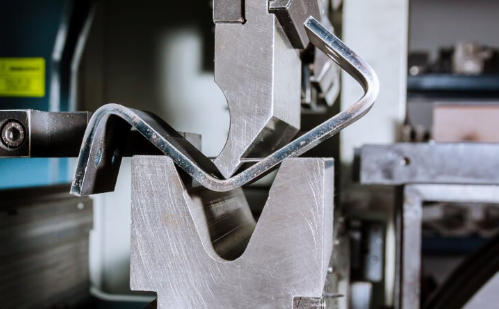
Dimensional errors and inconsistent bend angles are costly because they often appear only after assembly, when parts do not align, seat, or seal as designed.
- Press brake not properly calibrated before or during the production run.
- Variation in sheet thickness between batches or suppliers.
- Incorrect bend allowance or K factor in the flat pattern.
- Tooling not suited to the material and part geometry.
- Calibrate the press brake regularly, especially before repeating a job or scaling up volume.
- Validate and update flat pattern dimensions using real world bend tests, not only theoretical tables.
- Match punch and V die selection to the material thickness and required bend radius.
- Introduce angle measurement systems or offline inspection for critical or tight tolerance projects.
A structured approach with trial runs, measurement, feedback, and correction can greatly stabilize dimensions across batches and suppliers.
| Defect | Main Cause | Primary Solution |
|---|---|---|
| Cracking or fracturing | Tight bend radius, poor grain direction | Increase bend radius, change grain orientation, select more ductile material |
| Springback | Elastic recovery after forming | Overbend angle, use coining or bottoming, adjust punch and die angles |
| Wrinkling | Unsupported flanges, compression at bend | Shorten flange length, stiffen dies, increase blank holder force |
| Surface scratches or galling | Dirty or worn tooling, poor lubrication | Polish and clean dies, apply proper lubricant, use coated tooling |
| Dimensional inaccuracy or angle | Wrong K factor, press brake miscalibration | Calibrate press brake, adjust flat pattern from test bends, choose correct tools |
Many sheet metal forming defects can be prevented early at the design stage, before any tooling setup or mass production begins. Integrating manufacturability into the design reduces risk and shortens development cycles.
- Use realistic minimum bend radii based on actual material and thickness data instead of generic assumptions.
- Orient bends perpendicular to the rolling direction where possible to reduce cracking risk.
- Avoid excessively long, thin flanges unless there is clear support during forming.
- Define clear tolerances and distinguish between critical dimensions and secondary cosmetic dimensions.
For global OEMs working with manufacturing partners in China, sharing both 2D drawings and 3D models, together with functional and cosmetic requirements, allows the supplier to suggest design adjustments that eliminate potential failure modes.
Beyond design, robust process control is essential to keep sheet metal defects at a low and stable level. Consistent procedures help operators maintain quality from the first part to the last part in a batch.
- Conduct first article inspection for every new part number or engineering revision.
- Use standardized setup sheets for each bend or forming operation, including tool identification, V die size, pressure, and key parameters.
- Perform in process checks for angle, key dimensions, and surface quality at defined intervals.
- Define clear rework and scrap criteria so operators can act quickly when deviations appear.
1. Verify correct material grade and thickness before loading any sheet.
2. Confirm tooling type and condition, ensuring it is clean, undamaged, and properly lubricated.
3. Run a small sample batch and measure angles and critical dimensions.
4. Adjust machine program or tooling setup if deviations exceed control limits.
This combination of standard work and feedback loops improves yield and consistency for both small batches and large volume series.
If you are a foreign brand owner, wholesaler, or producer, outsourcing sheet metal parts and related components to a specialized partner can help you control defects without building in house capability.
A full service OEM partner that also offers high precision machining parts, plastic product manufacturing, silicone product manufacturing, and metal stamping can optimize the entire chain from forming to secondary processes. This integrated approach reduces handling damage, improves tolerance stack ups, and simplifies your supplier base.
At U NEED, cross process engineering that connects sheet metal bending with CNC machining, stamping, and plastic or silicone components helps ensure parts fit together correctly at final assembly with minimal rework.
If you are dealing with cracking, springback, wrinkling, surface damage, or dimensional issues in your sheet metal parts, you do not need to solve them alone. U NEED is a China based manufacturer focusing on:
- High precision CNC machining parts for metals and plastics
- Plastic product manufacturing for housings, covers, and functional parts
- Silicone product manufacturing for seals, gaskets, and customized components
- Metal stamping production for medium and high volume projects
Share your drawings, 3D models, and quality requirements with U NEED. Our engineering team will review manufacturability, recommend practical optimizations, and offer a tailored OEM solution that balances performance, cost, and lead time.
Contact us to get more information!
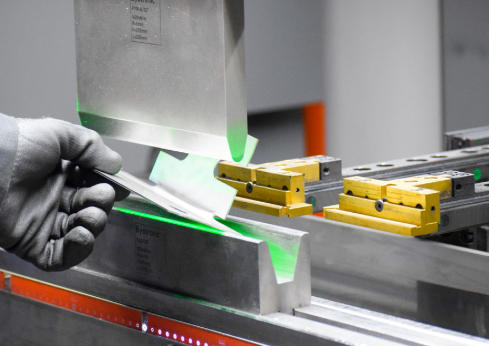
Cracking at the bend line and springback after unloading are among the most frequently seen sheet metal bending defects, especially in high strength steels and hard aluminum alloys.
Use material data from the supplier and apply recommended minimum bend radii according to thickness and alloy, then validate the chosen radius with short test bends before finalizing the design.
This usually indicates worn or dirty tooling, inadequate lubrication, or unsuitable die materials. Improving tool maintenance, polishing contact surfaces, and upgrading tool coatings often removes surface defects.
Springback cannot be completely removed because it is related to elastic recovery, but it can be effectively controlled with calculated overbending, coining or bottoming operations, and optimized tooling geometry.
Provide detailed 2D drawings, 3D models, material specifications, tolerance priorities, surface requirements, and expected annual volume so your manufacturing partner can design a stable, well controlled forming and inspection process.


