Views: 222 Author: Rebecca Publish Time: 2026-01-19 Origin: Site
Content Menu
● How the CNC Milling Process Works
>> CAM Programming and Toolpath Strategy
>> Machine Setup and Workholding
>> Inspection, Finishing, and Surface Treatment
● Common Types of CNC Milling Machines
>> Axis Configurations: 3-Axis, 4-Axis, and 5-Axis
>> Machine Structures: VMC, HMC, Gantry, C-Type
● Key CNC Milling Methods and When to Use Them
● Advantages of CNC Milling for OEM Projects
● Limitations and Design Considerations
● CNC Milling Materials for Metal and Plastic Parts
>> Engineering Plastics and Elastomers
● Industrial CNC vs Desktop CNC
● Practical Design Tips to Reduce CNC Milling Cost
● Why CNC Milling Is Ideal for High-Precision OEM Partners
● When to Combine CNC Milling with Other Processes
● How to Choose a CNC Milling Service Partner in China
>> Recommended Partner Profile
● Take the Next Step With a Reliable CNC Partner
● FAQs About CNC Milling Services
>> 1. What is the difference between CNC milling and CNC turning?
>> 2. When should I choose 5-axis CNC machining?
>> 3. What file formats are best for CNC milling orders?
>> 4. How long does CNC milling production usually take?
>> 5. Can CNC milling handle both metal and plastic parts in one project?
CNC milling is one of the most reliable ways to turn 3D designs into real, high-precision parts across metals and plastics, from prototypes to mass production. For global brands and manufacturers, choosing the right CNC milling service partner in China directly impacts quality, lead time, and total cost of ownership.

CNC milling is a subtractive machining process where a rotating cutting tool removes material from a fixed workpiece based on digital code. Every movement of the tool follows pre-programmed paths, allowing repeatable accuracy down to microns on complex shapes.
- The cutter spins at high speed in multiple directions.
- Material is removed layer by layer until the final geometry is reached.
- The process is ideal for flat faces, pockets, contours, and complex 3D surfaces.
Unlike manual machining, every cut is controlled by Computer Numerical Control (CNC), which significantly reduces human error and ensures consistent quality from part to part.
From initial idea to finished part, CNC milling follows a structured digital workflow that keeps design, machining, and inspection aligned.
Engineers create a precise 3D CAD model with all critical dimensions, tolerances, and surface requirements.
- The model becomes the single source of truth.
- Design for manufacturability (DFM) checks can reduce cost and machining risk.
CAM software converts the CAD model into toolpaths and G-code that the machine understands.
- Selection of tools such as end mills, face mills, drills, and ball nose cutters.
- Optimization of feeds, speeds, stepovers, and stepdowns.
- Simulation to detect collisions and reduce cycle time.
Accurate setup is critical to stable, high-precision machining.
- Raw material is clamped using vises, fixtures, or custom jigs.
- Work coordinate systems and tool offsets are set.
- Coolant, probes, and tool length measurements are verified.
A rigid setup reduces vibration, improves surface finish, and protects both tools and machines.
Once the program is loaded and verified, the CNC mill executes the cutting sequence automatically.
- Automatic tool changers handle multi-tool operations.
- 3-, 4-, or 5-axis CNC milling can be used depending on part geometry.
- Real-time monitoring helps detect overload or tool wear.
Industrial machines can run continuously with very low downtime, making them suitable for OEM and high-volume runs.
After machining, parts go through inspection and finishing to meet final requirements.
- Deburring, edge rounding, and cleaning.
- Dimensional inspection using calipers, gauges, and CMMs.
- Surface treatments such as anodizing, plating, painting, or polishing.
For critical sectors such as automotive, aerospace, or medical, a higher inspection level on key dimensions helps maintain stable quality.
Different machine architectures suit different part sizes, shapes, and production volumes.
- 3-axis CNC mill: Tool moves in X, Y, and Z, suitable for flat faces, simple pockets, and drilled features.
- 4-axis CNC milling: Adds a rotary axis for machining multiple sides in one setup, ideal for shafts and prismatic parts.
- 5-axis CNC machining: Allows tool or table tilt and rotation so the cutter can approach from almost any angle.
5-axis machines excel at complex surfaces, undercuts, and tight-tolerance features on aerospace, mold, and medical components.
- Vertical Machining Center (VMC): Spindle points down, with great visibility and flexible setups for small to medium parts.
- Horizontal Machining Center (HMC): Sideways spindle, better chip evacuation, ideal for heavy parts and higher production.
- Gantry machining center: Bridge-style frame for large plates, molds, and large-format components.
- C-type structure machine: Open-front, compact machines suited for smaller parts and quick jobs where accessibility is important.
Different milling strategies influence cycle time, tool life, and surface quality.
| Milling method | How it works | Best for | Key notes |
|---|---|---|---|
| Climb milling | Tool rotates in same direction as feed | Modern CNC machining | Better surface finish and longer tool life on rigid machines |
| Conventional milling | Tool rotates against feed | Older machines or roughing | Higher cutting forces and heat, less used on new CNCs |
| Face milling | Cutting with the tool face | Flat reference surfaces | Ideal for preparing stock and sealing surfaces |
| Pocket (cavity) milling | Material removal inside boundaries | Molds, dies, internal pockets | Often combines roughing and finishing passes |
| Contour or 3D milling | Follows complex profiles | Aerospace and medical parts | Requires accurate CAM and stable tooling |
| High-speed milling | High RPM with light cuts | Thin walls, heat-sensitive parts | Reduces deformation and improves surface finish |
| Ramp or helical entry | Tool enters diagonally or helically | Starting slots or deep cavities | Reduces tool stress compared with straight plunging |
Process engineers often blend methods, for example roughing with high-speed milling and finishing with contour milling to balance cost and quality.
CNC milling offers a powerful combination of precision, efficiency, and flexibility.
- High accuracy and repeatability
Tight tolerances are achievable with proper machines and process control, supporting demanding industries such as automotive and medical.
- Complex geometries in one setup
Multi-axis machines create organic curves, deep pockets, and free-form surfaces that would be very difficult or uneconomical manually.
- Efficiency from prototype to mass production
Once toolpaths are validated, the same program can be reused for repeat orders, shortening future lead times.
- Material versatility
Common options include aluminum, steel, stainless steel, brass, copper, engineering plastics, and selected composites.
- Reduced human error
Digital workflows and automated cutting minimize operator variability and improve first-pass yield.
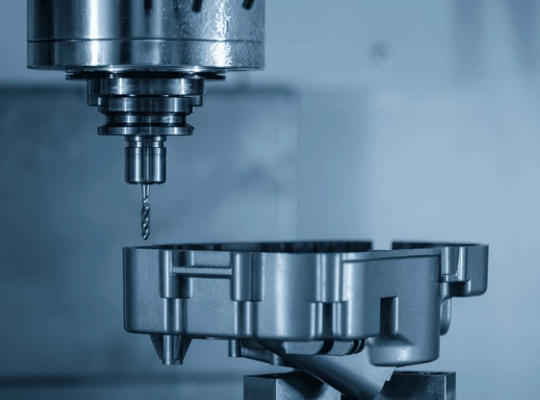
Understanding the limits of CNC milling helps optimize both function and cost.
- Design complexity
Very deep cavities or extremely thin walls are difficult or expensive to mill, and sometimes casting, metal injection molding, or 3D printing is more suitable.
- Material waste
As a subtractive process, milling generates scrap, especially when starting from solid blocks of expensive metals.
- Setup and programming cost
For very low quantities, NC programming and fixture costs can outweigh the part value unless tolerances are critical.
- Machine and skill limitations
Not every supplier has 5-axis capability or senior programmers, and complex parts require both advanced equipment and experienced teams.
Collaboration with a capable machining partner in the early stage helps align performance requirements with a cost-effective process plan.
Choosing the right material is as important as choosing the right machining strategy.
- Aluminum alloys: Excellent machinability and good strength-to-weight ratio, widely used in housings, brackets, and heat sinks.
- Carbon steel: Strong and economical for structural parts and mechanical components.
- Stainless steel: Corrosion-resistant for food, medical, and outdoor applications.
- Brass and copper: Suitable for electrical components and precise fittings.
- Titanium: High strength and low weight for aerospace, sports, and medical applications.
- ABS, PC, POM, PA and similar engineering plastics: Used in functional prototypes, structural plastic parts, and low-volume end-use components.
- Silicone and rubber: Often processed by molding, but machined for special gaskets, custom seals, and fixtures.
For hybrid projects combining metal CNC parts, plastic housings, and silicone seals, selecting compatible materials and tolerances is essential to avoid assembly issues later.
Industrial and desktop CNC machines each have their place in modern product development.
- Industrial CNC machines
Built for continuous operation, high rigidity, and tight tolerances, ideal for production parts in metals and engineering plastics.
- Desktop CNC machines
Smaller, lighter systems suitable for training, small prototypes, soft materials, and PCB routing.
For long-term OEM programs that demand consistent quality and international compliance, industrial CNC machining centers are generally the better choice.
Simple design adjustments can significantly reduce machining time and unit cost.
1. Standardize wall thickness
Avoid ultra-thin walls unless necessary, as moderate thickness improves stability and reduces chatter.
2. Minimize extremely deep pockets
Very deep cavities require long tools, multiple steps, and slower feeds, all of which add cost.
3. Use standard radii
Internal corners with standard radii that match common tool sizes reduce roughing passes.
4. Consolidate setups
Parts that can be machined with 3- or 4-axis setups are typically more economical than designs that strictly require 5-axis.
5. Combine components wisely
In some cases, one complex milled part can replace several assembled components, reducing assembly time and inventory.
A structured design for manufacturability review with your machining partner often reveals cost-saving opportunities before production.
Global brands, wholesalers, and manufacturers rely on CNC milling for critical, repeatable components.
- Stable quality across long-term production
- Fast response to engineering changes and product updates
- Compatibility with automated inspection and traceability requirements
For overseas buyers working with Chinese manufacturers, a strong CNC milling partner can often support not only metal parts, but also plastic components, silicone products, and stamped metal parts for complete assemblies.
To achieve the best combination of performance and cost, CNC milling is often used together with other manufacturing technologies.
- CNC turning for shafts, bushings, and cylindrical geometries
- Metal stamping for high-volume sheet metal components with consistent thickness
- Plastic injection molding after CNC prototypes validate the design
- Silicone molding for seals, gaskets, and energy-absorbing elements
Using CNC milling for prototypes and critical interfaces, then transferring suitable parts to stamping or molding, creates a scalable and flexible supply chain.
Selecting the right machining partner is crucial for long-term OEM cooperation.
- Machining capabilities
Confirm axes, supported materials, tolerances, and part size range.
- Quality management
Check for structured quality systems, CMM inspection capability, and clear QC procedures.
- Engineering support
Look for the ability to provide DFM feedback, process optimization, and cost-reduction suggestions.
- Lead time and scalability
Understand standard lead times, rush options, and capacity to support future volume growth.
- Communication and after-sales
Dedicated project managers, clear documentation, and responsive communication are essential for overseas projects.
A strong China CNC machining service provider typically offers:
- In-house CNC milling, turning, and related processes
- Experience across automotive, industrial, electronics, and consumer sectors
- Long-term cooperation with overseas OEM brands and wholesalers
If your business needs high-precision machined components, plastic parts, silicone products, or metal stamped parts, partnering with an experienced Chinese manufacturer can give you a strong technical and cost advantage. Share your drawings, 3D models, and quantity requirements, and request a detailed quotation that covers machining, finishing, inspection, and logistics. A capable team will help you optimize design, control quality, and shorten delivery cycles so that you can focus on product development and market growth while your manufacturing partner takes care of the production details.
Contact us to get more information!
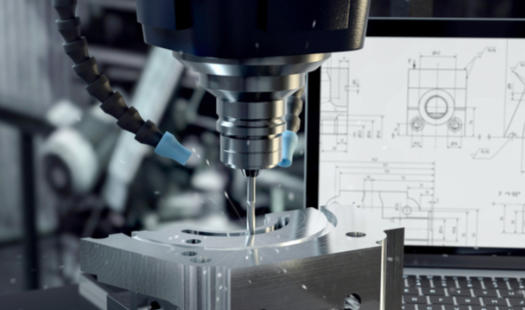
CNC milling uses a rotating tool and a fixed or slowly moving workpiece to create prismatic and 3D shapes, including pockets, slots, and complex contours. CNC turning rotates the workpiece against a stationary cutting tool and is mainly used for cylindrical parts such as shafts, pins, and bushings.
5-axis CNC machining is recommended for parts with complex surfaces, undercuts, or features that require precise machining from multiple angles in a single setup. Typical examples include turbine blades, medical implants, complex molds, and high-precision aerospace or automotive components.
Neutral 3D formats like STEP and IGES are widely accepted for CNC milling projects, along with native CAD formats from major software platforms. Two-dimensional drawings in PDF or DWG format are also helpful for highlighting tolerances, surface finishes, and critical dimensions.
Lead time depends on part complexity, quantity, and finishing requirements. Simple prototypes can often be completed in a few days, while complex assemblies or multi-process orders may require several weeks from confirmation to shipment, especially at higher volumes.
Yes. Many machining suppliers can process metals, engineering plastics, and even tooling for plastic and silicone parts, allowing them to support integrated OEM projects. This is especially valuable when a single assembly contains precision metal inserts, plastic housings, and custom silicone seals.
1. https://geomiq.com/blog/cnc-milling-guide/
2. https://jlccnc.com/blog/cnc-milling
3. https://www.makerverse.com/resources/cnc-machining-guides/10-big-benefits-of-cnc-milling/
4. https://www.china-machining.com/blog/cnc-milling-advantages-and-disadvantages/
5. https://www.unionfab.com/blog/2023/09/cnc-milling-vs-turning-processes-applications-pros-cons
6. https://www.3erp.com/blog/turning-vs-milling/
7. https://www.lsrpf.com/blog/precision-cnc-milling-explained-process-advantages-and-key-applications


