Views: 222 Author: Rebecca Publish Time: 2026-01-25 Origin: Site
Content Menu
● What Is Sheet Metal Fabrication and Why It Matters
● Major Sheet Metal Fabrication Techniques and How They Work with CNC Machining
>> Laser Cutting: Fast, Precise Profiling
>> CNC Punching (Stamping): High‑Speed Hole Patterns
>> CNC Bending: Turning Flat Sheets into 3D Structures
>> Welding and Joining: Building Rigid Assemblies
>> Surface Finishing and Corrosion Protection
● How Sheet Metal Fabrication and CNC Machining Work Together in OEM Projects
>> Typical Hybrid Production Flow
>> Industry Use Cases: Automotive, Electronics, and Machinery
● Choosing Between Sheet Metal Fabrication and Fully CNC‑Machined Parts
● Practical DFM Checklist for Sheet Metal and CNC Machining
● 2025–2026 Trends in Smart Sheet Metal Fabrication
● Why Work with a One‑Stop OEM Partner Like U‑NEED
● When to Involve Your Sheet Metal and CNC Supplier
● Call to Action: Start Your Next Sheet Metal and CNC Project with U‑NEED
● FAQs About Sheet Metal Fabrication Techniques and CNC Machining
>> 1. What are the most common sheet metal fabrication techniques?
>> 2. When should I combine sheet metal fabrication with CNC machining?
>> 3. How do laser cutting and punching compare for sheet metal parts?
>> 4. What tolerances are realistic for sheet metal parts?
>> 5. How are surface finishes chosen for sheet metal products?
Sheet metal fabrication and CNC machining often work together to deliver high‑precision, high‑volume metal parts for automotive, electronics, aerospace, and industrial equipment manufacturers. When engineers understand how each sheet metal process behaves and how it integrates with CNC machining, they can design parts that are easier to produce, more reliable in performance, and more competitive in cost.

In this guide, you will learn:
- The most common sheet metal fabrication techniques and how they work.
- How those techniques integrate with CNC machining in real OEM projects.
- Practical design tips, tolerances, and cost drivers for overseas buyers.
- Key 2025–2026 trends in smart sheet metal manufacturing and what they mean for your supply chain.
- How a one‑stop partner like U‑NEED can support combined sheet metal, CNC machining, plastic, silicone, and stamping projects.
Sheet metal fabrication is the process of transforming flat metal sheets into functional parts through cutting, forming, joining, and finishing operations. Typical materials include cold rolled steel, galvanized steel, stainless steel, and aluminum alloys.
For OEM brands and industrial buyers, sheet metal fabrication offers:
- High flexibility for brackets, enclosures, chassis, cabinets, frames, and panels.
- Short lead times compared with castings or fully machined blocks, especially for thin‑wall parts.
- Good cost‑performance at medium to high volumes, especially when modern automation and nesting software are used.
CNC machining complements sheet metal fabrication by adding tight‑tolerance features such as precision holes, countersinks, milled slots, and sealing surfaces that conventional sheet metal tools cannot easily achieve.
Laser cutting uses a high‑power laser beam to melt or vaporize material and cut complex profiles with high accuracy and clean edges. Modern fiber laser machines can cut stainless steel and aluminum sheets at high speeds with good dimensional accuracy, depending on thickness and setup.
Key advantages:
- Complex shapes and fine details without dedicated stamping tools.
- High precision and repeatable cuts, ideal for tight assemblies.
- Improved material utilization through intelligent nesting that reduces scrap.
Typical CNC machining integration:
- Laser cutting defines the part outline and basic openings, then CNC machining refines critical interfaces such as bearing seats, reference surfaces, and threaded holes.
- For thicker flanges or multi‑layer assemblies, CNC milling may be used after laser cutting to tune flatness or create counterbores for fasteners.
CNC punching uses a turret punch or press with tools and dies to stamp holes, louvers, embosses, and simple shapes in sheet metal. Once the tooling is in place, the process is extremely fast and efficient for repetitive patterns such as ventilation holes, grids, and knockouts.
Key advantages:
- Very high throughput for standard hole sizes and patterns.
- Lower operating cost per part than laser for many high‑volume jobs once tooling is amortized.
- Ability to form special features like louvers and embosses directly in the sheet.
Limitations:
- Restricted to shapes that match the available tools, and complex contours may require multiple hits or other processes.
Where CNC machining fits:
- After punching, CNC machining can deburr critical edges or add precision countersinks and threads where fasteners must seat perfectly.
- For hybrid parts, punched patterns may be combined with CNC‑machined frames or inserts for improved stiffness or alignment.
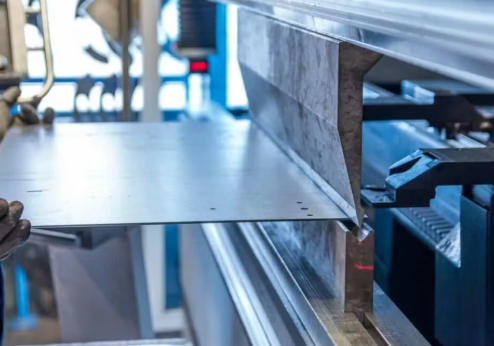
CNC bending uses press brakes and special tooling to bend sheet metal into brackets, frames, chassis, and other three‑dimensional geometries. Modern CNC press brakes with angle sensors and compensation algorithms significantly improve angle control and repeatability.
Key design considerations:
- Bend radius and K‑factor: inner radii should usually be at least one material thickness to avoid cracking and maintain dimensional accuracy.
- Bend reliefs around corners and cutouts reduce distortion and tearing.
- Tolerance stacking: multiple bends in one part can accumulate error, so critical interfaces may require CNC machining after bending.
Common CNC machining collaboration:
- Machining of mounting surfaces after bending to ensure flat contact with mating parts.
- Slotting or milling for cable entries, hinge locations, or precision alignment features that cannot be formed by bending alone.
Sheet metal parts are often joined by MIG/TIG welding, laser welding, spot welding, riveting, or bolting to create frames, enclosures, and structural assemblies. With good fixtures and controlled welding parameters, manufacturers can achieve consistent penetration, minimized distortion, and high structural strength.
Important points for OEM buyers:
- Weld design affects both strength and cost; long continuous welds are stronger but more expensive than intermittent welds.
- Heat input can cause warpage, so designers should avoid concentrating welds in small areas and may specify machining of critical surfaces after welding when necessary.
- For thin stainless steel or aluminum, laser welding can reduce spatter and distortion while improving appearance.
Integration with CNC machining:
- CNC machining is often used after welding to restore flatness and alignment, machine reference faces, and ensure accurate hole positions in assembled frames.
- Fixtures for welding are frequently CNC‑machined to maintain repeatability over large batches.
After forming and joining, sheet metal parts usually undergo finishing processes such as deburring, grinding, powder coating, painting, passivation, or plating. Proper finishing improves appearance, corrosion resistance, and durability, especially for outdoor or harsh environments.
Typical choices:
- Powder coating for colored, durable surfaces on steel and aluminum.
- Anodizing for aluminum housings, offering corrosion resistance and decorative colors.
- Galvanizing or the use of galvanized sheet for robust outdoor protection.
CNC machining's role:
- Critical interfaces are often masked during coating and may be machined again after finishing to maintain exact thickness and fit.
- For tight‑tolerance fits, machining after coating can prevent interference and ensure smooth assembly.
For many OEM applications, a hybrid process chain provides the best mix of speed, flexibility, and accuracy:
1. Laser cutting or CNC punching to create flat profiles and holes.
2. CNC bending to form three‑dimensional structures.
3. Welding and joining of sub‑assemblies.
4. CNC machining to refine critical surfaces, slots, and precision holes.
5. Surface treatment and final finishing.
This combination allows you to keep most of the part in cost‑efficient sheet metal fabrication while using CNC machining only where its tight tolerances and complex geometries are truly needed.
Automotive and EV applications often use laser‑cut, formed, and welded battery trays, brackets, and underbody shields, followed by CNC machining at mounting faces to ensure precise alignment with the chassis. Electronics and telecom products rely on punched ventilation patterns and CNC‑bent panels for rack enclosures, server cabinets, and device housings, with CNC‑machined cutouts or inserts for connectors and high‑density assemblies. Industrial machinery combines heavy‑gauge sheet metal with machined interface plates where linear guides, motors, or sensors are mounted.
By understanding these combinations, OEM buyers can design metal parts that are easier to fabricate and more consistent in quality across suppliers.
Sheet metal fabrication is ideal when you need thin‑wall, lightweight, and moderately tolerant parts such as housings, covers, brackets, and panels. Fully machined parts from bar or plate stock are better when you need very tight tolerances, thick sections, or complex three‑dimensional shapes such as manifolds, precision blocks, fixtures, and rotating components.
Key decision factors include:
- Material thickness: thin sheets favor sheet metal fabrication, while thicker blocks often favor machining or casting.
- Volume: medium‑to‑high volumes justify dedicated sheet metal setups and sometimes progressive dies; low volumes may stay with CNC machining plus simple bending.
- Tolerances and geometry: where flatness and angle tolerances are moderate, sheet metal is usually sufficient; where very high accuracy is required, machining is often preferred.
Many successful OEM projects use sheet metal for outer structures and machined inserts for high‑precision interfaces, giving a balanced cost and performance profile.
When you design sheet metal parts that will integrate with CNC machining, keep the following checklist in mind:
- Match material and thickness to your strength and stiffness requirements, and avoid unnecessary over‑engineering.
- Keep consistent bend radii across the design to simplify tooling and improve repeatability.
- Add bend reliefs and corner reliefs near cutouts to reduce tearing and warpage.
- Design hole‑to‑edge distances large enough to prevent distortion during punching or laser cutting.
- Avoid very narrow slots and tiny isolated tabs that are difficult to cut and bend reliably.
- Reserve CNC machining for functional surfaces and threads where tolerances truly matter.
Sharing your 3D models and tolerance requirements early with your supplier enables a better DFM review and often reduces overall project cost.
Global sheet metal fabrication is rapidly adopting automation, digitalization, and advanced laser technology to increase productivity and traceability. Automated laser cutting and bending cells support extended operation with minimal supervision, while robotic welding stations deliver consistent weld quality and lower rework rates.
Manufacturing execution systems and ERP integration are increasingly used to track batches, materials, and process parameters in real time. Higher‑power fiber lasers and improved optics support thicker materials and faster cutting speeds with better edge quality.
For overseas buyers, these improvements mean shorter lead times, more stable quality, and better data for audits and compliance.
U‑NEED is a China‑based OEM manufacturer specializing in high‑precision CNC machined parts, plastic products, silicone products, and metal stamping, which makes it easier to manage complex assemblies that combine multiple processes. By integrating sheet metal fabrication with CNC machining and other capabilities in one facility or network, you can reduce the number of suppliers and interfaces in your supply chain.
This integrated approach helps shorten development cycles by providing design‑for‑manufacturing feedback on metal, plastic, and silicone parts from one engineering team. It also simplifies logistics and quality management through unified inspections and documentation.
Typical collaboration models include early prototype runs with laser‑cut and bent sheet metal plus CNC‑machined inserts, design optimization for volume production, and full‑service OEM support from engineering review to mass production and packaging.
Involve your manufacturing partner as early as possible in the product development cycle, ideally during the first round of mechanical design. Early collaboration allows potential manufacturing risks in bends, welds, and assemblies to be identified and resolved before they become costly problems.
It also supports better process selection, including the choice between laser cutting and punching, bending strategies, and machining allowances. With accurate information, quotations and lead time estimates become more reliable.
For best results, share your 3D CAD files and 2D drawings with tolerances, annual volume estimates and target prices, and any environmental, regulatory, or testing requirements such as IP ratings, corrosion tests, or vibration criteria.
If you are planning a new sheet metal fabrication and CNC machining project or looking to optimize an existing product, this is the right time to review your design with a capable OEM partner. U‑NEED can support you from prototype to mass production, combining sheet metal fabrication with CNC machining, plastic molding, silicone molding, and metal stamping in a coordinated workflow.
You are welcome to send your 3D files and drawings for a free DFM review and quotation, request sample parts to validate fit and performance, or discuss long‑term supply agreements for your global markets. Contact U‑NEED today to talk through your project requirements and explore the most suitable manufacturing route for your metal and plastic components.
Contact us to get more information!
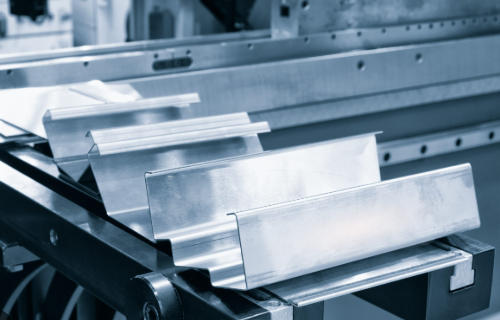
The most common sheet metal fabrication techniques include laser cutting, CNC punching, bending, welding, and surface finishing such as powder coating or plating. These processes often work together in one production flow to transform flat sheets into rigid assemblies.
You should combine sheet metal fabrication with CNC machining when you need lightweight structures that also contain high‑precision features, such as machined mounting faces, threads, or sealing surfaces. This hybrid approach keeps overall cost lower while still meeting demanding performance requirements.
Laser cutting offers greater flexibility and precision for complex contours and small batches, while punching is usually more cost‑effective for high‑volume, repetitive hole patterns and standard shapes once tooling is available. Many factories use both methods and select the best option based on geometry and volume.
Typical sheet metal parts can hold reasonably tight flatness and positional tolerances for many dimensions, but multiple bends and welds can increase variation. For features that require higher accuracy, designers often specify CNC machining after forming or welding to achieve the required tolerances.
Surface finishes are chosen based on corrosion resistance, appearance, environmental exposure, and cost. Common options include powder coating, painting, anodizing for aluminum, and galvanizing for steel. For critical interfaces or sliding fits, these areas may be masked or machined after finishing to keep dimensions within tolerance.


