Views: 222 Author: Rebecca Publish Time: 2026-01-29 Origin: Site
Content Menu
● Why Hole Cutting in Sheet Metal Is Not “Just a Hole”
● Fundamentals: Function, Thickness, and Deformation
>> Thickness-to-Diameter Ratio
>> Deformation, Burrs, and Warping
● Mechanical Hole Cutting Techniques
>> CNC Punching
>> CNC Drilling and Face Milling for Holes
● Thermal and Non-Thermal Cutting Techniques
● Quick Comparison of Sheet Metal Hole Cutting Methods
● Tolerance Considerations: What Drawings Often Miss
● Practical Design Rules for Sheet Metal Holes (DFM Checklist)
● Application-Based Guide: Choosing the Right Hole Cutting Method
>> Fastener Holes (Bolts, Rivets, PEM Inserts)
>> Ventilation Patterns and Decorative Perforations
>> Cosmetic and Precision Cutouts (Logos, Custom Shapes)
>> Tight Tolerance Panels for Lab and Industrial Equipment
● Typical Tolerance Table for Sheet Metal Holes
● 2025–2026 Trends in Sheet Metal Hole Cutting
● Why Work with an Integrated OEM Partner
● Clear Call to Action: Get Your Sheet Metal Holes Cut Right
● FAQ
>> 1. How small can a laser-cut hole be in sheet metal?
>> 2. When should I choose punching instead of laser cutting for holes?
>> 3. How close can holes be to the sheet edge or a bend?
>> 4. How do I decide which tolerance to specify on my drawings?
>> 5. Can waterjet cutting replace laser cutting for precision sheet metal holes?
Hole cutting in sheet metal looks simple on a drawing, but in production it directly impacts fit, strength, appearance, and total cost. Engineers and buyers who understand how different cutting methods behave in real sheet stock can avoid rework, delays, and quality issues.

In this guide, you will learn:
- The fundamentals of hole cutting in sheet metal, including function, thickness, and deformation control.
- How mechanical vs thermal cutting techniques compare for edge quality and tolerances.
- Practical tolerance ranges and design rules for holes in thin sheet metal.
- Application-based recommendations for fastener holes, ventilation patterns, logos, and precision cutouts.
- New sections on DFM checklists, typical tolerance tables, and recent trends so you can design more manufacturable parts.
For international OEM projects, partnering with a one-stop supplier that combines CNC machining, plastic and silicone molding, and metal stamping is often the most reliable way to keep hole tolerances and part performance under control from prototype to mass production.
Cutting a hole in sheet metal is about managing mechanical and thermal realities of the material, not just choosing a tool from a catalog. Every cut changes local stresses, stiffness, and surface condition, especially when you work below about 2 mm thickness.
Key design questions:
- What is the function of the hole (fastener, venting, locating, cosmetic, inspection)?
- What is the material and thickness (mild steel, stainless, aluminum, coated steel, copper)?
- How much deformation, burr, and taper can the assembly tolerate?
Even a small deviation in hole diameter or position can cause assembly misalignment, leaking joints, or cosmetic defects in painted or anodized panels.
When designing sheet metal holes, three fundamentals should guide your decisions.
Different functions require different tolerance levels:
- Structural fastener holes (bolts, rivets, PEM inserts) typically demand tight, predictable tolerances.
- Ventilation and decorative patterns can accept looser tolerances as long as pattern alignment and appearance remain acceptable.
- Sensor or alignment features may need positional accuracy as important as diameter tolerance.
For many projects, fastener holes are designed with relatively tight bands such as ±0.05–0.15 mm in thin metals, depending on process capability and inspection level.
Hole diameter relative to sheet thickness dictates whether a process will distort the material or damage tools.
General guidelines include:
- For mechanical punching, design hole diameter at least 1.0–1.2 times the material thickness.
- For laser cutting, keeping holes at or slightly above material thickness gives more stable quality, although smaller values can be achieved with careful control.
- For waterjet, minimum hole size is usually at least equal to sheet thickness because of jet diameter and taper.
Pushing below these ratios often leads to burrs, broken punches, heavy taper, and out-of-tolerance parts.
Thin sheet metal is sensitive to mechanical and thermal input; every cut can introduce dimpling, warping, and edge burrs.
Important points:
- Cutting near existing bends, embosses, or formed features increases distortion risk.
- Punching large hole arrays in thin gauge material can cause sheet growth or bowing without proper clamping and sequencing.
- Thermal processes can create a heat-affected zone that influences later forming, welding, and finishing.
Mechanical methods physically shear material with tooling, offering high speed and low cost in medium to high volumes.
CNC punching is ideal for high-speed, repetitive hole patterns in mild steel, stainless, and aluminum sheet.
Key characteristics:
- Edge quality: medium, with some burr and rollover that usually needs light deburring.
- Minimum hole size: typically at least 1.0–1.2 times sheet thickness, depending on tool design and material hardness.
- Tolerances: commonly around ±0.1–0.2 mm on hole size with precision tooling and good maintenance.
CNC punching is an excellent choice for large grids of ventilation holes, standard shapes, and forms where you want low cost per part at volume.
Drilling and milling are more common in thicker plate and machined parts, but they also appear in sheet metal assemblies when higher precision is required.
- CNC drilling is mainly used when gauge is above roughly 2.5 mm or as a secondary operation after laser or punching, for example to tighten tolerances or add countersinks.
- Face milling for holes is less common but valuable when you need a very flat sealing surface or a large diameter that is not suitable for punching.
These methods are slower and more expensive per hole, but they deliver tighter tolerances, better surface finish, and precise geometrical relationships.
Thermal methods use energy to melt material, while waterjet removes material with an abrasive high-pressure stream. Each behaves differently in terms of edge quality and dimensional control.
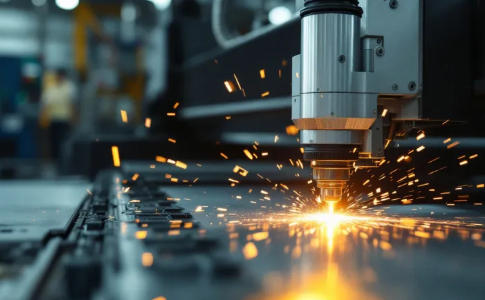
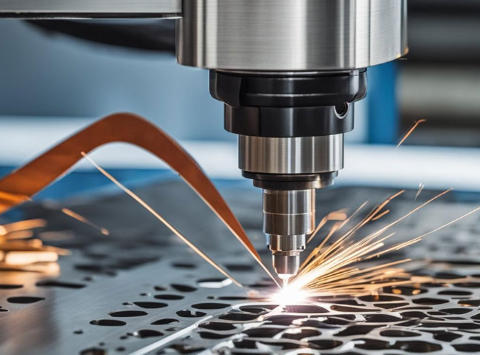
Laser cutting is a widely used technology for precise sheet metal hole cutting up to moderate thicknesses.
Benefits include:
- High precision and repeatability, with tight cutting tolerances on thin metals when equipment is well set up.
- Excellent performance for complex geometries, small holes, and mixed outlines and cutouts.
- Relatively small heat-affected zone, especially on thin stainless steel and aluminum.
Design considerations:
- Keep hole diameters at or above material thickness for more stable quality.
- Account for kerf width and taper, especially in thicker plates.
- Consider shielding gas and process tuning to reduce burn marks or discoloration on cosmetic surfaces.
Plasma is better suited to thicker, non-precision parts, where speed matters more than edge quality.
Typical characteristics:
- Edge quality is relatively rough, with more heat-affected zone and slag than laser.
- Minimum hole diameters are larger, often around 1.5 times the material thickness or more.
- Tolerance bands are looser compared with laser or high-end waterjet.
Plasma is rarely used for tight-tolerance fastener holes in thin gauge sheet but can be cost-effective in heavy structural components.
Waterjet is a cold cutting process, ideal for materials where heat would cause problems or change material properties.
Advantages:
- No heat-affected zone and no thermal distortion, crucial for heat-sensitive alloys, composites, and laminated materials.
- Very good edge quality, though sometimes requiring minimal polishing or deburring.
Limitations:
- Slower and usually more expensive per part than laser for thin metals.
- Tolerances are typically wider than high-precision laser on thin sheet, but still sufficient for many applications.
- Requires stable fixturing to prevent part movement during cutting.
| Method | Edge Quality | Typical Minimum Hole Diameter | Typical Tolerance Range (thin sheet) | Best For |
|---|---|---|---|---|
| CNC Punching | Medium | ≥ 1.0–1.2 × material thickness | ≈ ±0.1–0.2 mm | High-speed hole arrays, standard shapes |
| Laser Cutting | High | ≈ material thickness (sometimes slightly below) | ≈ ±0.05–0.2 mm | Precision holes, complex profiles |
| Plasma | Low | ≥ 1.5 × material thickness | Looser, suited to non-critical work | Thick structural parts, lower precision needs |
| Waterjet | Very high | ≥ material thickness | ≈ ±0.1–0.5 mm | Heat-sensitive materials, premium edge quality |
CAD models often assume perfectly rigid sheets and no thermal influence, but real sheet metal behaves differently once cutting starts.
Important tolerance drivers:
- Pierce points and lead-ins for laser cutting can leave dross or micro-notches that affect press-fit or sealing.
- Tool wear in punching slowly changes hole size and burr condition over long production runs.
- Thermal pull on long, thin sheets can change hole-to-hole spacing if not controlled by proper sequencing and fixturing.
Typical ranges that many shops work within:
- Laser cutting: about ±0.05–0.2 mm on thin metals, depending on material and equipment.
- CNC punching: often around ±0.1–0.2 mm on diameter and position with high-quality tooling.
- Waterjet: approximately ±0.1–0.5 mm depending on speed, thickness, and fixturing.
For critical interfaces with fasteners, gaskets, or precision mating parts, a common approach is to use laser or punching for rough creation and CNC machining for finishing key holes to very tight tolerances.
To improve manufacturability and reduce rework, use a simple design for manufacturing checklist for hole layout.
Recommended practices:
1. Hole diameter vs thickness
- Design hole diameter at least equal to sheet thickness for most processes, and at least 1.2 times thickness for punched holes.
2. Hole-to-hole spacing
- Keep holes at least 2 times material thickness apart to avoid tearing or distortion during forming and cutting.
3. Hole-to-edge distance
- Maintain at least 1 times material thickness from the hole edge to the sheet edge, increasing that margin for large holes or high-load regions.
4. Holes near bends
- Place holes at least 2 times material thickness away from the start of the bend radius to reduce deformation.
5. Process-appropriate tolerances
- Avoid specifying machining-level tolerances on holes that will only be laser-cut or punched unless a finishing operation is planned.
6. Surface finish expectations
- Clearly mark critical sealing or bearing surfaces and plan for secondary operations such as reaming, countersinking, or face milling where necessary.
Real fabrication decisions depend on function, material behavior, and tolerance stack-up across the entire assembly.
Fastener holes are usually among the most critical features in sheet metal components.
- Typical tolerance targets: around ±0.05–0.15 mm for bolt and rivet holes in thin metal, depending on the application.
- Laser cutting often serves as the first choice for steel and aluminum up to around 6 mm, because it delivers clean edges and repeatable diameters.
- For high-volume parts in mild steel, CNC punching with carefully selected tooling can be more cost-effective while still meeting many industrial fit requirements.
For blind PEM inserts, ensuring flatness and low warpage around the hole zone is crucial to avoid poor press-fit and potential in-service failures.
Ventilation and decorative patterns focus on pattern consistency and cost rather than ultra-tight individual hole tolerances.
- Hole count is high, but each individual hole can usually accept a moderate tolerance.
- CNC punching excels when you need large arrays, where speed and tool flexibility are essential.
- Waterjet is useful for non-metallic panels or heat-sensitive decorative finishes where thermal methods might cause discoloration or damage.
In these designs, emphasize pattern alignment, spacing, and cosmetic requirements rather than unnecessarily tight diameter limits.
Logos, windows, and branding cutouts must balance appearance and dimensional control.
- Fiber laser is typically the preferred process, particularly for stainless steel, aluminum, and copper alloys.
- Designers should consider burn marks, dross, and micro-taper, specifying post-processing only where cosmetic requirements demand it.
Using suitable assist gas and carefully tuned parameters helps reduce oxidation and discoloration on visible surfaces.
Instrument panels and precision equipment covers often require tight positional tolerances and a flawless cut quality.
- Combining waterjet or laser for blanking with CNC milling for final hole sizing and counterboring is a common strategy.
- For complex assemblies, using a coordinate measuring machine for inspection ensures that hole positions match 3D models and functional gauges.
These projects benefit from working with a supplier that offers integrated sheet metal fabrication, CNC machining, and finishing.
The following table summarizes practical tolerance ranges that many manufacturers can achieve, which helps engineers avoid over- or under-specifying drawings.
| Process & Scenario | Typical Hole Size Tolerance (thin sheet) | Notes |
|---|---|---|
| Laser-cut holes in thin mild steel | ≈ ±0.05–0.15 mm | Tightest with high-end fiber lasers |
| CNC punched holes in mild steel | ≈ ±0.1–0.2 mm | Depends on tool wear and clearance |
| Waterjet-cut holes in thin metals | ≈ ±0.1–0.3 mm | Slower speeds improve accuracy |
| CNC machined (drilled or reamed) holes | ≈ ±0.01–0.05 mm | Best choice for critical interfaces |
These values are guidelines, and actual capability depends on machine condition, programs, fixtures, and quality systems.
Modern sheet metal shops are using automation and smarter process control to improve hole quality and productivity.
Key trends:
- Advanced fiber lasers with real-time monitoring and compensation deliver tighter tolerances with less manual adjustment.
- Integrated CAD/CAM and manufacturing execution systems coordinate nesting, sequencing, and inspection, reducing scrap and variation.
- Hybrid workflows that combine laser, punching, stamping, and CNC machining provide better cost–tolerance combinations for different product segments.
For global buyers, working with a manufacturing partner that invests in these technologies can improve time-to-market and long-term quality stability.
For overseas brands, wholesalers, and equipment manufacturers, managing complex sheet metal projects across several suppliers adds risk and overhead. A partner that can handle high-precision CNC machining, plastic and silicone product manufacturing, and metal stamping simplifies coordination and improves control from prototype to mass production.
Benefits of an integrated approach include:
- Better tolerance management across sheet metal parts, machined inserts, and plastic or silicone components.
- Faster design for manufacturing feedback on hole sizes, spacing, and process selection before you freeze your design.
- Unified quality systems and documentation, supporting consistent repeat production and easier traceability.
If you are planning a new metal enclosure, equipment panel, or high-volume stamped part, you do not need to guess which hole cutting method will work best for your project. Send your drawings, material specifications, and tolerance requirements to an experienced integrated OEM partner that can combine laser cutting, punching, machining, plastics, silicone, and metal stamping in one workflow. Contact our engineering team today to review your sheet metal designs, optimize hole sizes and tolerances, and receive a tailored quotation for reliable, scalable OEM production.
Contact us to get more information!
For most thin sheet metals, it is a good practice to keep laser-cut hole diameters at or above the material thickness to maintain quality and consistency. Smaller holes are sometimes possible with advanced fiber lasers but may show more taper, dross, and dimensional variation, so they should be validated with samples first.
Punching is usually the better choice for high-volume parts with repetitive hole patterns, especially in mild steel. When you need many standard round or slotted holes and can accept moderate burr and tolerances in the ±0.1–0.2 mm range, punching often delivers a lower cost per part than laser cutting.
A common guideline is to keep holes at least one material thickness away from the sheet edge and at least two thicknesses away from the start of a bend. This reduces the risk of cracking, distortion, or unexpected changes in hole shape during bending and forming.
Start by matching the tolerance band to the capability of the chosen cutting process and the role of the hole in the assembly. Critical fastener or sealing holes may justify tight tolerances combined with a secondary machining step, while many ventilation or cosmetic holes work well with more relaxed tolerances that are easier and cheaper to achieve.
Waterjet can produce high-quality, cold-cut edges and is ideal where heat must be avoided, but it is usually slower and has wider tolerances than high-precision laser cutting for thin metals. It is best used for special alloys, composites, thicker materials, or applications where eliminating a heat-affected zone is more important than cycle time.


