Views: 222 Author: Rebecca Publish Time: 2026-01-29 Origin: Site
Content Menu
● Core Types of Laser Cutting Machines
● Step-by-Step: How a Laser Cutter Operates
>> 1. Digital Design and CNC Programming
>> 2. Material Setup and Focus Calibration
>> 3. Laser Generation and Beam Delivery
>> 4. Focusing, Assist Gas, and Material Interaction
>> 5. CNC Motion and Cutting Modes
● Key Advantages of Laser Cutting
>> Versatility Across Materials
● Limitations and Engineering Considerations
● Safety Essentials for Laser Cutting Operations
>> Fume Extraction and Ventilation
● Practical Example: Laser Cutting in an OEM Workflow
● When to Choose Laser Cutting vs Other Processes
● Work With U-NEED for OEM Laser-Cut Components
>> 1. What materials can a laser cutter process?
>> 2. How accurate is laser cutting compared with traditional methods?
>> 3. Is laser cutting suitable for high-volume production?
>> 4. Are there materials that should not be laser cut?
>> 5. How do I decide between CO2 and fiber laser for my project?
As a core OEM partner for overseas brands and manufacturers, U-NEED leverages CNC laser cutting to deliver tight-tolerance metal and plastic components at scale. This guide explains how a laser cutter operates, its advantages and limitations, best practices for safety, and how to choose the right solution for your production needs.

A laser cutter is a CNC-controlled machine that uses a concentrated beam of light to cut, engrave, or mark a wide range of materials with very high precision. The beam locally heats, melts, or vaporizes the material along a predefined path, creating a narrow kerf and clean, repeatable edges.
In OEM manufacturing, laser cutters are widely used for:
- Sheet metal parts and brackets
- Custom enclosures and panels
- Acrylic, wood, and plastic signage
- Precision jigs, fixtures, and tooling inserts
Because the entire process is driven by digital files (CAD/CAM), it is ideal for both small-batch customization and high-volume production.
Different laser sources are optimized for different materials and applications.
CO2 lasers use a gas mixture (mainly carbon dioxide) inside a sealed tube; high voltage excites the gas and generates an infrared beam around 10.6 μm. This wavelength is strongly absorbed by organic materials like wood, acrylic, rubber, paper, and many plastics.
Typical use cases:
- Non-metal signage and displays
- Packaging components (acrylic, cardboard, foam)
- Engraving on glass, leather, and coated materials
Fiber lasers energize ytterbium-doped fiber and emit light at around 1064 nm (1.064 μm), which is absorbed very efficiently by metals. They deliver a very small, intense spot, allowing faster cutting of stainless steel, carbon steel, aluminum, and many reflective metals.
Typical use cases:
- Sheet metal fabrication
- High-precision stainless steel and aluminum parts
- High-speed cutting for industrial production
Diode lasers use semiconductor junctions to generate the beam and are common in compact desktop systems. They are usually lower power and suited for engraving, marking, and light cutting of thin, non-metal materials.
Laser cutting is more than just “aiming a beam and cutting.” It is a controlled sequence of setup, calibration, and CNC execution.
1. The operator prepares a 2D or 3D design in CAD software.
2. CAM or nesting software converts shapes into toolpaths and optimizes sheet layout, kerf compensation, and lead-in/lead-out moves.
3. The CNC controller receives a program that defines speed, power, and motion for each contour.
This digital workflow guarantees repeatability across thousands of identical parts.
The sheet or workpiece is placed on a honeycomb or blade bed, then the machine sets the focus distance between the lens and the surface. Correct focus concentrates maximum energy in the smallest possible spot, which is critical for edge quality and cut speed.
- Focus too high → wider kerf, incomplete cuts
- Focus too low → scorching, excessive heat-affected zone
- Correct focus → narrow kerf, smooth edges, minimal dross
Modern systems often provide autofocus to keep this step consistent across different material thicknesses.
Once the job starts, the machine powers up the laser source.
- CO2 laser: excites gas inside a tube to generate infrared light.
- Fiber laser: pumps light through doped optical fiber to create a high-intensity beam.
- Diode laser: emits photons directly from the semiconductor junction.
The beam is then delivered to the cutting head:
- CO2 systems: use mirrors along the gantry to direct the beam.
- Fiber systems: transmit the beam via fiber-optic cable for better stability and less maintenance.
Inside the cutting head, lenses focus the beam to a tiny spot at or near the surface of the material. As the material absorbs energy, it melts, vaporizes, or carbonizes in a very narrow region.
Assist gas (oxygen, nitrogen, or air) is blown through the nozzle to:
- Expel molten material from the kerf
- Reduce oxidation or, in the case of oxygen, support combustion to increase cutting speed
- Help cool and protect the lens
For metals, fiber lasers with nitrogen are often used to produce bright, oxide-free edges; oxygen is preferred where maximum speed takes priority over cosmetic finish.
The CNC system coordinates motion in X, Y (and sometimes Z) axes to follow the programmed path. During motion, the laser can operate in different modes:
- Continuous wave (CW): constant beam, ideal for thick metal cutting and smooth edges.
- Pulsed: intermittent bursts of high energy, useful for fine detail and heat-sensitive applications.
The combination of speed, power, frequency, and gas pressure defines the quality and productivity of each cut.
Laser cutting offers multiple technical and business advantages compared with mechanical cutting or punching.
Laser cutters can achieve very tight tolerances with minimal kerf, enabling intricate geometries and sharp internal corners. Compared with saws or mechanical tools, the non-contact nature of the process reduces vibration and mechanical deformation.
A single laser platform can process:
- Metals: mild steel, stainless steel, aluminum, brass, copper (with suitable source and parameters)
- Non-metals: wood, MDF, acrylic, ABS, PETG, leather, textiles, paper
- Composite materials and laminates, within limits of safety and emissions
This flexibility makes laser cutting ideal for multi-industry OEM suppliers like U-NEED that serve different product categories with the same equipment.
Integration with CNC and nesting software enables unattended or semi-attended operation, high sheet utilization, and reduced scrap. Combined with automatic loading/unloading, one machine can support continuous shift production with stable quality.
Laser cutting often produces edges that need little or no deburring, sanding, or additional finishing. This shortens lead times and reduces total cost per part, especially in high-mix, low-volume orders.
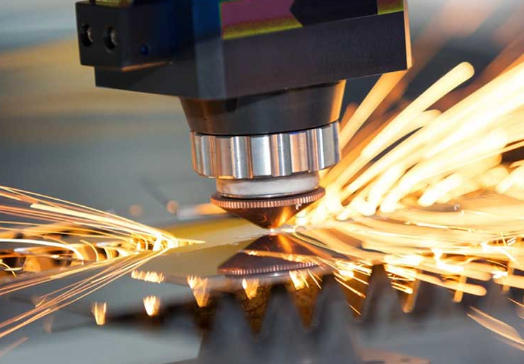
Laser cutting is powerful but not universal. Understanding its limits helps you choose the right process.
Highly reflective metals like aluminum, copper, and titanium can be challenging for older CO2 and diode lasers because they reflect most of the incident beam. Modern fiber lasers handle these materials much more effectively, but process windows are still narrower than for standard steel.
Heat-sensitive plastics and foams can burn, melt excessively, or release toxic gases (for example, PVC or some ABS formulations) and may be unsuitable for laser cutting.
As material thickness increases, cut speed drops and edge quality becomes harder to maintain. Cuttable thickness depends on laser power, material type, and assist gas; for very thick plate, plasma or waterjet may be more economical.
Standard laser cutters are optimized for flat sheet or simple formed parts. Complex curved surfaces or full 3D components require 5-axis or tube laser systems, which add cost and complexity but extend the process range.
Laser cutting concentrates high energy in a small area and generates fumes and particulates, so robust safety controls are essential.
Direct or reflected laser radiation can seriously damage eyes and skin. Operators should use:
- Properly rated laser safety glasses for the specific wavelength
- Enclosed work areas with interlocks
- Clearly marked hazard zones and access controls
Cutting plastics, coated metals, and composites produces fumes, VOCs, and fine particulates that may be hazardous if inhaled. A proper extraction system with HEPA and activated carbon filtration, or direct ventilation outdoors, is critical to meet health and regulatory requirements.
The high energy density of laser beams makes flammable materials such as paper, fabric, and thin wood more prone to ignition. Best practices include:
- Never leaving the machine unattended during cutting
- Keeping CO2 or dry chemical extinguishers nearby
- Using air assist to reduce flare-ups
- Integrating fire detection and suppression where appropriate
A typical OEM project for a global brand might involve custom stainless steel brackets for automation equipment.
1. The customer sends 3D CAD models and quantity requirements.
2. Engineers convert these into nested flat patterns optimized for sheet usage.
3. The fiber laser cuts all internal holes, slots, and outer profiles in one pass.
4. Parts move directly to bending and surface treatment with minimal edge finishing.
This digital-to-part workflow shortens development cycles and supports frequent design changes without new tooling.
Choosing between laser, CNC machining, stamping, or waterjet depends on design and volume.
| Process | Best for | Key Benefits | Typical Trade-Offs |
|---|---|---|---|
| Laser cutting | Flat sheet parts with fine detail | No tooling, fast changeover, clean edges | Limited for very thick or 3D shapes |
| CNC machining | 3D geometries, tight tolerances, pockets | High dimensional accuracy, 3D features | Slower for simple flat profiles |
| Stamping | Very high-volume simple sheet parts | Lowest cost per part at scale | High upfront die cost, low flexibility |
| Waterjet | Thick or heat-sensitive materials | No heat-affected zone, broad material range | Slower, higher operating cost |
For many OEM metal and plastic parts, laser cutting plus machining provides a balanced combination of cost, flexibility, and precision.
If you need OEM laser-cut parts together with CNC machining, plastic injection, silicone molding, or metal stamping, partnering with one supplier simplifies your supply chain. U-NEED supports overseas brands, wholesalers, and manufacturers with:
- Engineering support on drawings and DFM suggestions
- Rapid sampling and iterative design changes without new tooling
- Integrated production for metal, plastic, and silicone components
- Export-ready packaging, documentation, and quality control
U-NEED is ready to support your next project with stable quality, competitive lead times, and flexible OEM services. Contact our team today to share your drawings and requirements, and get a tailored quotation for your laser-cut and precision-manufactured components.
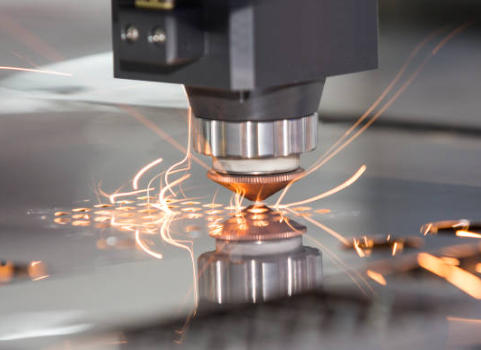
A laser cutter can work with metals such as steel, stainless steel, aluminum, copper, and brass, as well as non-metals such as wood, acrylic, plastics, textiles, leather, and paper, depending on the laser type and power. Suitable material selection ensures consistent quality and long machine life.
Laser cutting typically provides higher precision and smaller kerf than sawing or mechanical punching, with excellent repeatability across large production runs. This makes it suitable for parts that require tight tolerances and clean edges.
Yes. With nesting software, automation, and stable CNC control, laser cutting can support continuous, high-volume manufacturing with short changeover times between part numbers. It is widely used in automotive, electronics, and industrial equipment production.
Certain plastics, such as PVC and some ABS grades, and some composite materials can release corrosive or toxic fumes when cut. These materials are generally not recommended for laser cutting unless specialized systems and strict safety measures are in place.
As a rule of thumb, CO2 lasers are better suited to non-metals and engraving applications, while fiber lasers are preferred for fast, efficient cutting of metals, especially stainless steel and aluminum. Your choice should be based on material type, thickness, and productivity targets.


