Views: 222 Author: Rebecca Publish Time: 2026-02-21 Origin: Site
Content Menu
● What You Will Learn in This Guide
● Core Keywords and Target Readers
● Metal Materials for CNC Machining: Main Characteristics
>> Common Metals Used in CNC Machining
>> Advantages of Metal Materials
>> Limitations of Metal Materials
● Plastic Materials for CNC Machining: Main Characteristics
>> Common Plastics Used in CNC Machining
>> Advantages of Plastic Materials
>> Limitations of Plastic Materials
● Side-by-Side Comparison: Metal vs Plastic Material Performance
● Manufacturing and Machinability: Metal vs Plastic in CNC
● Cost, Lead Time, and Production Volume
>> Material and Machining Cost
>> Prototype vs Mass Production
● Application Scenarios: When to Choose Metal vs Plastic
>> When Metal Is Usually the Better Choice
>> When Plastic Can Outperform Metal
● Advanced Strategy: Combining Metals and Plastics in One Design
● Practical Material Selection Steps for CNC Projects
● Example Use Cases: From Design Concept to Production
>> Example 1: Industrial Bracket for Heavy Equipment
>> Example 2: Lightweight Electronic Device Housing
>> Example 3: Precision Moving Mechanism with Low Noise
● How an Experienced OEM Partner Helps You Choose the Right Material
● Clear Call to Action: Get Expert Material Guidance for Your CNC Parts
● FAQs About Metal vs Plastic Materials in CNC Machining
>> 1. Is metal always stronger than plastic for CNC parts?
>> 2. When should I choose plastic instead of metal?
>> 3. Can plastic CNC parts hold tight tolerances?
>> 4. Are plastic parts always cheaper than metal parts?
>> 5. Can I combine metal and plastic in a single CNC project?
Choosing between metal and plastic for CNC machined parts directly affects strength, weight, durability, production cost, and overall product performance. This guide explains how metal and plastic materials compare in real OEM projects and helps you select the right material for your parts.

- Key differences between metal and plastic properties for CNC machining.
- How material choice affects performance, cost, and lead time.
- Typical use cases where metal is the safer option and where plastics can outperform metals.
- Practical selection steps for engineers, buyers, and OEM project managers.
- When to combine metals and plastics in one design, such as insert molding and overmolding.
This article is written for OEM brands, product designers, and engineers comparing metal vs plastic materials for CNC machining and evaluating metal and plastic material performance in real-world applications.
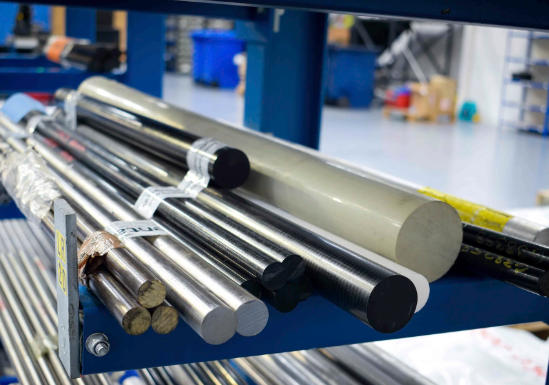
- Aluminum: Lightweight, good strength-to-weight ratio, excellent machinability, and good thermal conductivity; widely used for housings, brackets, and structural components.
- Stainless steel: High strength, very good corrosion resistance, suitable for medical, food, and outdoor applications.
- Carbon steels: High strength and hardness after heat treatment, ideal for mechanical components and tooling.
- Copper and brass: Excellent electrical and thermal conductivity, easy to machine, widely used in electrical and electronic components.
- Titanium and its alloys: Very high strength and low weight, excellent corrosion resistance; favored in aerospace and high-end medical parts.
- High strength and load capacity: Metals provide higher tensile strength and stiffness than plastics, making them suitable for structural and high-stress components.
- Excellent temperature resistance: Metals maintain mechanical properties at much higher temperatures.
- Good dimensional stability: Under cutting forces and during long-term use, metals usually hold tolerances better than plastics.
- Electrical and thermal conductivity: Many alloys are conductive and essential for heat sinks, busbars, and electrical contacts.
- Higher weight: Metal parts are heavier, which can increase energy consumption and transport costs.
- Higher machining cost: Harder alloys require more robust tooling and slower cutting speeds, extending cycle times.
- Risk of corrosion: Many metals require coatings, plating, or protective design to avoid corrosion in harsh environments.
- ABS: Tough, impact resistant, widely used for consumer housings and prototypes.
- Nylon (PA): Good wear resistance and low friction, suitable for gears, bushings, and sliding components.
- POM (acetal): High dimensional stability and low friction, popular for precision mechanical parts.
- PC (polycarbonate): High impact strength and transparency, often used for protective covers and lenses.
- PEEK and other high-performance plastics: Excellent chemical and thermal resistance, used in aerospace and medical applications.
- Low weight: Plastics are significantly lighter than metals, ideal for weight-sensitive applications.
- Corrosion and chemical resistance: Many plastics resist corrosion and aggressive chemicals better than metals.
- Design flexibility: Plastics can easily form complex shapes and internal features, especially when combined with molding processes.
- Noise and vibration damping: Plastics can absorb shocks and reduce noise and vibration in moving assemblies.
- Lower strength and stiffness: Most plastics cannot match metals under high loads or extreme stress.
- Thermal limitations: Plastics may soften, creep, or deform at elevated temperatures.
- Dimensional instability: Plastics can expand, contract, or warp due to temperature and humidity changes, requiring careful design and machining parameters.
| Performance factor | Metals (typical) | Plastics (typical) |
|---|---|---|
| Strength and load capacity | High strength, ideal for high-stress and structural parts | Medium strength, suitable for moderate loads |
| Stiffness | High stiffness, low deflection under load | Medium stiffness, more flexible structures |
| Weight | Heavy, higher density | Light, excellent for weight reduction |
| Thermal resistance | High, stable at elevated temperatures | Medium, risk of softening or creep |
| Corrosion and chemical resistance | Often requires coatings or stainless alloys | Often very resistant to corrosion and chemicals |
| Electrical properties | Usually conductive | Mostly insulating, good for electrical safety |
| Machining difficulty | Harder to cut, more tool wear | Easier to cut but sensitive to heat and warping |
| Cost and cycle time | Higher tooling demand and cycle time for hard alloys | Faster machining, potential cost savings in many projects |
CNC machining of metals supports tight tolerances, consistent surface quality, and robust mechanical performance. However, metals ask for powerful spindles, rigid fixtures, and optimized cutting strategies to avoid tool wear and vibration.
Typical metal CNC operations include:
- Milling and turning of housings, brackets, shafts, and frames.
- Drilling and tapping of precise threaded holes.
- Surface finishing such as grinding, polishing, and anodizing or plating.
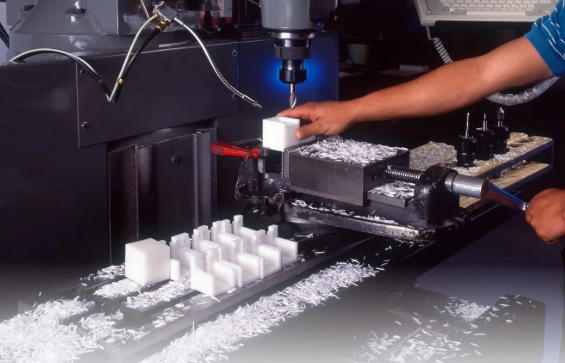
Plastics are softer and easier to cut, which often reduces machining time and tool wear. At the same time, heat management is critical to prevent melting, burrs, and warping.
Key machining considerations for plastics:
- Lower cutting speeds and careful feed control to avoid friction heat.
- Sharp tools and appropriate chip evacuation to maintain surface quality.
- Design rules for thin walls and small features to prevent deformation.
- Metals: High-performance alloys such as titanium are expensive and often require longer machining cycles and more robust tooling.
- Plastics: Many engineering plastics are cheaper per volume and faster to machine; even high-end plastics can be cost-competitive when they simplify design or reduce assembly steps.
- For small-batch prototypes and customized parts, metal CNC machining often delivers consistent performance and easier tolerance control.
- For mass production, plastics combined with molding processes usually reduce cost per part and improve throughput.
Choose metal materials for CNC machining when:
1. High loads and structural performance are required, such as frames, brackets, and mechanical linkages.
2. Parts will operate in high temperatures or under heavy thermal cycling.
3. You need precision and long-term dimensional stability under stress.
4. The design demands electrical or thermal conductivity, such as heat sinks or contacts.
Typical metal applications:
- Automotive and aerospace structural components.
- Industrial machinery and tooling.
- Medical and food equipment using stainless steel.
Choose plastic materials for CNC machining when:
1. Weight reduction directly improves product performance or shipping cost.
2. Components face corrosive or chemically aggressive environments.
3. You need noise reduction and vibration damping in moving assemblies.
4. Complex shapes and integrated features help reduce part count and assembly.
Typical plastic applications:
- Consumer product housings and covers.
- Electrical enclosures and insulation parts.
- Wear components such as bushings, guides, and gears with engineering plastics.
In many OEM projects, the best solution is not metal versus plastic, but metal plus plastic. By combining both materials, you can balance strength, weight, and cost.
Typical hybrid approaches:
- Insert molding: Metal inserts such as threads, shafts, or frames encapsulated by plastic to combine structural strength and design flexibility.
- Overmolding: Soft plastic or elastomer overmolded on a metal or rigid plastic core for better grip, sealing, or impact protection.
- Modular assemblies: CNC metal base structures with CNC plastic covers, seals, or functional modules.
This strategy allows engineers to place metal only where it is truly needed and use plastics to reduce weight, cost, and noise.
Follow these steps when deciding between metal and plastic:
1. Define functional loads and safety factors
Clarify mechanical loads, impacts, and required lifetime, and note where failure is unacceptable.
2. Evaluate working environment
Check temperature, humidity, chemicals, UV exposure, and outdoor conditions, then shortlist materials that can survive these conditions.
3. Clarify precision and tolerance demands
Very tight tolerances or critical fits may favor metal; plastics often require more allowance for expansion and moisture absorption.
4. Compare cost and production volume
For prototypes and small batches, CNC machining of both metals and plastics is flexible; for large volumes with plastics, consider a path from CNC prototypes to molding.
5. Analyze lifecycle performance
Consider maintenance cycles, corrosion risk, replacement cost, and recyclability instead of only looking at initial part price.
6. Consider hybrid solutions
Use metal frames or inserts plus plastic components where this combination reduces cost without sacrificing safety or performance.
- Requirements: High static load, shock resistance, outdoor exposure.
- Recommended: Stainless steel or carbon steel CNC machined bracket with protective coating, ensuring long-term stability and safety.
- Requirements: Low weight, integrated clips and ribs, good appearance.
- Recommended: CNC machined ABS or PC for prototyping, then transition to molded plastic for volume production to reduce unit cost.
- Requirements: Low friction, low noise, moderate loads.
- Recommended: Nylon or POM CNC machined gears and bushings, optionally combined with metal shafts for added stiffness and durability.
An experienced manufacturing partner with both metal machining and plastic machining or molding capabilities can help you evaluate your drawings and recommend the most suitable material family for each component. Such a partner can also suggest ways to reduce cost through material substitution or hybrid design while keeping safety and performance. In addition, process engineers can optimize machining parameters for better surface quality, tighter tolerances, and more stable delivery times. Finally, a capable supplier will plan a prototype-to-mass-production path, from CNC metal or plastic prototypes to molding or other processes where appropriate.
If you are planning a new OEM project and are still unsure whether metal or plastic is the best choice for your parts, share your 3D models, drawings, and key performance requirements with a professional engineering team now. Ask for a detailed material selection proposal and a CNC quotation that compares at least two material options so you can see the impact on strength, weight, and cost before finalizing your design. Taking this step early will help you avoid redesigns, shorten development time, and bring more reliable products to market faster.
Contact us to get more information!
In general, metals such as steel, aluminum, and titanium provide higher tensile strength and stiffness than common engineering plastics. However, high-performance plastics can still be suitable for moderate loads when weight and corrosion resistance are critical.
Choose plastic when you need low weight, corrosion resistance, noise reduction, or high design flexibility with complex shapes and integrated features. Plastics are also a strong option when you plan to move from CNC prototypes to molded mass production later.
Yes, plastic CNC parts can hold good tolerances, but you must consider thermal expansion, moisture absorption, and potential warping. Proper design allowances and suitable machining parameters are essential for stable dimensions over the part's lifetime.
Not always. While many plastics are cheaper and faster to machine, high-performance resins can be costly, and scrap rates can increase if machining conditions are not optimized. The final cost depends on material grade, part complexity, and production volume.
Yes, many successful OEM designs combine metal and plastic to balance strength, weight, and cost. Common examples include metal frames with plastic covers, insert-molded threaded inserts, and overmolded soft grips on rigid substrates.
1. https://jlccnc.com/blog/metal-vs-plastic-materials
2. https://cncmachines.com/metal-vs-plastic-cnc-machining-costs-applications-best-practices
3. https://www.rallyprecision.com/plastic-vs-metal-how-to-choose-for-cnc-projects
4. https://www.millerplastics.com/metal-vs-plastic-cnc-machining-key-differences/
5. https://www.pcbway.com/blog/CNC_Machining/Compare_the_advantages_and_disadvantages_of_plastics_and_metals_in_CNC_d5ad285b.html
6. https://www.rspinc.com/blog/plastic-injection-molding/plastic-vs-metal/
7. https://www.rkt.de/en/plastic-vs-metal-comparison/
8. https://eagle-plastics.com/2025/09/top-5-plastics-vs-metals/


