Views: 222 Author: Rebecca Publish Time: 2026-01-27 Origin: Site
Content Menu
● How NiBore Coating Is Applied to Injection Tooling
● 9 Core Benefits of NiBore Coating for Injection Tooling
>> 1. High Wear Resistance for Long Tool Life
>> 2. Superior Lubricity and Lower Friction
>> 3. Strong Corrosion Resistance
>> 4. Improved Mold Release and Fewer Sticking Issues
>> 5. Better Surface Finish on Molded Parts
>> 6. Temperature Tolerance for High‑Performance Resins
>> 7. Uniform Coverage on Complex Geometries
>> 8. Compatibility with Aluminum and Steel Tooling
>> 9. Cost‑Effectiveness and Lifecycle Value
● When to Use NiBore: Typical Injection Molding Applications
● NiBore vs Other Mold Coatings
● Practical Design and Maintenance Tips for NiBore‑Coated Molds
● Partnering with an OEM Manufacturer for NiBore‑Coated Tools
● Take the Next Step with NiBore‑Coated Injection Tooling
● FAQs About NiBore Coating for Injection Tooling
>> 1. Is NiBore suitable for both prototype and production molds?
>> 2. How does NiBore affect mold tolerances and dimensions?
>> 3. Can NiBore be repaired or recoated if it wears over time?
>> 4. Does NiBore replace the need for mold release agents?
>> 5. How does NiBore compare with standard electroless nickel for corrosion and wear?
NiBore coating has become a go‑to surface treatment for injection molds that must run fast, handle abrasive or corrosive materials, and still maintain tight tolerances over long production runs. For OEM buyers and molders, understanding how NiBore works, when to use it, and how it compares with other coatings is critical to improving tool life, part quality, and overall cost per shot.

NiBore is an electroless nickel‑boron composite coating engineered to deliver very high hardness, excellent lubricity, and strong corrosion resistance on steel and aluminum injection molds. Because it is deposited chemically rather than by electroplating, NiBore builds a uniform layer even on complex geometries, deep cavities, threads, and internal features.
Key technical characteristics include:
- Hardness up to about 650–700 HV as‑deposited, and up to around 1100 HV after post heat treatment.
- Very low coefficient of friction, around 0.05, for self‑lubricating performance.
- Thin, controllable deposit (typically up to about 0.0005 inch) that preserves critical dimensions.
- Stable performance at elevated temperatures relevant to engineering thermoplastics.
These properties make NiBore particularly suitable for high‑cavitation, high‑volume injection tooling and for difficult resins or part geometries that tend to stick or wear tools quickly.
NiBore uses an electroless nickel‑boron plating process that relies on a chemical reaction, not electric current, to deposit the coating. This autocatalytic reaction enables highly uniform coverage, even on intricate mold features that are hard to reach with conventional electroplating.
Typical process steps for injection molds:
1. Surface preparation – The mold steel or aluminum is thoroughly cleaned, degreased, and activated so that the nickel‑boron layer bonds strongly to the substrate.
2. Chemical deposition – Mold components are immersed in a bath containing nickel and boron chemistry, and the coating builds evenly on all exposed surfaces.
3. Post‑treatment – Heat treatment may be applied to boost hardness and wear resistance, and controlled finishing can tune the surface for specific release or appearance requirements.
Because the deposit is thin and uniform, NiBore can usually be applied without major design changes, which is especially valuable for precision multi‑cavity injection molds.
Injection molds face repeated mechanical stress from clamping, injection pressure, and abrasive fillers in plastics. NiBore's nickel‑boron‑based composite structure provides a hard, abrasion‑resistant surface that reduces galling and erosion on core pins, slides, and shut‑offs.
This leads to:
- Fewer unscheduled repairs and re‑polishing.
- Longer intervals between preventive maintenance.
- More consistent cavity dimensions over the life of the tool.
For high‑volume molds, this directly lowers cost per part and extends the effective life of the tooling.
NiBore exhibits an extremely low coefficient of friction, around 0.05, providing a naturally lubricious surface on steel or aluminum tooling. This self‑lubricating behavior reduces wear on moving components and allows mechanisms like unscrewing cores to cycle smoothly.
Key advantages of the coating's lubricity:
- Reduced risk of galling on slides and lifters.
- Improved performance in zero‑draft or low‑draft core applications.
- Potentially shorter cycle times due to smoother movements.
In some cases, NiBore can reduce or even eliminate the need for external lubricants that might contaminate parts or complicate cleaning.
Molds can corrode from contact with moisture, cooling water, aggressive resins, and flame retardants. NiBore's nickel matrix, reinforced with boron and composite particles, creates a barrier that resists both chemical attack and oxidation.
This corrosion resistance is especially helpful when:
- Molding hygroscopic resins or materials with corrosive additives.
- Tools are frequently stored or exposed to condensation.
- Cooling circuits and mold surfaces encounter aggressive environments.
The result is more stable surface quality and fewer corrosion‑related defects or dimensional changes over time.
One of NiBore's most visible benefits is improved part release. The combination of low friction and a smooth surface helps parts separate cleanly from cavities, even in deep ribs, texture, or complex undercuts.
Improved release can:
- Reduce sticking and drag marks on cosmetic surfaces.
- Minimize the need for mold‑release sprays that could affect painting or bonding.
- Lower the risk of part damage or distortion during ejection.
For challenging polymers or highly detailed consumer products, NiBore often leads to more stable and predictable ejection behavior.
NiBore contributes to a very smooth surface on the tooling, which directly affects the finish of molded parts. When applied and finished correctly, the coating can preserve or enhance the polish level of the base steel, helping maintain gloss, clarity, or fine texture details over large production runs.
This is valuable when:
- High‑gloss surfaces are needed for lenses or cosmetic housings.
- Textures must stay sharp and consistent across many cycles.
- You want to reduce post‑molding surface finishing operations.
By keeping surface quality stable over time, NiBore supports consistent part appearance and dimensional accuracy.
Some NiBore systems withstand elevated temperatures up to about 1250 °F (677 °C), significantly higher than many conventional release coatings. While molds typically run below these extremes, this capability shows stability under high‑melt temperatures for engineering and high‑performance thermoplastics.
Benefits of this temperature tolerance include:
- Maintained hardness and lubricity during high‑heat molding.
- Reduced risk of coating breakdown over long runs.
- Compatibility with aggressive thermal cycling.
This makes NiBore a solid choice when you push cycle times and process windows with demanding polymer grades.
Because NiBore is applied via an electroless plating process, it coats complex shapes uniformly without edge build‑up issues typical of electroplating. This uniformity is critical for precision injection molds where small deviations can cause flash, mismatch, or fit problems.
Examples of where uniform coverage matters most:
- Multi‑cavity molds with fine features or micro‑details.
- Unscrewing cores, threads, and lifters.
- Tools with deep, narrow ribs or intricate features.
Uniform coating thickness means you preserve critical tolerances while still gaining the protective benefits of the coating.
NiBore has proven effective on both hardened tool steels and modern aluminum mold alloys when used with proper surface preparation. This enables faster, lower‑cost aluminum prototype or bridge tooling to achieve wear and release characteristics closer to hardened steel molds.
For aluminum molds, NiBore can:
- Harden the surface to resist abrasion and prevent galling.
- Improve release, especially in low‑draft or highly polished cavities.
- Extend the practical life of aluminum tools beyond typical expectations.
This combination of speed from aluminum and durability from NiBore is appealing for short‑to‑medium production runs and fast iterations.
Electroless nickel‑boron coating does not require an external power source, which can make it more energy‑efficient than some traditional electroplating methods. By extending tool life, reducing downtime, and cutting back on lubricants or release agents, NiBore lowers total lifecycle costs per mold.
In many projects, NiBore offers a favorable cost/benefit ratio compared with:
- Hard chrome plating for wear resistance.
- Standard electroless nickel for corrosion protection.
- PTFE‑based or other specialty release coatings.
For high‑volume production, the incremental coating cost is usually offset by reduced scrap and maintenance.
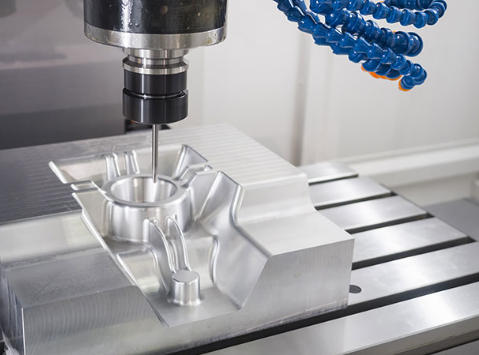
NiBore is not necessary for every tool, but it can be a game‑changer in specific scenarios.
Common use cases include:
- Highly filled or abrasive resins – Glass‑filled, mineral‑filled, and flame‑retardant plastics that rapidly wear uncoated steel.
- Sticky or soft materials – TPEs, TPVs, and some engineering plastics that tend to adhere to cavity surfaces.
- Complex mechanics – Unscrewing cores, slides, lifters, and moving components where galling and friction are concerns.
- Aluminum prototype and bridge tools – When you need better durability and release without upgrading to full steel tooling.
- High‑volume multi‑cavity molds – Where improvements in wear and release have a strong impact on uptime and yield.
In these situations, NiBore helps maintain cycle time, part quality, and dimensional stability over long production runs.
The table below compares NiBore with several common mold coatings to support practical decision‑making.
| Coating type | Main benefits | Typical hardness / performance | Best use cases |
|---|---|---|---|
| NiBore (Ni‑B composite) | High hardness, very low friction, strong corrosion resistance, thin uniform deposit | Up to ~650–700 HV as‑deposited, up to ~1100 HV with heat treatment; very low COF; withstands high temperatures | High‑volume tools, abrasive or sticky resins, complex steel or aluminum molds needing both wear resistance and release |
| Electroless nickel (Ni‑P) | Uniform coating, improved wear and corrosion resistance, better release vs bare steel | Hard, durable surface; strong corrosion resistance; uniform coverage | General‑purpose protection, molds exposed to moisture or chemicals where extreme lubricity is not essential |
| Hard chrome | High surface hardness, wear resistance | Very hard surface but less uniform on complex features; risk of cracking or chipping | Simpler geometries, certain high‑wear areas where uniformity and lubricity are less critical |
| Nickel‑PTFE composites | Very high lubricity, release, and improved flow | Low COF, excellent release, can shorten cycle times by improving resin flow | Deep ribs, zero‑draft cores, sticky polymers needing maximum release performance |
For many advanced injection tools, NiBore offers a balanced combination of hardness, lubricity, and corrosion resistance that is difficult to match with a single alternative coating.
Design and maintenance practices strongly influence the performance and return on NiBore coatings.
Key recommendations:
- Choose mold steels or aluminum grades that are compatible with electroless nickel‑boron coatings, and follow the coater's guidelines.
- Maintain adequate draft wherever possible, since NiBore improves release but does not replace fundamental tooling rules.
- Build coating thickness into tolerance stack‑ups for shut‑offs, cores, and threads.
- Use cleaning procedures that avoid scratching or chemically attacking the coated surface.
- Plan inspection intervals and repair pathways, including stripping and recoating if needed.
With these practices, NiBore enhances uptime and part consistency over the entire mold lifecycle.
For overseas brands and manufacturers, strong results usually come from combining a specialized coating provider with an experienced tooling and molding partner. A capable OEM can design, machine, coat, assemble, and test NiBore‑coated molds as a coordinated project, then run trial shots to validate performance with your actual resin and cycle targets.
When evaluating OEM partners for NiBore‑coated injection tooling, consider:
- Experience with high‑precision injection molds for engineering plastics, including multi‑cavity and family molds.
- High‑accuracy machining, EDM, and polishing capabilities for surface preparation.
- Stable cooperation with reputable NiBore or electroless nickel‑boron coaters.
- In‑house DFM support and mold trials to optimize cycle time and part quality.
An OEM that understands both tooling and molding can translate the advantages of NiBore into practical gains in quality, uptime, and total cost.
If you are facing recurring problems with mold wear, sticking, or corrosion, now is the right moment to evaluate NiBore for your next tool build or refurbishment project. Share your part drawings, resin specifications, and target volumes with a qualified OEM so they can recommend the best substrate, NiBore thickness, and finishing plan to meet your production and cost targets.
By integrating NiBore into your next tooling program, you protect your most critical molds, stabilize cycle time and quality, and improve the long‑term profitability of your injection molding operations. Contact an experienced NiBore‑capable tooling and molding partner today to discuss how NiBore‑coated molds can support your specific parts, volumes, and market requirements.
Contact us to get more information!
Yes. NiBore is widely used on aluminum prototype and bridge tools as well as hardened steel production molds, providing wear resistance and improved release in both scenarios. The choice depends on expected volumes, resin abrasiveness, and budget.
NiBore is applied as a thin, controlled layer, typically up to about 0.0005 inch, so its impact on critical dimensions can be planned into tool design and machining. Because the coating is uniform, it generally preserves parting line quality and cavity balance when properly accounted for.
In many cases, worn NiBore can be chemically stripped and recoated, provided the base steel or aluminum remains within dimensional limits. It is important to coordinate inspection and repair procedures with the coating provider to avoid damaging the substrate.
NiBore's low coefficient of friction and smooth surface often reduce or eliminate the need for external release sprays or oils, especially with sticky polymers or complex geometries. Some applications may still use controlled amounts of release agents depending on part design and cosmetic requirements.
Standard electroless nickel provides good corrosion and wear resistance with uniform coverage, but NiBore enhances hardness and lubricity by adding boron and composite particles. For highly abrasive, high‑volume, or release‑critical molds, NiBore typically offers superior performance and longer tool life.
1. https://uptivemfg.com/9-things-to-know-about-nibore-coating-for-injection-tooling/
2. https://balesusa.com/what-is-nibore-coating-extreme-wear-applications/
3. https://balesusa.com/coatings/nibore/
4. https://balesusa.com/electroless-nickel-plating-uniform-protection/
5. https://www.moldmakingtechnology.com/articles/know-your-mold-coatings
6. https://www.moldmakingtechnology.com/products/electroless-nickel-plating-benefits-plastic-injection-molds
7. https://www.phoenixproto.com/rapid-prototype-tooling/the-aluminum-alternative-hard-coating/
8. https://www.pfiinc.com/injection-mold-release-coating-comparison-dura-slick-nibore-millenium-kr/


