Views: 222 Author: Rebecca Publish Time: 2026-01-07 Origin: Site
Content Menu
● Chemical Composition and Metallurgy
>> Effect of molybdenum in 316
● Corrosion Resistance in Real Environments
>> General atmospheric and industrial conditions
>> Chloride, marine, and chemical exposure
● Mechanical Properties and High-Temperature Behavior
>> Strength at room temperature
>> Performance at elevated temperatures
● Machinability and Forming for CNC and Stamping
>> CNC machining characteristics
>> Forming, bending, and metal stamping
● Surface Finish, Cleanability, and Hygiene
>> Cleanability for hygienic applications
● Cost, Availability, and Lifecycle Economics
>> Material and processing costs
>> Lifecycle and total cost of ownership
● Typical Applications of 304 and 316
● Quick Comparison Table: 304 vs 316 Stainless Steel
● Practical Material Selection Steps
>> Structured decision approach
● Example Scenarios for Material Choice
● Clear Call to Action: Get the Right Stainless Steel Grade for Your Next Project
● FAQs About 304 vs 316 Stainless Steel
>> 1. Is 316 stainless steel always better than 304?
>> 2. Can 304 stainless steel be used near the sea?
>> 3. Which grade is easier to machine in CNC operations?
>> 4. Are 304 and 316 stainless steels magnetic?
>> 5. How should a food processing facility decide between 304 and 316?
When comparing 304 vs 316 stainless steel, the main difference is that 316 includes molybdenum, which significantly enhances resistance to pitting, crevice corrosion, and aggressive chemicals, especially in chloride-rich environments. Both are austenitic stainless steels with excellent formability and weldability, but 304 is generally the cost-effective solution for common applications, while 316 is preferred when failure risk or environmental severity is high.[2][3][1]
For CNC machining, metal stamping, and fabricated assemblies in industrial projects, the choice between these two grades directly affects long-term reliability, safety, and total cost of ownership. This guide explains composition, corrosion resistance, mechanical properties, machinability, and typical applications so engineers and sourcing teams can select the most suitable material.[3][4][1]

- 304 stainless steel typically contains about 18 percent chromium and 8 percent nickel, which is why it is often called an 18/8 stainless steel. This balanced chemistry provides good corrosion resistance and excellent formability for many general-purpose components.[4][2][3]
- 316 stainless steel also contains chromium and nickel but adds roughly 2 to 3 percent molybdenum, which is the key element that boosts resistance to chlorides and several industrial chemicals.[1][2]
Both 304 and 316 are austenitic grades with a face-centered cubic crystal structure that delivers high toughness and good ductility, even at low temperatures. In the annealed condition they are usually non-magnetic, though cold working can induce slight magnetism in local areas.[5][2][3][1]
The molybdenum in 316 improves resistance to localized corrosion, especially pitting and crevice attack in environments containing chloride ions. This improved resistance makes 316 a logical choice for marine hardware, chemical processing components, and other parts exposed to aggressive solutions.[2][4][5]
For designers, this means 316 provides more safety margin in demanding conditions, even though its alloy content raises the initial material cost.[3][4]
Both grades offer very good resistance to oxidation and many mild chemicals, which is why they are used widely in industrial and architectural applications. In standard indoor or mildly corrosive outdoor environments, performance differences between 304 and 316 are often modest.[6][2][3]
However, 304 stainless steel becomes more vulnerable when exposed to high chloride levels from seawater, de-icing salts, or certain cleaning agents, which can cause pitting or rust staining. Without suitable design and maintenance, these localized attacks can compromise performance and appearance over time.[5][2][3]
- 316 stainless steel offers markedly better resistance to chloride-induced corrosion, making it a common choice in marine, coastal, and chemical-processing environments.[4][2]
- In splash zones or areas with constant salt spray, 316 usually maintains surface integrity longer and reduces the risk of pitting or crevice corrosion.[3][5]
In many chemical process applications, 316 also withstands a broader range of acids, alkalis, and solvents than 304, particularly when temperature and concentration fluctuate. This makes it attractive for pumps, valves, and tanks that must operate reliably in harsh service media.[4][5][3]
At room temperature, 304 and 316 show broadly similar tensile and yield strength values, so the choice between them is rarely based on strength alone. Typical tensile strength for both grades lies in the range of roughly 515 to 690 MPa, with yield strength around 205 MPa depending on product form.[6][4]
Some data sets indicate that 316 can show slightly higher ultimate tensile strength, while 304 sometimes offers marginally higher yield strength. For most industrial components, these differences are small and do not override environmental considerations.[7][6][3]
- 316 stainless steel generally retains both strength and corrosion resistance better at higher temperatures than 304, which is important for parts exposed to continuous heat.[8][4]
- Data indicates that 316 maintains useful yield strength at temperatures that would significantly reduce the performance margin of 304.[8][4]
While 304 can perform adequately in many moderate temperature applications, long-term exposure to higher temperatures in corrosive media often favors 316. For combined high temperature and aggressive chemistry, 316 usually offers a more robust solution.[2][5][8][4]
Both alloys are more challenging to machine than most carbon steels, but their cutting behavior is different.[9][10]
- 304 stainless steel is generally regarded as easier to machine, allowing higher cutting speeds and reduced tool wear under optimized conditions. This advantage can significantly lower cycle times and machining costs in volume production.[10][9][8]
- 316 stainless steel tends to work harden more aggressively and exerts higher cutting forces, which often requires slower speeds, higher-quality tools, and careful coolant application.[10][8]
Because of these factors, machining costs for 316 are frequently higher than for 304, an important point when comparing total part cost rather than just raw material price.[8][10]
Both 304 and 316 can be cold formed, bent, and deep drawn into complex shapes and are widely used in stamped and fabricated products.[2][3]
- 304 stainless steel often offers slightly better deep draw capability and is more forgiving during severe forming operations.[3][2]
- 316 stainless steel also forms well but demands closer control of tooling and process conditions to manage work hardening and reduce the risk of cracking.[4][8]
For high-volume metal stamping where forming difficulty and tool life are critical, many manufacturers favor 304 unless environmental conditions point strongly toward 316.[10][3]
Both grades are available in multiple surface finishes such as hot-rolled and pickled, 2B, brushed, and mirror-polished, depending on the end use. High-quality finishing on 304 and 316 can achieve low roughness values that support both aesthetic requirements and easy cleaning.[1][2][3][4]
Because 316 resists pitting more effectively, polished 316 surfaces tend to maintain their appearance better under exposure to chlorides or harsh cleaners. This stability often makes 316 the preferred option for high-visibility components in demanding environments.[5][2][4]
- 304 stainless steel is widely used in food and beverage equipment that operates in moderate environments and uses standard cleaning agents.[2][3]
- 316 stainless steel is often selected for more demanding sanitary systems, including pharmaceutical and high-end food processing, where strong disinfectants and frequent sterilization cycles are standard.[5][4]
In such applications, the higher resistance of 316 to micro-pitting helps minimize potential sites where contaminants or microorganisms might accumulate.[4][5]
In general, 316 stainless steel costs more than 304 due to its higher alloy content and reliance on molybdenum. The price difference can become substantial for large volumes, thick plates, or heavy sections.[3][2][4]
Processing costs also tend to diverge between the two grades:
- 316 typically incurs higher machining and forming costs because of slower cutting speeds and increased tool wear.[8][10]
- 304 can reduce both raw material and processing costs, which is why it is often the default choice in cost-sensitive designs.[10][3]
While 316 may carry a higher purchase price, its superior corrosion resistance can lengthen service life, reduce maintenance, and prevent premature failures in harsh environments. For equipment where downtime or replacement is expensive, these benefits often outweigh initial cost differences.[5][3][4]
In mild environments, the extra performance margin of 316 may not translate into practical benefits, so 304 remains the more rational and economical option. Evaluating realistic exposure conditions and expected service life is crucial to selecting the most cost-effective grade.[6][2][3]
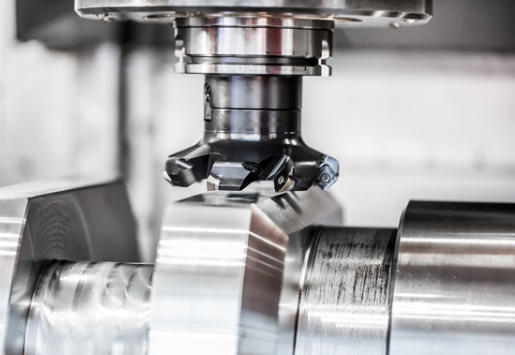
Typical applications for 304 stainless steel include the following.[1][2]
- Kitchenware, sinks, appliances, and food contact surfaces in moderate conditions
- General industrial equipment, housings, and frames away from aggressive chemicals
- Structural brackets, supports, and hardware in indoor or standard outdoor environments
- Consumer products where corrosion risk is moderate and cost is sensitive
These uses take advantage of 304's good corrosion resistance, versatile formability, and relatively low cost.[2][3]
316 stainless steel is chosen when corrosion resistance and durability are especially critical.[1][4]
- Marine and coastal fittings, including fasteners, railings, and structural elements
- Chemical processing components that face aggressive media and elevated temperatures
- Pharmaceutical, biotech, and high-end food equipment requiring frequent aggressive cleaning
- Industrial systems in chloride-rich or highly polluted atmospheres
In these cases, 316 provides a higher confidence level against localized corrosion and long-term degradation.[3][4]
| Aspect | 304 Stainless Steel | 316 Stainless Steel |
|---|---|---|
| Key alloy elements | Around 18 percent chromium and 8 percent nickel. | Chromium–nickel plus about 2 to 3 percent molybdenum. |
| Corrosion in chlorides | Good but more susceptible to pitting and crevice corrosion. | Excellent resistance to chlorides and localized corrosion. |
| General corrosion | Very good in many indoor and outdoor conditions. | Very good to excellent, especially in harsh or marine environments. |
| Room-temperature strength | Similar tensile and yield strengths to 316. | Similar range, with some data showing slightly higher ultimate strength. |
| High-temperature behavior | Adequate in many cases but less robust in severe conditions. | Better strength and corrosion resistance at elevated temperatures. |
| Machinability | Easier to machine, lower tooling cost. | More difficult to machine, higher tool wear. |
| Forming and stamping | Excellent formability, very suitable for deep drawing. | Good formability with stronger work hardening. |
| Typical environments | General industrial and consumer applications in mild conditions. | Marine, coastal, chemical, and highly sanitized environments. |
| Relative cost | Lower material and processing cost. | Higher material and processing cost. |
When choosing between 304 vs 316 stainless steel for mechanical parts, a structured evaluation can prevent over- or under-specification.[1][3]
1. Clarify environmental conditions
Determine whether the part will face chlorides, salt spray, aggressive chemicals, or frequent cleaning cycles. If these factors are severe, 316 often becomes the preferred option.[4][5][2]
2. Assess mechanical and thermal requirements
Define load cases, fatigue expectations, and working temperature range. For high-temperature or combined heat and corrosion exposure, 316 usually offers more reliable performance.[8][5][4]
3. Evaluate manufacturability and production cost
Analyze component geometry, machining complexity, and expected volume. Where machining accounts for a large share of cost and conditions are mild, 304 often gives a better economic balance.[9][10][3]
4. Check regulatory and hygiene needs
Identify any food, medical, or pharmaceutical standards and cleaning protocols that influence material choice. Where harsh disinfectants are used regularly, 316 typically aligns better with long-term hygiene and inspection requirements.[5][2][4]
5. Compare lifecycle cost rather than just purchase price
Estimate maintenance intervals, potential downtime, and failure consequences. In critical systems, the added corrosion resistance of 316 can pay for itself by reducing replacement needs and operational risk.[3][4][5]
- Indoor food-processing equipment using standard detergents with moderate cleaning severity.[2][3]
- Industrial machinery frames and housings located away from concentrated chemicals or seawater.[6][2]
- High-volume consumer products where price sensitivity is high and corrosion risk is modest.[10][3]
In these cases, 304 usually satisfies performance requirements while keeping both material and machining costs under control.[2][3]
- Coastal and marine installations subjected to salt spray, tidal splashing, or direct seawater contact.[5][2]
- Equipment in chemical plants where parts must endure aggressive fluids and temperature fluctuations.[4][5]
- Hygienic systems in pharmaceuticals or high-end food production that undergo frequent high-intensity cleaning.[4][5]
Here, 316 provides greater protection against localized corrosion, which helps protect safety and maintain a clean surface over a longer service life.[3][4]
If your project involves CNC machined or stamped stainless steel components and you are weighing 304 vs 316, it is essential to finalize material selection early with support from experienced engineers. Share your working environment, performance targets, and expected annual volumes with a professional OEM manufacturer to receive specific recommendations on grade, thickness, tolerances, and machining strategies.[9][10][1][3]
By collaborating closely with a knowledgeable production partner, you can avoid material choices that either inflate cost without benefit or compromise durability and safety. Taking this step before locking drawings and tooling will help you achieve a more reliable, cost-effective stainless steel solution for your application.[9][1][5][3]
No. While 316 stainless steel offers higher resistance to chlorides and many chemicals, 304 is usually sufficient and more economical in mild environments. The best choice depends on exposure conditions, risk tolerance, and budget.[5][2][3]
304 can be used in some sheltered coastal installations, but it is more susceptible to rust staining and pitting when salt accumulates on the surface. For direct or frequent seawater exposure, 316 generally provides more reliable long-term performance.[2][4][5]
In most situations, 304 stainless steel is easier to machine due to lower work hardening and reduced tool wear. 316 typically requires slower cutting speeds, robust tooling, and careful coolant management to maintain tool life and surface finish.[8][10]
Both grades are classified as austenitic and are essentially non-magnetic in the fully annealed condition. However, cold working and forming operations can introduce partial magnetism in localized areas of both materials.[6][5][2]
Facilities using standard detergents and operating in moderate environments often find 304 stainless steel sufficient for many components. If strong chlorinated cleaners, frequent sterilization, or coastal air are present, 316 may reduce pitting, simplify cleaning, and extend equipment life.[3][4][5][2]
[1](https://www.rapiddirect.com/blog/304-vs-316-stainless-steel/)
[2](https://www.themetalcompany.co.nz/technical-tuesday-304-316-stainless-steel-what-is-the-difference/)
[3](https://www.metaltek.com/blog/304-vs-316-stainless-steel-which-one-is-better/)
[4](https://www.zintilon.com/blog/304-vs-316-stainless-steel/)
[5](https://additiveplus.com/316-vs-304-stainless-steel-which-one-is-best-for-your-project/)
[6](https://geomiq.com/blog/304-vs-316-stainless-steel/)
[7](https://www.essentracomponents.com/en-us/news/solutions/access-hardware/304-vs-316-stainless-steel)
[8](https://jlccnc.com/blog/stainless-steel-304-vs-316)
[9](https://www.rapiddirect.com/blog/alloy-steel-vs-stainless-steel-exploring-the-differences/)
[10](https://www.machining-custom.com/blog/easier-cnc-machining-304-or-316-stainless-steel-material.html)


