Views: 222 Author: Rebecca Publish Time: 2026-01-07 Origin: Site
Content Menu
● Overview of 304 and 316 Stainless Steel
● Chemical Composition: 304 vs 316
● Mechanical Properties and Strength
>> Typical Mechanical Data (Annealed)
● Corrosion Resistance and Environmental Performance
● Temperature and Heat Resistance
● Weldability, Formability, and Machinability
● Cost and Availability Considerations
● Common Applications of 304 and 316 Stainless Steel
● Food-Grade and Hygiene Requirements
● Marine, Chemical, and Outdoor Environments
● Practical Selection Guide: How to Decide Between 304 and 316
● Expert OEM Insight: Matching Stainless Steel to Manufacturing Processes
● When You Should Choose 304 vs 316 at a Glance
● Call to Action: Get Expert Support for Your Stainless Steel OEM Project
● FAQs About 304 vs 316 Stainless Steel
>> 1. Is 316 stainless steel always better than 304?
>> 2. Can 304 stainless steel be used in food contact applications?
>> 3. When should 304 be upgraded to 316?
>> 4. Are 304 and 316 difficult to machine?
>> 5. Do both 304 and 316 meet hygiene standards for medical and pharmaceutical equipment?
When comparing 304 vs 316 stainless steel, the core difference is that 316 contains molybdenum, which significantly boosts corrosion resistance in harsh, chloride-rich, and marine environments compared with 304. Both are austenitic grades with excellent formability and weldability, but 304 is more cost-effective and widely used for general-purpose applications, while 316 is preferred where maximum durability and chemical resistance are critical. Understanding these distinctions is essential when selecting materials for CNC machining, plastic overmolding inserts, silicone sealing interfaces, or metal stamping projects in OEM production.

Both 304 and 316 belong to the austenitic stainless steel family, which means they have high chromium and nickel content, non-magnetic structure in annealed condition, and very good toughness even at low temperatures. These characteristics make them popular choices for precision machining, deep drawing, and complex stamped parts in industries such as food processing, medical, and industrial equipment.
- 304 stainless steel (AISI 304)
- Typical composition: about 18–20% chromium and 8–10.5% nickel with low carbon.
- Known as a highly versatile “workhorse” stainless for general engineering and food-grade applications.
- 316 stainless steel (AISI 316)
- Typical composition: about 16–18% chromium, 10–14% nickel, plus 2–3% molybdenum for improved corrosion resistance.
- Often called marine-grade stainless because of its superior performance in chloride and seawater environments.
The chemical composition difference between 304 and 316 stainless steel is the foundation for all property and performance variations. While both contain chromium and nickel for passivation and toughness, only 316 includes a meaningful molybdenum addition that enhances resistance to pitting and crevice corrosion.
| Element | 304 Stainless Steel | 316 Stainless Steel |
|---|---|---|
| Chromium (Cr) | 18–20% | 16–18% |
| Nickel (Ni) | 8–10.5% | 10–14% |
| Molybdenum (Mo) | Trace / none | 2–3% |
| Carbon (C, max) | 0.08% | 0.08% (0.03% for 316L) |
| Iron (Fe) | Balance | Balance |
This additional molybdenum in 316 strengthens the passive surface film, making it more resistant to chlorides and aggressive chemicals than 304.
From an engineering standpoint, both 304 and 316 offer high tensile strength and good ductility, supporting forming, bending, and deep drawing operations commonly used in OEM production. In many standard conditions, their strength levels are broadly comparable, but 316 can offer slightly better performance in certain high-stress or cold-worked states.
| Property | 304 Stainless Steel | 316 Stainless Steel |
|---|---|---|
| Ultimate tensile strength | ~515–620 MPa | ~515–620 MPa (depending on finish) |
| Yield strength (0.2% offset) | ~205 MPa | ~205–290 MPa |
| Modulus of elasticity | ~193–200 GPa | ~193–200 GPa |
| Hardness (typical) | Similar Rockwell B range | Similar, with minor variation |
For most machined and stamped parts, these mechanical differences are not the main selection driver; instead, corrosion resistance and cost often dominate the decision.
Corrosion resistance is the primary reason many engineers upgrade from 304 to 316. Both alloys resist rust in normal atmospheric and many industrial environments, but 316 outperforms 304 in chloride-rich or chemically aggressive conditions.
Key points:
- 304 stainless steel
- Excellent resistance in general indoor and outdoor environments, mildly corrosive industrial settings, and many food-processing conditions.
- More susceptible to pitting and crevice corrosion when exposed to high chlorides such as salt spray, seawater, or deicing salts.
- 316 stainless steel
- Designed to handle higher chloride levels, acids, and alkalis, making it better for marine, coastal, and chemical-processing applications.
- Frequently specified where long-term reliability and hygiene are critical, such as pharmaceutical and marine foodservice equipment.
If parts will be exposed to saltwater, frequent washdown with aggressive cleaners, or sterilization cycles, 316 usually offers a significantly longer service life than 304.
Both 304 and 316 maintain strength and oxidation resistance over a wide temperature range, which is useful for components in ovens, heat exchangers, and high-temperature process lines. In general, their maximum service temperatures are comparable, although low-carbon variants (304L, 316L) are preferred for welded structures at elevated temperatures to reduce carbide precipitation.
- 304 provides reliable oxidation resistance in air up to around the 870–925 °C range for intermittent and continuous service respectively.
- 316 offers similar high-temperature oxidation performance, with 316L helping to control sensitization in weld zones.
For most OEM machined and stamped parts in typical industrial settings, both materials deliver adequate high-temperature stability, so the choice leans on corrosion and budget considerations rather than temperature alone.
From a manufacturing perspective, a key benefit of both 304 and 316 stainless steels is their excellent formability and weldability. These attributes are crucial for deep-drawn housings, stamped brackets, and complex CNC-machined parts that may then be welded into assemblies.
- Weldability
- Both 304 and 316 can be welded using standard arc welding processes, with low-carbon 304L and 316L grades recommended for heavy welding to reduce carbide precipitation.
- Proper filler selection and post-weld cleaning help restore corrosion resistance in the heat-affected zones.
- Formability
- The austenitic microstructure provides high ductility, supporting bending, flanging, spinning, and progressive stamping without cracking when processes are correctly controlled.
- Machinability
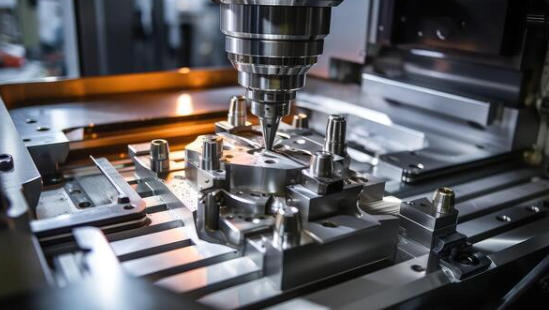
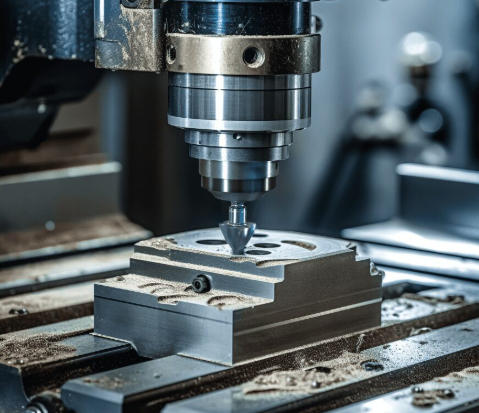
- Both grades are more difficult to machine than carbon steels but are routinely used for CNC milling, turning, and drilling with appropriate tooling and parameters.
- Molybdenum in 316 can slightly affect chip formation, so optimized cutting speeds, feeds, and coolant strategies are recommended.
For OEM buyers, this means both materials integrate well into CNC machining, metal stamping, and secondary assembly workflows, enabling cost-efficient, high-precision production.
One of the most practical differences between 304 and 316 stainless steel is cost. The additional nickel and molybdenum in 316 increase alloy and processing costs, which makes it more expensive than 304 on a per-kilogram basis.
- 304 is widely produced and is usually the most cost-effective choice for stainless steel with good corrosion resistance in standard environments.
- 316 typically commands a premium because of its alloying additions and is chosen when lifecycle cost and performance in aggressive environments justify the higher initial material price.
For large-volume OEM orders, the difference in material price can significantly affect project budgets, making correct grade selection at the design stage essential.
Both grades appear across almost every manufacturing sector, but their application focus differs depending on environmental exposure and regulatory demands.
| Industry / Scenario | Preferred Grade | Reasons |
|---|---|---|
| General structural parts, brackets, covers | 304 | Good corrosion resistance, economical, easy forming |
| Interior food-processing equipment, kitchenware | 304 | Food-grade, easy to clean, widely accepted |
| Coastal, marine hardware, dock components | 316 | Marine-grade, high chloride resistance |
| Pharmaceutical and medical equipment | 316 | High corrosion resistance, hygienic surface |
| Chemical processing and tanks | 316 | Better resistance to aggressive media |
| Outdoor enclosures and electrical boxes | 304 or 316 depending on location | 304 inland, 316 for coastal or high-pollution areas |
Selecting the right grade at the design phase helps avoid premature failures, surface staining, and unnecessary maintenance in service.
Both 304 and 316 stainless steels are recognized as food-grade materials and meet regulatory requirements for direct food contact when properly finished and cleaned. Their non-porous surface, ease of cleaning, and resistance to common food acids and detergents make them reliable for hygienic environments.
- 304 is widely used for general food-processing machinery, storage tanks, conveyor systems, and commercial kitchen equipment.
- 316 is often specified where food or beverages contain higher salt or acid levels, or when the equipment is located in marine or coastal facilities.
For OEMs supplying to international food and beverage brands, choosing an appropriate finish such as polished or pickled-and-passivated is just as important as choosing between 304 and 316 for maintaining sanitary performance.
When designing components for marine, chemical, or harsh outdoor exposure, the performance gap between 304 and 316 becomes more pronounced.
- 304 can discolor or pit over time in environments with persistent salt spray, industrial pollutants, or strong cleaning agents.
- 316 and 316L help resist pitting and crevice corrosion, delivering a longer, more reliable service life in these conditions.
Typical examples where 316 is preferred include marine fasteners, offshore equipment, chemical dosing systems, coastal architectural elements, and outdoor medical or lab installations.
For engineers, project managers, and purchasing teams, choosing between 304 and 316 stainless steels is about balancing performance, risk, and cost. The following questions provide a practical framework.
1. What is the operating environment?
- Dry indoor, low-chloride, or mildly corrosive conditions usually make 304 a smart, economical choice.
- Marine, coastal, chemical-processing, or frequent washdown with strong cleaners typically justify upgrading to 316.
2. How critical is long-term appearance and reliability?
- If light staining is acceptable and periodic maintenance is planned, 304 may be adequate.
- If pitting, rust staining, and unplanned downtime are unacceptable, 316 offers more robust corrosion resistance.
3. What are the regulatory and hygiene requirements?
- For standard food and beverage equipment, 304 often meets regulations at lower cost.
- For high-risk hygiene environments or aggressive process media, many standards and customers prefer 316.
4. What is your budget and volume?
- For high-volume OEM runs where the environment is moderate, 304 helps control cost while still delivering stainless performance.
- For mission-critical, safety-related, or hard-to-access components, investing in 316 can reduce lifecycle costs even if unit price is higher.
From an OEM perspective, it is not only the alloy but also the manufacturing route that determines performance of stainless parts in real applications. When combining stainless steel with plastic and silicone components in assemblies, several best practices apply.
- CNC machining of 304 vs 316
- Both grades can achieve tight tolerances for shafts, housings, and precision connectors when correct tooling, feeds, and coolants are used.
- 316 may require slight parameter adjustments due to work hardening and the molybdenum addition, but it delivers excellent surface finish for sealing interfaces and cosmetic parts.
- Metal stamping and forming
- 304 is often preferred for high-volume stamped brackets, covers, and structural components where corrosion risk is moderate and cost is sensitive.
- 316 is chosen for stamped parts in marine, chemical, or medical applications where resistance to localized corrosion is critical.
- Integration with plastic and silicone components
- Stainless inserts used in plastic injection molding benefit from controlled surface roughness to improve bonding and prevent stress concentrations.
- In silicone seal and gasket applications, 316 inserts or mating surfaces are often selected when the assembly will contact seawater, disinfectants, or pharmaceutical media.
Working with an experienced OEM manufacturing partner helps align material selection, process strategy, and end-use environment to maximize value over the full product lifecycle.
The table below summarizes the most common selection criteria in a concise format.
| Design Priority | Better Choice | Why |
|---|---|---|
| Lowest material cost, general indoor use | 304 | Economical, good all-round performance |
| Standard food-processing equipment | 304 | Food-grade, widely accepted and available |
| Marine and coastal installations | 316 | Superior chloride and saltwater resistance |
| Chemical and pharmaceutical equipment | 316 | Handles aggressive media and cleaning agents |
| Critical hygiene and sterilization cycles | 316 | Better resistance after repeated cleaning |
| Heavy washdown with strong detergents | 316 | Reduced risk of pitting and staining |
| Large production with mild environments | 304 | Cost-effective for high-volume OEM parts |
Selecting the right stainless steel grade is only the first step; turning that choice into high-quality, reliable parts requires an experienced manufacturing partner. If you are planning a new CNC machining or metal stamping project, or need to optimize an existing stainless steel component, share your drawings, annual demand, and working environment details with our engineering team so you can receive a tailored material recommendation, manufacturability review, and a fast, accurate quotation for your OEM production.
No. 316 offers better corrosion resistance, especially in chloride-rich environments, but 304 is often the better choice when conditions are moderate and cost is a key factor.
Yes. 304 is widely accepted as a food-grade stainless steel and is commonly used in food processing, kitchen equipment, and storage tanks when properly finished and cleaned.
It is worth upgrading to 316 when parts are exposed to seawater, deicing salts, aggressive cleaning chemicals, or high-chloride food and process media where pitting or staining would be unacceptable.
Both grades are more challenging to machine than carbon steel but are routinely CNC machined using appropriate tooling, cutting parameters, and coolant strategies, especially when working with a specialist in stainless steel machining.
Both can meet hygiene requirements, but 316 is more frequently specified in medical and pharmaceutical environments because its enhanced corrosion resistance improves performance under repeated sterilization and chemical exposure.


