Views: 222 Author: Loretta Publish Time: 2025-12-25 Origin: Site
Content Menu
● Understanding EDM Surface Finish Challenges
● From Additives to HQSF™: What the Original Article Covers
● Why EDM Surface Finish Matters for OEM Brands
● How Powder Additives Improve EDM Surface Finish
● Graphite vs Copper Electrodes in the Additive Era
>> Electrode comparison for EDM with additives
● U-NEED's EDM Surface Finish Workflow
● Case Insight: Moldmakers Using HQSF™-Type Additives
● Practical Selection Guide: When to Use Additive EDM
● Integration With U-NEED's Core Capabilities
● Clear Call to Action for OEM Buyers
● FAQs About EDM Surface Finish and Additives
For OEM brands that rely on high-precision machined parts, plastic components, silicone products and metal stampings, EDM surface finish is no longer just a technical detail – it is a decisive factor for mold life, cycle time and product appearance. As a Chinese OEM manufacturer, U-NEED helps overseas brands leverage powder-additive EDM technologies and optimized electrode strategies to achieve finer surface finishes, shorter lead times and lower total cost per part.[1][2][3]

In conventional ram EDM, the spark between electrode and workpiece creates tiny craters that define the final surface roughness. When discharges become unstable or “secondary” sparks occur, the surface becomes rougher, the heat-affected zone thickens and polishing time increases.[4][1]
Key pain points for OEM buyers:
- Inconsistent cavity finishes across large mold areas.[1]
- Long polishing cycles and high labor cost to reach cosmetic requirements.[4]
- Electrode wear and repeated setups that extend overall lead time.[5]
Modern powder-additive EDM addresses these issues by changing how energy is distributed in the spark gap rather than relying only on machine settings or electrode materials.[2][1]
The U-NEED case study describes HQSF™ (High Quality Surface Finish), a ram EDM technology that uses a semi-conductive powder additive in the dielectric oil to stabilize and diffuse discharges. This powder, known as µSC, has extremely low specific gravity, allowing it to remain suspended in the dielectric and distribute evenly throughout deep cavities and sidewalls.[3][2][1]
Core technical points highlighted in the original content:
- The µSC powder turns one large spark into many smaller sparks, producing smaller craters and a finer finish without sacrificing metal removal rate.[1]
- The additive reduces abnormal and secondary discharges, resulting in 20–30% faster machining speeds in hardened steels like H13, 420 stainless and S7, depending on cavity depth and geometry.[1]
- A thinner, less brittle white layer (heat-affected zone) improves die life, especially in die-casting applications.[1]
These principles are now part of a broader EDM trend: using additives, smarter controls and optimized filtration to achieve highly consistent fine finishes directly in the machine, minimizing manual post-processing.[6][7]
For international buyers working with contract manufacturers in China, EDM surface finish performance has direct commercial impact.[3][4]
Main business consequences:
- Appearance and brand perception
- Consumer and medical housings require uniform textures, no swirl marks and controlled gloss levels.[4]
- Tool life and maintenance
- A thinner, more uniform white layer reduces micro-cracks and extends mold and die life, lowering total cost of ownership.[4][1]
- Lead time and launch timing
- Less polishing means fewer manual hours and fewer opportunities for human error or geometry distortion, shortening project timelines.[3][1]
By integrating additive EDM processes into its tooling workflow, U-NEED focuses on delivering mold cavities that are closer to “production-ready” straight off the machine, especially for complex plastic, silicone and metal components.[3][1]
Powder-suspension EDM is based on mixing a semi-conductive powder into the dielectric fluid and adjusting parameters so the spark energy is distributed through the particles. In U-NEED's approach, µSC particles create a more conductive channel in the spark gap, allowing very small and evenly spaced discharges.[4][1]
Key technical effects:
- Spark diffusion
- Instead of a single high-energy spark, the energy is divided into numerous micro-sparks, each producing a smaller crater.[1]
- Improved gap stability
- The additive helps avoid local hot spots and secondary discharges, reducing pitting and random roughness.[4][1]
- Deep cavity performance
- Because µSC has almost zero specific gravity, it stays suspended, allowing consistent sidewall finishes even in deep, narrow features.[3]
For hardened tool steels commonly used in injection molds, this leads to finer Ra/Rz values, reduced white layer thickness and better repeatability across the entire cavity surface.[1][4]
Electrode material strategy is a crucial part of any EDM surface finish discussion. Traditionally, copper dominated ultra-fine finishing, while graphite was chosen for speed and cost efficiency. Modern additive EDM narrows this gap and often reverses the economics.[8][9][5]
Aspect | Copper electrode | Graphite electrode |
Surface finish potential | Historically better for mirror like finishes without additives. | With modern EDM and powder additives, fine grain graphite can achieve near mirror finishes comparable to copper. |
Machining & cost | More expensive, slower to machine, can be gummy and require adjusted feeds/speeds. | Easier and faster to machine; typically much lower electrode cost and shorter fabrication time. |
Wear behavior | Very good wear, suitable for critical finishing passes. | Comparable wear in many modern EDM setups; excellent for roughing and semi finishing. |
Role with powder additive | Still useful for extreme detail or specialty cases. | Often sufficient to reach final finish when combined with powder additives, eliminating extra copper finishing steps. |
For many mold projects, U-NEED recommends a graphite-centric strategy supported by additive EDM to balance speed, quality and cost, while retaining copper for exceptional micro-detail where absolutely necessary.[9][8]
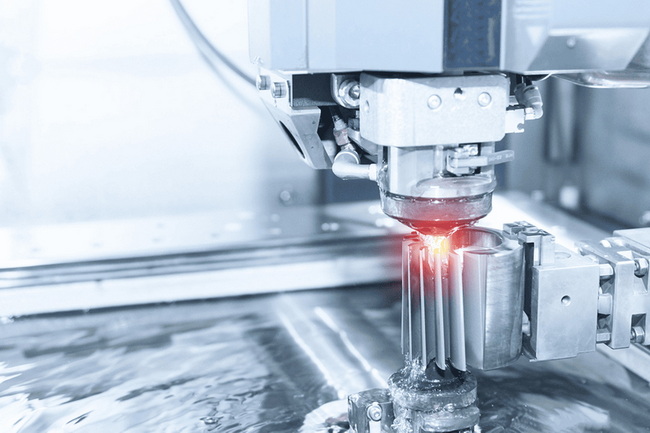
To align with demanding overseas quality standards, U-NEED embeds surface finish control into the full tooling workflow, not just the EDM step.
1. Requirement definition with the customer
- Clarify target Ra/Rmax values or VDI texture levels per cavity and functional area.[4]
- Define areas where polishing is allowed versus areas that must remain EDM-textured (e.g., sealing surfaces, optical features).[4]
2. Electrode and material plan
- Select fine-grain graphite or copper based on detail level, cavity depth and production volumes.[8][9]
- Design electrodes to optimize flushing and reduce risk of sharp corners that concentrate energy.[5]
3. Additive EDM parameter setup
- Adjust dielectric additive concentration and filtration strategy in line with machine recommendations to maintain uniform suspension.[1][4]
- Optimize orbiting, pulse parameters and gap settings to take advantage of the additive's ability to dissipate energy evenly.[1]
4. Verification and documentation
- Measure surface finish at multiple locations (bottoms, corners, sidewalls) to confirm uniformity.[4]
- Provide measured data and photos to OEM clients as part of the tooling approval dossier.[4]
This structured approach helps foreign buyers understand exactly how their cosmetic and functional requirements are translated into repeatable EDM processes on the shop floor.
Real-world experience from mold shops that adopted HQSF-style powder additives shows several repeatable benefits relevant to international OEMs.[3][1]
Documented improvements include:
- 30% or more reduction in EDM time on hardened tool steels for many cavity geometries, reflecting faster spark rates and reduced secondary discharges.[1]
- Significant reduction in polishing time as EDM finishes become uniform enough to require only minimal or localized touch-up.[3][1]
- Thinner and less brittle white layer, improving fatigue resistance and extending die life in high-temperature die-casting applications.[1]
For plastic injection molds, the practical outcome is shorter overall mold build lead times and more consistent textures, which in turn improve part-to-part appearance on production lines.[3]
For purchasing teams and engineers at overseas brands, the key question is not “Is additive EDM good?” but “When does it give the best ROI for this tool?”
Typical scenarios where powder-additive EDM is most valuable:
- Deep, narrow cavities where flushing is difficult and sidewall finish is critical.[3][1]
- High-cavitation molds where even small reductions in polishing time per cavity accumulate into major savings.[3][4]
- Visually critical surfaces (consumer electronics housings, automotive interior trim, cosmetic packaging) demanding highly uniform finishes.[4]
U-NEED reviews part geometry, resin type and expected production volume, then proposes a tooling and EDM strategy – including whether to use additive EDM – to balance cost, timing and lifecycle performance.
Because U-NEED offers high-precision machining, plastic molding, silicone molding and metal stamping, EDM surface finish quality influences several downstream manufacturing stages.
How this integration benefits OEM buyers:
- Precision machining + EDM
- Machined cores and cavities with tight tolerances receive EDM finishing where necessary, maintaining critical dimensions while adjusting surface textures.[6]
- Plastic and silicone molding
- Controlled EDM textures help manage demolding forces, reduce risk of drag marks and achieve desired gloss or matte effects on plastic and silicone parts.[4]
- Metal stamping tools
- Cleaner EDM finishes in die details can improve edge quality and reduce burr formation in stamped components.[4]
By aligning surface finish targets at the tooling design stage, U-NEED helps foreign brands avoid costly late-stage changes and repeated sample rounds.
If your brand requires stable EDM surface finishes, shorter polishing cycles and reliable mold life, U-NEED can support you from early DFM through final production.
- Share your 3D files, target finishes and annual volumes, and U-NEED's engineering team will propose an EDM and tooling strategy tailored to your application.
- For ongoing programs, U-NEED can standardize surface finish specifications, measurement methods and reporting templates, ensuring consistent quality across multiple tools and factories.
Contact U-NEED today to discuss your next mold, silicone tool or metal stamping die and learn how optimized EDM surface finish can reduce cost and risk across your full product lifecycle.
1. Do all molds need powder-additive EDM to achieve a fine surface finish?
Not all molds require additive EDM; many simple cavities with generous access and moderate finish requirements can be processed with conventional EDM plus polishing. Additives become more attractive in deep, complex or highly cosmetic areas where uniform finish and reduced polishing time are critical.[3][1][4]
2. Will additive EDM eliminate polishing completely?
In some applications, especially with fine-grain graphite electrodes and optimized parameters, additive EDM can produce finishes that need minimal or no polishing in limited areas. However, many high-end cosmetic parts still benefit from targeted manual finishing to achieve specific gloss or texture targets.[1][4]
3. Is graphite always better than copper when using powder additives?
Graphite often becomes more attractive with additives because it can now reach finishes previously associated with copper while maintaining faster machining and lower cost. That said, copper still has a role in ultra-fine detail or special cases where its solid, non-porous structure provides advantages.[8][9][5][1]
4. How does EDM surface finish affect plastic part performance?
Surface finish influences appearance, demolding behavior and sometimes sealing performance in assembled parts. Rough or inconsistent EDM surfaces can cause drag marks, higher ejection forces and visible defects, especially on glossy or clear plastics.[4]
5. What information should OEMs provide to ensure the right EDM finish?
OEMs should clearly specify target roughness (Ra/Rz/VDI), critical functional areas and any zones where a specific texture or polishing level is mandatory. Providing reference samples or texture plates greatly improves alignment between design teams and toolmakers.[4]
[1](https://www.makino.com/resources/content-library/article/archive/the-case-for-additive-technology-in-edm-/299)
[2](https://topmetrology.ro/en/product/makino-edaf3-masina-de-electroeroziune-cu-electrod-solid/)
[3](https://www.moldmakermag.com/articles/lens-tool-surface-finishing/)
[4](https://www.sciencedirect.com/science/article/abs/pii/S0924013605005728)
[5](https://www.edmtechman.com/library/EDM-107855-0814%20Cooper%20vs%20Graphite.pdf)
[6](https://www.makino.eu/en-us/machine-technology/machining-process/edm)
[7](https://www.makino.eu/resources/content-library/webinars/archive/evolution-of-wire-edm-technology/345)
[8](https://www.moldmakingtechnology.com/articles/graphite-or-copper-part-1)
[9](https://mwi-inc.com/blog-post/copper-vs-graphite-electrodes-which-is-better/)
[10](https://www.makino.com/resources/content-library/article/archive/additive-solves-edm-surface-finish-problem/144)
[11](https://www.moldmakermag.com/articles/makino-hqsf/)
[12](https://www.moldmakermag.com/articles/makino-hqsf/default.aspx?mobile=0)
[13](https://topmetrology.ro/en/product/makino-edac1-masina-de-electroeroziune-cu-electrod-solid/)
[14](https://www.graphitequipment.com/copper-vs-graphite-electrode/)
[15](https://makinoindia.co.in/die_edm.aspx)
[16](https://ferrosos.files.wordpress.com/2010/10/rango-productos-hitachi-tabla-comparativa.pdf)
[17](https://www.canplastics.com/features/moldmaking-product-expo-preview-edm-additive-improves-surface-finish/)
[18](https://par.nsf.gov/biblio/10595877-powder-bed-additive-manufacturing-effect-layer-thickness-powder-bed-density)
[19](https://www.facebook.com/groups/PlasticInjectionMoldingAndMoldMakersWorldwide/posts/24788499934118737/)
[20](https://www.ctemag.com/articles/mighty-fine)


