Views: 222 Author: Rebecca Publish Time: 2026-01-16 Origin: Site
Content Menu
● What Are Bending, Folding and Shaping
● Sheet Metal Bending: Precision in Curvature
>> Design Guidelines for Bending
>> Typical Use Cases for Bending
● Sheet Metal Folding: Multiple Bends in One Part
>> How Folding Differs from Bending
>> Design Guidelines for Folding
● Shaping: Curves and Complex Contours
>> Design Guidelines for Shaped Parts
● Why Bending, Folding and Shaping Matter in Modern Fabrication
● Common Materials for Bending, Folding and Shaping
>> Typical Sheet Metal Materials
● Design for Manufacturability in Sheet Metal Forming
>> Flat Pattern and Tolerances
● Choosing Between Bending, Folding and Shaping
● Quality Control and Tolerance Management
● Working Effectively With a Sheet Metal Supplier
● Integrated OEM Support for Sheet Metal Parts
● Clear Call to Action: Turn Your Sheet Metal Designs Into Reliable Products
>> Q1: What is the main difference between bending and folding in sheet metal fabrication
>> Q2: How can cracking be reduced when bending sheet metal
>> Q3: Which metals are commonly used for curved and shaped sheet metal parts
>> Q4: When should a sheet metal supplier be involved in the design process
Sheet metal fabrication is a versatile and fundamental process for creating precise and durable components used in machinery, electronics, automotive products, and architectural applications. This guide explains bending, folding, and shaping in clear, practical terms and helps engineers, buyers, and OEMs make better decisions from design to mass production.

Sheet metal fabrication turns flat metal sheets into functional three‑dimensional parts with defined geometry, strength, and surface quality. Among its key forming processes are bending, folding, and shaping, each suited to different part geometries and performance requirements.
- Bending changes the angle of a sheet along a straight line to create U, V, or L profiles and flanges.
- Folding creates multiple bends in a controlled sequence to form boxes, channels, and enclosures.
- Shaping gradually forms smooth curves and complex contours without sharp bend lines.
A basic understanding of these methods helps design teams choose proper materials, define realistic tolerances, and avoid costly redesigns later.
Sheet metal bending applies force to a sheet along a straight axis so that the material yields and permanently changes angle without breaking. This process is ideal for components such as brackets, frames, and simple housings that rely on accurate angles and repeatable dimensions.
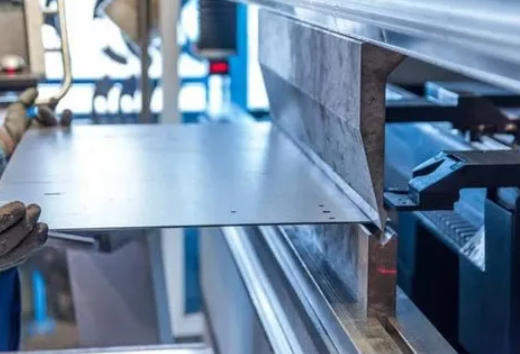
In a typical press brake operation, a punch pushes the sheet into a die opening until the material plastically deforms and takes on the desired angle. The final result depends on tooling geometry, material type, thickness, and springback, which is the tendency of metal to slightly return toward its original shape after the load is removed.
Common bending methods include:
- Air bending, where the punch does not fully bottom in the die, allowing flexible angles but requiring springback compensation.
- Bottom bending, where the punch presses the sheet closely into the die for more consistent angles.
- Coining, which uses higher pressure so the metal conforms precisely to the die, minimizing springback for tight tolerance parts.
Good design practices allow bending operations to run smoothly with stable quality.
- Make the inside bend radius equal to or greater than the material thickness to reduce risk of cracking.
- Include clear angle and radius specifications in drawings, with tolerances on critical dimensions only.
- Use bend allowance or bend deduction to calculate accurate flat patterns.
- Place holes, slots, and other features at least three times the material thickness away from bend lines.
- Align bends with the material rolling direction whenever possible to improve consistency.
Bending is used in many industries that require lightweight yet strong components.
- L and U shaped brackets for mounting and support.
- Channels and frames for racks, fixtures, and machine structures.
- Flanges that stiffen panels and provide surfaces for fastening or welding.
Folding produces multiple bends on the same part to create complex three‑dimensional shapes from a single flat blank. This method is especially valuable for parts where dimensional consistency, cleanliness of edges, and neat appearance are important.
Bending often refers to one or a small number of angles, while folding usually involves a series of bends that build an integrated geometry such as a box or enclosure. In many folding systems, the sheet is clamped and flanges are folded up or down around the clamped line, which reduces repositioning and handling.
Advantages of folding include:
- Lower risk of scratches on visible surfaces when the machine design protects the face of the material.
- High repeatability for parts with multiple sides and lids.
- Shorter production time when several bends are accomplished in a single setup.
Clear data helps a fabricator set up folding operations efficiently.
- Show all fold lines, directions, and angles in the CAD model and drawings.
- Keep material thickness consistent across the design for predictable behavior.
- Check minimum flange lengths against machine and tooling limitations.
- Allow reasonable tolerances to account for springback while still meeting functional needs.
Folding is central to many enclosures and protective parts.
- Boxes and junction enclosures for electrical and electronic assemblies.
- Machine covers, safety guards, and access doors.
- Rackmount housings and chassis for communication or control equipment.
Shaping creates curved and contoured geometries in sheet metal without distinct bend lines, making it suitable for parts where visual appearance and airflow or ergonomics are important. This approach often spreads deformation over a wider area than simple bending.
Shaping may involve rolling, deep drawing, hydroforming, or incremental forming, depending on geometry and production volume. During shaping, the material stretches and compresses, so thickness reduction and potential wrinkling must be controlled.
Typical shaping approaches include:
- Roll forming for long, continuous curves or profiles.
- Deep drawing or hydroforming for more three‑dimensional shapes.
- Incremental or manual forming for low volume or highly customized components.
Close collaboration between design and manufacturing is especially important for shaped components.
- Define radii, transitions, and contour limits clearly in the CAD model.
- Evaluate possible thinning and wrinkling in deep or complex areas, especially for thin or soft metals.
- Balance appearance and performance with practical limits on tooling and forming capability.
Shaping enables products that combine strength, style, and functionality.
- Automotive body panels, roofs, and fenders with smooth surfaces.
- Decorative or functional architectural panels and cladding.
- Consumer product casings and covers that require flowing lines and seamless edges.
Bending, folding, and shaping allow manufacturers to convert flat metal sheets into strong, lightweight components without excessive welding or machining. These processes help reduce part count, improve assembly efficiency, and achieve consistent quality from batch to batch.
Key advantages include:
- High precision and repeatability when using modern, controlled forming equipment.
- Lower cost per part after setup, thanks to efficient forming cycles.
- Design flexibility, since many functional features can be integrated into one piece.
- Smooth integration with cutting, welding, and finishing steps in a complete production flow.
Material selection strongly influences formability, strength, corrosion resistance, and weight. Different metals react differently to bending, folding, and shaping, so their properties must be matched to the design.
- Mild steel, which offers good formability and economical cost for general industrial parts.
- Stainless steel, which provides strength and corrosion resistance but may need larger bend radii.
- Aluminum, which is lightweight and suitable for many housings and structural components.
- Copper and brass, which are often used for decorative, electrical, and HVAC applications.
When choosing a material, it is important to consider:
- Structural loads and stiffness requirements of the finished assembly.
- Feasible bend radii and forming depths for the specific alloy and temper.
- Compatibility with welding, coating, painting, plating, or anodizing steps.
Applying design for manufacturability principles early helps avoid delays and unexpected costs during tooling and production. Well‑designed parts are easier to form and produce more consistent results.
Use the following points during design reviews for sheet metal parts.
1. Confirm that minimum bend radii match material thickness and alloy.
2. Ensure that all holes, slots, and cutouts are set back from bend lines and edges by sufficient distance.
3. Check whether bend sequences can be performed without tool collisions or impossible motions.
4. Simplify extremely complex shapes where possible, especially when they require special tools or multiple setups.
5. Align key features to make fixturing, measurement, and assembly more straightforward.
Accurate flat patterns are essential for reliable forming.
- Use consistent bend allowance data across the entire project to avoid mismatched results.
- Apply tight tolerances only where they directly affect fit, function, or sealing.
- Allow more generous tolerances in noncritical regions to reduce scrap and rework.
Different requirements lead to different forming strategies, and the right choice depends on geometry, appearance, and production quantity. Selecting the most suitable process at the beginning of a project supports smoother development.
- Bending is suitable for simple flanges, brackets, and profiles with a limited number of angles.
- Folding is suitable for boxes, frames, and enclosures with multiple interconnected bends.
- Shaping is suitable for contoured parts with flowing lines, deep draws, or aerodynamic surfaces.
| Requirement | Main Process | Notes |
|---|---|---|
| Simple L brackets and mounting flanges | Bending | Fast setup and good angular accuracy. |
| Electrical or electronics enclosure | Folding plus bending | Multi‑bend box with mounting features. |
| Curved automotive‑style body panel | Shaping | Requires control of thinning and smooth curvature. |
| Low volume ergonomic cover with curves | Shaping or incremental forming | Suitable for prototypes and small series. |
| Structural frame from channels and angles | Bending | Ideal for repeatable linear profiles. |
Reliable sheet metal parts must meet drawing specifications and fit correctly into assemblies. Consistent quality control during bending, folding, and shaping reduces defects, rework, and delays.
- Bend angle and inside radius, which must match the design within acceptable tolerance.
- Hole positions and overall dimensions, which affect assembly fit and alignment.
- Surface condition, including checking for cracks, wrinkles, or dents, especially on visible faces.
Manufacturers often use both manual and digital inspection tools.
- Calipers, angle gauges, and radius gauges for quick checks in production.
- Coordinate measuring machines and 3D scanning for complex shapes and high accuracy demands.
- Statistical process control for monitoring trends and maintaining stable production.
Good communication with a sheet metal fabrication partner helps turn designs into stable mass production. Sharing complete information early allows the supplier to optimize bending, folding, and shaping steps.
Before asking for a quote or lead time, it is helpful to prepare:
- 3D models and detailed 2D drawings with all important dimensions, material, and finish requirements.
- Estimated order quantities and potential ramp‑up plans.
- Requirements for coatings, painting, plating, or other finishing operations.
- Details on operating environment, loads, and any applicable industry standards.
Focused questions help confirm a supplier's capabilities.
- What sheet sizes, thicknesses, and press capacities can you handle for bending and folding.
- Can you support both prototypes and volume production of the same part.
- How do you calculate and control bend allowance and flat pattern dimensions.
- Which inspection tools and quality systems do you use for complex shaped parts.
Many projects do not involve metal parts alone but combine machined components, plastic products, silicone components, and metal stamping. A manufacturing partner that can manage these processes together helps simplify supply chains and reduce coordination effort.
A capable OEM‑focused manufacturer can:
- Review CAD files and give practical advice on bending, folding, and shaping before production.
- Combine sheet metal fabrication with high precision machining, plastic product molding, silicone product manufacturing, and metal stamping.
- Deliver ready‑to‑use assemblies, including finishing, subassembly, packaging, and export handling.
For international brands, wholesalers, and manufacturers, this integrated model reduces supplier numbers and supports faster and more reliable product launches.
If your team is planning new brackets, enclosures or contoured sheet metal parts and needs reliable forming from prototype to mass production, now is the ideal time to review your bending, folding and shaping strategy. Choosing a partner with practical OEM experience ensures that your CAD files are translated into stable, production-ready parts with predictable cost and quality.
Work with a dedicated manufacturer that understands complex projects, manages multiple processes under one roof and supports you from DFM to final shipment. Share your drawings, 3D models and quantity targets to receive a detailed DFM review, optimized forming and a tailored quotation for your next sheet metal fabrication project.
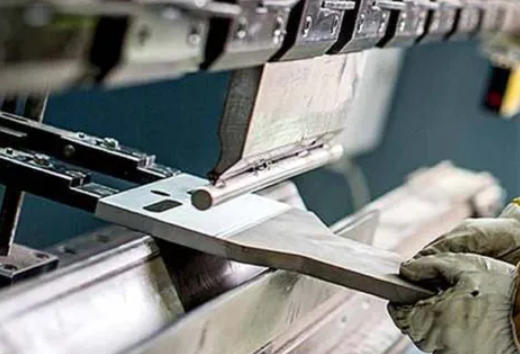
Bending typically involves forming one or a few angles using a press brake, while folding usually refers to creating multiple bends in a coordinated way to form complete shapes such as boxes or enclosures.
Use an inside bend radius at least equal to the material thickness, select suitable alloys, keep features away from bend lines, and avoid angles that exceed recommended limits for the chosen material.
Aluminum and mild steel with good formability are often selected for shaped parts, while stainless steel can also be used when bend radii and process parameters are adjusted to prevent excessive thinning.
Involving a supplier early allows them to validate bend radii, check flat patterns, and suggest design adjustments before tooling and pilot production, which reduces the risk of later modifications.
Many OEM‑oriented manufacturers combine sheet metal fabrication with machining, plastic and silicone molding, stamping, and assembly, enabling them to deliver complete component sets or subassemblies from a single source.


