Views: 222 Author: Rebecca Publish Time: 2026-01-19 Origin: Site
Content Menu
>> Key characteristics of CNC machining:
>> Key characteristics of injection molding:
● CNC machining vs injection molding overview
● How to choose: the 5 key questions OEM buyers must ask
>> 1. What is your expected production volume
>> 2. Where is your design in the product lifecycle
>> 3. What performance and tolerance levels are required
>> 4. What materials do you need
>> 5. What is your budget and timeline
● When CNC machining is the better choice
● When injection molding is the better choice
● Hybrid strategy: CNC first, molding later
● Design tips to avoid costly mistakes
● How U-NEED supports OEM buyers from prototype to mass production
● Clear action steps for your next project with U-NEED
● FAQ: CNC machining vs injection molding
>> FAQ 1: Is CNC machining or injection molding cheaper
>> FAQ 2: Can I start with CNC and switch to injection molding later
>> FAQ 3: Which process gives better tolerances
>> FAQ 4: What if my product includes both metal and plastic parts
>> FAQ 5: How do I know if my design is ready for injection molding
Choosing between CNC machining and injection molding is not about which technology is “better,” but which is better for this product, at this volume, at this stage of your project. For overseas brands, wholesalers, and manufacturers working with China-based OEM partners like U-NEED, the right choice directly affects cost, lead time, quality, and long-term scalability.
This guide is written for foreign brand owners, wholesalers, and manufacturers who source custom components from China and need a clear, practical framework to select the right process. By the end, you will know exactly when to use CNC machining, when to invest in injection molding, and when a hybrid strategy is the most effective option.

CNC machining is a subtractive process where a computer-controlled machine cuts material into the final shape using tools like mills, lathes, drills, and routers. Because it does not require a mold, it is extremely flexible for design changes and low to medium volumes.
No mold required: Suitable for prototypes, design iterations, and small batches.
Wide material range: Metals such as aluminum, stainless steel, brass, and engineering plastics such as PEEK, PC, POM, and others.
High precision: Capable of tight tolerances around ±0.001 in (±0.025 mm) with proper machines and fixturing.
Ideal use cases: High-precision mechanical parts, metal brackets, fixtures, low-volume plastic parts, and functional prototypes.
For OEM buyers, CNC machining is often the fastest and lowest risk path from CAD model to functional parts in hand.
Injection molding is a process where molten plastic is injected into a hardened steel or aluminum mold, cooled, and ejected as a finished part. The mold is an upfront investment and takes time to manufacture, but once built, it can produce parts in seconds at a very low per-unit cost.
Requires a mold: Higher upfront cost and longer tooling lead time compared with CNC machining.
Primarily thermoplastics: ABS, PP, PC, PA, PBT, PM## CNC Machining vs Injection Molding: A 2026 OEM Buyer's Guide to Choosing the Right Process
Choosing between CNC machining and injection molding is not about which technology is “better,” but which is better for this product, at this volume, at this stage of your project. For overseas brands, wholesalers, and manufacturers working with China-based OEM partners like U-NEED, the right choice directly affects cost, lead time, quality, and long-term scalability.
This guide is written for:
- Foreign brand owners launching new products with plastic, metal, or silicone parts.
- Wholesalers sourcing custom components from China.
- Manufacturers needing reliable OEM partners for long-term production.
By the end, you will know exactly when to use CNC machining, when to invest in injection molding, and when a hybrid strategy is the best option.
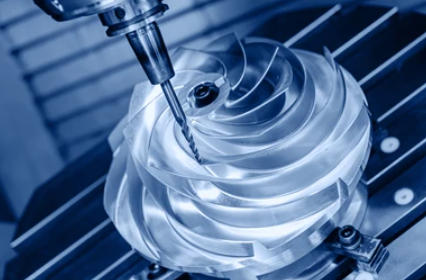
CNC machining is a subtractive process where a computer-controlled machine cuts material into the final shape using tools like mills, lathes, drills, and routers. Because it does not require a mold, it is extremely flexible for design changes and low to medium volumes.
Key characteristics of CNC machining
- No mold required, only fixtures and programming.
- Wide material range: metals such as aluminum, stainless steel, brass, and engineering plastics like PEEK, PC, and POM.
- High precision with tolerances as tight as ±0.001 in (±0.025 mm) on critical features.
- Ideal for high-precision mechanical parts, metal brackets, fixtures, low-volume plastic parts, and complex prototypes.
For OEM buyers, CNC machining is often the fastest and lowest risk path from CAD model to functional parts in hand.
Injection molding is a process where molten plastic is injected into a hardened steel or aluminum mold, cooled, and ejected as a finished part. The mold is expensive and takes time to manufacture, but once built, it can produce parts in seconds at a very low per-unit cost.
Key characteristics of injection molding
- Requires a mold with higher upfront tooling cost and several weeks of lead time.
- Primarily used for thermoplastics such as ABS, PP, PC, PA, PBT, and their filled grades, and can also be used for silicone and elastomers.
- Typical tolerances around ±0.003 in (±0.08 mm) in well-designed molds.
- Ideal for tens of thousands or millions of identical plastic or silicone parts, housings, enclosures, and consumer product shells.
For mature designs with stable demand, injection molding becomes the most cost-effective solution.
| Dimension | CNC Machining | Injection Molding |
|---|---|---|
| Tooling / mold cost | No mold, only fixtures and setup | High mold cost, especially for multi-cavity or complex tools |
| Lead time to first part | Days to a couple of weeks | Several weeks for mold design, machining, trials, and tuning |
| Per-part cost | Higher per piece, especially at higher volumes | Very low per piece at medium to high volumes |
| Typical volumes | 1–5,000 units, depending on complexity and material | 1,000–1,000,000+ units for plastic and silicone parts |
| Materials | Metals, engineering plastics, some composites | Thermoplastics, some thermosets, silicone and TPE for flexible parts |
| Design flexibility | Very high, easy to change CAD and machine again | Limited after mold is cut, changes may require expensive tool rework |
| Tolerances | As tight as ±0.001 in on critical features | Around ±0.003 in under ideal conditions |
| Surface finish | Machined; can be polished, anodized, plated, or coated | Mold-defined, supports textures, high gloss, matte, and patterns |
Volume is one of the strongest indicators of which process to choose.
- For 1–100 pcs: CNC machining is usually preferred for fast, flexible prototypes and pilot runs.
- For 100–3,000 pcs: CNC machining or bridge tooling (soft molds) can both work, and a cost comparison is essential.
- For 3,000+ pcs of plastic or silicone: injection molding almost always wins on per-part cost once the mold is amortized.
A practical and low-risk approach is to start with CNC machining for prototypes and engineering builds, then transfer to injection molding when demand and design are stable.
The earlier you are in the product lifecycle, the more valuable flexibility becomes.
- Concept or prototype stage:
- Dimensions, wall thickness, and even overall structure may still change.
- CNC machining lets you modify the CAD model and receive updated parts in days, without paying for new tooling.
- Mass-production stage:
- The design is frozen and tested in real usage.
- Injection molding becomes the logical choice for cost, repeatability, and automation.
If there is demand uncertainty or the need for frequent design changes, staying with CNC machining longer can significantly reduce risk and prevent wasted tooling investment.
Some applications cannot compromise on tolerances or material performance.
Choose CNC machining when:
- You need extremely tight tolerances around ±0.001 in for mating parts, sealing interfaces, or safety-critical components.
- You require high-strength metals or engineering plastics with demanding mechanical or thermal performance.
- You need complex 3D surfaces where precision is critical, such as sealing surfaces or alignment features.
Choose injection molding when:
- Parts are mainly plastic housings, covers, knobs, or structural plastic elements with moderate tolerances.
- You need consistent geometry and appearance across tens of thousands of parts after the mold is tuned.
Many real products combine both processes in one assembly, such as metal cores or inserts machined by CNC, overmolded with plastic or silicone.
Material availability and behavior under processing are important factors.
CNC machining materials:
- Metals: aluminum, stainless steel, carbon steel, brass, copper, and other alloys.
- Plastics: PEEK, POM, PC, PA, PMMA, and many more engineering thermoplastics.
Injection molding materials:
- Thermoplastics: ABS, PP, PC, PA, PMMA, PBT, and filled grades such as glass-fiber reinforced materials.
- Elastomers: TPE, TPU, and various silicone formulations for flexible, soft-touch, or sealing components.
If your product roadmap includes metal parts, plastic housings, and silicone seals, cooperating with a partner like U-NEED that can support CNC machining, plastic injection molding, silicone molding, and metal stamping greatly simplifies coordination and improves fit between components.
Budget and schedule often drive the final decision.
- Budget constraints:
- When you cannot justify mold investment yet, CNC machining or low-cost soft tooling is usually the safest route.
- Once your forecast supports tooling costs, injection molding can deliver strong long-term cost advantages.
- Timeline considerations:
- CNC parts can often be delivered in days to a couple of weeks for many designs.
- Injection molds typically require several weeks for design, machining, trials, and tuning before stable production.
For time-sensitive launches, many brands start selling with CNC-machined parts, then switch to molded parts once tooling is ready, without changing the external appearance to end users.
CNC machining is usually the better option when:
- You are building engineering prototypes that must behave like final parts under load, vibration, or temperature.
- You need short runs of customized mechanical parts, such as machine components, fixtures, or test jigs.
- You are making metal or hybrid assemblies where strength, stiffness, or precision fit are critical.
Typical CNC parts include:
- Precision machined shafts, bushings, and spacers for automation equipment.
- Aluminum or steel brackets, frames, and chassis for industrial systems.
- Low-volume plastic parts or assemblies where tooling costs would be too high for the required quantity.
Because the same CNC setup can often run multiple versions of a design, it supports continuous improvement without tooling risk.
Injection molding is usually the better option when:
- You have a validated design with stable and predictable demand.
- You plan to produce thousands or millions of plastic or silicone parts over the life of the product.
- You need consistent appearance, surface texture, and color across all parts.
Typical injection molded parts include:
- Consumer product plastic housings and covers for electronics, appliances, and tools.
- Connectors, caps, closures, and other repeat components used in packaging and industrial systems.
- Silicone keypads, gaskets, and seals used in consumer electronics, medical devices, and household appliances.
Injection molding is also strong when you need functional features like snap-fits, internal ribs, bosses for screws, and integrated branding details molded directly into the part.
For many OEM customers, the most practical strategy is a staged, hybrid approach.
1. Concept and engineering validation
- Use CNC machining to quickly produce functional prototypes.
- Test assembly, performance, ergonomics, user feedback, and reliability.
2. Pilot run and market test
- Continue with CNC or low-volume tooling to test small markets, B2B customers, or early adopters.
3. Tooling and mass production
- Once the design is stable and the market response is clear, invest in injection molds for plastic and silicone parts.
- Keep CNC machining for metal components and any parts that still need tight tolerances or frequent design updates.
Working with a one-stop OEM partner like U-NEED, which covers CNC machining, plastic molding, silicone molding, and metal stamping, makes the transition from prototype to mass production smoother and more cost-efficient.
To get reliable CNC quotations and stable production, it helps to follow a few basic design for manufacturability guidelines.
- Maintain consistent wall thicknesses as much as possible to avoid distortion in thin sections.
- Use standard hole sizes, thread types, and radii where possible to reduce tooling and programming time.
- Avoid specifying ultra-tight tolerances on non-critical dimensions, because this increases machining time and cost without adding real value.
Good CNC DFM improves manufacturability and reduces the risk of unexpected cost increases during production.
For injection molding, well thought-out design for manufacturability is essential from the start.
- Add draft angles on vertical walls to allow easy ejection from the mold and reduce drag marks.
- Keep wall thickness reasonably uniform to minimize sink marks, warpage, voids, and internal stresses.
- Work with your mold engineer to define proper gate positions, runner layout, and venting to ensure balanced filling and reduce defects such as short shots or burn marks.
Good DFM at the beginning can significantly reduce the number of mold trials required, saving both time and money in mass production.
As a China-based OEM partner, U-NEED focuses on integrating multiple manufacturing processes to support your entire product lifecycle.
U-NEED provides:
- High-precision CNC machining of metals and engineering plastics for prototypes and production.
- Plastic injection molding for small to large housing and structural parts.
- Silicone molding for gaskets, seals, keypads, and other flexible components.
- Metal stamping for brackets, terminals, and sheet metal parts used together with molded components.
Working with one integrated supplier helps you to:
- Reduce supplier fragmentation and quality variation between different processes.
- Shorten development time by coordinating CNC, molding, and stamping through one engineering and project management team.
- Optimize cost by choosing the right process at each stage without constantly changing suppliers or re-qualifying factories.
To move your project forward efficiently and choose the right process with confidence, follow these steps:
1. Send your 3D files and requirements
- Share your CAD files (STEP/IGES), 2D drawings if available, material preferences, estimated annual volume, and target markets.
2. Request a process recommendation and cost comparison
- Ask U-NEED's engineering team to compare CNC machining and injection molding for your part, including unit price at different volumes, tooling investment, and lead times.
3. Start with prototypes or a pilot run
- Begin with CNC machining or low-volume molding to validate design, assembly, and user feedback before committing to hard tooling.
4. Scale to mass production
- Once volumes justify tooling costs, move to plastic or silicone molding for the appropriate components while continuing to use CNC machining and metal stamping for high-precision or structural parts.
If you are planning a new project or reviewing existing parts, now is the right time to talk to an experienced OEM partner. Contact U-NEED today with your drawings and volume forecast to get a free manufacturability review and a tailored CNC versus injection molding proposal for your product.
Contact us to get more information!
For small volumes, CNC machining is usually cheaper because there is no mold cost. For medium to high volumes, injection molding becomes cheaper per part after the mold cost is spread over enough pieces, especially for plastic and silicone parts.
Yes. Many OEM buyers start with CNC machining for prototyping and small runs, then move to injection molding once the design and demand are stable. This staged approach reduces risk and avoids paying for mold changes every time you update the design.
In general, CNC machining can achieve tighter tolerances, around ±0.001 in on critical features, than typical injection molding, which is usually around ±0.003 in. For most consumer and industrial plastic parts, well-designed molds still provide more than adequate accuracy and consistency.
This situation is very common. Many products use CNC-machined metal components, injection-molded plastic housings, and sometimes silicone seals in the same assembly. Working with a partner like U-NEED that offers all these processes in-house helps ensure that fit, function, and cost are optimized at the system level, not just at the part level.
Your design is usually ready for injection molding when dimensions are stable and tested in prototypes, you have reliable demand forecasts, and a DFM review has confirmed suitable draft angles, wall thickness, and gating. If any of these aspects are still uncertain, staying with CNC machining and small batches a little longer is often the safer choice.
1. https://jlccnc.com/blog/cnc-machining-vs-injection-molding-how-to-choose-the-right-process-for-your-product
2. https://uptivemfg.com/cnc-machining-vs-injection-molding/
3. https://fictiv.com/articles/cnc-machining-vs-injection-molding
4. https://protolabs.com/resources/blog/cnc-machining-vs-injection-molding/
5. https://xometry.com/resources/manufacturing/cnc-machining-vs-injection-molding/
6. https://3dhubs.com/knowledge-base/cnc-machining-vs-injection-molding/
7. https://jiga.io/resources/cnc-machining-vs-injection-molding/
8. https://sungplastic.com/project/china-plastic-injection-mold-manufacturer/
9. https://unesen.com/services/cnc-machining/
10. https://gree-ge.com/cnc-machining-vs-injection-molding-top-10-insights-for-manufacturers/


