Views: 222 Author: Rebecca Publish Time: 2026-01-15 Origin: Site
Content Menu
● What Is 3D Printing for Consumer Products
● Why 3D Printing Matters for Consumer Brands
● Key 3D Printing Technologies for Consumer Products
>> FDM / FFF (Fused Deposition Modeling)
>> SLA / DLP (Resin-Based Printing)
>> SLS (Selective Laser Sintering)
>> Metal 3D Printing (SLM / DMLS)
● Materials for Consumer 3D Printing
>> Resins
>> Composites and Advanced Materials
● Typical Consumer Applications of 3D Printing
● How 3D Printing Supports the Product Development Cycle
● Design Best Practices for 3D Printed Consumer Products
● Hybrid Strategy: 3D Printing with CNC, Plastic, Silicone, and Stamping
● Case-Type Examples in Consumer Goods
● Emerging Trends in 3D Printing for Consumer Products
● Practical Steps for Brands Planning 3D Printed Consumer Products
● How U-NEED Supports 3D Printing–Driven Consumer Projects
● Partner with U-NEED for Scalable Consumer Products
● FAQs about 3D Printing for Consumer Products
>> 1. How is 3D printing used in consumer products today?
>> 2. When does 3D printing become too expensive compared with injection molding?
>> 3. Can 3D printed parts be strong enough for everyday consumer use?
>> 4. How does 3D printing support sustainable consumer products?
>> 5. Why should overseas brands work with a hybrid OEM partner like U-NEED?
3D printing for consumer products has evolved into a core manufacturing strategy for brands that need faster launches, highly customized designs, and efficient low-volume or bridge production. For overseas brands, wholesalers, and manufacturers working with Chinese OEM partners like U-NEED, understanding how to combine 3D printing with CNC machining, plastic molding, silicone molding, and metal stamping is critical for turning concepts into scalable consumer products.
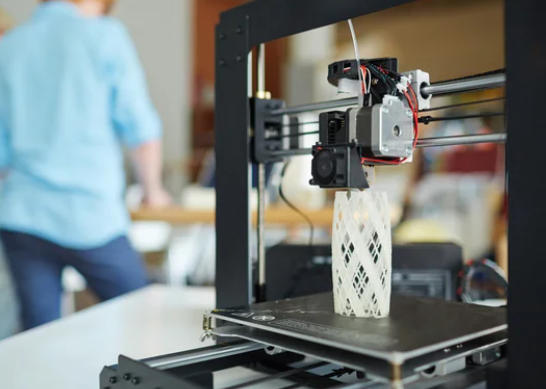
3D printing for consumer products means using additive manufacturing to convert digital 3D models into physical parts, layer by layer, without traditional tooling. It is widely used for rapid prototyping, functional testing, mass customization, and increasingly for end-use parts in sectors like wearables, smart home devices, and lifestyle accessories.
Key characteristics include:
- Direct production from CAD files, eliminating dedicated molds in early stages.
- Ability to integrate complex geometries that are difficult or impossible with conventional manufacturing.
- Cost-effective low-volume runs and personalized designs with minimal changeover cost.
Consumer expectations for personalized products, fast updates, and sustainable solutions are reshaping how brands design and manufacture goods. 3D printing fits this shift because it supports on-demand, localized, and highly flexible production.
Key benefits for consumer product companies:
- Faster time-to-market with shorter design–prototype–test cycles.
- More differentiated design thanks to complex geometries and organic shapes.
- Reduced risk and inventory through small pilot runs and make-to-order models.
- Potential for more sustainable supply chains with less waste and overproduction.
The global 3D printing market has grown into a multi‑billion dollar industry supported by rapid R&D and adoption across multiple sectors, including consumer products. Market analysts expect strong double‑digit annual growth into the 2030s, driven by broader use in production and not just prototyping.
Within this larger space, the consumer 3D printing segment is expanding quickly as more brands adopt mass customization, flexible production, and localized manufacturing for consumer goods. This growth is supported by improved printers, broader material options, and more experienced service providers.
Different 3D printing technologies offer distinct advantages for consumer goods, from aesthetic prototypes to durable end-use parts. Choosing the right process for each phase of development is essential for cost, quality, and scalability.
FDM builds parts by extruding melted thermoplastic filament layer by layer and is widely used for concept models, fixtures, and low-cost prototypes.
- Typical materials: PLA, ABS, PETG, TPU, and blends.
- Advantages: Low material cost, quick iterations, and large build volumes for basic models.
- Limitations: Visible layer lines and lower surface quality compared with resin-based processes.
Stereolithography (SLA) and Digital Light Processing (DLP) use light to cure liquid resin into highly detailed parts, ideal for consumer applications requiring fine surface finish and intricate features.
- Applications: Cosmetic prototypes, jewelry, eyewear frames, cosmetic packaging, and small detailed components.
- Benefits: Very smooth surfaces and high accuracy with minimal post-machining.
- Trade-offs: Resins may be more brittle than engineering thermoplastics and require controlled post-curing.
SLS uses a laser to sinter nylon or similar powders, producing strong, functional parts without support structures.
- Typical materials: PA11, PA12, and filled nylons.
- Strengths: Excellent mechanical properties, good dimensional stability, and efficient nesting for batch production.
- Common uses: Wearable housings, sports components, snap-fit parts, and custom accessories.
HP Multi Jet Fusion (MJF) is a powder-bed fusion technology optimized for fast throughput and consistent part properties, often used for series production.
- Features: High production speed, good surface quality after finishing, and repeatable mechanical properties.
- Ideal for: Short-run production of smart device housings, structural brackets, and highly customized components.
Metal additive manufacturing uses laser or electron beams to fuse metal powder into dense, functional components. While still more expensive, it is increasingly relevant for premium consumer products.
- Common materials: Stainless steel, titanium alloys, aluminum alloys.
- Use cases: High-end watch parts, luxury eyewear, bicycle components, and performance sports gear.
Material selection directly impacts product strength, appearance, regulatory compliance, and long-term durability. For consumer goods, designers typically choose between thermoplastics, photopolymer resins, composites, and metals.
- ABS: Tough and impact-resistant, suitable for enclosures and functional parts.
- PLA: Good for visual prototypes and eco‑oriented concepts, but less heat-resistant.
- Nylons (PA): Excellent strength, fatigue resistance, and wear performance for moving or structural elements.
- Standard resins: High detail and smooth finish for visual models and cosmetic parts.
- Tough/engineering resins: Enhanced impact and heat resistance for functional testing.
- Specialty resins: Flexible, transparent, or high‑temperature formulas for niche applications.
- Fiber-reinforced filaments or powders for stronger, lighter parts.
- Eco-friendly and recycled materials that support sustainability goals.
- Ceramic and biocompatible materials for premium home goods or wearables.
Leading brands now integrate 3D printing across the consumer product lifecycle, from idea validation to limited production runs.
Common application areas include:
- Wearables and smart devices: Custom-fit housings, straps, mounts, and sensor enclosures.
- Home and lifestyle products: Personalized decor, kitchen tools, organizers, and lighting fixtures.
- Footwear and sports: Custom insoles, protective gear, and performance-optimized structures.
- Fashion and jewelry: Intricate, lightweight structures for unique accessories and limited collections.
- Gaming and entertainment: Custom controllers, props, figurines, and peripherals.
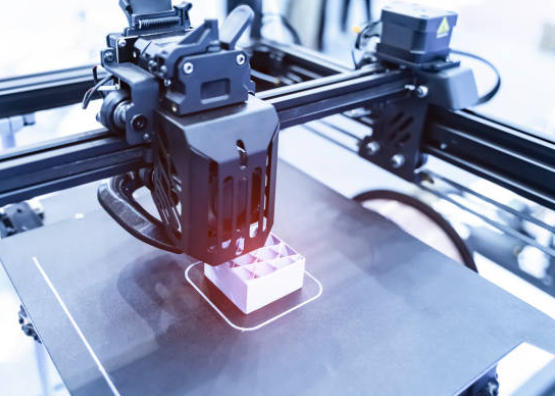
3D printing adds value at multiple stages of consumer product development, not just early design.
1. Concept validation
- Fast visual models for stakeholder reviews and early consumer testing.
2. Functional prototyping
- Engineering-grade materials to verify fit, ergonomics, and performance.
3. Design refinement
- Rapid iterations on shapes, textures, and user interactions without modifying molds.
4. Pilot runs and market testing
- Dozens or hundreds of units for beta tests, crowdfunding campaigns, or niche launches.
5. Bridge production and long-tail SKUs
- Initial demand covered with additive manufacturing before mass production, or long-tail variants kept in 3D printing indefinitely.
Design for 3D printing helps teams avoid print failures and ensures reliable, repeatable quality. Well-optimized designs are also easier to scale later into CNC machining, plastic molding, or metal stamping.
Key guidelines:
- Wall thickness: Keep walls above process minimums to avoid warping or breakage.
- Support-aware geometry: Minimize steep overhangs, deep cavities, and thin spikes.
- Tolerance strategy: Design clearances for snap-fits, hinges, and assemblies based on process capability.
- Orientation planning: Align critical surfaces and load paths for maximum strength and surface finish.
- Material-driven design: Match geometry to the strengths and weaknesses of the chosen material.
For overseas brands and wholesalers, the most practical strategy is often to combine 3D printing with established manufacturing processes through one integrated OEM partner.
A typical hybrid flow with a China-based OEM like U-NEED can include:
- Early-stage: 3D printed concept and functional prototypes to validate design and user experience.
- Pre-production: CNC machining of pilot parts for mechanical validation and pre-certification builds.
- Mass production: Injection molding, silicone molding, and metal stamping for cost-effective volume supply.
- Long-tail variants: Additive manufacturing for limited editions, accessories, or spare parts.
This approach lets brands keep maximum flexibility early while still achieving competitive pricing and stable quality at scale.
Looking at common pattern cases makes it easier to see how 3D printing adds value without relying on specific brand names.
Examples include:
- Custom-fit wearables: Body or foot scans converted into personalized bands, shells, or inserts produced via SLS or MJF, then combined with molded elastomer components.
- Modular home devices: Interchangeable covers, mounts, or decorative elements printed around a standard electronics core to target different segments.
- Limited edition lifestyle products: Metal 3D printing or high-end resins for small batches of premium accessories without expensive tooling.
New technologies and materials will further expand what consumer brands can do with 3D printing.
Notable trends:
- Sustainable materials such as biodegradable, recycled, and bio‑based filaments.
- Advanced composites that replace metal in sports and lifestyle products.
- Larger-format printing for furniture elements, large decor pieces, and sports equipment.
- Digital, on-demand supply chains that place micro-factories closer to end-users.
Brands that adopt these trends early can position themselves as innovative and sustainability-focused.
To move from idea to reliable supply with minimal risk, consumer brands can follow a structured approach.
1. Define product goals and constraints
- Clarify target price, annual volume, standards, and key functions.
2. Choose the target 3D printing role
- Decide if it is for prototypes only, limited series, mass customization, or hybrid with mass production.
3. Match technology and materials
- Select FDM, SLA, SLS, MJF, or metal printing based on geometry, performance, and aesthetics.
4. Apply DfAM early
- Optimize wall thickness, clearances, and support strategy before releasing files.
5. Run pilot builds
- Validate ergonomics and performance, then consider transition to CNC or molding when volumes grow.
6. Select a hybrid OEM partner
- Prefer suppliers that can manage both additive and traditional processes and support design optimization for each.
As a China-based OEM focusing on high-precision machining, plastic part manufacturing, silicone products, and metal stamping, U-NEED can act as a bridge between 3D printing concepts and mass-market consumer products.
U-NEED can help overseas brands, wholesalers, and manufacturers to:
- Review 3D printable designs and suggest modifications that simplify later CNC machining or injection molding.
- Produce CNC-machined or molded parts that replicate 3D printed prototypes while meeting tight tolerances and cosmetic standards.
- Combine plastic, silicone, and metal components to create complete assemblies ready for retail packaging.
- Scale from pilot batches to stable, repeatable production with robust quality management.
For projects where customers already have 3D printed prototypes, U-NEED's engineering team can convert them into manufacturing drawings and propose the most cost-effective mix of machining, molding, and stamping.
Global brands, wholesalers, and manufacturers that want to unlock the full potential of 3D printing for consumer products need an OEM partner that can handle both agile prototyping and robust mass production. U-NEED provides integrated services in high-precision machining, plastic and silicone manufacturing, and metal stamping, enabling a smooth path from 3D printed concept to retail-ready product lines.
If your team is planning a new consumer product, exploring mass customization, or looking for a more flexible supply chain, contact U-NEED today for a detailed engineering review, manufacturability suggestions for 3D printing and traditional processes, and a customized quotation for your next project.
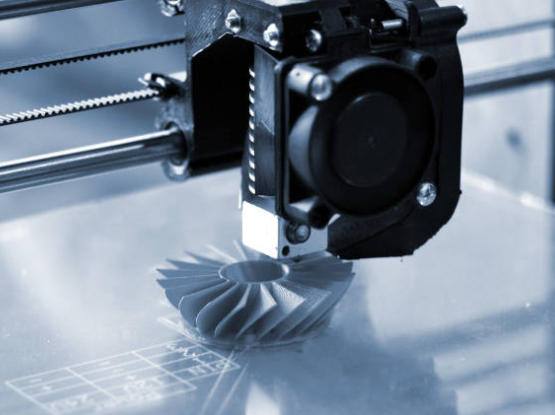
3D printing is used to create concept models, functional prototypes, customized accessories, and low-volume end-use parts in sectors such as wearables, home goods, and electronics. It supports rapid iteration, mass customization, and on-demand production, often alongside traditional CNC and molding processes.
3D printing is cost-effective at low to medium volumes and for frequent design changes, because it avoids the cost and lead time of steel molds. Once annual volumes reach higher levels and designs are stable, injection molding usually offers a much lower cost per part, even with the tooling investment.
Yes, when the right technology and material are chosen, 3D printed parts can meet demanding mechanical requirements for everyday use. Processes such as SLS and MJF with engineering-grade nylons, as well as reinforced composites, are frequently used for functional consumer components.
3D printing can reduce waste by using only the material required to build each part and by enabling local, on-demand production that lowers inventory and logistics. The adoption of recycled and bio-based materials further improves the sustainability profile of 3D printed consumer products.
A hybrid OEM partner can align 3D printed prototypes with scalable manufacturing routes, ensuring a smoother transition to CNC machining, molding, and metal stamping when volumes grow. This reduces redesign risk, shortens launch time, and consolidates responsibility for quality and delivery with a single supplier.


