Views: 222 Author: Rebecca Publish Time: 2026-01-21 Origin: Site
Content Menu
>> How the Injection Molding Process Works
>> Common Injection Molding Applications
● Advantages of Injection Molding
● Limitations of Injection Molding
● What Is 3D Printing (Additive Manufacturing)?
>> Main 3D Printing Technologies
>> Typical 3D Printing Use Cases
● Injection Molding vs 3D Printing: Key Factors
● Cost, Volume, and Break-Even Strategy
● Design Considerations: When Each Process Works Best
>> Choose Injection Molding When…
● Practical Workflow: 3D Printing to Injection Molding
● When You Need a Manufacturing Partner
● Call to Action: Plan Your Next Project
● FAQs on Injection Molding vs 3D Printing
>> 1. Is 3D printing cheaper than injection molding?
>> 2. Can 3D printing replace injection molding completely?
>> 3. Which process gives better mechanical performance?
>> 4. How do I decide which process to use for a new product?
>> 5. Can I use the same CAD file for both 3D printing and injection molding?
Injection molding is ideal for high-volume production with consistent quality, tight tolerances, and excellent surface finish.
3D printing (additive manufacturing) is ideal for rapid prototyping, complex geometries, and low–to–medium volumes that need frequent design changes or customization.
In short: use 3D printing to design, test, and validate parts quickly; then switch to injection molding once your design is frozen and demand scales.

Injection molding is a high-volume production process where molten material is injected into a hardened steel or aluminum mold, cooled, and then ejected as a finished part. It is widely used for plastic parts, but can also be applied to metals, glass, and elastomers in specialized variants.
1. Material melting – Plastic pellets or other materials are heated until they become molten.
2. Injection into the mold – The molten material is injected at high pressure into a precisely machined mold cavity.
3. Cooling and solidification – The filled mold is cooled so the part solidifies into its final shape.
4. Ejection – The mold opens and ejector pins push the solid part out, ready for the next cycle.
Because this cycle repeats very quickly, injection molding is extremely efficient once the mold is built.
Injection molding is the “default” process for many mass-produced products, such as:
- Automotive parts: dashboards, bumpers, grilles, interior trims, engine covers.
- Consumer electronics: phone cases, remote controls, chargers, device housings.
- Medical components: syringes, IV connectors, surgical instrument handles.
- Aerospace: ducting systems, brackets, interior components, small structural parts.
- Optical parts: light guides, camera lenses, optical housings.
- Agricultural equipment: seed trays, connectors, irrigation components.
Injection molding is favored for production scaling because it combines precision, repeatability, and low cost per part at high volumes.
- High precision and repeatability
Tight tolerances as small as approximately ±0.005 inches are achievable with a well-designed mold and stable process settings. Parts from the same mold show minimal dimensional variation even across very large production runs.
- Complex geometries at scale
Undercuts, ribs, fine textures, and complex surface details can be integrated into the mold, enabling intricate part designs that are difficult or impossible with traditional machining.
- Material versatility
Supports a wide range of thermoplastics, thermosets, and elastomers, from cost-effective polyethylene to high-performance materials such as PEEK and engineering nylons. This allows designers to match strength, chemical resistance, and temperature resistance to specific applications.
- High strength-to-weight ratio
Engineering plastics can replace metal in many structural parts, reducing weight without sacrificing performance in automotive, aerospace, and electronics.
- Excellent surface finish and aesthetics
Surface textures, gloss levels, and decorative effects can be built into the mold, minimizing post-processing.
- Multi-material and overmolding options
Processes such as two-shot molding enable parts with rigid and soft sections, integrated seals, or conductive areas in a single cycle.
Despite its strengths, injection molding has constraints that matter in early-stage or low-volume projects.
- High upfront tooling cost
Complex molds often cost thousands of dollars or more, which makes molding uneconomical for very low volumes unless there is a clear plan for long-term production.
- Longer lead times for tooling
Mold design, machining, and tuning take time; modifications after initial trials can extend the schedule further. This slows down rapid prototyping and time-to-market.
- Design constraints
Parts must include draft angles for ejection and consistent wall thickness to prevent warping, sink marks, or internal stresses. Thick sections cool more slowly and are more prone to cosmetic and dimensional defects.
For startups, new product launches, or highly customized parts, these limitations are exactly why 3D printing has become so important.
3D printing, or additive manufacturing, builds parts layer by layer from a digital CAD model instead of cutting material away or filling a mold. Because there is no dedicated tooling, design changes are fast and inexpensive.
Different 3D printing technologies suit different materials and performance targets:
- FDM (Fused Deposition Modeling) – Extrudes molten thermoplastic through a nozzle; common materials include PLA and ABS.
- SLS (Selective Laser Sintering) – Uses a laser to fuse powdered polymers into solid parts; often used for functional prototypes.
- DMLS (Direct Metal Laser Sintering) – Fuses metal powders into dense metal parts, enabling complex metal geometries.
- SLA / DLP (Stereolithography / Digital Light Processing) – Cure liquid photopolymers with light; used for high-detail, smooth-surface parts.
- MJF (Multi Jet Fusion) – Uses ink and heat to fuse powder, offering faster builds for certain polymer parts.
3D printing is widely used where flexibility and complexity are more important than per-part cost.
- Automotive: custom exhaust manifolds, ducts, cooling pipes.
- Aerospace: fuel nozzles, turbine blades, satellite hardware.
- Medical and dental: patient-specific implants, prosthetics, dental crowns, anatomical models.
- Tooling and fixtures: custom jigs, assembly fixtures, gauges.
- Consumer products: jewelry, décor, fashion accessories, personalization components.
- Architecture and construction: detailed models, customized façade elements.
- Healthcare and bioprinting: experimental bioprinted tissues, surgical planning models.
3D printing delivers speed, design freedom, and customization that traditional processes cannot match.
- Extreme design freedom
Internal channels, lattice structures, organic shapes, and complex internal cavities can be produced without the traditional constraints of mold design or tool access.
- Toolless, low-upfront-cost manufacturing
No molds, fixtures, or hard tooling are required; you go directly from CAD file to part, which is ideal for prototypes and small-batch runs.
- Rapid prototyping and fast iteration
Design changes are as simple as updating the CAD model and re-printing, enabling multiple iterations in days instead of weeks or months.
- Mass customization at no extra tooling cost
Each part can be unique without additional setup costs, which is critical for medical implants, dental appliances, and personalized consumer products.
- Multi-material possibilities
Advanced printers can combine materials with different hardness, flexibility, or conductivity in a single build.
- Lightweight structures
Techniques such as topology optimization and lattice infill reduce weight while maintaining strength—especially valuable for aerospace, automotive, and robotics.
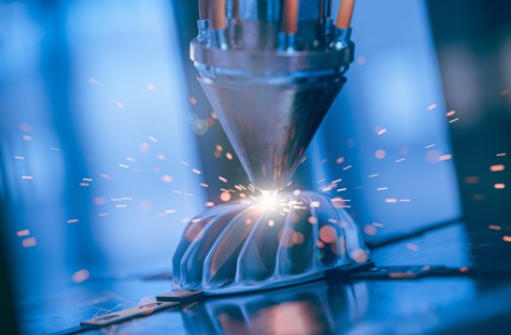
3D printing is not a complete replacement for conventional manufacturing, especially at scale.
- Mechanical properties and anisotropy
Many printed parts are weaker along the build direction (Z‑axis) because each layer bond is a potential failure plane. This can be a concern for critical structural applications.
- Surface finish and tolerances
Processes like FDM leave visible layer lines, and even higher-resolution technologies, such as SLA and DMLS, often require sanding, polishing, or coating to meet cosmetic or dimensional requirements.
- Slower throughput for high volumes
Print times are relatively long, especially for large or complex parts, and do not scale as efficiently as injection molding cycle times in mass production.
As a result, 3D printing excels in early development and specialized production, while injection molding remains the workhorse for high-volume manufacturing.
The table below summarizes when each process usually wins for a given decision factor.
| Factor | Injection Molding – Best Use Case | 3D Printing – Best Use Case |
|---|---|---|
| Customization | Limited once mold is made; design changes are costly. | Highly flexible; each part can be different with no tooling changes. |
| Surface finish | Excellent finish directly from the mold at scale. | Often needs post-processing to match molded surfaces. |
| Material options | Very wide range of plastics and elastomers. | Growing but still narrower material portfolio. |
| Speed at scale | Slow to start, extremely fast per part once tooled. | Quick to start, but slower per part in large batches. |
| Design complexity | Good, but limited by mold design rules. | Excellent; ideal for internal channels and lattices. |
| Cost at low volume | High due to mold cost. | Favors small batches and prototypes. |
| Cost at high volume | Lowest cost per unit when volumes are high. | Per-part cost stays relatively high with volume. |
Cost strategy is usually the most critical business question when choosing between injection molding and 3D printing.
- For prototyping and early market tests, 3D printing minimizes risk because you avoid expensive tooling while your design and volumes are still uncertain.
- For validated designs and stable demand, injection molding generates the lowest cost per unit and the most consistent quality.
A common approach is:
1. Use 3D printing for early concept models, ergonomic mockups, and functional prototypes.
2. Move to pilot runs using either 3D printing or soft tooling, depending on part size and complexity.
3. Invest in production injection molds once your design, specifications, and target quantities are stable.
This staged strategy balances cash flow, speed, and quality across the lifecycle of your product.
- You need tens of thousands or millions of parts at consistent quality.
- Tolerances, mechanical strength, and surface aesthetics are critical.
- You have access to professional mold design to handle draft, wall thickness, and gate locations.
- You are still iterating part geometry and want fast feedback.
- The part includes internal channels, lattices, or organic shapes hard to mold.
- You need custom, one-off, or low-volume parts without committing to tooling.
A modern, efficient product development workflow often uses both processes in sequence.
1. Concept & visual models – 3D print early shapes to validate size, ergonomics, and general form.
2. Functional prototypes – Print parts in engineering-grade materials to test assembly, performance, and user interaction.
3. Design for Manufacturing (DFM) for molding – Refine the design to add draft, smooth wall transitions, and optimize gate and ejector locations.
4. Tooling and T1 samples – Build the injection mold and run first articles for dimensional and functional validation.
5. Ramp to mass production – Lock the design and scale output with short molding cycle times.
Using this combined approach, you get fast learning from 3D printing and low unit cost from injection molding when it matters most.
For many companies, the most efficient path is to work with a single manufacturing partner that offers both 3D printing and injection molding, plus related services such as CNC machining and metal fabrication. Such partners can help you:
- Review your CAD files and recommend the best process based on volume, material, and performance requirements.
- Combine rapid prototyping via 3D printing with mass production via injection molding on the same project.
- Optimize part design for manufacturability, cost, and long-term reliability.
If your next project requires high-precision mechanical parts, plastic components, silicone parts, or metal stampings, working with an experienced OEM-focused supplier streamlines the entire journey from prototype to full-scale production.
If you are planning a new product or upgrading an existing one, now is the right time to decide how injection molding vs 3D printing will fit into your roadmap. Define your target quantities, budget, and performance requirements, then align each project phase with the process that delivers the best balance of cost, speed, and quality.
Discuss your CAD files, material ideas, and volume expectations with a professional manufacturing team to get tailored guidance and a reliable quotation before you commit to tooling or large print runs.
Contact us to get more information!
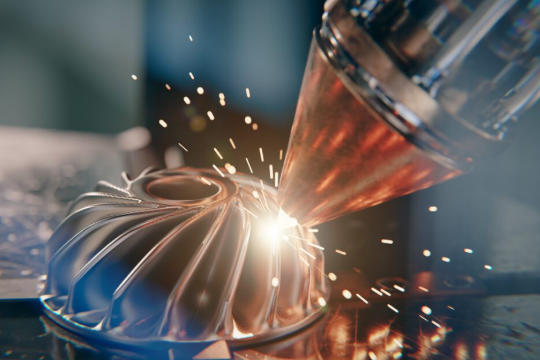
3D printing is usually cheaper for low volumes and prototypes because no mold is required, even though per-part cost is relatively high. Injection molding becomes cheaper per part when production volumes are high enough to offset tooling costs.
In most cases, no. 3D printing is excellent for prototyping and specialized or customized parts, but injection molding still offers better economics and consistency for high-volume production.
Injection-molded parts typically provide more isotropic mechanical properties and stable tolerances. 3D-printed parts can be strong, but often show anisotropy and may need careful orientation and post-processing.
Start by defining expected volume, required lead time, mechanical properties, and budget. Use 3D printing for early iterations and validation, and transition to injection molding when the design and demand are stable.
You can use the same base geometry, but it usually needs Design for Manufacturing (DFM) adjustments for molding, such as draft angles, uniform wall thickness, and revised gating and ejection features.


