Views: 222 Author: Rebecca Publish Time: 2026-02-18 Origin: Site
Content Menu
● What Is Sheet Metal Processing?
● Core Sheet Metal Processing Workflow
>> 1. Material Selection and Specifications
>> 3. Punching and Forming Features
>> 5. Welding and Mechanical Assembly
>> 6. Surface Treatment and Finishing
● Key Sheet Metal Processing Techniques
>> Shearing
>> Punching
>> Bending
>> Welding
● How to Choose the Right Sheet Metal Tools and Equipment
● How to Improve Sheet Metal Accuracy and Efficiency
>> Use CNC and Digital Manufacturing
>> Optimize Tooling and Fixture Design
>> Control Key Process Parameters
● Design for Manufacturability in Sheet Metal
>> Design Guidelines for OEM Sheet Metal Parts
>> Common Design Mistakes to Avoid
● OEM Sheet Metal Processing for Global Customers
● How a Professional Partner Supports Your Project
● Take the Next Step With a Reliable OEM Sheet Metal Partner
● FAQ About Sheet Metal Processing for OEM Projects
>> 1. What is the typical thickness range for sheet metal parts?
>> 2. How do I choose between laser cutting and punching?
>> 3. What information should I include in a sheet metal RFQ?
>> 4. How does surface treatment affect cost and lead time?
>> 5. Can one supplier handle both sheet metal and CNC machined parts?
Sheet metal processing is a core manufacturing technology for OEM and ODM projects in industries such as automotive, electronics, home appliances, and industrial equipment. For overseas brands, wholesalers, and manufacturers, choosing the right sheet metal partner directly affects product quality, cost, and time-to-market.

Sheet metal processing (sheet metal fabrication) is the process of cutting, forming, joining, and finishing thin metal sheets into functional parts or assemblies. Typical products include enclosures, brackets, machine covers, chassis, cabinets, and structural components for various industries.
Common materials include:
- Cold rolled steel
- Stainless steel
- Aluminum and aluminum alloys
- Galvanized steel and coated steels
For overseas OEM customers, sheet metal fabrication offers:
- High flexibility for customized designs
- Competitive cost for medium and high volumes
- Good balance of strength, weight, and aesthetics
A standardized workflow helps ensure consistent quality and predictable lead time.
Material selection is usually based on strength, corrosion resistance, surface appearance, and cost. In OEM work, designers and suppliers typically define:
- Material type (for example, SPCC, SECC, SUS304, AL5052)
- Thickness or gauge range
- Surface condition (oiled, dry, coated)
- Applicable standards (for example, ASTM, JIS, EN)
Selecting standard gauges simplifies sourcing and reduces cost.
In the cutting stage, the sheet is cut to the required flat pattern based on the 2D development from 3D CAD.
Typical cutting methods:
- Shearing: Fast straight-line cutting for simple blanks and strips.
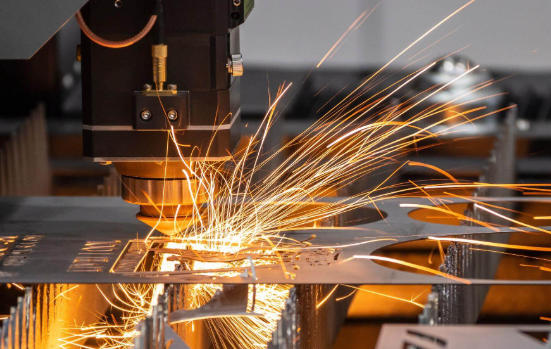
- Laser cutting: High-precision cutting for complex contours and tight tolerances.
- Stamping and blanking: High-speed production using dedicated dies, suitable for mass production.
For prototypes and small batches, laser cutting is usually preferred for its flexibility.
Punching creates holes, slots, louvers, and other 2.5D features.
Key considerations:
- Minimum hole diameter typically at least 1.0–1.5 times material thickness to avoid deformation.
- Adequate distance between holes and between holes and bends to prevent tearing.
- Tool selection, such as standard versus special tools, affects cost and lead time.
CNC turret punching is often used for panels with many repetitive features and can be more cost-effective than laser cutting in high-volume production.
Bending converts flat blanks into three-dimensional parts using press brakes or specialized forming tools.
Best practices:
- Bend radius at least equal to material thickness to avoid cracking.
- Maintain consistent bend orientation and radius to reduce setups and cost.
- Allow realistic tolerances because the metal stretches during bending.
For long profiles or continuous sections, roll forming can be used to produce complex shapes at high volume.
When multiple sheet metal parts are joined into an enclosure or frame, welding or mechanical fastening is used.
Common welding processes:
- MIG or MAG and TIG welding for structural and visible seams
- Spot welding for overlapping sheets in automotive or appliance housings
- Laser welding for high-precision, low-distortion joints
Where heat or deformation must be controlled, mechanical joining such as screws, rivets, rivet nuts, or clinching is often preferred.
Surface treatment improves corrosion resistance and visual appearance.
Typical options:
- Powder coating and liquid painting
- Anodizing for aluminum
- Electroplating, such as zinc, nickel, chrome
- Brushing, polishing, bead blasting
For export projects, finishes often need to meet specific salt-spray, hardness, or adhesion standards.
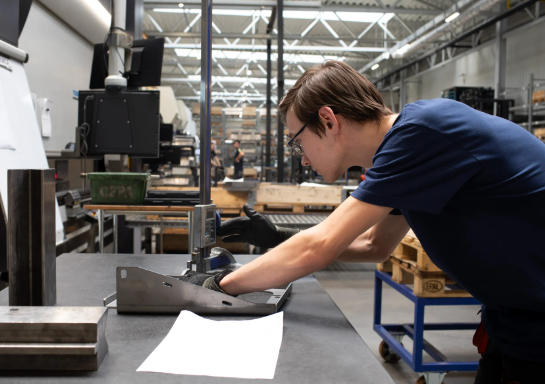
This section summarizes the main processes involved in sheet metal fabrication and when to use them.
- Tools: Shearing machines, guillotines, band saws
- Advantages: Fast, cost-effective for straight cuts
- Best for: Simple rectangular blanks, preliminary sizing before laser cutting
- Tools: Fiber or CO2 laser cutting machines
- Advantages: High precision, narrow kerf, minimal burrs
- Best for: Complex geometries, tight tolerance parts, prototypes and small batches
- Tools: Mechanical or servo punching presses with tooling
- Advantages: Extremely high productivity for repetitive holes and forms
- Best for: Large panels with many standard features, mid-to-high volume OEM parts
- Tools: CNC press brakes and bending machines
- Advantages: Accurate angle control, flexible setup
- Best for: Brackets, enclosures, U-shaped and L-shaped parts, structural frames
- Tools: Arc welding machines, laser welding equipment
- Advantages: High joint strength, suitable for complex assemblies
- Best for: Structural frames and load-bearing interfaces
Proper equipment selection is critical for precision and stable production.
- Role: Rapid cutting of sheet metal before forming or laser cutting.
- Selection points: Plate thickness range, maximum width, and production volume.
- Role: Precision bending to required angles and dimensions.
- Selection points: Tonnage, maximum bending length, backgauge accuracy, and tool compatibility.
- Role: Fast processing of holes, slots, and formed features.
- Selection points: Press tonnage, tool library size, automation level, and stroke speed.
- Role: High-precision cutting of complex shapes and tight-tolerance contours.
- Selection points: Laser power, cutting speed, supported material types, and thickness ranges.
- Role: Joining sheet metal parts into assemblies and frames.
- Selection points: Welding process type, compatible materials, and operator skill requirements.
For overseas OEM customers, stable quality and short lead time are decisive.
- CNC bending and CNC punching provide high repeatability and tight process control.
- Integrated systems provide traceability from material to finished part, which supports quality audits.
- Well-designed dies and fixtures reduce deformation and improve positional accuracy.
- Standardizing tools and setups minimizes changeover time and scrap.
- Parameters include cutting speed, laser power, bend pressure, and welding current.
- Stable parameters ensure consistent results across batches and reduce rework.
- Regular inspection and calibration keep equipment in optimal condition.
- Proactive maintenance reduces unplanned downtime and supports reliable delivery.
Good design can significantly reduce cost, improve quality, and shorten lead time.
- Keep material thickness uniform where possible to simplify bending and cutting.
- Use standard gauges and standard hole sizes to leverage existing tooling.
- Avoid very tight tolerances unless they are functionally necessary, as they increase cost and scrap.
- Ensure hole-to-edge and hole-to-bend distances follow minimum guidelines to prevent cracking.
- Insufficient relief around bends, causing tearing or warping.
- Overly complex geometries that require expensive special tools.
- Ignoring surface finishing requirements during design, which can lead to rework or coating defects.
Many international brands prefer Chinese sheet metal manufacturers for their ability to offer end-to-end OEM services from prototype to mass production.
Typical OEM services include:
- Engineering support and design for manufacturability review
- Rapid prototyping, such as CNC machining, 3D printing, and sample runs
- Tooling design and fabrication
- Mass production with quality control and full inspection reports
- Global logistics and packaging tailored to customer markets
For overseas partners, it is important to evaluate:
- Process capabilities, including cutting, stamping, bending, welding, and finishing
- Supported materials and thickness ranges
- Quality certifications and audit history
- Communication responsiveness and project management strength
A professional sheet metal manufacturer combines advanced equipment, engineering expertise, and strict quality management to support complex OEM work.
Key technical strengths often include:
- Five-axis CNC machining to produce high-precision, complex components and tooling
- High-precision laser cutting for intricate contours and tight tolerance flat patterns
- Multiple surface treatment options, such as coating and plating, to meet diverse application needs
Service advantages that matter for overseas customers:
- Responsive communication to support engineering changes and urgent requirements
- Global delivery capability based on an integrated supply chain network
- Strict quality control with comprehensive inspection and testing to meet international standards
If you are a foreign brand owner, wholesaler, or manufacturer looking for a long-term OEM partner, working with an experienced sheet metal supplier can reduce your risk and accelerate your projects. You are welcome to share your drawings, technical requirements, and target quantities so that our engineering team can provide manufacturability suggestions, cost-effective process options, and a detailed quotation. Contact us now to start your next sheet metal, machining, plastic, silicone, or metal stamping project and turn your design into high-quality, market-ready products.
Contact us to get more information!
Most sheet metal OEM parts fall between about 0.5 millimeters and 6 millimeters, depending on material and process. Thicker sections may require special equipment or alternative processes.
Laser cutting is ideal for complex profiles and small batches, where flexibility and precision are important. Punching is usually better for high-volume parts with many repetitive holes or features.
You should provide 3D and 2D drawings, material and thickness, surface finish requirements, quantities for prototype and mass production, tolerance expectations, and any special testing or certification needs.
More advanced finishes, such as multilayer powder coatings or special anodizing colors, usually add cost and may extend lead time. This is due to extra processing steps and additional quality checks.
Many integrated manufacturers combine sheet metal fabrication, CNC machining, and secondary processes to deliver complete assemblies from a single source. This can simplify supply chain management and shorten product launch cycles.
1. https://jlccnc.com/blog/introduction-to-sheet-metal-processing
2. https://www.zetwerk.com/resources/knowledge-base/sheet-metal/sheet-metal-manufacturing/
3. https://uark.pressbooks.pub/mechanicaldesign/chapter/sheet-metal-work/
4. https://us.caddi.com/resources/insights/sheet-metal-fabrication-process
5. https://sedinengineering.com/blogs/sheet-metal-design-guidelines/
6. https://mechpowertech.com/blog/sheet-metal-fabrication-7/design-best-practices-for-efficient-sheet-metal-fabrication-52
7. https://geomiq.com/blog/sheet-metal-forming/
8. https://www.sgproto.com/product-page/china-oem-factory-for-customized-sheet-metal-fabrication
9. https://www.komacut.com/sheet-metal-factory-china/
10. https://www.approvedsheetmetal.com/blog/optimizing-sheet-metal-designs-a-guide-for-mechanical-engineers
11. https://www.made-in-china.com/manufacturers/steel-fabrication.html
12. https://richconn.com/top-12-sheet-metal-fabrication-companies-in-china/


