Views: 222 Author: Rebecca Publish Time: 2026-02-19 Origin: Site
Content Menu
● Working Principle of Laser Cutting
● Types of Laser Cutting Machines
>> Fiber Laser Cutting Machines
>> Crystal (Solid-State) Laser Cutting Machines
● Advantages of Laser Cutting Technology
>> High Precision and Accuracy
>> Capability for Complex Designs
>> Lower Tooling Requirements and Energy Use
● Limitations of Laser Cutting Technology
>> Requirement for Skilled Technicians
>> Constraints on Metal Thickness
>> High Initial Equipment Investment
● Practical Application Examples
● Latest Trends in Sheet Metal Laser Cutting
>> Higher Power and Faster Cutting
>> Intelligent Automation and Smart Production
>> Broader Material Compatibility
● Design for Manufacturability Tips for Laser-Cut Sheet Metal
>> Reference Table: DFM Principles for Laser-Cut Sheet Metal
● Comparing Laser Cutting with Plasma Cutting and Turret Punching
● Why Work with a Professional Laser Cutting Partner
● Take the Next Step with a Trusted Laser Cutting Partner
● FAQs About Laser Cutting in Sheet Metal Processing
>> 1. What materials can be processed by laser cutting in sheet metal fabrication?
>> 2. How accurate is laser cutting for industrial and OEM parts?
>> 3. Is laser cutting suitable for prototypes and small batch production?
>> 4. What information should be provided when requesting a quotation for laser-cut sheet metal parts?
>> 5. How does laser cutting influence subsequent processes such as bending and welding?
Laser cutting has become a core technology in modern sheet metal processing, offering a combination of precision, efficiency, and flexibility that is difficult to match with traditional cutting methods. It is widely used to produce parts and assemblies for industries such as automotive, aerospace, electronics, and industrial equipment, especially where complex geometries and tight tolerances are required.

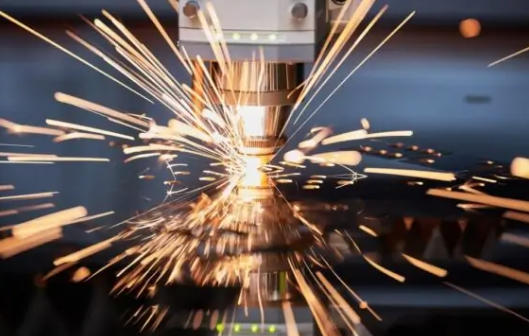
Laser cutting is a thermal cutting process that uses a high-energy laser beam to cut, engrave, or shape sheet metal. The laser beam is focused onto the metal surface, generating intense heat that melts or vaporizes the material along a programmed path. A CNC (Computer Numerical Control) system controls the position and movement of the laser head, enabling accurate and repeatable cutting according to the designed profiles.
The workflow typically includes CAD design, nesting of parts on metal sheets to reduce waste, CAM programming of cutting paths, and setting process parameters such as power, speed, and assist gas. Once the sheet is loaded and fixed on the cutting bed, the machine performs piercing and cutting according to the program. After cutting, the parts are removed for downstream processes like bending, welding, surface treatment, and final assembly.
CO2 laser cutting machines use a gas mixture as the laser medium and are suitable for cutting a wide range of materials. They can process non-metallic materials such as wood, paper, and acrylic, as well as thin aluminum and some non-ferrous metals. High-power CO2 laser cutters can handle thicker metals to a certain extent, though their efficiency and stability are lower when cutting highly reflective materials such as brass and copper.
Typical applications include thin-gauge steel panels, decorative panels, and non-metallic components used in signage, displays, and various industrial products. CO2 systems remain a practical option where mixed material processing is required and where extremely high productivity on metals is not the primary goal.
Fiber laser cutting machines use optical fibers doped with rare earth elements to amplify the laser beam. This configuration delivers high beam quality and power density, resulting in fast cutting speeds, narrow kerf width, and excellent edge quality. Fiber laser cutters are particularly suitable for cutting metals such as carbon steel, stainless steel, aluminum, brass, and copper, including highly reflective metals that pose challenges for some other laser sources.
They are especially efficient in thin and medium thickness sheet metals and are now commonly offered with power levels from a few kilowatts to several kilowatts. Higher power allows processing of thicker plates while maintaining cutting quality. In addition to cutting, fiber lasers can perform annealing, marking, and engraving operations, making them versatile tools in modern fabrication workshops.
Crystal laser cutting machines, also known as solid-state laser cutters, use crystals doped with rare-earth elements (such as Nd:YAG, Nd:YLF, or Er:YAG) as the gain medium. These machines offer high output power, excellent beam stability, and good energy efficiency. They can operate at different wavelengths, allowing process engineers to match the laser output to the absorption characteristics of specific materials.
Crystal lasers are commonly used for cutting, welding, and engraving metals, ceramics, and certain plastics. Their compact structure, reliability, and stable performance make them a popular choice in industrial and scientific applications where long-term consistency and high repeatability are important.
Laser cutting offers impressive precision for parts with complex designs and tight tolerances. Typical cutting accuracy ranges from about ±0.1 mm to ±0.5 mm, and even higher precision can be achieved for thin sheet metals on well-maintained equipment. The narrow kerf and small heat-affected zone help maintain dimensional stability and avoid significant distortion, which is critical for parts that must fit into assemblies without additional rework.
Modern laser cutting machines are highly automated, from sheet loading and unloading to nesting and process optimization. Combined with high cutting speeds, this automation allows manufacturers to process large batches of parts in relatively short cycle times. Efficient automation also makes it easier to respond to design changes, handle multiple product variants, and maintain stable quality across repeated production runs.
Laser cutting uses a fine, concentrated beam with a narrow kerf, enabling tight nesting of parts on each sheet. This reduces scrap and improves overall material utilization. In industries where raw material cost is significant, optimizing sheet usage can directly lower project cost. Reduced waste also contributes to more sustainable and resource-efficient manufacturing.
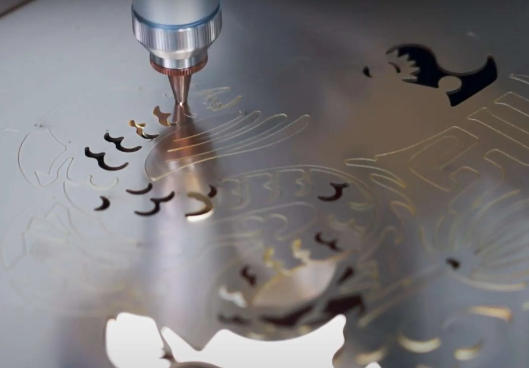
Laser cutting excels at processing complex geometries that are difficult or costly with conventional mechanical methods. It can produce intricate cutouts, small holes, sharp internal corners, fine slots, and decorative patterns without special tooling. This capability supports product designers who want to integrate functional and aesthetic features into sheet metal parts while keeping production practical and repeatable.
Laser cutting is a non-contact process, which means that there is no physical cutting tool that gradually wears out or needs frequent replacement. This reduces tooling costs, eliminates tool change downtime, and avoids dimensional deviations caused by worn tools. Compared with certain thermal cutting processes such as plasma cutting, laser cutting can often achieve similar or better results with lower energy consumption in many thin and medium thickness sheet applications.
Even though laser cutting systems are automated, they require experienced technicians to select appropriate parameters, maintain the optical path, and troubleshoot process issues. Incorrect parameter settings can cause burrs, insufficient penetration, excessive heat-affected zones, or unstable cutting. A shortage of skilled personnel may impact the overall performance and consistency of the process.
Laser cutting covers a wide range of sheet thicknesses, especially in thin and medium thickness materials. However, when processing very thick plates, it may be more economical and practical to use alternative processes such as plasma cutting or flame cutting. In thicker sections, cutting speeds drop significantly, and the edge quality may require additional machining or grinding.
Cutting coated, painted, or treated metals can release harmful fumes and fine particles. Adequate fume extraction, dust collection, and filtration systems are necessary to protect operators and maintain a safe working environment. Proper ventilation also helps extend the life of optical components and maintain machine performance over time.
Industrial laser cutting systems involve substantial upfront investment. Costs include the machine itself, laser source, auxiliary equipment, and suitable infrastructure such as power supply and gas systems. While the ongoing operating cost can be competitive due to automation and efficient material usage, the initial investment barrier is relatively high for small shops and new market entrants.
In the automotive industry, laser cutting is widely used to manufacture body panels, reinforcement parts, brackets, interior structural components, and many other sheet metal products. The combination of high precision and flexibility allows manufacturers to handle complex automotive designs while maintaining production efficiency and consistent edge quality. Laser cutting also supports frequent design updates and model changes, which are common in automotive programs.
The aerospace sector has strict requirements for precision, material properties, and structural integrity. Laser cutting is used to produce aircraft engine components, wing structures, brackets, and satellite parts, especially when working with high-performance metals such as titanium and aluminum alloys. Fiber lasers, in particular, perform well on reflective and high-strength materials, helping aerospace manufacturers achieve the necessary balance of weight, strength, and reliability.
The electronics industry depends on precise metal processing for components such as housings, mounting plates, shielding covers, and heat sinks. Laser cutting can achieve micron-level precision on thin metals and certain non-metallic materials, which is especially valuable for small parts with many openings or complex outlines. Fiber laser cutters are widely adopted in electronics applications because they can handle reflective materials like copper and aluminum and support fine cutting and engraving within a single setup.
In recent years, fiber laser sources have continued to increase in power. Higher power levels allow faster cutting speeds for carbon steel and stainless steel and enable thicker sections to be processed directly by laser cutting. This trend improves throughput in high-volume production and helps manufacturers shorten delivery times for large and complex projects.
Laser cutting systems are increasingly integrated with automated storage systems, robot-assisted loading and unloading, and automatic sorting. Intelligent software can optimize nesting, generate efficient cutting paths, and monitor cutting quality in real time. When these systems are connected to manufacturing execution and planning software, they support transparent, data-driven production management and make it easier to implement smart factory strategies.
Advances in laser sources, process control, and assist gas technology have expanded the range of materials that can be processed reliably. Modern laser cutting machines can handle different steel grades, aluminum alloys, brass, copper, and other special metals used in advanced engineering applications. This versatility makes laser cutting an attractive choice for OEMs that work with diverse materials and need consistent quality across various projects.
Good design practices can significantly reduce cost and risk in laser-cutting projects. The following suggestions help improve manufacturability and maintain quality:
- Use consistent material thickness within an assembly whenever possible to reduce setup changes and simplify nesting.
- Avoid extremely small internal corner radii that increase cutting time and may lead to overheating or warping; use practical, standardized radii where functionally acceptable.
- Keep minimum hole diameters and slot widths larger than or equal to the material thickness to maintain structural integrity and edge quality.
- Reduce the number of very small separate cutouts by combining them into slightly larger openings or functional slots when the design permits.
- Define tight tolerances only on truly critical dimensions; unnecessary tight tolerances increase inspection effort and scrap without adding real functional value.
| Design Aspect | Recommended Practice | Benefit for Projects |
|---|---|---|
| Material thickness | Standardize gauge within assemblies | Fewer setups, easier nesting and control |
| Small holes | Diameter ≥ sheet thickness | Cleaner edges, fewer defects |
| Corner radii | Avoid overly sharp internal corners | Reduced heat buildup and distortion |
| Tolerance definition | Apply tight tolerance only where needed | Lower cost, better yield |
| Part identification | Use engraved IDs or codes as needed | Easier tracking and error reduction |
Understanding alternative processes helps select the most suitable method for each project.
| Process | Best For | Advantages | Limitations |
|---|---|---|---|
| Laser cutting | Thin–medium sheet metal, complex contours | High precision, clean edges, no physical tooling | Higher equipment cost, thickness constraints |
| Plasma cutting | Thick plates and structural components | High speed on thick material, lower machine cost | Rougher edges, larger heat-affected zone |
| Turret punching | Parts with many repeated holes and forms | Very fast for simple patterns, can form features | Limited flexibility for complex outlines |
In many modern fabrication shops, these processes complement each other. Laser cutting often handles complex parts and prototypes, while plasma cutting and turret punching are used for thick plates or highly repetitive geometries.
A reliable sheet metal partner helps ensure that laser cutting truly delivers its potential benefits in real projects. A capable provider will:
- Operate modern CO2 and fiber laser cutting equipment suitable for your required materials and thickness range.
- Offer integrated services such as bending, welding, surface finishing, assembly, packaging, and inspection, reducing coordination work on your side.
- Provide engineering support on material selection, DFM optimization, and tolerance setting, helping you balance performance and cost.
- Understand export requirements, including labeling, documentation, and logistics, so that parts arrive ready for use in your target market.
For overseas brands, wholesalers, and manufacturers, choosing a partner with stable quality control and experience in long-term OEM cooperation is essential to maintaining consistent supply and protecting brand reputation.
If you are a brand owner, wholesaler, or manufacturer looking for stable, high-quality laser-cut sheet metal parts for your projects, now is the right time to collaborate with a professional OEM partner. Share your drawings, material specifications, and project requirements so that a dedicated engineering and production team can evaluate your design, provide practical manufacturability suggestions, and offer a detailed quotation including lead time and quality standards. By starting this cooperation, you can shorten development cycles, improve product consistency, and focus more resources on your core business while your sheet metal components are handled by experienced specialists.
Contact us to get more information!
Laser cutting can process most commonly used sheet metals, including carbon steel, stainless steel, aluminum alloys, brass, and copper. It is also suitable for certain non-metallic materials depending on the laser type. Fiber lasers are particularly effective for cutting reflective metals such as copper and brass, which are traditionally more difficult for some other cutting technologies.
In general, laser cutting accuracy is around ±0.1 mm to ±0.5 mm, and even better results are possible for thin sheets on high-quality machines with proper setup and maintenance. This level of precision is sufficient for most industrial assemblies and allows parts to fit together without extensive manual adjustment or post-processing.
Yes. Because laser cutting does not require dedicated physical tooling such as stamping dies, it is ideal for prototypes, engineering samples, and small production runs. Design changes can be implemented directly by updating the digital drawing and cutting program, which supports rapid iteration during product development.
To obtain an accurate quotation, it is recommended to provide material type and thickness, 2D drawings or CAD files, tolerance requirements, surface finish needs, expected order quantities, and delivery destination. If there are special requirements such as labeling, packaging, or certification standards, those should also be clearly stated so the supplier can plan accordingly.
Clean, burr-free edges and stable dimensional accuracy make bending and welding more predictable and repeatable. When parts are cut consistently, fixtures and bending programs can be optimized more easily, and welding gaps can be controlled more tightly. This reduces rework, improves assembly efficiency, and supports higher overall product quality.


