Views: 222 Author: Rebecca Publish Time: 2026-01-01 Origin: Site
Content Menu
● Core Keywords and Search Intent
● How the Laser Marking Process Works
● Types of Laser Marking Processes
>> Discoloration and Foaming on Plastics
● Laser Marking vs Engraving vs Etching
● Main Laser Types for Marking
● Common Materials for Laser Marking
● Advantages of Laser Marking for OEM Production
● Practical Design and Process Tips
● How to Choose the Right Laser Marking System
● Quality Control and Traceability with Laser Marking
● When to Outsource Laser Marking to an OEM Partner
● Clear Call to Action for OEM Buyers
● FAQ:
>> 1. Is Laser Marking Permanent
>> 2. Does Laser Marking Damage the Part
>> 3. Which Laser Is Best for Metal Parts
>> 4. Can Laser Marking Be Used on Plastics
>> 5. How Can Barcode Readability Be Ensured
Laser marking uses a concentrated laser beam to create permanent, high-contrast information on a part without significantly damaging its surface. It has become a core technology for traceability, branding, and compliance in sectors such as automotive, medical devices, aerospace, and consumer electronics.[1][2]

Target primary keyword: laser marking.
Recommended secondary keywords: what is laser marking, laser marking process, types of laser marking, fiber laser marking, CO2 laser marking, UV laser marking, laser marking vs engraving vs etching, industrial laser marking applications, laser marking services.[2][1]
This article targets engineers, buyers, and operations managers who need clear, practical guidance on how laser marking works, when to use it, and how to choose the right laser system for their projects.[1][2]
Laser marking is a non-contact process that uses a focused beam of light to change the surface of a material and create readable marks, such as text, codes, and logos. Unlike traditional mechanical or chemical methods, laser marking offers precise, durable marks with minimal damage or stress to the underlying part.[3][2][1]
Typical information added by laser marking includes:[2][1]
- Part numbers and serial numbers.
- 1D barcodes, 2D Data Matrix, and QR codes.
- Logos, brand names, and regulatory symbols.
- Batch numbers, production dates, and tracking IDs.
Because the beam can be precisely controlled, laser marking is suitable wherever traceability, anti-counterfeiting, and product identification are important.[1][2]
Laser marking systems generate a high-energy beam and steer it across the workpiece to alter the material surface. Most industrial machines use three main subsystems.[4][1]
- Laser source that generates the beam, typically fiber, CO2, or UV.
- Scanning mirrors, also called galvanometers, that rapidly move the beam in X and Y directions.
- Focusing optics that concentrate the beam onto a small spot on the part.
1. Digital content preparation
The operator sets up the marking layout, including text, codes, and graphics, in dedicated software and imports any required databases or serial number rules.[1]
2. Parameter configuration
Laser power, pulse frequency, marking speed, and focal position are adjusted based on material and required mark quality.[5][4]
3. Beam–material interaction
As the focused beam scans the surface, it induces localized heating, oxidation, color change, or shallow ablation, depending on the process type.[2][1]
4. Verification and quality check
Mark readability is verified visually or with code readers, and parameters are fine-tuned for contrast and durability.[1]
Because marking is digitally controlled, the same machine can switch between different designs, languages, and code formats in seconds.[4][1]
Industrial laser marking is a broad category that includes several distinct processes. The most common are laser annealing, laser etching, and laser engraving, along with discoloration and foaming on plastics.[6][7][2][1]
Laser annealing is a low-damage marking process mainly used on metals such as stainless steel, titanium, and certain alloys. The laser locally heats the surface to create an oxide layer that changes color without removing material.[2][1]
Key features include.[7][1]
- No significant material removal, and the surface remains smooth.
- Typical penetration in the range of tens of micrometers.
- Dark, high-contrast marks suitable for medical and food-contact components.
Annealed marks are widely used where corrosion resistance and surface integrity must be preserved.[7][1]
Laser etching melts the micro-surface of the material to create a slightly raised or textured mark. Compared with engraving, it is shallower but usually faster and requires less energy.[8][6][7]
Main characteristics are.[6][7]
- Shallow depth, often around 0.001 inch or about 0.03 mm on metals.
- Increased surface roughness that enhances visual contrast.
- A practical option for high-speed marking where moderate durability is adequate.
Etching is used on metals and some plastics where visual contrast is more important than very deep penetration.[6][2]
Laser engraving removes material from the surface and produces a recessed cavity. Because the beam vaporizes or ablates material, engraving creates deeper and highly durable marks.[8][6][2]
Typical aspects include.[8][6]
- Depths up to roughly 0.5 mm on metals for robust marks.
- High wear resistance, suitable for harsh environments.
- Frequent use for nameplates, tools, and parts subject to heavy abrasion or cleaning.
Engraving is often chosen for long-term identification where marks must survive friction, chemicals, and outdoor exposure.[6][8]
On many plastics, laser marking modifies pigments or creates microscopic bubbles called foaming that change how light reflects from the surface.[3][5]
Common results include.[5][3]
- Light-on-dark or dark-on-light contrast without deep cuts.
- Good readability on housings, switches, and consumer products.
- Minimal mechanical impact on thin walls or delicate features.
This method supports high-speed, high-contrast marking for plastic components in electronics, automotive interiors, and household appliances.[3][5]
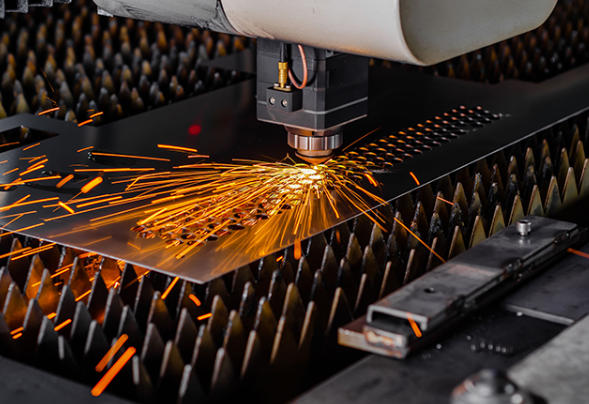
These three terms are often used interchangeably in general discussions, but technically they describe different interactions between the laser beam and the material.[7][2][6]
| Aspect | Laser Marking | Laser Engraving | Laser Etching |
|---|---|---|---|
| Core effect | Surface color or contrast change | Material removed by vaporization or ablation | Surface melted or deformed |
| Typical depth | Very shallow, near zero | Up to about 0.5 mm on metals | Around 0.001 inch, about 0.03 mm on metals |
| Durability | High for non-wear surfaces | Excellent under abrasion | Moderate and may fade under heavy wear |
| Speed and energy | Lower energy and fast | Higher energy and slower | Faster than engraving, moderate energy |
| Best use | Identification and codes on functional parts | Deep and rugged marks in harsh environments | Fast and high-contrast branding and codes |
This comparison reflects typical industrial guidance on laser processes.[7][2][6]
Selection between these processes depends mainly on required durability, allowable depth, and throughput targets.[2][6]
Different laser sources operate at different wavelengths, which strongly influences which materials they can mark efficiently.[9][4][5]
Fiber lasers use doped optical fibers to generate an infrared beam around 1064 nm. Metals absorb this wavelength efficiently, which is why fiber systems dominate metal marking.[4][5]
Key points include.[5][4]
- Excellent performance on stainless steel, aluminum, copper, and alloys.
- High-speed, high-contrast marking with fine detail.
- Long source lifetime and relatively low maintenance.
Fiber laser marking is widely used in aerospace, automotive, tooling, and electronics where metal identification is important.[4][5]
CO2 lasers operate at a wavelength of about 10.6 micrometers and are well suited for organic and non-metal materials.[10][5][4]
Typical materials include.[10][3][4]
- Wood, paper, cardboard.
- Glass and ceramics.
- Leather and textiles.
- Many plastics and rubber.
CO2 marking is selected where non-metal parts need branding, date codes, or decorative graphics at high speed.[3][4]
UV lasers emit ultraviolet light around 355 nm and support so-called cold marking. Instead of bulk heating, UV photons can break molecular bonds directly and minimize the heat-affected zone.[11][5][4]
Main advantages are.[11][5]
- Very fine, high-resolution marks on plastics, glass, and delicate components.
- Minimal thermal damage, suitable for electronics, medical devices, and micro-parts.
- Good performance on transparent or heat-sensitive materials.
UV laser marking is often chosen where precision and micro-scale features are more important than maximum marking speed.[11][5]
Laser marking covers a broad range of metals and non-metals when the laser type and process are correctly matched.[9][3][1]
Typical examples are.[9][3][1]
- Metals such as stainless steel, carbon steel, aluminum, brass, copper, titanium, and tool steel.
- Plastics including ABS, PC, PA, PBT, PE, PP, and specialized laser-markable grades.
- Other materials such as ceramics, glass, coated metals, anodized aluminum, and painted surfaces.
Because the process is contactless, it is suitable for thin-walled, small, or delicate parts that might be damaged by mechanical stamping or punching.[3][1]
Laser marking is common in production lines as a standard solution for traceability and branding.[1][2]
Representative applications include.[2][1]
- Automotive, including VINs, part numbers, and safety labels.
- Medical devices, such as unique device identifiers on instruments and implants.
- Aerospace, covering serialized structural and engine components.
- Electronics, including PCB codes, chip IDs, and connector labeling.
- Consumer products, such as logos and decorative elements on housings and accessories.
In these sectors, manufacturers rely on laser marking to meet regulatory requirements, support quality audits, and manage warranty tracking.[1][2]
Compared with mechanical engraving, labels, or ink-based coding, laser marking offers practical advantages for OEM production.[9][3][1]
Key benefits include.[9][3][1]
- Permanent marks that resist wear, solvents, and heat when properly designed.
- High readability for both humans and automated code scanners.
- Contactless processing that avoids stress and deformation on parts.
- Fast and automated operation with low consumable costs.
- Easy integration with conveyors and robotics for inline marking.
Because the content is digital, one system can handle multiple product models and customers by changing recipes or databases in software.[9][1]
To achieve consistent readability and durability, it is helpful to consider marking requirements early in the design and sourcing stages.[2][1]
Some recommended practices are.[9][1][2]
- Reserve a flat or slightly curved area large enough for codes and text.
- Define mark sizes and line widths that scanners can reliably read.
- Align mark orientation with the direction products pass under the marking head.
- Specify contrast, depth, and verification standards in drawings.
- Ensure surface treatments such as coatings or anodizing are compatible with the chosen marking process.
Collaboration with an experienced manufacturing partner helps optimize cycle time, laser type, and parameter settings according to materials and production volumes.[1][9]
Selecting a laser marking setup requires balancing material, throughput, and quality requirements.[10][5][4]
Important decision factors include.[5][10][4]
- Material family, because metals often favor fiber lasers, most non-metals favor CO2, and heat-sensitive or micro-scale parts may require UV.
- Production speed, with high-volume lines often prioritizing faster processes such as etching or high-power fiber marking.
- Marking content, since fine logos and small Data Matrix codes on tiny components may justify higher-resolution UV systems.
- Integration level, including standalone benchtop units versus fully integrated inline systems with conveyors and vision.
Working with a specialist OEM manufacturer allows marking technology to be aligned with part design, batch sizes, and long-term maintenance budgets.[10][4][5]
A central role of laser marking in many factories is enabling reliable, end-to-end traceability.[2][1]
A typical traceability workflow includes.[1][2]
1. Each part receives a unique serial number or two-dimensional code at a defined station.
2. The code is linked to a database containing material batches, machine parameters, and operator data.
3. Downstream stations scan the code to record tests, assembly steps, or shipments.
This structure supports.[2][1]
- Faster root-cause analysis in cases of failures or recalls.
- Stronger anti-counterfeiting and gray-market control.
- Improved process optimization using historical production data.
Because laser marks are permanent and scannable, they function as a digital fingerprint for every component.[1][2]
Investing in and operating a laser marking system requires capital, technical expertise, and robust safety measures. Many organizations prefer to work with OEM partners that embed laser marking directly into part manufacturing.[4][10]
Outsourcing is often considered when.[10][4]
- Only small or variable batches are needed, making a dedicated machine difficult to justify.
- Tight process control and certified materials are required, but internal laser expertise is limited.
- The product mix spans metals, plastics, and silicone, each needing different marking setups.
By partnering with an OEM supplier that already operates fiber, CO2, or UV laser marking systems, it becomes easier to.[4][10]
- Shorten lead times and reduce logistics by combining machining, molding, stamping, and marking in one facility.
- Maintain consistent marking quality across all parts and materials.
- Scale volumes quickly without new capital expenditure.
Companies that rely on high-precision metal parts, plastic components, silicone products, or stamped parts can gain efficiency by sourcing components that arrive fully marked with logos, barcodes, and serial numbers. Integrating laser marking at the manufacturing source helps reduce handling, avoid rework, and maintain consistent identification standards across global product lines.[3][9][2][1]
For upcoming projects that require durable and traceable identification, consider working with an OEM manufacturing partner capable of combining precision machining, plastic and silicone processing, metal stamping, and professional laser marking in a single workflow. Sharing drawings, material specifications, and marking requirements early in the process allows such a partner to recommend suitable laser types, validate mark quality, and deliver parts that align with your technical and regulatory targets.[3][9][2][1]

Laser marks produced with suitable processes and parameters are intended to be highly durable, and on metals they typically withstand abrasion, cleaning, and moderate chemicals. Actual service life depends on material type, environment, and mark depth or method.[6][1]
Most methods, especially annealing and discoloration, create only minimal surface modification and do not significantly affect mechanical strength. Deep engraving removes more material but is usually applied only in non-critical regions defined in the design.[7][3][1]
Fiber lasers around 1064 nm are generally the preferred choice for marking metals because these materials absorb that wavelength efficiently, providing fast, high-contrast marks. CO2 lasers are less effective on bare metals but can mark coated or painted surfaces when needed.[5][4][3]
Many engineering plastics can be laser marked, and specially formulated laser-markable grades offer very good contrast. CO2 or UV lasers are commonly chosen, producing marks by foaming or pigment change with limited impact on structural properties.[11][5][3]
To keep one-dimensional and two-dimensional codes readable, it is useful to define minimum code size, quiet zones, and contrast requirements in technical drawings, then validate them using code verification equipment. Stable part fixturing, correct focus, and consistent surface finishes also contribute to reliable scanner performance.[9][2][1]
[1](https://www.rapiddirect.com/fr/blog/what-is-laser-marking/)
[2](https://www.xometry.com/resources/blog/laser-marking-vs-engraving/)
[3](https://www.acctekgroup.com/fr/what-is-laser-marking/)
[4](https://www.a-optowave.com/news/co2-vs-fiber-vs-uv-laser-marking/)
[5](https://www.zhswjx.com/news/types-of-laser-marking-comparison-guide/)
[6](https://www.cncsourced.com/guides/laser-engraving-vs-etching-vs-marking/)
[7](https://www.keyence.com/products/marker/laser-marker/resources/laser-marking-resources/laser-etching-vs-laser-engraving.jsp)
[8](https://www.xometry.com/resources/sheet/laser-engraving-vs-laser-etching/)
[9](https://www.keyence.eu/products/marker/laser-marker/resources/laser-marking-resources/fiber-vs-co2-vs-uv-which-laser-marker-should-i-choose.jsp)
[10](https://tri-star-technologies.com/blog/choosing-between-co2-fiber-and-uv-laser-marking-systems/)
[11](https://www.keyence.com/products/marker/laser-marker/resources/laser-marking-resources/fiber-vs-co2-vs-uv-which-laser-marker-should-i-choose.jsp)


