Views: 222 Author: Loretta Publish Time: 2025-12-26 Origin: Site
Content Menu
● Myth 1: Aluminum Tooling Is Only for Prototypes and Low Volumes
● Myth 2: Aluminum Tooling Only Works with a Few Resin Types
● Myth 3: Aluminum Tooling Wears Out Too Quickly
● Myth 4: Aluminum Tooling Cannot Achieve High-End Textures and Finishes
● Myth 5: Aluminum Tools Create More Processing Problems
● Myth 6: Aluminum Molds Are Difficult and Expensive to Modify
● Myth 7: Aluminum Tooling Cannot Handle Complex Designs
● Myth 8: Aluminum Tooling Is Too Expensive Compared to P20 Steel
● Aluminum vs. Steel Tooling: Cost and Performance Snapshot
● When to Choose Aluminum vs. Steel Tooling
● Practical Steps to Specify Aluminum Injection Mold Tooling
● Real-World Benefits of Modern Aluminum Tooling
● Optimizing Aluminum Tooling for Long-Term Success
● Discuss Your Next Tooling Project
>> 1. How long does an aluminum mold typically last?
>> 2. Is aluminum tooling only suitable for prototyping?
>> 3. Can aluminum molds run glass-filled or high-temperature resins?
>> 4. How much faster is aluminum compared with steel tooling?
>> 5. When should steel tooling still be chosen?
Aluminum tooling has been surrounded by misconceptions for years, especially among teams used to steel molds for injection molding. With modern high-strength alloys and advanced machining, aluminum molds can deliver fast, repeatable, and cost-effective production, even into the hundreds of thousands of shots.[2][1]
In this guide, readers will learn:
- Why aluminum tooling is not limited to low-volume prototypes.
- How it really compares to P20 and other steel tooling.
- Which resins, textures, and part complexities aluminum can handle.
- When to choose aluminum vs. steel for a new molding program.[3][1]
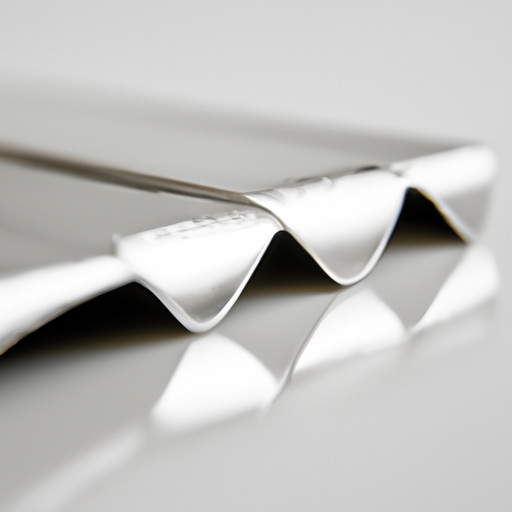
Aluminum tooling refers to injection mold tools machined from high-strength aluminum alloys, such as 7075, Alumold, QC-10, and Hokotol, instead of tool steels like P20. These alloys are specifically engineered for good strength, stability, and machinability in molding environments.[4][1]
Key characteristics of modern aluminum tooling include:
- High thermal conductivity, typically several times higher than steel, which significantly shortens cooling times and improves cycle efficiency.[5][2]
- Excellent machinability, allowing faster tool builds, easier design modifications, and lower machining costs in many cases.[2][3]
- Adequate strength and wear resistance for a wide range of production volumes when properly engineered and maintained.[1][3]
Because of these properties, aluminum injection mold tooling is increasingly used for prototypes, bridge tools, and many low- to mid-volume production runs.[6][3]
The belief that aluminum molds are suitable only for early prototypes and very small batches remains one of the most widespread misconceptions. This viewpoint ignores both modern alloys and decades of successful field use.[7][1]
In practice:
- High-strength aluminum alloys such as 7075 and Alumold can support 100,000 to 1,000,000 parts or more when tool design, resin choice, and maintenance are handled correctly.[3][1]
- Many manufacturers now run aluminum tooling for sustained production, especially for product lines with moderate volumes or evolving designs.[6][3]
For organizations managing uncertain demand, aluminum tooling can provide the flexibility to launch quickly and scale intelligently without overcommitting to full steel production tooling up front.[8][4]
Another frequent misconception is that aluminum molds can only handle a limited set of soft, non-abrasive resins. This assumption stems from outdated material data and incomplete field experience.[7][1]
Actual resin compatibility is significantly broader:
- Unfilled engineering resins, such as ABS, PC, nylon, and PP, are very well suited to aluminum tooling and can achieve stable, repeatable production outputs.[1][3]
- Many high-temperature resins, including certain high-performance polymers and LCPs, can also be molded successfully in aluminum tools, provided the tool is properly designed for temperature, venting, and cooling.[9][1]
Practical guidelines:
- Choosing unfilled or lightly filled grades where possible extends mold life and reduces wear risk.[10][3]
- For glass-filled or highly abrasive resins, surface treatments, hardened inserts, and localized steel components can protect critical areas while still leveraging aluminum's speed and cost advantages.[10][3]
Because aluminum is softer than steel, many teams assume aluminum molds will fail prematurely or require constant repair. This perspective does not account for modern alloys, optimized design, and proper maintenance practices.[7][10]
With high-strength aluminum, typical performance patterns are different:
- Purpose-developed mold alloys combine improved hardness with good fatigue resistance, supporting long tool life for low- and mid-volume applications.[4][1]
- Robust gating, ejection, cooling, and venting strategies greatly reduce stress and heat concentration that would otherwise drive early wear or cracking.[3][4]
To extend tool life:
- Hardened inserts can be applied in high-wear regions such as gates, runners, and heavily loaded shut-offs.
- Coatings or surface treatments help manage abrasion where aggressive resins cannot be avoided.[10][3]
- Stable processing windows minimize thermal shock and mechanical overload during production.[4][6]
Some decision-makers still believe aluminum molds are limited to simple or low-cosmetic surfaces. This idea persists despite extensive use of aluminum in applications with demanding appearance standards.[1][7]
In reality:
- Common texture and finish standards used for steel—such as SPI grades and Mold-Tech patterns—can be accurately applied to aluminum molds with the proper tooling specialist.[3][1]
- High-strength aluminum alloys can be polished and EDM-finished to achieve both fine textures and high-gloss surfaces where required.[4][3]
To achieve consistent aesthetics:
- Clear texture specifications should be included in the design package, with explicit codes or reference panels.[8][4]
- Partnering with a shop experienced in polishing and texturing aluminum alloys helps maintain fidelity between design intent and molded parts.[1][3]
There is a belief that aluminum tools are more prone to warpage, sink, and hot spots than steel tools. This expectation often arises from early experiences with poorly designed tools rather than the material itself.[5][1]
In practice, aluminum's thermal behavior offers important advantages:
- Aluminum has significantly higher thermal conductivity than tool steels, leading to faster and more uniform cooling in many mold designs.[2][5]
- Studies show that parts molded in aluminum inserts can exhibit reduced warpage and more stable temperatures compared with equivalent steel inserts under the same conditions.[5]
As a result:
- Cooling times can be shortened, improving cycle time and throughput.
- More uniform part cooling helps reduce internal stresses and dimensional variation, especially in geometries with variable wall thickness.[6][5]
Another outdated assumption is that aluminum molds are difficult or risky to alter once built. In reality, aluminum's machinability makes it one of the most modification-friendly tooling materials.[11][1]
Key advantages during engineering changes:
- Aluminum generally requires less machining time and causes less tool wear than steel, lowering the cost and turnaround time for corrections and optimizations.[2][3]
- Gate locations, vents, inserts, and local geometry can often be adjusted quickly, helping teams iterate design and process with minimal schedule impact.[11][1]
This flexibility supports:
- Faster response to field feedback and quality data.
- Efficient refinement of critical dimensions and cosmetic features as volumes increase or product requirements evolve.[8][4]

It is common to assume that complex part geometry, thin walls, and multiple side actions automatically require steel molds. Advances in machining and tooling strategies make this assumption increasingly inaccurate.[7][1]
Modern manufacturing capabilities support:
- Intricate aluminum tools with tight tolerances, undercuts, lifters, and complex parting lines using high-speed CNC machining and EDM.[3][1]
- Cost-effective testing of challenging features—such as deep ribs or thin-wall sections—before committing to long-lifetime steel tools.[8][4]
Aluminum tooling is particularly effective when:
- The design is still being dialed in and requires real-world molding feedback before finalizing steel tooling.
- Teams want to validate filling, venting, and cooling behavior for complex parts under production-like conditions.[6][3]
Another significant misconception is that aluminum tooling is more expensive over the full product life cycle. When all cost drivers are considered, aluminum often provides a lower total cost of ownership.[5][1]
Relevant factors include:
- Aluminum tools generally cost less to manufacture than equivalent steel tools, mainly because of shorter machining time and reduced tool wear.[4][3]
- Faster cooling cycles and shorter lead times help cut per-part cost and bring products to market sooner, which can be critical for commercial success.[2][4]
Factor | Aluminum tooling | Steel tooling (e.g., P20) |
Initial mold cost | Often lower due to faster machining and easier cutting. | Typically higher because of harder material and longer machining time. |
Lead time to first parts | Frequently days to a few weeks for many projects. | Often several weeks to months for complex tools. |
Thermal conductivity | High; enables faster, more uniform cooling and shorter cycles. | Lower; usually requires more complex cooling design and longer cooling time. |
Typical volume range | Prototypes to 100,000–1,000,000+ parts with proper design. | High-volume production well into the millions of parts. |
Design modification cost | Generally lower; easy to mill and re-work. | Generally higher; changes can be more time-consuming. |
Choosing between aluminum and steel should be based on data and project priorities, not generalized assumptions. Each material has clear strengths for specific contexts.[12][3]
Aluminum tooling is often the better fit when:
- Product demand is uncertain or ramping, and the goal is to minimize upfront capital risk.[6][3]
- Speed to market is a high priority, such as for new launches or time-sensitive campaigns.[2][4]
Steel tooling remains the preferred option when:
- Very high, long-term, and predictable volumes are expected, often in the multi-million part range.[12][2]
- Highly abrasive, heavily filled, or extremely high-temperature resins must run continuously over long tool lifetimes.[12][10]
Many programs benefit from a staged approach, using aluminum for rapid launch and early production before transitioning to steel once volume and design stabilize.[8][3]
Clear upfront planning helps unlock the full potential of aluminum tooling and reduces the risk of surprises during production.[4][8]
Recommended steps:
1. Define realistic volume and lifecycle targets.
Estimating low, target, and high volumes guides alloy selection, cooling strategy, and possible use of hybrid aluminum/steel solutions.[12][3]
2. Share complete and accurate design data.
Providing detailed CAD models, tolerances, cosmetic requirements, and resin information allows the toolmaker to optimize gating, venting, and cooling from the beginning.[8][4]
3. Align on resin strategy and risk.
Agreement on whether to use unfilled, lightly filled, or heavily filled grades informs decisions about inserts, coatings, and expected tool life.[10][3]
4. Plan for design evolution.
Identifying likely change areas early helps determine where modular inserts or adjustable features will be most valuable.[11][1]
5. Coordinate process development.
Collaborating on initial process windows, cooling times, and quality checks improves time to stable production and supports consistent tool performance.[6][4]
Many manufacturers report measurable gains when integrating aluminum tooling into their product development and production strategies.[3][4]
Observed outcomes include:
- Mold lead times reduced from months to weeks, enabling earlier design validation and faster market introduction.[2][4]
- Cooling time reductions that improve overall cycle efficiency, sometimes cutting seconds per shot compared with equivalent steel tooling.[5][6]
These improvements translate into:
- Lower upfront investment in tooling for new or evolving product lines.
- Reduced scrap and more stable startup behavior thanks to more uniform mold temperatures and optimized thermal management.[4][8]
Maximizing the value of aluminum tooling requires attention to material selection, design discipline, maintenance, and process control.[13][1]
Best practices include:
- Using high-strength aluminum alloys that are specifically validated for injection mold applications.[13][1]
- Implementing preventive maintenance schedules tailored to aluminum, including regular cleaning, inspection, and lubrication of moving elements.[3][4]
- Monitoring critical process parameters such as melt temperature, injection pressure, and cooling time to avoid unnecessary thermal and mechanical stress on the mold.[6][4]
When these practices are applied, aluminum tooling can deliver consistent, repeatable performance over an extended production horizon.[1][3]
Teams that continue to rely on outdated assumptions about aluminum tooling risk longer lead times, higher costs, and slower responses to market demands. Modern high-strength alloys and proven tooling strategies have changed what is possible.[1][4]
For upcoming projects, it is worth taking a structured look at whether aluminum injection mold tooling can reduce risk and accelerate launch timelines. Sharing part files, projected volumes, and resin requirements with an experienced tooling partner enables a data-driven comparison between aluminum and steel options.[8][3]
To move forward, request a detailed tooling review for your next component and obtain a tailored recommendation on whether aluminum, steel, or a hybrid approach is the best fit for your production, cost, and quality goals.[3][8]
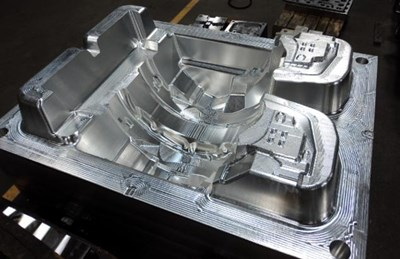
With high-strength aluminum alloys, sound tool design, and appropriate resin selection, aluminum molds can often achieve between 100,000 and 1,000,000 shots. Actual tool life depends on factors such as geometry complexity, processing conditions, and maintenance practices.[1][3]
Aluminum is a strong option for rapid prototyping and bridge tooling, but its use is not limited to early-stage development. Many organizations deploy aluminum tools for sustained low- to mid-volume production where performance and economics align with project requirements.[6][3]
Aluminum molds can run glass-filled and high-temperature resins, provided that gate design, cooling strategy, and wear protection (such as hardened inserts or coatings) are carefully considered. These measures help maintain tool integrity and part quality over the planned production life.[10][1]
Aluminum's higher thermal conductivity can significantly shorten cooling time and improve cycle efficiency compared with steel inserts of similar design. In many applications, lead times for aluminum tools are also shorter, which helps accelerate the overall product launch schedule.[5][2]
Steel tooling remains the preferred choice when extremely high volumes, multi-year production, or very demanding resin and environment combinations are expected. In these conditions, steel's higher hardness and wear resistance can be crucial for maintaining performance over long tool lifetimes.[12][2]
[1](https://uptivemfg.com/8-myths-about-aluminum-tooling/)
[2](https://www.protolabs.com/resources/blog/aluminum-vs-steel-tooling/)
[3](https://www.boyiprototyping.com/injection-molding-guide/aluminum-injection-molds-tool-life-cost/)
[4](https://www.moldmakingtechnology.com/articles/five-benefits-of-aluminum-tooling)
[5](https://www.plasticstoday.com/materials/aluminum-vs-steel-study-tackles-the-two-tooling-materials)
[6](https://www.rapiddirect.com/blog/aluminum-injection-molding/)
[7](https://www.phoenixproto.com/rapid-prototype-tooling/about/aluminum-tooling-information/aluminum-tooling-myths/)
[8](https://www.protolabs.com/resources/blog/aluminum-mold-tooling-for-injection-molding/)
[9](https://hitopindustrial.com/aluminum-injection-molding/)
[10](https://www.fictiv.com/articles/steel-vs-aluminum-for-injection-molds)
[11](https://www.linkedin.com/posts/peter-liu-elitemould_aluminum-tooling-is-often-dismissed-as-a-activity-7405080148057915392-EEJD)
[12](https://premieraluminum.com/aluminum-mold-vs-steel-mold/)
[13](https://www.cepi.com/injection-molding/the-realities-of-aluminum-tooling/)
[14](https://uptivemfg.com/aluminum-machining/)


