Views: 263 Author: U-Need Publish Time: 2026-08-22 Origin: Site
Content Menu
>> Common Aluminum Anodizing Types
● Why Conventional Anodizing Is Not Ideal for Steel
>> Steel Oxides Are Less Protective
>> Specialized Processing Is Difficult to Control
>> Better Alternatives Are Widely Available
● Best Alternatives to Anodizing Steel
>> Black Oxide
>> Zinc Plating
>> Stainless Steel Passivation
>> PVD Coating
● Steel Surface Finish Comparison
● How to Select the Right Finish for Steel Parts
>> Start With the Base Material
>> Define the Operating Environment
>> Protect Critical Tolerances
>> Define Testing and Inspection Requirements
● Practical Design Tips for Better Finishing Results
>> Avoid Hard-to-Reach Features
>> Complete Fabrication Before Finishing
>> Consider Mixed-Metal Assemblies
>> Can carbon steel be anodized like aluminum?
>> Is black oxide the same as anodizing?
>> What is the best black finish for steel?
>> Does zinc plating affect threads and tight tolerances?
>> Can stainless steel be anodized?
>> Which finish is best for outdoor steel parts?
>> Can a steel part be painted after phosphating?
Steel cannot be anodized in the same standard, commercially established way as aluminum. Although specialized electrochemical processes can form oxide layers on certain steels, they are rarely the most reliable or economical option for production. In most applications, finishes such as black oxide, zinc plating, phosphating, passivation, electropolishing, powder coating, and PVD offer better results.
For engineers, buyers, and product developers, the more useful question is: Which surface finish best meets the part's corrosion, wear, appearance, tolerance, and cost requirements? The answer depends on the steel grade, working environment, geometry, production volume, and required service life.
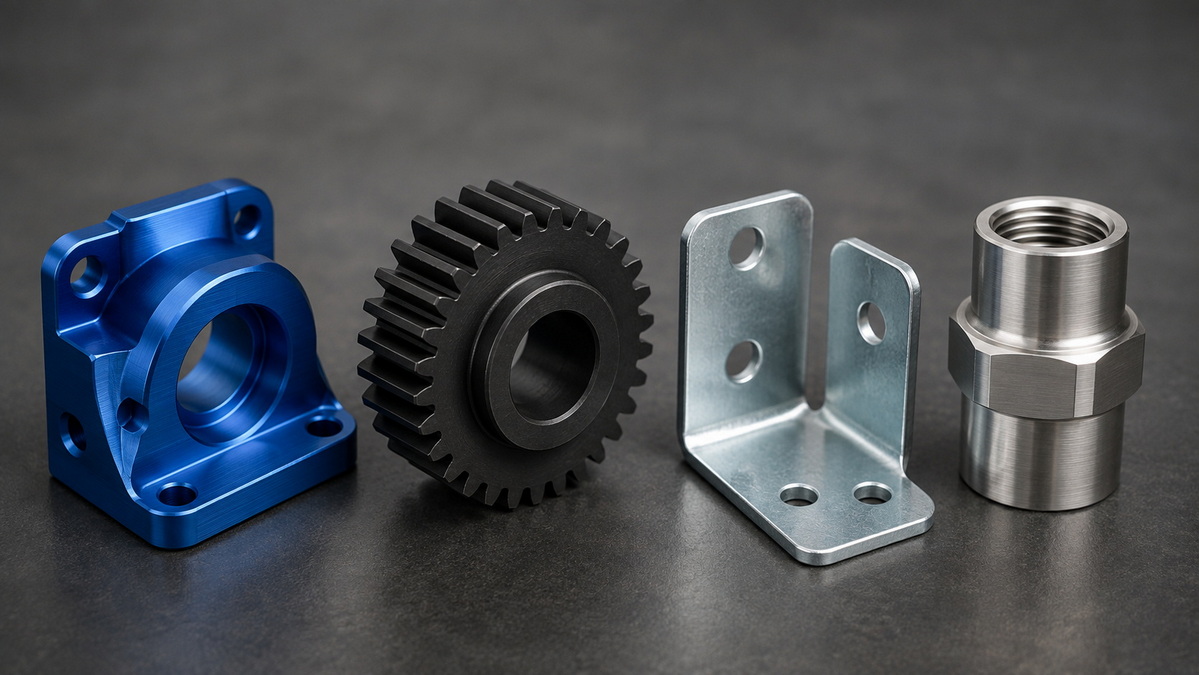
Anodizing is an electrochemical conversion process used primarily on aluminum. The metal part is placed in an electrolytic solution and connected as the anode. Electrical current converts the outer surface of the metal into a controlled oxide layer.
For aluminum, this process forms aluminum oxide. This hard, adherent layer becomes part of the substrate rather than sitting on the surface like paint. It can improve corrosion resistance, wear resistance, paint adhesion, and visual appearance.
The oxide layer may also be dyed in a range of colors before sealing. This is why anodized aluminum is common in consumer products, machinery components, electronics housings, architectural products, automotive parts, and industrial equipment.
| Anodizing Type | Typical Thickness | Main Benefit | Typical Applications |
|---|---|---|---|
| Type I / Chromic Acid | 0.5–2.5 μm | Thin protective layer with low dimensional impact | Aerospace and precision components |
| Type II / Sulfuric Acid | 2.5–25 μm | Corrosion resistance and decorative coloring | Enclosures, brackets, consumer products |
| Type III / Hardcoat | 25–100 μm | Higher hardness and wear resistance | Industrial equipment and moving parts |
Hardcoat anodizing is often used when aluminum components require a tougher surface. However, anodizing changes dimensions because the oxide layer grows both into and outward from the original surface. Designers should account for this effect when specifying tolerances, threaded holes, bearing seats, and precision mating features.
Not in the conventional sense used for aluminum.
Steel can be subjected to controlled electrochemical oxidation processes, but the result does not behave like anodized aluminum. Carbon steel and low-alloy steel naturally form iron oxides when exposed to oxygen and moisture. These oxides are commonly associated with rust and do not form the same stable, protective barrier as aluminum oxide.
In certain controlled environments, steel can form a dark magnetite-based surface layer. However, this process requires strict control over bath chemistry, temperature, current density, surface preparation, and sealing. It is not the standard finishing method used by most manufacturers for production steel parts.
For this reason, specifying "anodized steel" may create confusion during sourcing. A more precise requirement is to identify the intended function of the finish, such as:
- Black decorative appearance
- Corrosion resistance
- Wear resistance
- Paint adhesion
- Low-friction performance
- Electrical conductivity
- Reduced surface reflection
- Easier cleaning
- Premium cosmetic appearance
Once the required function is clear, the correct steel finish becomes easier to select.
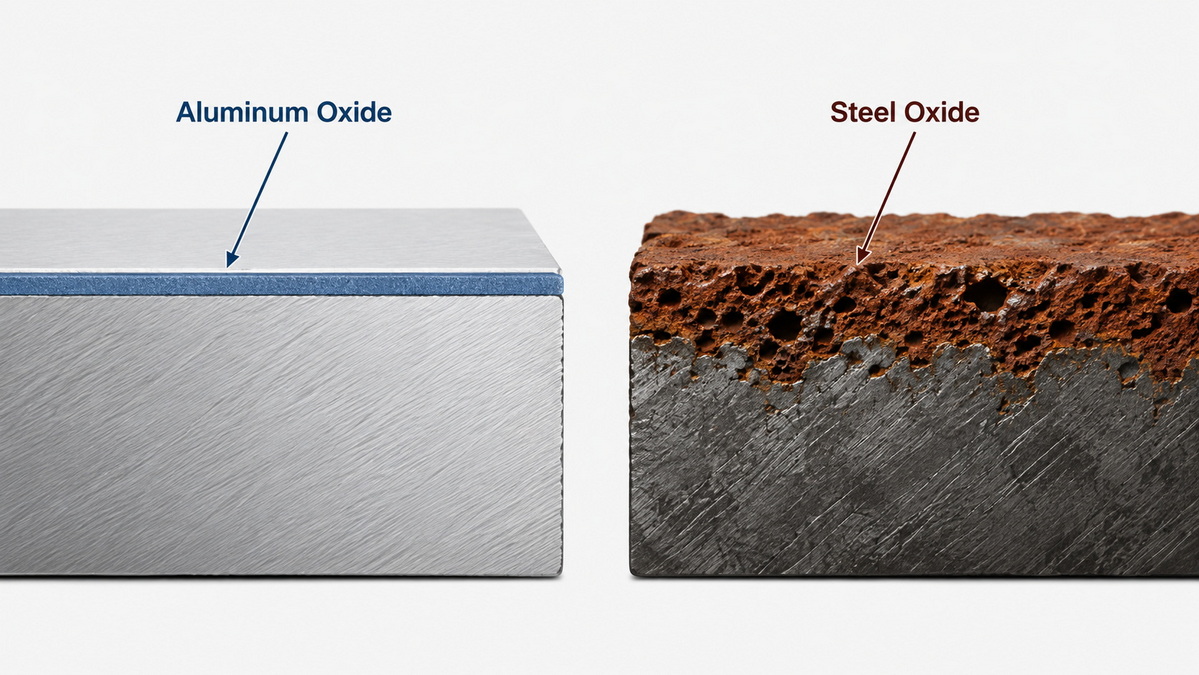
The key difference lies in the behavior of the oxide layer.
Aluminum oxide is dense, hard, adherent, and protective. When aluminum is anodized, the resulting oxide layer can slow further corrosion and provide a stable base for dyes or sealants.
Steel oxidation is different. Common iron oxides can be porous and unstable. Instead of preventing corrosion, they may allow water and oxygen to reach the underlying metal. This can lead to continued rusting beneath the surface.
For components used outdoors, in humid storage, around salt, near chemicals, or in marine transport conditions, this difference is critical.
Steel oxidation processes require careful management of multiple variables, including:
- Surface cleanliness
- Part material composition
- Bath concentration
- Operating temperature
- Electrical current
- Treatment duration
- Rinsing process
- Sealing or oiling method
Small changes can affect coating color, thickness, adhesion, uniformity, and corrosion performance. Parts with deep cavities, tight corners, welds, or inconsistent surface roughness can be especially difficult to finish evenly.
Many steel surface treatments are already proven across industrial production. They are easier to specify, inspect, scale, and reproduce from prototype to mass production.
The right choice depends on whether the part must resist corrosion, maintain tight dimensions, achieve a black appearance, support paint adhesion, or withstand repeated wear.
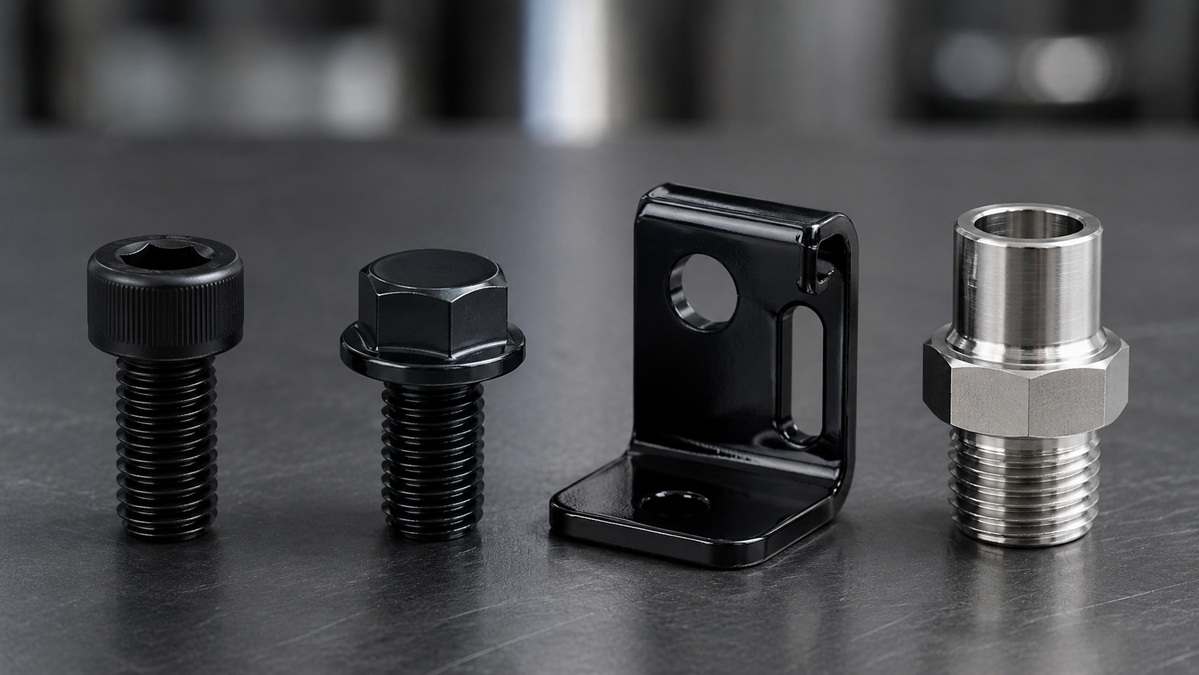
Black oxide is often the most suitable option when a customer requests a dark steel finish with minimal dimensional change. It is a conversion coating that produces a black or deep blue-black appearance.
Because black oxide adds very little thickness, it is useful for close-tolerance parts, threaded components, tools, fasteners, fixtures, gears, and machined hardware.
However, black oxide alone provides limited corrosion protection. It usually requires oil, wax, or another sealant to improve performance.
Best for:
- Indoor tools and fixtures
- Precision machined components
- Black hardware
- Low-reflective surfaces
- Parts requiring little or no coating buildup
Zinc plating provides a sacrificial protective layer over steel. When corrosion begins, zinc reacts before the underlying steel does, helping protect the base metal.
This finish is widely used for brackets, fasteners, stamped metal parts, fabricated assemblies, and general-purpose hardware.
Zinc plating can be supplied in clear, blue, yellow, black, or other passivated appearances. It is economical and suitable for many commercial and industrial applications.
Best for:
- Fasteners
- Sheet metal brackets
- General hardware
- Indoor and moderate outdoor conditions
- Cost-sensitive production programs
For high-strength steel components, manufacturers should evaluate hydrogen embrittlement risk and define appropriate baking requirements after plating.
Zinc-nickel plating is selected when corrosion resistance requirements are higher than standard zinc plating can provide. It is commonly used in automotive, industrial, transportation, and demanding outdoor applications.
The finish offers improved durability in harsh environments, but it generally costs more and requires stronger process control.
Best for:
- Automotive components
- Outdoor machinery
- High-corrosion environments
- Long-life industrial hardware
- Components exposed to road salt or marine air
Phosphate coating is a conversion treatment that improves paint adhesion and can support lubrication during forming or assembly. It is frequently used as a pretreatment before painting or powder coating.
Phosphate finishes may also help reduce galling and improve break-in performance for some moving steel components.
Best for:
- Painted steel structures
- Automotive components
- Stamped and formed parts
- Parts requiring lubrication
- Pre-treatment before coating
Powder coating is a durable finish applied as dry powder and cured under heat. It is available in many colors, gloss levels, textures, and protective grades.
It is widely used on metal enclosures, furniture, equipment covers, frames, brackets, cabinets, and fabricated assemblies.
The coating provides strong visual coverage and can protect steel from outdoor exposure when the correct preparation and coating system are selected. However, it has more thickness than black oxide or plating and may not be suitable for precision threads, tight bores, or critical mating surfaces.
Best for:
- Sheet metal enclosures
- Equipment frames
- Outdoor structures
- Decorative industrial products
- Consumer-facing metal components
Passivation is commonly used for stainless-steel components. It removes free iron and surface contaminants that may remain after machining, grinding, welding, or handling.
The process supports the stainless steel's natural protective passive layer. It does not add a thick coating or significantly change the appearance of the part.
Best for:
- Medical equipment components
- Food-processing equipment
- Stainless fittings
- Precision-machined stainless parts
- Corrosion-sensitive assemblies
Electropolishing is an electrochemical finishing method used mainly for stainless steel. It removes a very small amount of material from the surface and improves microscopic smoothness.
This can reduce surface roughness, improve cleanability, remove burrs, and create a bright appearance. It is often selected for hygienic, medical, laboratory, semiconductor, pharmaceutical, and food-processing applications.
Best for:
- Stainless steel tubing
- Medical devices
- Laboratory components
- Food-grade equipment
- Parts requiring smooth and clean surfaces
Physical vapor deposition, commonly called PVD, is a thin-film coating process that can provide a premium decorative appearance, enhanced hardness, and improved wear resistance.
PVD coatings can produce black, gold, bronze, gray, and other metallic finishes. They are often used for premium hardware, tools, decorative products, consumer electronics, and wear-sensitive parts.
Best for:
- Premium visible hardware
- Wear-resistant components
- Decorative metal products
- High-end consumer products
- Specialty tools and fixtures
| Finish | Corrosion Protection | Coating Buildup | Appearance | Typical Use |
|---|---|---|---|---|
| Black Oxide | Low to moderate with sealant | Very low | Black or blue-black | Tools, precision hardware, indoor parts |
| Zinc Plating | Moderate | Low | Silver, blue, yellow, black | Fasteners, brackets, sheet metal |
| Zinc-Nickel | High | Low | Gray, silver, black | Automotive and harsh environments |
| Phosphate | Low alone | Very low | Gray or dark gray | Paint base and lubricated parts |
| Powder Coating | Moderate to high | Medium to high | Wide color and texture range | Enclosures, frames, equipment |
| Passivation | Improves stainless performance | None | Natural stainless appearance | Medical and food-grade stainless parts |
| Electropolishing | Improves stainless performance | Slight material removal | Bright, smooth finish | Hygienic and precision stainless parts |
| PVD | Moderate to high, depending on system | Very low | Premium metallic colors | Decorative and wear-resistant parts |
The exact steel grade matters. Specify whether the part is made from carbon steel, alloy steel, tool steel, stainless steel, cold-rolled steel, hot-rolled steel, or another material.
The same finish can perform differently on different substrates. Heat treatment, machining marks, welding, grinding, and polishing quality can also affect the final result.
A finish should match real working conditions, not only visual preferences.
Consider the following questions:
1. Will the part be installed indoors or outdoors?
2. Will it be exposed to rain, humidity, salt, chemicals, oils, or cleaning agents?
3. Will it experience friction, impact, vibration, or repeated assembly?
4. Does the part need electrical conductivity after finishing?
5. Is the surface decorative, functional, or both?
6. Will the part be shipped internationally through humid or marine conditions?
7. Does the assembly involve aluminum, copper, stainless steel, or other dissimilar metals?
For example, a black indoor tool handle may work well with black oxide. A coastal outdoor bracket may require zinc-nickel plating or a qualified powder-coating system. A stainless medical component may benefit more from passivation or electropolishing.
Surface finishing can change dimensions. This is especially important for:
- Threaded holes
- Shafts
- Bearing seats
- Precision bores
- Press-fit features
- Electrical contact areas
- Sealing faces
- Welded assemblies
- Sliding components
Include masking requirements for surfaces that must remain uncoated. For plated or painted parts, specify the maximum acceptable coating thickness and the finished-part tolerances.
A clear finishing specification should include:
- Material grade
- Surface preparation requirements
- Finish type
- Color or appearance requirement
- Coating thickness range
- Corrosion resistance target
- Adhesion requirement
- Masking locations
- Cosmetic acceptance criteria
- Packaging requirements
- Inspection method
For stainless-steel parts, passivation treatments and verification methods should be selected based on the material grade, application, contamination risk, and required corrosion performance.

A durable finish begins with good part design and consistent fabrication quality.
Sharp edges can make coatings thinner and more vulnerable to damage. Adding practical radii helps improve coating coverage, durability, and cosmetic consistency.
Deep narrow pockets, blind holes, enclosed cavities, and complex internal channels can trap chemicals, rinse water, powder, or plating solution. If such features are necessary, discuss them during design review.
Clearly identify visible surfaces on drawings or 3D models. This helps manufacturers control racking marks, handling marks, weld cleanup, grinding direction, and appearance consistency.
Machining, drilling, tapping, welding, deburring, and polishing should usually be completed before the final surface treatment. Post-finish machining may expose untreated steel and reduce corrosion protection.
When different metals contact each other in a humid or corrosive environment, galvanic corrosion may occur. Material selection, isolation washers, sealants, and compatible coating systems can reduce this risk.
> Suggested infographic: "Seven checks before selecting a steel surface finish" covering material, environment, appearance, tolerance, wear, corrosion, and production quantity.
No. Carbon steel is not anodized in the same conventional way as aluminum. Specialized oxidation processes exist, but they are not usually the most practical choice for industrial production.
No. Black oxide is a steel conversion coating that produces a dark surface with very little buildup. Anodizing is mainly associated with aluminum and creates an oxide layer with different chemistry and performance.
Black oxide is suitable for low-buildup indoor applications. Black zinc can provide stronger corrosion protection. Powder coating is useful for durable colored coverage, while PVD is often chosen for premium decorative or wear-resistant surfaces.
Yes. Zinc plating adds thickness and can affect thread engagement, press fits, bores, and close-tolerance features. Define coating thickness and masking requirements before manufacturing.
Stainless steel is not normally anodized like aluminum. Passivation and electropolishing are more common choices when the objective is improved corrosion performance, cleanliness, or a smoother surface.
The best option depends on the required service life and exposure level. Zinc-nickel plating, properly prepared powder coating, and multi-layer protective systems are commonly considered for demanding outdoor use.
Yes. Phosphate coating is frequently used as a pretreatment before painting or powder coating because it can improve adhesion and support more consistent coating performance.
1. RapidDirect. "[Is Anodizing Steel Feasible and What Are the Alternatives?]"
2. Anoplate. "[Plating, Anodizing & Metal Finishing Services]"
3. Anoplate. "[Aluminum Anodizing]"
4. Anoplate. "[How Anodizing Increases Corrosion Resistance]"
5. Anoplate. "[How Hard Is Hardcoat Anodize?]"
6. Anoplate. "[How Anodizing Affects Dimensions: Build-Up vs. Penetration]"
7. ASTM International. "[ASTM A967/A967M-25: Standard Specification for Chemical Passivation Treatments for Stainless Steel Parts]"
8. ASTM International. "[ASTM A380/A380M: Standard Practice for Cleaning, Descaling, and Passivation of Stainless Steel Parts]"


