Views: 285 Author: U-Need Publish Time: 2026-07-15 Origin: Site
Content Menu
● What Is Electroplating in Modern Manufacturing?
● Core Electroplating Process: From Design Intent to Finished Part
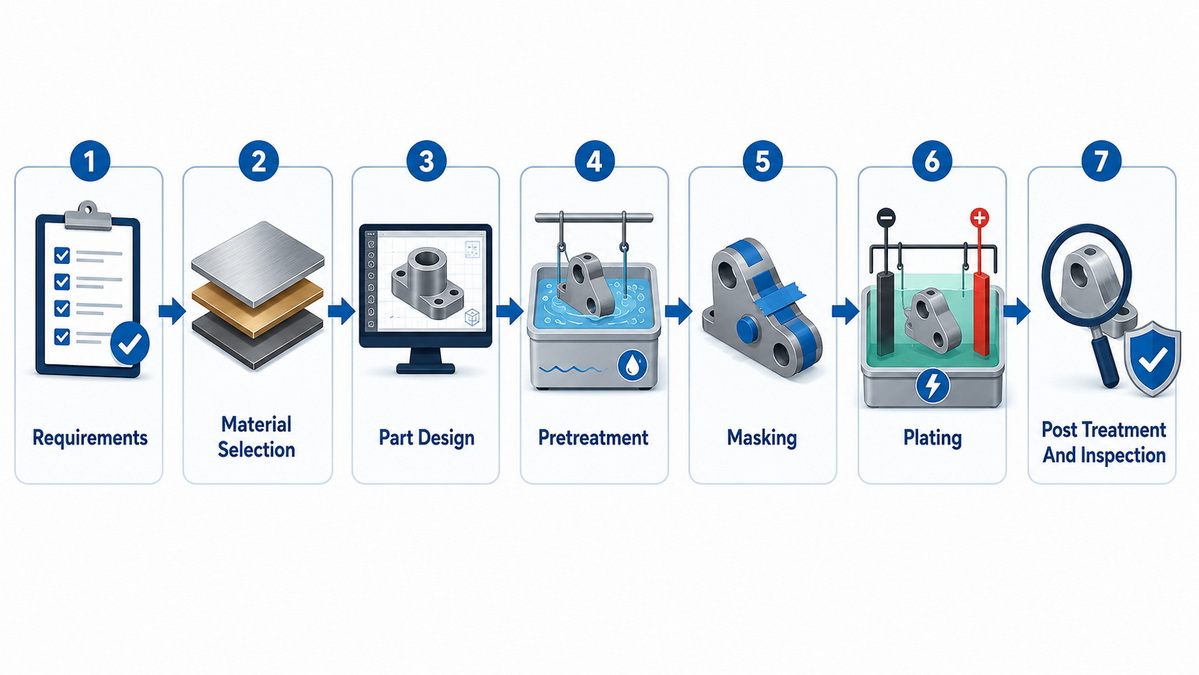
● Step‑by‑Step Electroplating Workflow (Engineer's View)
● Electroplating Working Principle: What Engineers Must Understand
● Common Electroplating Techniques and When to Use Them
>> Rack Plating
● Key Plating Metals and Their Engineering Trade‑Offs
● Advantages and Limitations of Electroplating
● Industrial Applications: Where Electroplating Really Matters
>> Electronics and Microelectronics
>> Jewelry and Decorative Hardware
● Electroplating Costs: What Really Drives Your Budget
● Electroplating vs. Electroless Plating and Electroforming
● How to Choose the Right Electroplating Service Provider
● Safety, Compliance, and Best Practices in Electroplating Operations
● Talk to a Precision Electroplating Partner in China
● FAQs About the Electroplating Process
Electroplating is a core finishing method that can dramatically improve the performance, durability, and appearance of metal parts when it's engineered and controlled correctly. For global brands sourcing precision components from China, partnering with an experienced electroplating provider like U-Need turns this complex electrochemical process into a repeatable, production-ready advantage. [lakshmipadmanaban]
Electroplating is a controlled electrochemical process that deposits a thin, engineered metal layer onto a substrate to enhance its properties such as corrosion resistance, hardness, conductivity, and aesthetics. In practice, that means you can turn a cost‑effective base material (e.g., low‑carbon steel) into a high‑performance component by adding a tailored plating system of nickel, chrome, copper, gold, or other alloys. [lakshmipadmanaban]
For today's global OEMs, distributors, and industrial brands, electroplating is no longer just a decorative finish—it's a critical design variable that influences product lifetime, safety margins, and total cost of ownership across automotive, aerospace, electronics, and medical devices. [papers.ssrn]
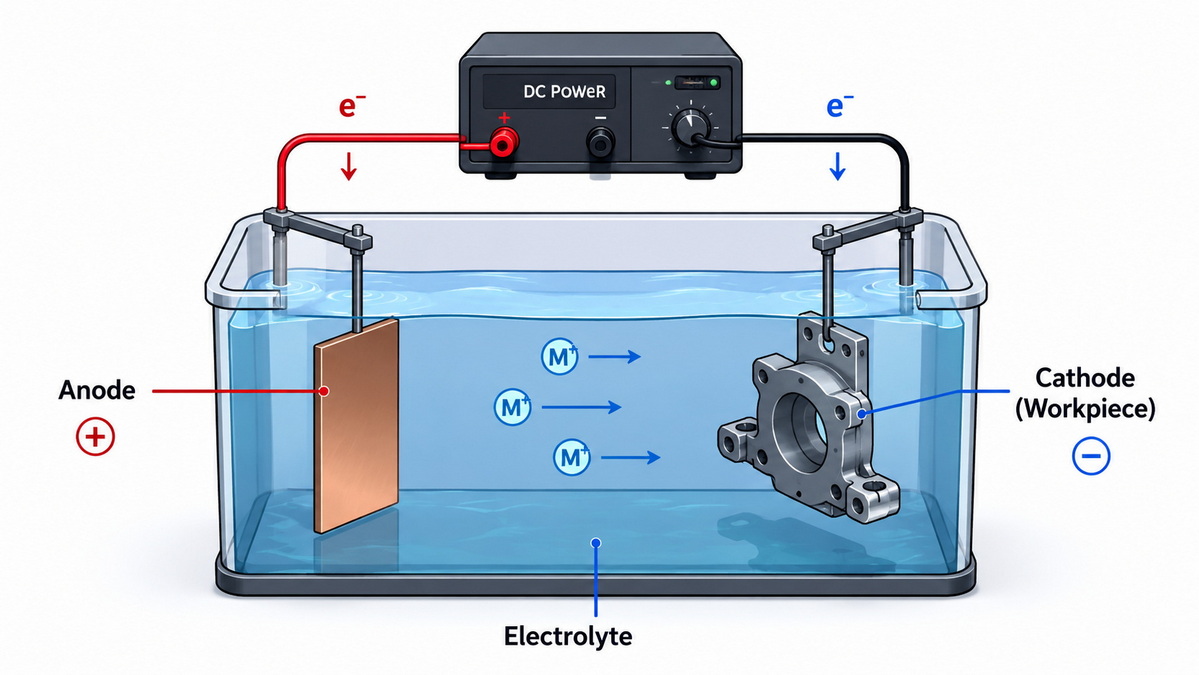
At its heart, the electroplating process relies on four key elements: anode, cathode, electrolyte (plating solution), and DC power source. The part to be coated is connected as the cathode, the plating metal acts as the anode, and both are immersed in an electrolyte carrying dissolved metal ions; when current flows, ions move from anode to cathode and build a tightly bonded metal layer on the part surface. [lakshmipadmanaban]
From an engineer's perspective, electroplating is a multi-parameter process where voltage, current density, bath chemistry, agitation, and time must be tuned to hit the right thickness, grain size, roughness, and adhesion—especially for precision components machined, molded, or laser‑cut by providers like U‑Need. [uneedpm]
Designing for electroplating starts long before parts enter the tank. Below is a typical end‑to‑end workflow used by mature manufacturers and precision finishing shops. [papers.ssrn]
1. Define functional requirements
- Corrosion life targets, wear cycles, electrical resistance, cosmetic specs (gloss, color, texture).
2. Select base material and plating metal
- Steel, copper alloys, aluminum, or stainless combined with zinc, nickel, chrome, silver, gold, or palladium depending on the application. [lakshmipadmanaban]
3. Engineer part geometry for plating
- Avoid deep blind holes, allow drainage, add fixtures or tabs for current flow and handling. [lakshmipadmanaban]
4. Pre‑treatment and cleaning
- Degreasing, pickling, rinsing, and sometimes activation to ensure clean, wettable surfaces and strong adhesion. [lakshmipadmanaban]
5. Masking critical areas
- Use tapes, lacquers, or fixtures where coating is not allowed (e.g., tight fits, sealing surfaces).
6. Electroplating in production tanks
- Parts are loaded on racks or in barrels, immersed into the bath, and plated under controlled current and time. [lakshmipadmanaban]
7. Post‑treatment and inspection
- Rinsing, passivation, baking (for hydrogen embrittlement relief), thickness checks, adhesion tests, and cosmetic inspection. [lakshmipadmanaban]
Well‑run precision manufacturers document each of these steps in process control plans and tie them to real‑time quality data so that plating variation remains within tight engineering limits across batches. [tiecas]
Electroplating is governed by electrolysis: when DC current passes through the electrolyte, the metal salt dissociates into ions that move toward electrodes and participate in oxidation–reduction reactions. At the anode, metal atoms lose electrons and become ions; at the cathode (your part), those ions gain electrons and deposit as a solid metal layer. [lakshmipadmanaban]
For example, in copper plating using copper sulfate solution, CuSO₄ dissociates into Cu⊃2;⁺ and SO₄⊃2;⁻; copper at the anode oxidizes into Cu⊃2;⁺, while Cu⊃2;⁺ at the cathode gains electrons and forms metallic copper on the part surface. In practice, bath chemistry control (pH, additives, temperature) and current density management drive coating uniformity, porosity, and grain structure, which are directly linked to fatigue life and corrosion resistance in real‑world use. [papers.ssrn]
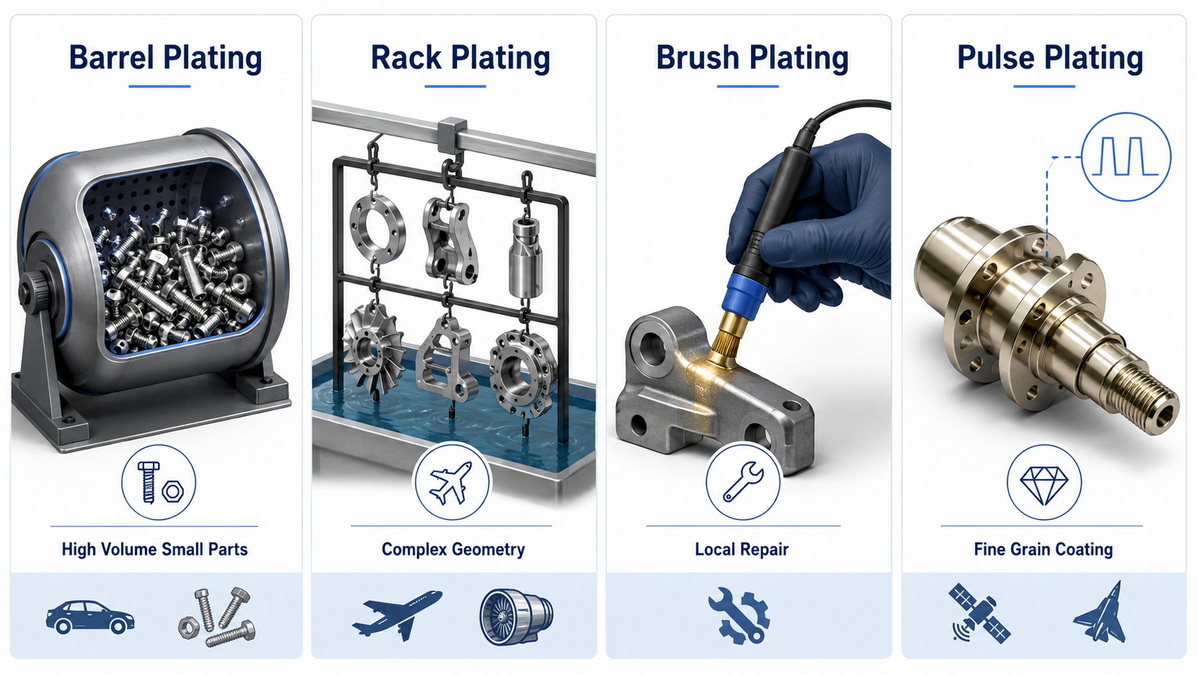
Different industrial electroplating techniques are used depending on part geometry, volume, and performance requirements. [papers.ssrn]
Barrel plating uses a rotating, chemically resistant barrel filled with parts, electrolyte, and anodes; rotation ensures parts tumble and receive reasonably uniform coating at high throughput and low cost. It is ideal for large quantities of small, robust parts such as fasteners, pins, and fittings that can tolerate minor surface contact marks. [lakshmipadmanaban]
Rack plating mounts parts on racks with hooks or fixtures, minimizing part‑to‑part contact and allowing controlled current distribution. This method is preferred for larger, more delicate, or geometry‑complex components where cosmetic appearance, localized thickness control, and precise edge coverage are critical (e.g., automotive trim, aerospace hardware). [lakshmipadmanaban]
Brush plating uses a portable electrode wrapped in absorbent material, soaked in plating solution, to deposit metal on selected areas. It is valuable for localized repair, selective reinforcement, and field maintenance where dismantling the entire assembly or building custom racks is not economically viable. [lakshmipadmanaban]
Pulse plating modulates current between different levels, including periods of zero current, to refine grain structure and reduce porosity, micro‑cracks, and roughness. It is frequently chosen for high‑reliability components requiring extremely uniform, fine‑grained coatings, such as electronics, aerospace parts, and precision hydraulic components. [papers.ssrn]
Choosing the right plating metal is a multi‑variable decision that balances performance, cost, and manufacturability. Below are some commonly specified materials. [lakshmipadmanaban]
- Zinc plating – Economical sacrificial coating for steel and other rust‑prone metals; offers good corrosion protection in moist environments and a bright, silver‑like finish. [lakshmipadmanaban]
- Nickel plating – Delivers hard, wear‑resistant, and corrosion‑resistant surfaces; can be bright or dull and often acts as a base layer for subsequent gold or chrome plating. [lakshmipadmanaban]
- Chrome plating – Provides exceptional hardness, abrasion resistance, and a highly reflective surface; widely used in automotive and aerospace components for both functional and decorative roles. [lakshmipadmanaban]
- Copper plating – Offers excellent electrical and thermal conductivity, good lubricity, and a smooth, bright base for additional coatings; common in PCBs and electronic hardware. [lakshmipadmanaban]
- Silver plating – High conductivity and lower contact resistance than many alternatives; suitable for connectors, power components, and RF applications, though its corrosion behavior must be managed. [lakshmipadmanaban]
- Gold plating – Premium, highly stable, and superb conductor with excellent resistance to oxidation; used in high‑reliability electronics, micro‑connectors, and luxury applications. [lakshmipadmanaban]
Because each plating system interacts differently with base materials and operating environments, expert suppliers perform application‑specific material selection rather than defaulting to a single "standard" coating. [papers.ssrn]
Electroplating delivers a compelling mix of functional and cosmetic benefits when correctly specified and controlled. [lakshmipadmanaban]
- Corrosion resistance – Properly applied chrome, nickel, zinc, or noble metal coatings can dramatically delay rust and degradation in harsh environments. [lakshmipadmanaban]
- Wear and fatigue performance – Hard, low‑friction surfaces reduce wear, extend service intervals, and stabilize fatigue life, especially on moving or contact surfaces. [lakshmipadmanaban]
- Improved aesthetics and branding – Bright, uniform finishes hide minor substrate imperfections and support premium brand positioning in consumer‑facing products. [lakshmipadmanaban]
- Enhanced electrical and thermal performance – Copper, silver, and gold coatings tailor conductivity and contact resistance for critical electronics and power systems. [lakshmipadmanaban]
- Better adhesion vs. paint – Electroplated layers form a chemical bond with the substrate and adhere well to subsequent coatings, minimizing peeling and delamination. [lakshmipadmanaban]
- Limited to conductive substrates – Conventional electroplating requires electrically conductive materials; non‑conductive plastics and composites need specialized pre‑treatments or electroless processes. [lakshmipadmanaban]
- Environmental and safety considerations – Electroplating baths, fumes, and waste must be managed carefully due to potential health and environmental impacts. [lakshmipadmanaban]
- Capital and operational cost – Tanks, power supplies, ventilation, waste treatment, and automation represent significant upfront investment and ongoing overhead. [lakshmipadmanaban]
Experienced manufacturers mitigate these drawbacks through closed‑loop chemistry management, waste treatment, and safety programs, which should be part of any audit of potential plating partners. [tiecas]
Electroplating has become a cornerstone of performance and reliability in multiple industries. [lakshmipadmanaban]
Aerospace manufacturers use electroplating to improve corrosion and wear resistance, stabilize dimensions, and ensure reliable performance under thermal cycling and high loads. Typical applications include engine parts, turbine blades, hydraulic components, fasteners, valve bodies, and sensor housings. [lakshmipadmanaban]
In automotive engineering, electroplated surfaces on bumpers, piston rods, shock absorbers, radiator grilles, fuel injectors, battery terminals, and interior trim balance aesthetics with durability. Chrome, zinc‑nickel, palladium, and other coatings help components withstand road salts, humidity, and repetitive mechanical stress. [lakshmipadmanaban]
For electronic connectors, PCBs, semiconductors, and sensor interfaces, electroplating of gold, copper, nickel, and palladium is critical to achieving low contact resistance and stable long‑term performance. Plated enclosures also contribute to UV resistance, abrasion resistance, and EMI shielding. [lakshmipadmanaban]
Jewelry and high‑end hardware rely on electroplating of gold, silver, rhodium, and blends to achieve long‑lasting, visually striking finishes. Layered coatings can combine aesthetics, wear resistance, and skin compatibility for watches, bracelets, and custom ornamental parts. [lakshmipadmanaban]
Total electroplating cost is influenced by material selection, coating thickness, geometry complexity, and production volume. [lakshmipadmanaban]
- Material choice and thickness – Premium metals like gold, platinum, and palladium significantly increase cost per unit area, while copper, nickel, and zinc are more economical; total cost scales with plated area and thickness. [lakshmipadmanaban]
- Geometry and precision requirements – Deep recesses, blind holes, and tight tolerances can require masking, specialized fixturing, and multiple plating cycles, increasing process time and quality control demands. [lakshmipadmanaban]
- Production volume – High‑volume programs reduce unit cost via economies of scale, while prototype or low‑volume orders remain comparatively expensive. [lakshmipadmanaban]
For practical budgeting, leading suppliers provide DFM feedback and cost breakdowns early in the design phase so engineers can trade off performance vs. cost before locking specifications. [medium]
Electroplating is only one of several surface and near‑net‑shape technologies available to manufacturing teams. [lakshmipadmanaban]
- Electroless plating relies on chemical reactions and heat rather than external current, can coat non‑conductive substrates, and is well suited to thick, hard layers (e.g., electroless nickel) with excellent wear resistance. [lakshmipadmanaban]
- Electroforming uses similar electrochemical principles to build entire standalone metal parts over a mandrel or mold, enabling extremely intricate geometries and micro‑features rather than just surface coatings. [lakshmipadmanaban]
Engineers often evaluate these options side‑by‑side when designing complex, highly loaded, or miniaturized components, especially in aerospace, medical, and high‑frequency electronics. [papers.ssrn]
Selecting the right electroplating partner can be as important as choosing the coating itself. [lakshmipadmanaban]
Key evaluation criteria include:
- Equipment and processing capabilities – Assess tank sizes, rack/barrel options, power supplies, and automation to ensure they can handle your part dimensions, materials, and target thickness ranges. [lakshmipadmanaban]
- Quality control systems – Look for documented procedures, coating thickness measurement, surface roughness tests, adhesion testing, and compliance with relevant standards (e.g., automotive, aerospace, medical). [lakshmipadmanaban]
- Process and application expertise – Prefer suppliers with a proven track record in your specific sector (e.g., automotive suspensions, aerospace hydraulics, medical implants) so they understand functional requirements and regulatory context. [lakshmipadmanaban]
- Customer support and engineering collaboration – Strong technical communication, DFM input, and responsive problem‑solving are essential to avoid misinterpretations that can derail projects. [lakshmipadmanaban]
For global buyers sourcing in China, working with a precision partner that integrates CNC machining, mold manufacturing, and sheet‑metal fabrication with electroplating helps compress lead times and simplify vendor management. [uneedprecisionmachine]
Electroplating involves corrosive chemicals, electrical energy, and potentially hazardous fumes, so safety and environmental compliance are non‑negotiable. [lakshmipadmanaban]
Best practices include wearing appropriate PPE (goggles, gloves, aprons), ensuring proper ventilation and fume extraction, keeping electrolytes at controlled temperatures in sealed containers, and preventing contact with household chemicals or incompatible substances. Electrical safety measures such as grounding, fusing, insulated gloves, and avoiding metallic jewelry during operations further reduce risk. [lakshmipadmanaban]
Responsible manufacturers also invest in waste treatment, emissions control, and spill response plans, which should be documented and auditable as part of supplier qualification. [tiecas]
If you're evaluating electroplating for new or existing products, the most effective next step is to review your drawings and performance requirements with an experienced precision manufacturer in China. A partner like U‑Need, which combines custom precision parts machining, mold manufacturing, sheet‑metal fabrication, and advanced surface finishing, can help you:
- Optimize plating specifications for cost, performance, and manufacturability.
- Integrate electroplating into CNC, molding, and fabrication workflows.
- Scale from prototypes to high‑volume production with consistent quality.
Ready to improve the performance and appearance of your components with engineered electroplating? Contact U‑Need's engineering team to review your project and request a detailed quotation today. [uneedpm]

1. Is it possible to electroplate plastics or non‑conductive materials?
Yes, but not via conventional electroplating alone; plastics typically require special surface activation and, in many cases, electroless plating steps to create a conductive layer before further electroplating. [lakshmipadmanaban]
2. Does electroplating wear off over time in harsh environments?
Electroplated layers are sacrificial or protective coatings that will gradually degrade under corrosion and wear; service life depends on metal type, thickness, environment, and mechanical load, with hard chrome capable of lasting decades in suitable conditions. [lakshmipadmanaban]
3. What part sizes can be electroplated in typical industrial tanks?
Common commercial setups handle parts roughly up to 18 × 18 × 24 inches, though larger capacity systems exist; always verify tank dimensions and fixturing options with your supplier. [lakshmipadmanaban]
4. Can electroplating repair surface damage such as wear marks or pits?
Electroplating can help fill minor defects, but pre‑polishing and surface preparation are crucial; otherwise, scratches and pits may remain visible or become more pronounced after coating. [lakshmipadmanaban]
5. How do I decide between electroplating and electroless plating for my design?
Choose electroplating when you have conductive substrates and need precise thickness control, decorative finishes, or selective coatings; consider electroless plating for non‑conductive substrates or when thick, uniformly hard coatings are the primary requirement. [papers.ssrn]
1. RapidDirect. "What's Electroplating? Definition, How It Works & Applications."
https://www.rapiddirect.com/blog/electroplating-process/ [lakshmipadmanaban]
2. U‑Need Precision Machinery Co., Ltd. "Our Values | Precision Manufacturing | U‑Need."
https://www.uneedpm.com/values/ [uneedpm]
3. U‑Need Precision Machinery Co., Ltd. "Contact – U‑Need – China Custom CNC Machining Services."
https://www.uneedprecisionmachine.com/contact.html [uneedprecisionmachine]
4. Tiecas. "A Guide to Writing Industrial Blogs | Tips for Manufacturing Companies."
https://www.tiecas.com/guide-to-writing-industrial-blogs/ [tiecas]
5. Marsh, Ed. "Role of a Manufacturing Blog on an Industrial Manufacturing Website."
https://www.edmarshconsulting.com/blog/how-to-optimize-a-manufacturing-blog-effort-to-drive-lead-generation-and-revenue [edmarshconsulting]
6. SSRN. "Electroplating as a Strategic Industrial Process."
https://papers.ssrn.com/sol3/papers.cfm?abstract_id=6255542 [papers.ssrn]
7. Lform Design. "Why Should Manufacturers Publish Blog Posts?"
https://lform.com/blog/post/manufacturers-publish-blog-posts/ [lform]
8. Tiecas. "Technical Content Writing Drives Success for Manufacturers."
https://www.tiecas.com/technical-content-writing-manufacturing-marketing/ [tiecas]
9. ITD Growth Labs. "Technical Blog Writing for Product Teams | Pro Tips & Guide."
https://www.itdgrowthlabs.com/resources/Crafting_Code_Into_Content_Technical_Blog_Writing_for_Product_Teams.php [itdgrowthlabs]
10. Ajay Raj. "A Comprehensive Guide to Writing Your First Successful Technical Blog."
https://medium.com/@ajayrajrthd5/a-comprehensive-guide-to-writing-your-first-successful-technical-blog-7d672ed3406d [medium]


