Views: 222 Author: Rebecca Publish Time: 2026-02-13 Origin: Site
Content Menu
● What You Will Learn in This Guide
● Why Cutting Tool Material Matters
>> What Really Happens at the Cutting Edge
● Why Cutting Tools Fail: The Main Wear Mechanisms
● Key Factors in Cutting Tool Material Selection
>> Cutting Speed, Feed Rate, and Coolant
● Overview of Common Cutting Tool Materials
>> Carbide
>> Ceramics
>> Cermets
>> PCD (Polycrystalline Diamond)
● Lathe Cutting Tools Versus CNC Cutting Tools
● Coatings and Surface Treatments for Cutting Tools
● Practical Decision Guide: Choosing Tool Materials by Scenario
● Cost Versus Performance: When Premium Tools Make Sense
● Safety and Efficiency with Different Cutting Tool Materials
● Step-by-Step Framework for Cutting Tool Material Selection
● Real-World Case: Moving from Manual Lathe to CNC
● When to Rely on an OEM Machining Partner
● Building Your Cutting Tool Material Toolbox
● FAQs About Cutting Tool Materials for CNC and Lathes
>> Q1. What is the best cutting tool material for metalworking lathes?
>> Q2. Are carbide cutting tools always better than HSS?
>> Q3. Can I use the same cutting tool material for steel, aluminum, and brass?
>> Q4. How often should lathe cutting tools be replaced or re-sharpened?
>> Q5. Is it safe to regrind cutting tools at home?
Choosing the right cutting tool material is one of the most important decisions in CNC and lathe machining because it directly affects surface finish, tool life, production cost, and overall reliability. Use this guide as a practical, up-to-date playbook to match tool materials and coatings with your workpiece, machine type, and production goals.

By the end of this guide, you will know how to:
- Select the best cutting tool material for CNC and manual lathes in different scenarios.
- Balance hardness and toughness to avoid premature tool failure and poor surface finish.
- Match tool materials and coatings to steel, stainless steel, aluminum, brass, and superalloys.
- Make realistic decisions about cost versus performance and know when higher-end tools really pay off.
- Decide when to partner with a professional machining shop instead of struggling with outdated setups.
Many machinists focus heavily on tool geometry and overlook cutting tool material, but material is what actually survives the heat, friction, and impact of real-world machining. A poor choice leads to chatter, chipped edges, poor surface finish, and unnecessary downtime.
For manual lathe cutting tools, you can often run at lower speeds with more forgiving materials such as high-speed steel (HSS). For CNC machining, where speeds are higher and tolerances are tighter, the tool material and coating become critical to both quality and cost.
At the cutting edge, three main phenomena dominate tool behavior:
- Heat – Generated by plastic deformation of the workpiece and friction between chip and tool, excessive heat accelerates wear and can change tool hardness.
- Friction – Occurs between the tool and the workpiece, and between the chip and the rake face, high friction can cause built-up edge and rough surfaces.
- Material flow – Governs chip shape and evacuation, poor chip flow causes re-cutting, notch wear, and tool breakage, especially at higher speeds.
The right cutting tool material is the one that controls heat, handles friction, and maintains integrity under your specific cutting conditions.
Even the best cutting tool materials will fail if they are misapplied. Understanding wear mechanisms helps you choose better tools and parameters.
The four dominant wear mechanisms are:
- Abrasion – Hard particles in the workpiece scratch and wear away the cutting edge.
- Adhesion – Workpiece material welds microscopically to the tool and then tears away small fragments.
- Diffusion – At high temperatures, atoms migrate between tool and workpiece, weakening the tool.
- Oxidation – Chemical reactions on the hot tool surface form weaker oxides that flake off.
Choosing tool material, grade, and coating without considering these mechanisms often leads to short tool life, scrap, and frequent tool changes.
Almost every decision in cutting tool material selection comes back to balancing hardness and toughness.
- Hard tools (very hard, less tough):
- Hold a sharp edge and produce excellent surface finishes.
- Ideal for high-speed cutting of steels and other hard materials.
- More vulnerable to chipping in interrupted cuts or unstable setups.
- Tough tools (more tough, less hard):
- Absorb impact and vibration in interrupted cuts and roughing operations.
- Well suited for ductile materials such as aluminum and softer alloys.
- Tend to wear faster and may struggle with very tight tolerances over long runs.
For lathe cutting tools used for stainless steel finishing, hardness and heat resistance are critical to maintain accuracy and prevent work hardening. For roughing on mild steel on a manual lathe, a tougher HSS tool may be more economical and forgiving.
Different workpiece materials require different combinations of hardness, toughness, and heat resistance. The table below summarizes typical pairings:
| Workpiece material | Recommended tool characteristics | Notes |
|---|---|---|
| Steel | Carbide with TiAlN coating | Handles higher temperatures and suits general machining. |
| Stainless steel | High-toughness carbide with sharp edge geometry | Reduces work hardening and built-up edge. |
| Aluminum | Uncoated carbide or PCD with polished flutes | Provides low adhesion and excellent chip evacuation. |
| Non-ferrous (brass, copper) | Polished carbide with sharp edges | Avoids smearing and keeps crisp geometry. |
| Superalloys (Inconel, titanium) | CBN, ceramic, or advanced coated carbides | Resists extreme heat, diffusion wear, and notching. |
For metals and plastics commonly used in machining, an internal link to a dedicated materials guide can help readers choose more quickly and confidently.
Machine capability strongly influences which cutting tool materials you can use effectively.
- Manual lathes:
- Operate at relatively low speeds and depend heavily on operator skill.
- Work well with HSS and brazed carbide, which are forgiving and easy to regrind.
- CNC machines:
- Operate at higher speeds and feed rates with stable fixtures.
- Benefit from indexable carbide, ceramic, CBN, and PCD inserts optimized for productivity and repeatability.
If your setup is not rigid, such as older machines, long overhang tools, or light-duty fixtures, select slightly tougher tool grades even in CNC to reduce the risk of chipping.
Cutting tool material cannot compensate for poor cutting parameters. Speeds, feeds, and coolant strategy must match both tool and workpiece.
Key points:
- Higher speeds increase heat, which is especially critical with superalloys.
- Coolant or properly controlled lubrication should be treated as part of the tool strategy.
- Incorrect feed rates can trigger chatter, premature wear, and micro-chipping at the cutting edge.
Always reference the recommended speed and feed window for each tool material and coating and then refine during trials.
Strengths:
- Cost-effective and durable.
- Tolerant of operator error and flexible for general-purpose metal cutting.
- Easy to regrind, which suits small shops and manual lathes.
Weaknesses:
- Wears quickly at high cutting speeds.
- Limited performance on hard alloys and high-temperature applications.
HSS lathe cutting tools are ideal when you need flexibility, low upfront cost, and the ability to regrind tools in-house.
Strengths:
- Excellent wear resistance and edge retention at higher speeds.
- Delivers consistent surface finish in production runs and harder materials.
- Widely available in indexable insert formats for fast changeovers.
Weaknesses:
- More expensive than HSS.
- More brittle, especially in interrupted cuts or unstable setups.
Carbide is the main workhorse cutting tool material in modern CNC machining for steels, stainless steels, and many cast irons when productivity and repeatability matter.
Strengths:
- Extremely high heat resistance and hardness at elevated temperatures.
- Very effective for high-speed machining of cast iron and high-temperature alloys.
Weaknesses:
- Very brittle and prone to chipping under heavy impact.
- Unsuitable for unstable setups or severe interrupted cuts.
Ceramic tools perform best in rigid machines at high speed, especially when cutting cast iron or certain superalloys.
Strengths:
- Combine ceramic and metal for a balance of toughness and heat resistance.
- Produce fine finishes in high-speed finishing operations.
Weaknesses:
- Lower impact resistance than tougher carbide grades.
- Not ideal for heavy roughing or severe interrupted cuts.
Cermets are a strong choice for finishing cuts where surface quality is more important than maximum toughness.
Strengths:
- Extremely hard, second only to diamond.
- Ideal for hardened steels and high-speed hard turning operations.
- Maintains performance at very high cutting speeds and temperatures.
Weaknesses:
- High cost and more specialized usage.
- Not necessary for lower hardness materials.
CBN inserts are particularly effective in hard turning tool steels and case-hardened metals, where they can replace grinding and reduce cycle time.
Strengths:
- Ultra-hard with outstanding wear resistance.
- Very low friction and excellent against built-up edge.
- Ideal for non-ferrous materials and abrasive composites.
Weaknesses:
- Not suitable for ferrous alloys due to chemical reaction with iron at high temperatures.
- Higher cost, best justified by high-volume or high-value parts.
PCD cutting tools are ideal for high-volume aluminum machining and non-ferrous composites where mirror-like surface finishes and long tool life are required.
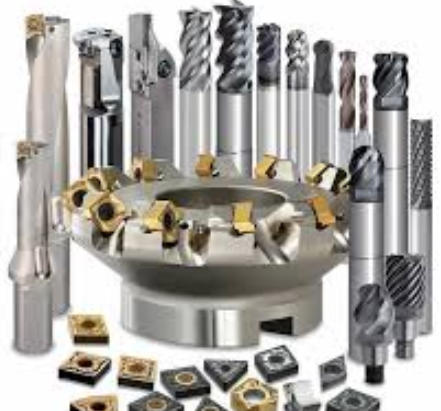
Both lathe and CNC tools remove material, but they are designed around different priorities. The contrast below highlights why cutting tool material choices differ between manual and CNC environments.
| Category | Lathe cutting tools (manual) | CNC cutting tools |
|---|---|---|
| Typical materials | HSS, brazed carbide, basic inserts | Indexable carbide, coated carbide, ceramics, CBN, PCD |
| Tool setup | Single-point tools, manually resharpened | Toolholders with quick-change inserts and automated offsets |
| Durability and speed | Lower cutting speeds and more forgiving of operator error | High-speed machining optimized for efficiency and tool life |
| Common applications | Hobby work, repair jobs, small batches | High-volume production, tight tolerance, hard-to-cut alloys |
| Why it matters | Lower tool cost and higher flexibility, high dependence on operator skill | Requires higher-performance tool materials to maintain speed and repeatability |
As production volume and tolerances increase, moving from HSS-heavy tool sets toward modern carbide, ceramic, CBN, and PCD solutions becomes a natural progression.
Base material is only part of the performance equation. Coatings and surface treatments can significantly improve tool life, reduce friction, and prevent built-up edge.
| Coating | Appearance or property | Key benefits | Best applications |
|---|---|---|---|
| TiN | Gold finish | Increases hardness and reduces general wear | General-purpose tools on steels |
| TiCN | Dark gray to blue | Higher hardness and toughness than TiN | Abrasive materials, cast iron, stainless steels |
| TiAlN | Violet or black | Excellent oxidation resistance at high temperatures | Hardened steels, nickel alloys, high-speed machining |
| DLC | Black slick surface | Very low friction and strong resistance to built-up edge | Aluminum machining and non-stick finishing operations |
General rules:
- For high-temperature steels and nickel alloys, TiAlN-coated carbide is often a strong starting point.
- For aluminum machining, DLC-coated or polished uncoated carbide typically delivers the best performance with minimal built-up edge.
Use this practical checklist as a starting point for everyday cutting tool material decisions.
1. Mild steel on a manual lathe
- Choose HSS tools for cost-effectiveness, forgiving performance, and easy regrinding.
2. Hardened steel on CNC in a production run
- Use coated carbide or CBN for improved heat resistance, precision, and consistent tool life.
3. High-volume aluminum CNC machining
- Select PCD or DLC-coated carbide for fast machining and near-mirror surface finishes.
4. Mixed materials and general-purpose CNC work
- Default to a robust carbide grade with a suitable coating such as TiAlN or TiCN, and refine based on the major material groups in your production.
5. Uncertain starting point
- Begin with a versatile carbide insert recommended for your main workpiece material, then upgrade to specialized grades, coatings, ceramics, CBN, or PCD as your volume or tolerance demands increase.
Every shop must decide whether to prioritize lower tool cost or higher performance and reliability.
- Cheap inserts may save a small amount per tool but can cost much more by losing tolerance, causing chatter, or failing mid-job.
- Hidden costs of poor tools include scrap parts, rework, machine downtime, and delayed deliveries.
- High-quality carbide or coated tools may cost more per insert, but a modest price difference can prevent large losses in labor, material, and production time.
The real cost is rarely the tool itself; it is the impact on your production if the tool fails during a critical operation.
Cutting tool material affects not only machining performance but also safety and shop efficiency.
Key aspects to consider:
- Tool breakage hazards:
- Carbide and ceramics are very hard but brittle. If overloaded or poorly clamped, they can shatter and produce dangerous fragments.
- Heat management:
- Carbide and ceramics can run at higher temperatures than HSS, but you still need to control heat to protect the workpiece and ensure stable conditions.
- HSS tools require appropriate cutting fluids or slower speeds to avoid temper loss.
- Regrinding safety:
- HSS tools can be resharpened relatively safely in small shops with standard grinding equipment.
- Carbide and ceramic grinding produces fine dust that requires proper dust extraction and protection. Without suitable equipment, replacement is usually safer than regrinding.
Efficient machining is not only about long tool life; it is also about safe procedures, stable setups, and predictable tool behavior over entire batches.
To turn these concepts into a repeatable process, use the following six-step framework before choosing cutting tool materials for a new job:
1. Define the workpiece and hardness
- Identify the material grade and hardness range, such as stainless 304, 42 HRC tool steel, or 6061-T6 aluminum.
2. Clarify machine and setup constraints
- Determine whether you are using a manual lathe or CNC machine, assess rigidity, fixturing, coolant availability, and maximum spindle speed.
3. Choose a base material family
- Select HSS for flexible, low-speed manual work.
- Select carbide for most CNC operations.
- Consider ceramic, CBN, or PCD for specialized high-speed or hard-turning work.
4. Select a coating strategy
- Choose TiN or TiCN for general-purpose steels or cast iron.
- Choose TiAlN for high-temperature steels and nickel alloys.
- Choose DLC or polished carbide for aluminum and non-ferrous alloys.
5. Set initial speeds and feeds
- Start with recommended data for the tool material and coating, then adjust based on chip color, sound, and surface finish.
6. Monitor and refine
- Observe wear patterns, adjust coolant and parameters, and upgrade to higher-performance materials or coatings where you see consistent limits or bottlenecks.
This structured approach helps avoid both over-specifying expensive tools for simple jobs and under-specifying tools for demanding production runs.
Consider a shop that was machining stainless steel shafts on a manual lathe. They experienced excessive tool wear, inconsistent quality, and long cycle times. Operators frequently swapped inserts and scrapped parts, increasing cost and lead time.
After moving the job to a professional CNC setup with optimized carbide tools and coatings, the shop achieved:
- Consistent surface finish across all batches.
- Faster turnaround, which freed machine capacity for other orders.
- Lower tooling and scrap costs, as fewer tools were damaged or prematurely discarded.
For similar jobs where manual setups are pushed to their limits, transitioning to optimized CNC processes can deliver a significant improvement in stability and overall cost.
Many brand owners, wholesalers, and manufacturers do not have the internal resources to continually optimize cutting tool materials, coatings, and cutting parameters for every project. In these cases, partnering with an experienced OEM machining provider can be the most efficient solution.
An expert machining partner can:
- Select appropriate cutting tool materials for metals, plastics, and elastomers.
- Match insert geometry and coatings to each specific workpiece and production volume.
- Minimize trial-and-error on the shop floor and shorten the time from design to reliable production.
This allows your internal team to focus on product design, brand development, and customer service while the machining partner handles technical optimization.
Instead of looking for one universal tool, treat cutting tool materials as a toolbox that grows with your production needs.
- Use HSS where flexibility, low cost, and easy regrinding make sense, especially in manual operations and small batches.
- Use carbide as your main workhorse when you need precision, speed, and durability, particularly in CNC machining.
- Add ceramics, CBN, and PCD as specialized tools when you expand into hardened steels, high-temperature alloys, and large-volume non-ferrous machining.
Over time, continuous testing and refinement on your own machines will reveal the ideal mix of materials, grades, coatings, and geometries for your workload.
If you want reliable, high-precision components without the trial-and-error of selecting cutting tool materials, consider partnering with a professional machining supplier that specializes in OEM services. Share your drawings, materials, tolerance requirements, and expected volumes, and let an experienced engineering team recommend the most suitable cutting tool materials and machining solutions for your project. This approach shortens your development cycle, stabilizes quality, and allows you to focus on growing your brand and serving your customers.
Contact us to get more information!
There is no single best material for all situations. HSS is economical and versatile for manual lathes and general-purpose work. Carbide performs better in high-speed and precision cutting. Ceramics and CBN are preferred for hardened steels and specific high-temperature applications.
No. Carbide offers higher cutting speeds and longer edge life, but it is more brittle and more expensive. HSS is tougher and more forgiving of interrupted cuts or less rigid setups, which is useful on manual lathes or light-duty machines.
You can, but it is not always efficient. Aluminum usually benefits from polished, high-positive-rake carbide inserts. Steels often require tougher tool grades and suitable coatings. Brass machines well with both HSS and carbide, but sharp edges and appropriate geometry make a noticeable difference.
The frequency depends on material, cutting parameters, and required surface finish. HSS tools can be resharpened many times, making them cost-effective for smaller shops. Carbide inserts are typically replaced once they lose sharpness or are chipped, although indexable designs provide multiple cutting edges per insert.
Regrinding HSS tools is common and generally safe when using appropriate grinding equipment and basic precautions. Carbide and ceramic tools require specialized grinding equipment and proper dust collection, because grinding dust can be hazardous. Without adequate equipment and safety measures, it is usually better to replace them rather than regrind.


