Views: 297 Author: U-Need Publish Time: 2026-11-05 Origin: Site
Content Menu
● Why Source Precision CNC Machining Parts from China?
>> A Concentrated Supplier Ecosystem
● Selection Criteria: How to Evaluate a Precision CNC Supplier
● Comparison Table: Capacity, MOQ, and Certification
● Top 10 Precision CNC Machining Parts Companies in China
>> 1. U-Need Precision Machinery Co., Ltd.
>> 3. WayKen
>> 4. HLH
>> 6. 3ERP
>> 8. DEK
>> 9. SuNPe
● Technical Buying Guide: What "Precision CNC" Should Mean in Your RFQ
>> Specify Materials Beyond a Generic Alloy Name
>> Define Tolerances and Inspection Together
>> Keep Certification and Product Compliance Separate
● Buyer's Guide: From Factory Verification to Repeat Orders
>> 1. Verify the Contracting and Manufacturing Entities
>> 2. Use a Production-Intent Sample Process
>> 3. Compare Total Landed Cost
>> 4. Lock Down Repeat-Order Controls
● Common Sourcing Pitfalls and How to Avoid Them
>> Material Substitution Hidden Behind "Equivalent"
>> Certification That Does Not Cover the Producing Factory
>> Inspection Before the Final Process
>> A Low Price Built on Different Assumptions
● An Overlooked Shop-Floor Trap: The Sample Route Is Not the Production Route
● Conclusion: Choose a Manufacturing Route, Not Just a Company Name
● FAQ
>> 1. How Can I Verify Whether a Supplier's ISO Certificate Has Expired or Been Suspended?
>> 2. How Do I Know Whether a Supplier Can Hold ±0.005 mm in Production?
>> 3. Can a Chinese Supplier Substitute a Local Material Grade for the One on My Drawing?
>> 4. Should Every CNC-Machined Part Have CE and RoHS Certificates?
>> 5. Who Should Pay When Parts Pass the Supplier's Inspection but Fail at Our Facility?
Choosing a precision CNC machining supplier in China requires more than comparing quotations and advertised tolerances. For procurement managers, the real challenge is finding a partner that can reproduce approved quality, protect technical information, document material traceability, and maintain delivery performance as order volumes change.
The most useful starting point is repeatability: can the supplier make the same conforming part next month, on a different production shift, without relying on undocumented adjustments?
This guide examines ten China-based precision manufacturing companies, starting with U-Need Precision Machinery Co., Ltd. It compares their published capabilities, explains what buyers should verify, and provides a practical framework for qualifying a long-term manufacturing partner.
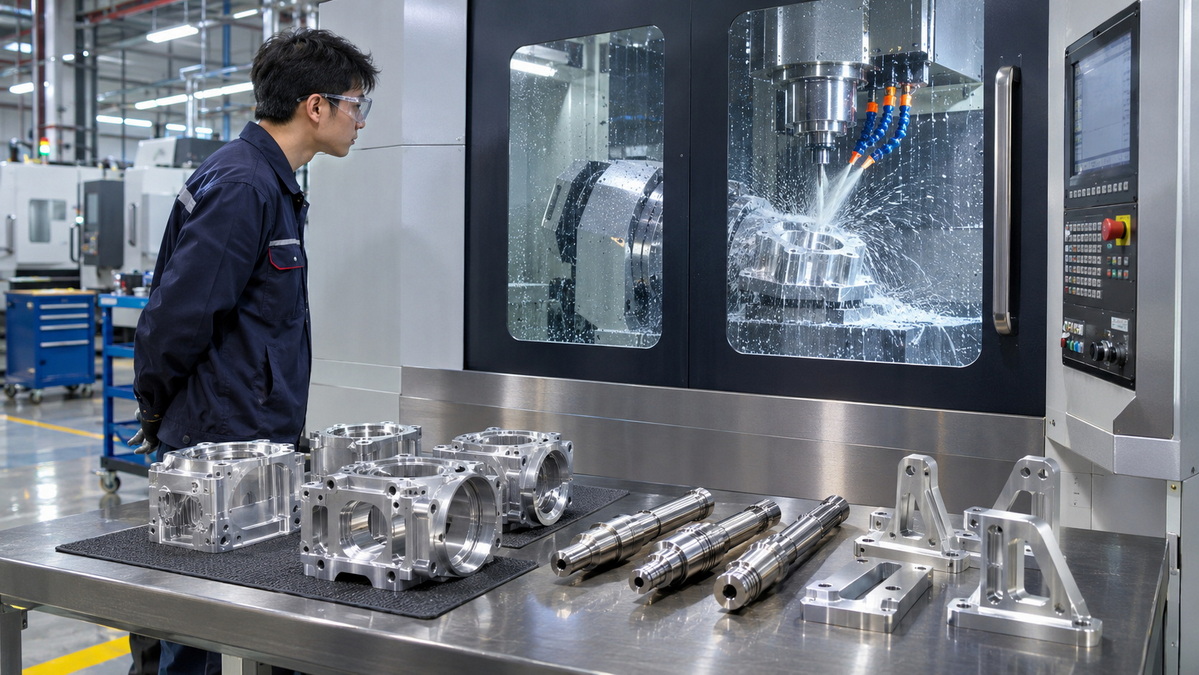
China offers buyers a substantial manufacturing ecosystem, but its value extends beyond the hourly cost of machining.
According to the German Machine Tool Builders' Association, VDW, China produced approximately €30 billion of machine tools in 2025, excluding parts and accessories. Its reported share of worldwide machine-tool production reached 37%. Chinese machine-tool exports increased 13% to €8.6 billion, making China the largest exporter in that category in 2025. These figures describe manufacturing equipment—not the export value of subcontract CNC-machined parts—but they illustrate the scale of the underlying industrial base.
The companies in this shortlist demonstrate the depth of Guangdong's precision manufacturing network:
- Shenzhen hosts suppliers such as RapidDirect, WayKen, and DEK.
- Dongguan is home to U-Need and manufacturing operations associated with HLH.
- Zhongshan supports established prototyping and tooling companies such as 3ERP, SuNPe, TEAM Rapid, and NICE Rapid.
For buyers, this concentration makes it practical to shortlist partners offering combinations of CNC milling, turning, EDM, tooling, molding, fabrication, and finishing. However, a broad service menu does not prove that every process is performed in-house. RapidDirect, for example, explicitly describes a combination of its own factory and an external manufacturing network.
The procurement task is therefore to understand the manufacturing route—not simply the supplier's address.
This shortlist prioritizes companies with public evidence of custom machining services, engineering support, quality processes, and international customer service. It does not assign numerical scores because comparable audited delivery, rejection, and capacity data are unavailable.
Use the following framework during qualification.
| Evaluation dimension | Evidence to request | Why it matters |
|---|---|---|
| Legal identity and manufacturing responsibility | Business license, contracting entity, production-site address, subcontractor disclosure | Establishes who accepts responsibility for the order |
| Quality-system certification | Current certificate, scope, covered locations, issuing body | Helps confirm that the relevant manufacturing activity is covered |
| Engineering and development support | Drawing review, DFM comments, tolerance-risk assessment | Shows whether the supplier can resolve manufacturing problems before production |
| Process capability | Comparable parts, machine list, fixture strategy, inspection plan | Connects equipment claims to the actual component |
| Material control | Mill certificates, heat or lot references, incoming-verification procedure | Reduces substitution and traceability risks |
| Delivery stability | Recent delivery records, scheduling method, recovery plan | Tests whether quoted lead times are operationally credible |
| Change control | Revision approval, process-change notification, subcontractor controls | Protects repeat orders from undocumented changes |
| Commercial support | Named project owner, response expectations, corrective-action process | Clarifies how technical and quality issues will be resolved |
For certification checks, IAF CertSearch allows buyers to search by company name or certificate number and review status, scope, issuing certification body, and accreditation information. A logo on a quotation should not replace this verification.
Capacity figures below are supplier-published indicators, not independently validated available capacity. Machine counts, floor area, and monthly output are not directly comparable. Ask each shortlisted supplier to confirm available hours on the equipment your project actually requires.
"Confirm with RFQ" means the reviewed sources did not establish a clear project-independent minimum order quantity.
| Company | Published capacity or scale indicator | MOQ / order-size information | Published certification claims |
|---|---|---|---|
| U-Need | Prototype-to-production services; mixed machining, tooling, and fabrication scope | Customization from 1 piece | Certification scope not established from the reviewed homepage; request documents |
| RapidDirect | Own Shenzhen factory plus network of 700+ suppliers | Confirm with RFQ | ISO 9001:2015, ISO 13485, ISO 14001, IATF 16949; verify entity and site coverage |
| WayKen | 35,000 sq. ft. factory; reports 20,000+ parts per month | Prototype and small-batch support; confirm minimum | ISO 9001, IATF 16949, ISO 14001 |
| HLH | Multiple China locations; CNC and other prototype-to-production processes | Confirm with RFQ | ISO 9001:2015, ISO 14001:2015, IATF 16949; confirm producing subsidiary and site |
| Star Rapid | Prototyping, rapid tooling, low-volume manufacturing, and production tooling | Confirm with RFQ | ISO 9001, ISO 13485, ISO 14001, ISO 45001 |
| 3ERP | Reports 50+ production machines | Describes CNC projects of 1–1,000 pieces | ISO 9001:2015 |
| TEAM Rapid | Integrated machining, tooling, molding, and manufacturing-resource support | Confirm CNC-specific minimum | ISO 9001:2015 |
| DEK | Reports 100+ CNC machines on its own production floor | Advertises no MOQ | ISO 9001:2015, ISO 13485, AS9100D |
| SuNPe | Reports four factories totaling approximately 30,000 m² | Confirm with RFQ | Published history records ISO 9001 certification; verify current certificate |
| NICE Rapid | CNC machining, rapid tooling, injection molding, and silicone molding | Confirm with RFQ | ISO 9001:2015 |
Established: 2016
Location: Dongguan, Guangdong
Market coverage: International customers; the company reports shipping to more than 100 countries. A country-by-country sales breakdown is not published on the reviewed homepage.
U-Need is a relevant first candidate for smaller brands, distributors, and manufacturers seeking customized parts without committing immediately to large production quantities. Its published offering starts at one piece and extends through prototyping, low-volume production, mass production, and packaging.
Its main differentiator is service breadth. Beyond precision CNC milling and turning, the company lists five-axis machining, wire EDM, grinding, injection mold tooling, stamping dies, cold-forging services, sheet metal fabrication, laser cutting, and bending. This makes it worth considering when a product includes both machined components and other custom-manufactured parts.
For OEM projects, U-Need offers drawing-based manufacturing and process coordination. For development-oriented work, it describes concept support, material selection, engineering design, DFM analysis, technical drawing preparation, and iterative prototyping. These services support a collaborative development role, although ownership of designs, tooling, and engineering deliverables should be agreed contractually.
Its potential cost-performance advantage should be evaluated through total project cost rather than an unsupported claim of lowest pricing. A single project interface may simplify communication across several processes, while one-piece customization allows buyers to test cooperation before scaling.
Qualification priority: Ask U-Need to identify the actual production site for each operation, provide applicable quality certificates, and submit a feature-specific inspection plan. Its advertised machining accuracy of ±0.001 mm should be treated as a capability claim for suitable applications—not a blanket tolerance for every feature, material, or geometry.
Established: 2017, as stated on its website
Location: Shenzhen, Guangdong
Market coverage: Global, with explicit service references to North America and Europe.
RapidDirect combines its own manufacturing operation with a network of more than 700 suppliers. Its published services include CNC machining, injection molding, sheet metal fabrication, and additive manufacturing.
Its strongest procurement fit is a buyer managing multiple part categories who values a centralized ordering and engineering interface. The company describes English-speaking project engineers and support from prototypes through production.
OEM scope includes custom machined and manufactured components. Development support is better evaluated as project-specific engineering assistance rather than assumed ownership of a complete product-design program.
Qualification priority: Determine which processes are performed internally and which are assigned externally. Require certificate coverage, traceability, inspection responsibility, and change-notification obligations to follow the actual manufacturing site—not just the sales organization.
Established: An exact founding year was not confirmed in the reviewed official company profile; WayKen states more than 20 years of industry experience.
Location: Shenzhen, Guangdong
Market coverage: The company reports business activity in more than 30 countries.
WayKen focuses on metal and plastic prototypes, low-volume manufacturing, and production support. Its company profile describes three-axis and five-axis CNC machining alongside vacuum casting, injection molding, additive manufacturing, and sheet metal fabrication.
It is a useful candidate for engineering teams developing functional prototypes, complex housings, and components requiring coordination between geometry, surface appearance, and assembly fit.
The company describes dedicated project management, engineering guidance, and quality-control support. Its published certification claims include ISO 9001, IATF 16949, and ISO 14001.
OEM scope centers on custom components. Development support includes manufacturability review and prototype iteration; buyers seeking broader ODM responsibilities should define those deliverables separately.
Qualification priority: Confirm whether the quoted route is a prototype route or the intended repeat-production route, particularly when fixture design and dimensional stability affect later orders.
Established: 2008, according to the HLH CNC company profile
Locations: The profile lists Shenzhen, Dongguan, Changsha, and Wuhan.
Market coverage: International; the related HLH Rapid website reports customers in more than 50 countries. These statements concern related operations and should not be treated as proof of identical capabilities at every entity.
HLH's published scope includes CNC machining, additive manufacturing, vacuum casting, sheet metal work, tooling, and injection molding. This makes it relevant to buyers sourcing both prototype components and a broader manufacturing package.
Its OEM support spans custom parts and tooling-based production. Development support includes DFM and project review, with the specific contracting operation determining responsibility.
Qualification priority: Resolve the legal and operational distinctions between the quoting company, manufacturing subsidiary, and certificate holder. Obtain the address, inspection responsibilities, and applicable certificates for the factory producing your parts.
Established: 2005, according to its company listing
Market coverage: International product-development customers; the reviewed sources do not provide an audited geographic revenue breakdown.
Star Rapid focuses on rapid prototyping, tooling, low-volume manufacturing, and production tooling. Its published process range includes CNC machining, vacuum casting, plastic injection molding, and finishing.
The company's international engineering team and development-oriented services make it a relevant candidate for buyers who want technical discussion alongside manufacturing execution. It also publishes material-identification educational content, a useful topic to raise during qualification.
OEM scope includes custom parts and tooling. Development support focuses on translating customer ideas into manufacturable components and production solutions.
Qualification priority: Separate prototype requirements from recurring-production requirements. Confirm inspection deliverables, material-verification methods, and the exact certificate scope applicable to the order.
Established: 2010; the company states that its first dedicated manufacturing facility opened in 2013
Location: Zhongshan, Guangdong
Market coverage: Global, with a North American division in Missouri.
3ERP is oriented toward rapid prototyping and low-volume production. Its published CNC capabilities include three-, four-, and five-axis machining, turning, milling, and EDM, supported by CMM inspection.
The company describes CNC projects ranging from one to 1,000 pieces, making it relevant for engineering validation, bridge production, and specialized equipment components.
OEM scope includes custom metal and plastic parts. Its wider process offering supports programs combining machining with molding, fabrication, or prototype technologies.
Qualification priority: Ask how the approved prototype will transfer into recurring production. The review should cover fixtures, program control, material procurement, and measurement methods—not only the appearance of the sample.
Established: 2017, according to its company page
Location: Zhongshan, Guangdong
Market coverage: International; published materials identify customers in the United States, United Kingdom, France, Germany, and other markets.
TEAM Rapid combines CNC machining with tooling, injection molding, die casting, fabrication, finishing, and assembly support. Its published materials emphasize DFM and integrated manufacturing resources.
It is worth considering when a project may begin with machined prototypes but later move into molding or casting. The advantage to investigate is continuity between development stages—not an assumption that one supplier will always offer the lowest cost for every process.
OEM scope includes drawing-based parts and custom tooling. Development-oriented support includes DFM, process selection, and manufacturing coordination.
Qualification priority: Request separate commercial and technical proposals for each production phase. Prototype, bridge-production, and high-volume prices should show their different tooling, inspection, and process assumptions.
Established: 2002
Location: Shenzhen, Guangdong
Market coverage: North America, Europe, and Asia, according to the company.
DEK traces its origins to precision mold components such as core pins, ejector pins, and guide bushes. It now describes an in-house production floor with more than 100 CNC machines and capabilities extending to precision grinding.
Its published service profile makes it relevant for buyers whose parts require a combination of machining and grinding or documented inspection for demanding applications.
DEK advertises ISO 9001:2015, ISO 13485, and AS9100D certification, along with first-article and CMM reporting. These remain supplier claims until the buyer verifies current certificates and scope.
OEM scope centers on customer-designed precision components. Engineering assistance should be specified separately from any complete ODM obligation.
Qualification priority: Review a comparable inspection report and confirm measurement uncertainty, datum alignment, heat-treatment routing, and post-grinding acceptance requirements.
Established: 2005
Location: Zhongshan, Guangdong
Market coverage: An international customer base; the reviewed profile reports more than 5,000 customers but does not provide a verified regional breakdown.
SuNPe describes four manufacturing facilities with CNC machining, tooling, molding, vacuum casting, sheet metal, additive manufacturing, and finishing capabilities.
Its principal procurement appeal is a multi-process development and low-volume manufacturing offering. It is a candidate for programs containing both machined parts and molded or appearance-sensitive components.
OEM services cover custom prototypes, tooling, and production components. Development support is primarily associated with prototyping and manufacturing implementation rather than an automatically included complete product-design service.
Qualification priority: Confirm which plant will manufacture the order and which processes will move between facilities. Ask who owns cross-site inspection records and corrective actions.
Established: Manufacturing predecessor founded in 2012; development under the NICE Rapid name began in 2015
Location: Zhongshan, Guangdong
Market coverage: Worldwide customers, according to its published history.
NICE Rapid offers CNC machining, rapid injection molding, rapid tooling, and silicone rubber molding. Its company profile also references five-axis CNC machining and ISO 9001:2015 certification.
It is particularly relevant when a buyer needs machined components together with custom tooling or silicone-molded parts.
OEM scope includes custom parts and tools. Development support concerns prototype and manufacturing implementation; buyers should clarify whether product engineering, validation, or regulatory documentation is included.
Qualification priority: Define process-specific acceptance criteria. A silicone component and a machined metal insert require different inspection methods, material evidence, and dimensional expectations.

A useful RFQ translates "high precision" into measurable acceptance requirements.
A purchasing specification should identify the grade, condition, applicable material standard, traceability requirements, and permitted substitutions.
Examples of the level of detail to address include:
| Material family | Specification details to resolve |
|---|---|
| Aluminum | Alloy, temper, stock form, finish, cosmetic requirements |
| Stainless steel | Exact grade, heat-treatment condition where applicable, passivation requirements |
| Alloy steel | Grade, heat treatment, hardness range, finish-machining sequence |
| Titanium | Exact grade, material standard, certification and traceability |
| Engineering plastics | Resin grade, fillers, color, conditioning and dimensional acceptance |
Do not accept a cross-reference table as automatic approval for substitution. Star Rapid's published 440C comparison, for example, explicitly warns that nominally equivalent grades can differ in chemistry and that its table is for reference only.
For production orders, require written engineering approval before any grade, temper, stock form, or material-source change.
The drawing and inspection plan should resolve:
- Which dimensions are critical to function.
- Which datum system controls geometric acceptance.
- Whether limits apply before or after surface treatment.
- How threads and functional fits will be checked.
- Whether thin or flexible parts are inspected free-state or restrained.
- Which surface areas have appearance requirements.
- Whether inspection covers every part or an agreed sampling plan.
Published supplier tolerances are conditional. WayKen explicitly states that its tightest advertised tolerances depend on geometry and material, which is the appropriate context for interpreting any precision claim.
ISO 9001 concerns a quality-management system; it is not a dimensional inspection report or a guarantee that a particular shipment conforms. Certification is issued by certification bodies, not by ISO itself.
Other requirements need separate treatment:
- ISO 14001 concerns environmental management, not blanket approval of every chemical used.
- Medical or aerospace certification claims must be checked for the relevant scope and manufacturing location.
- RoHS concerns restricted substances in electrical and electronic equipment within its scope, subject to applicable exclusions and exemptions.
- CE marking applies only where relevant legislation requires it. It is not a general factory-quality badge, and a buyer should not assume that every standalone machined component requires its own CE marking.
For an electronic-product component, request material and finishing evidence appropriate to the product's compliance obligations. A generic "RoHS compliant" statement may not adequately identify the supplied material, coating, or batch.
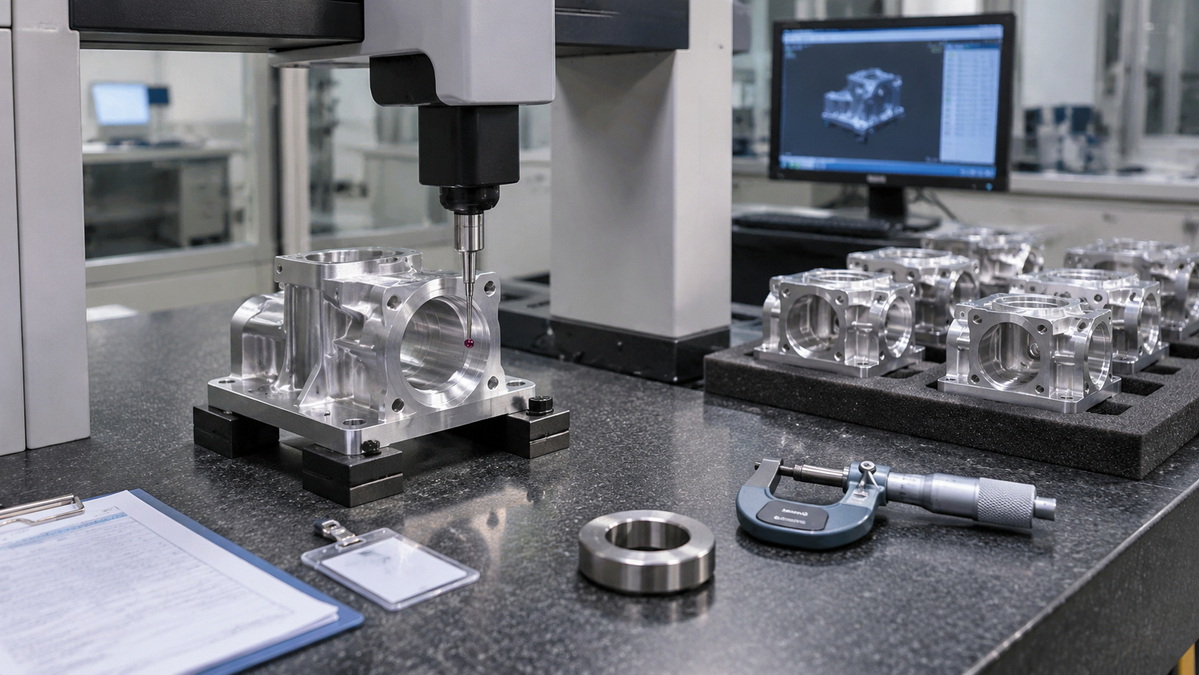
Before paying a deposit, request:
1. The supplier's legal name and business license.
2. The beneficiary name for payment.
3. The manufacturing-site address.
4. A list of outsourced processes.
5. Applicable certificates and their covered sites.
6. A sample inspection report for comparable work.
Where practical, conduct a live factory walkthrough or independent audit focused on your proposed manufacturing route. A video showing machines is less useful than a demonstration of material identification, work-order control, inspection records, and nonconformance handling.
A sample order should test both the part and the supplier's operating discipline.
Recommended approval package:
- Controlled drawing and model revision.
- Written DFM agreement.
- Material documentation linked to the sample.
- Ballooned drawing and dimensional report.
- Finish and appearance acceptance records.
- Functional or assembly test results where needed.
- List of deviations requiring buyer approval.
Require the supplier to disclose whether the sample used temporary fixtures, manual correction, or an inspection method that will differ during production.
Evaluate more than the unit price:
| Cost category | Questions to resolve |
|---|---|
| Engineering and setup | Is programming included? Who owns fixtures? |
| Materials | Are specified grades and certificates included? |
| Finishing | Are masking, inspection, and rework included? |
| Quality documentation | Are dimensional reports and traceability records chargeable? |
| Logistics | What are the named delivery place, Incoterms rule, freight terms, and insurance arrangements? |
| Importation | Who manages classification, brokerage, duties, and taxes? |
| Nonconformance | Who pays for replacement freight, sorting, rework, or rejected parts? |
For thin walls, ground surfaces, cosmetic finishes, and corrosion-sensitive materials, approve packaging before shipment. Separation, surface protection, moisture control, and handling orientation should match the actual damage risks.
The purchase agreement should require approval before changes to:
- Manufacturing location.
- Material grade or condition.
- Critical subcontractors.
- Heat treatment or surface treatment.
- Fixtures affecting critical features.
- Inspection method or acceptance criteria.
Also establish a process for containment, root-cause analysis, corrective action, and replacement delivery when nonconforming parts are found.
Risk: A quotation or production order silently replaces the specified material with a nominally comparable local grade.
Control: State "no substitution without written approval," require traceable certificates, and agree on any additional material testing before production.
Risk: A valid certificate belongs to another entity, another address, or an unrelated activity.
Control: Match the supplier's legal name, manufacturing location, certificate scope, and active status. IAF CertSearch provides these verification fields.
Risk: The supplied report covers machining but not the dimensions after coating, heat treatment, grinding, or other subsequent operations.
Control: Identify which characteristics must be accepted in the final delivered condition and require the report to state the inspection stage.
Risk: One supplier includes certified material, final inspection, and protective packaging while another excludes them.
Control: Issue a normalized quotation template so every supplier prices the same drawing revision, material, process sequence, inspection package, and delivery terms.
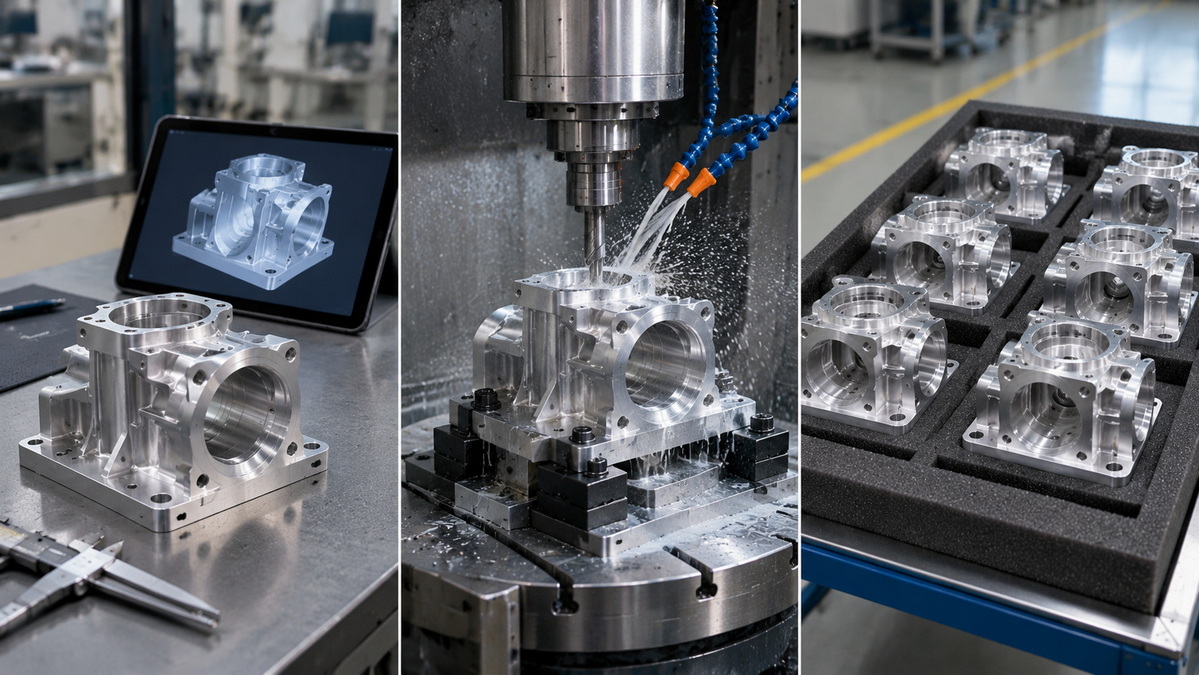
A particularly important risk is approving a good sample without approving how it was made.
A first article might be produced with a carefully adjusted fixture, extensive inspection, and manual fitting. The recurring order may then use a faster fixture, a different machine, another subcontractor, or reduced inspection.
The sample proves that an acceptable part can be made. It does not, by itself, prove that the repeat-production route is controlled.
Use a production-route sign-off to record:
1. Material grade and condition.
2. Major manufacturing operations.
3. Critical fixture and clamping principles.
4. Heat-treatment and finishing sources.
5. Inspection datums and measurement methods.
6. Any permitted manual correction.
7. Changes requiring customer approval.
For complex parts, ask the supplier to identify which aspects of the approved sample route will change at the next volume level. This turns an informal expectation into a manageable engineering decision.
These ten companies offer different combinations of machining, engineering support, tooling, and production coordination. The right choice depends on the component, order profile, documentation requirements, and the buyer's ability to manage manufacturing risk.
U-Need is a relevant candidate for buyers seeking flexible custom quantities and coordinated support across precision machining, mold manufacturing, and sheet metal fabrication. Its published design-to-production services make it worth evaluating for smaller brands and mixed-process OEM projects. Certification coverage, actual manufacturing locations, and part-specific capability should still be verified during qualification.
To start a substantive discussion with U-Need, submit a controlled drawing package, 3D model, material specification, forecast quantities, critical tolerances, finishing requirements, and required inspection documents. Request a written DFM review and production-intent sample proposal before committing to recurring supply.
Search the exact certificate number or legal company name in IAF CertSearch. Review the standard, active status, scope, certified locations, issuing body, and accreditation details—not just the printed expiration date. The platform distinguishes active, suspended, withdrawn, and expired certificates.
If the record cannot be located or the details conflict with the supplier's documents, contact the issuing certification body directly before accepting the claim. Do not treat an unexplained mismatch as resolved simply because the supplier provides another logo or scan.
Ask for evidence tied to your feature, material, geometry, and production condition.
Request an agreed measurement method, a production-intent trial, and capability evidence appropriate to the characteristic and process. If statistical capability reporting is required, agree in advance on the sampling approach, process stability expectations, measurement-system suitability, and acceptance threshold.
Do not substitute a marketing tolerance for this work. Even WayKen's published ±0.005 mm capability is expressly conditional on geometry and material.
Only under the substitution approval process agreed with the buyer.
Require a comparison covering chemistry, mechanical properties, material condition, applicable standards, and functional implications. Nominal cross-references are not enough: published grade-comparison tables may themselves warn that chemistry differs.
Approve any substitution through a documented drawing deviation or engineering change before manufacturing begins.
No. CE marking is required only for products covered by applicable legislation; it is not a universal requirement for machined parts or factories.
RoHS applies to electrical and electronic equipment within its scope, with relevant exclusions and exemptions. Components used in such equipment may need supporting substance-compliance evidence, but that is different from assuming every component needs an individual CE mark.
Determine the requirements from the finished product, intended use, destination market, and applicable legislation.
The purchase agreement should resolve responsibility before production.
First compare drawing revisions, datum alignment, measurement conditions, inspection methods, and final-process status. If those differ, the two parties may be testing different acceptance conditions.
The contract should define containment, independent inspection where necessary, root-cause investigation, rework approval, replacement timing, and allocation of freight and other costs. For disputed critical characteristics, agree on a reference measurement method or independent laboratory in advance.
1.German Machine Tool Builders' Association, "German machine tool industry leveling off—China further dominating production," published March 2026, reporting 2025 production and export figures. [vdw]
2.IAF CertSearch, certificate-search and verification guidance. [iafcertsearch]
3.European Commission, CE marking guidance. [single-market-economy.ec.europa]
4.European Commission, Restriction of Hazardous Substances in Electrical and Electronic Equipment. [environment.ec.europa]
5.U-Need, official company overview, manufacturing capabilities, and quality-process description. [uneedprecisionmachine]
6.RapidDirect, official manufacturing services and company information. [rapiddirect]
7.WayKen, official company profile and capacity information. [waykenrm]
8.HLH CNC and HLH Rapid, company and manufacturing-service profiles. [hlhrapid]
9.Star Rapid, official services and certification information; company listing for establishment year. [starrapid]
10.3ERP, official company information and manufacturing FAQ. [3erp]
11.TEAM Rapid, official company page and service information. [teamrapidtooling]
12.DEK, official company profile and precision-machining services. [dekmake]
13.SuNPe, official company profile, factory information, and history. [sunpe]
14.NICE Rapid, official company profile and manufacturing history. [nicerapid]


