Views: 222 Author: Loretta Publish Time: 2025-12-20 Origin: Site
Content Menu
● German precision mold industry overview
● Leading German mold and component specialists
● Typical products from Precision Mold Parts Manufacturers and Suppliers
● Core industries served in Germany
>> Automotive and transportation
>> Packaging and consumer goods
>> Electronics, industrial, and technical markets
● Technology and quality in German mold production
● Role of global OEM partners (including China)
● How to evaluate Precision Mold Parts Manufacturers and Suppliers
● Typical workflow with a German precision mold supplier
>> 2. Mold and component design
>> 3. Tool manufacturing and validation
>> 4. Industrialization and series support
● Digitalization, sustainability, and future trends
>> Additive manufacturing of mold components
>> Sustainability and energy efficiency
● FAQ
>> 1. How big is the German injection molding and tooling market?
>> 2. Which industries rely most on German precision mold suppliers?
>> 4. Can overseas OEMs work effectively with German mold and component suppliers?
>> 5. How do Chinese OEMs complement German precision mold suppliers in global projects?
Germany is home to a dense network of precision mold tooling specialists that support some of the most demanding global industries, including automotive, medical, packaging, and electronics. For international brand owners, wholesalers, and OEMs, understanding how Precision Mold Parts Manufacturers and Suppliers operate in Germany is crucial for building a robust, high-quality, and cost-effective supply chain.[1][2]
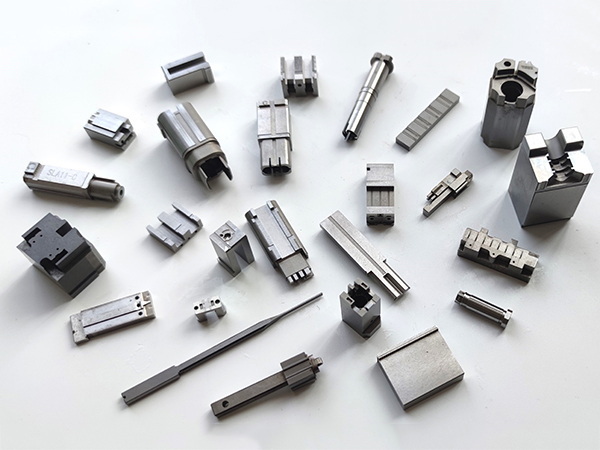
Germany's manufacturing sector is one of the most advanced in Europe, and injection molding and mold tooling form a central pillar of its industrial strength. From high-volume plastic components to complex technical parts, the country's Precision Mold Parts Manufacturers and Suppliers provide the molds and mold components that keep production running reliably across thousands or even millions of cycles.[2][1]
A few key characteristics define the German precision mold industry:
- Strong emphasis on engineering and process control, with a tradition of technical education and apprenticeship in toolmaking.[1]
- High adoption of automation, robotics, and digital monitoring in both mold building and injection molding production.[3]
- Close integration between mold makers, component suppliers, material producers, and machine manufacturers, which supports fast development cycles and stable quality.[2]
Plastic materials represent the vast majority of parts produced with injection molding technology in Germany, and this dominance directly drives demand for reliable Precision Mold Parts Manufacturers and Suppliers that can deliver standard and custom components. At the same time, metal stamping dies, progressive tools, and hybrid solutions add further complexity to the tooling landscape.[1][2]
Several German companies are widely recognized as benchmark Precision Mold Parts Manufacturers and Suppliers thanks to their specialization, technical capabilities, and global reach.[1]
- Strack Norma Group focuses on standard and special components for stamping and forming tools, supplying many major German automotive OEMs and tier-one suppliers.[1]
- HASCO is a global reference for standardized mold bases, ejector pins, guide elements, and other mold components used by toolmakers worldwide.[1]
- Meusburger Georg GmbH & Co. KG specializes in precision machined, pre-hardened plates and a comprehensive range of standard parts that simplify mold design and assembly.[1]
- Foboha GmbH is known for multi-component, cube, and stack molds, supporting complex technical parts and high-cavity consumer and packaging applications.[4]
- Männer Molding Solutions develops high-precision injection molds and integrated hot runner systems for medical, pharmaceutical, and packaging industries where high output and tight tolerances are essential.[5][4]
- Steiert Präzisionsformenbau produces high-performance injection molds for technical and industrial parts, offering extensive engineering and trial capabilities.[6]
These Precision Mold Parts Manufacturers and Suppliers often cooperate with each other and with global partners to deliver complete tooling packages, from standard components through to fully validated production molds.[4][1]
German Precision Mold Parts Manufacturers and Suppliers offer a very broad product portfolio, covering both standardized elements and custom-engineered components.[1]
Common product categories include:
- Standard mold bases and plates, available in multiple steel grades and pre-hardened conditions to shorten machining time.[1]
- Mold components such as ejector pins, sleeves, guide pillars, bushings, springs, locating rings, and centering elements tailored to common mold sizes and layouts.[1]
- Custom cavity and core inserts designed for specific part geometries, often optimized using flow simulation and cooling analyses.[5]
- Complex mechanisms such as sliders, lifters, unscrewing units, and collapsible cores required for undercuts and internal threads.[1]
- Hot runner nozzles, manifolds, and control systems integrated with the mold to ensure consistent melt delivery and fast cycle times.[4][5]
- High-precision injection molds for micro-parts, multi-material components, thin-wall packaging, technical housings, and structural parts.[7][4]
- Metal stamping dies and progressive tools used for automotive body parts, brackets, and precision metal components.[1]
Because these parts must perform for long periods under high pressures and temperatures, Precision Mold Parts Manufacturers and Suppliers pay close attention to steel selection, heat treatment, surface coating, lubrication, and maintainability.[6][1]
The customer base for Precision Mold Parts Manufacturers and Suppliers in Germany is broad but highly concentrated in industries where precision and reliability directly affect safety, performance, and regulatory compliance.[1]
The automotive industry is one of the largest consumers of precision molds and mold components in Germany. Injection-molded plastic parts and metal stampings are found in:[2]
- Interior components such as dashboards, consoles, and trim parts.
- Exterior elements like bumpers, grilles, and lighting housings.
- Under-hood and powertrain components that need thermo- and chemical-resistant materials.[7]
To serve this sector, Precision Mold Parts Manufacturers and Suppliers must deliver tools that can run at high speeds with minimal downtime, while staying within tight dimensional tolerances across long production runs.[7][2]
Medical and pharmaceutical customers demand extremely high precision and repeatability from molds and mold components used to produce laboratory consumables, diagnostic cartridges, pharmaceutical closures, syringes, and drug-delivery devices.[4]
German molds in this field often feature:
- High cavity counts and fully hot runner-balanced layouts to support massive daily outputs.
- Cleanroom-compatible designs using corrosion-resistant steels and optimized venting.
- Mold and hot runner systems designed for fast mold change and easy cleaning.[5][4]
Precision Mold Parts Manufacturers and Suppliers serving this market typically comply with strict quality systems and documentation requirements to support regulatory audits.[4]
High-volume packaging applications such as beverage closures, personal care caps, and food packaging rely on molds that combine speed, durability, and low scrap rates. Precision Mold Parts Manufacturers and Suppliers in Germany provide:[8]
- Lightweight, high-cavity closure molds with optimized cooling channels.
- Long-life standard components designed to withstand millions of cycles.
- Fast service and spare-parts availability to keep production lines running.[8][4]
In electronics and industrial markets, precision tooling is required for connectors, sensor housings, gears, and other technical components that must meet tight dimensional and functional tolerances.[1]
German Precision Mold Parts Manufacturers and Suppliers address these needs by offering:
- Micro-machined cavities and inserts for very small features.
- Special steels and coatings to handle fiber-reinforced or abrasive materials.
- Advanced quality control, including optical metrology, to validate part geometry.[6][7]
To remain competitive, German Precision Mold Parts Manufacturers and Suppliers continually invest in advanced manufacturing technology and rigorous quality systems.[1]
Key technological pillars include:
- High-speed CNC machining centers that enable accurate machining of hardened steels and complex 3D geometries with minimal manual fitting.[6]
- EDM (electrical discharge machining) for fine details, sharp corners, and deep cavities that would be difficult to mill.[1]
- Precision grinding and polishing processes that achieve tight tolerances and surface finishes suitable for optical and medical parts.[7][1]
- CAD/CAM integration and simulation tools to optimize mold design, cooling performance, gate locations, and part warpage before cutting any steel.[3][1]
Quality assurance is an equally critical differentiator for Precision Mold Parts Manufacturers and Suppliers in Germany.[1]
Typical methods include:
- Coordinate measuring machines (CMMs) for high-accuracy measurement of mold components and trial parts.
- Optical and laser scanning systems for complex free-form surfaces.
- Process documentation and traceability aligned with standards such as ISO 9001 and industry-specific requirements for automotive or medical.[7]
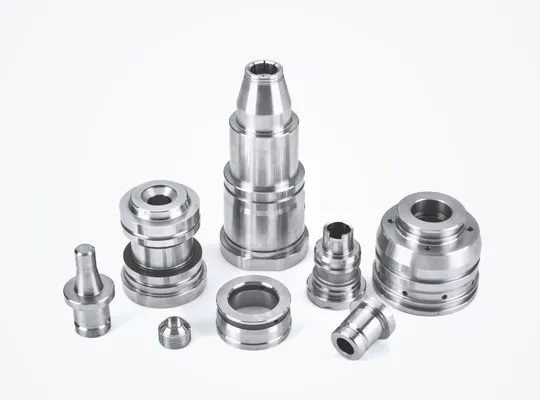
The German mold market does not operate in isolation; it is tightly connected to global networks of Precision Mold Parts Manufacturers and Suppliers, particularly in Asia. For many projects, buyers blend German engineering with cost-effective manufacturing capacity abroad.[9]
Chinese OEM factories, for example, have developed strong capabilities in:
- Plastic injection molds for consumer goods, automotive parts, and technical components.
- Production of precision mold inserts and standard components using high-speed machining and EDM.[10][9]
- Series production of injection-molded parts in thermoplastics and high-temperature polymers.[10]
By collaborating with German Precision Mold Parts Manufacturers and Suppliers, these OEMs can:
- Manufacture tools based on German designs and standards while maintaining cost advantages.
- Supply spare parts and duplicate molds to support multi-site production.
- Provide flexible capacity when European plants are fully loaded.[11][9]
For overseas brand owners and wholesalers, this hybrid model offers a balance of:
- German engineering, validation, and project management.
- Global production, logistics, and cost optimization from international Precision Mold Parts Manufacturers and Suppliers.[9][11]
Selecting the right partner among numerous Precision Mold Parts Manufacturers and Suppliers in Germany requires a structured evaluation based on technical, quality, and commercial criteria.[1]
Important aspects include:
- Specialization and application know-how: A supplier with deep experience in medical micro-molds may not be the best choice for large automotive bumper tools, and vice versa.[4][1]
- Engineering and DFM support: Strong design and DFM capabilities help optimize part geometry, reduce tooling risk, and shorten development time.[1]
- Case studies and references: Successful projects in similar industries provide evidence of performance, reliability, and service quality.[7][1]
- Quality systems and certifications: Compliance with relevant standards, plus documented procedures for inspection and process control, are essential when selecting Precision Mold Parts Manufacturers and Suppliers.[7]
- Lead times and capacity: Toolroom capacity, machine availability, and project management efficiency affect delivery schedules and scalability.[1]
- After-sales support: Local service, spare-parts availability, and the ability to retrofit or upgrade existing molds are important over the full tool lifecycle.[6]
While every project is unique, German Precision Mold Parts Manufacturers and Suppliers often follow a similar, highly structured workflow from concept to series production.[1]
The process begins with the customer providing a detailed brief that includes:
- 3D and 2D data for the part, target materials, and expected annual volume.
- Dimensional tolerances, cosmetic requirements, and regulatory constraints.
- Target machine specifications and any existing plant standards.[5][1]
The supplier may also request information on packaging, logistics, and downstream operations to ensure that mold design supports the full product lifecycle.[5]
Once requirements are clear, engineering teams at Precision Mold Parts Manufacturers and Suppliers develop a mold concept and detailed design.[1]
Typical activities:
- Defining parting lines, gating concepts, runner layouts, and cooling channel designs.
- Selecting standard components such as ejector pins, guide elements, and hot runner systems from established catalogs.
- Designing high-precision custom inserts, cores, and mechanisms to address undercuts and special features.[5][6]
Simulation tools help verify filling behavior, shrinkage, and warpage, allowing early adjustments before steel is ordered.[3]
After design approval, the mold enters production in the toolroom of the chosen Precision Mold Parts Manufacturers and Suppliers.[1]
Key steps:
- Rough and finish machining of plates and inserts using CNC milling and EDM.
- Heat treatment and surface finishing to achieve the required hardness and wear resistance.
- Assembly, fitting, and functional testing of moving elements and cooling circuits.[6][1]
The completed mold is then tested on an injection molding machine, often under near-series conditions. Trial parts undergo dimensional checks and visual inspections, and process settings are optimized.[7]
Once the mold is validated, it is transferred to the designated production plant, which may be in Germany or at another global location. Precision Mold Parts Manufacturers and Suppliers continue to support:[11]
- Adjustment of process parameters during ramp-up.
- Supply of spare parts such as inserts, ejectors, and standard elements.
- Preventive maintenance recommendations and possible design upgrades based on early production data.[6]
This long-term collaboration ensures that overall equipment effectiveness remains high throughout the tool's life.
German Precision Mold Parts Manufacturers and Suppliers are at the forefront of several important trends reshaping the tooling and plastics industries.[1]
Digital technologies are increasingly embedded in mold design, manufacturing, and operation.
- Advanced CAD/CAM systems and simulation accelerate design iterations and reduce trial-and-error during mold trials.[3]
- Sensors embedded in molds track cavity pressure, temperature, and cycle counts, enabling predictive maintenance and process optimization.[3]
- Data connectivity between injection molding machines, quality systems, and ERP platforms supports real-time production monitoring and traceability.[3]
Additive manufacturing has become a powerful tool for Precision Mold Parts Manufacturers and Suppliers in Germany, especially for complex inserts.[1]
- Metal 3D printing enables conformal cooling channels that would be impossible to machine conventionally, shortening cycle times and improving part quality.[1]
- Rapid prototyping of inserts and soft tools allows customers to test design concepts early, reducing the risk of late changes.[1]
Sustainability goals and rising energy prices encourage German Precision Mold Parts Manufacturers and Suppliers and their customers to adopt more efficient solutions.[8]
- Energy-efficient injection molding machines and hot runner systems reduce electricity consumption per part.[3]
- Optimized cooling and cycle time reductions cut energy usage and increase output without extra machines.[4]
- Design-for-recycling, material down-gauging, and reduced scrap help brand owners meet environmental targets.[8]
For buyers, selecting partners that embrace these trends can lead to long-term cost savings and improved environmental performance.
Germany remains a strategic hub for high-end molds, mold components, and injection molding technology, supported by a large ecosystem of Precision Mold Parts Manufacturers and Suppliers that combine deep engineering expertise with advanced production capabilities. From automotive and medical to packaging and electronics, these suppliers provide standardized and custom components, complete molds, and long-term service that enable reliable mass production under demanding conditions.[2][7][1]
By integrating German technical leadership with the flexible capacity and cost advantages of international OEM partners—especially in China—brand owners, wholesalers, and manufacturers can build global tooling strategies that balance quality, speed, and cost. For any company seeking to secure its supply chain with high-precision molds and components, carefully selected Precision Mold Parts Manufacturers and Suppliers in Germany will remain a cornerstone of success in the years ahead.[9][11][2][1]
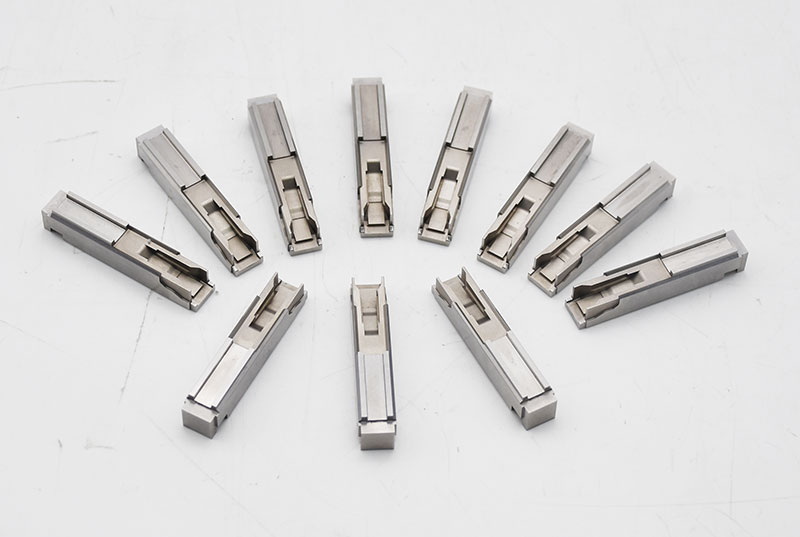
Germany's injection molding market generates many billions of dollars in annual revenue and is among the largest in Europe. This strong demand for molded parts naturally sustains a large base of Precision Mold Parts Manufacturers and Suppliers providing molds, components, and services across multiple industries.[2]
Automotive and transportation firms rely heavily on German Precision Mold Parts Manufacturers and Suppliers for interior, exterior, and under-hood components that require high durability and tight tolerances. Medical, pharmaceutical, packaging, and technical electronics companies also depend on German tooling and components to meet strict performance and regulatory requirements.[2][4][7][1]
German suppliers typically combine strong engineering know-how, advanced simulation, and high-accuracy machining with robust quality systems, resulting in long-life tools and highly consistent parts. Many also provide comprehensive after-sales service, spare-parts programs, and digital monitoring solutions that help reduce downtime and total cost of ownership.[3][6][1]
Yes, many German Precision Mold Parts Manufacturers and Suppliers are experienced in handling global projects and offer multilingual project management, digital collaboration tools, and international logistics support. In some cases, groups operate production or engineering facilities in multiple regions, enabling them to coordinate tool manufacturing, validation, and series production worldwide.[11][1]
Chinese OEM factories that follow strong quality standards can manufacture cost-effective molds, inserts, and molded parts that align with German engineering specifications. By combining German design and validation with production support from Chinese Precision Mold Parts Manufacturers and Suppliers, buyers can reduce tooling and part costs while maintaining high performance and reliability.[10][9][11]
[1](https://www.acomold.com/who-are-the-best-mold-suppliers-in-germany.html)
[2](https://www.grandviewresearch.com/horizon/outlook/injection-molding-market/germany)
[3](https://www.precedenceresearch.com/plastic-injection-molding-machine-market)
[4](https://j-mold.com/blog-detail/top-10-german-mold-manufacturers-precision-engineering-leaders-for-global-industries)
[5](https://barnesmoldingsolutions.com/en/maenner/)
[6](https://steiert.com/en/)
[7](https://www.bruss.de/en/products/details/high-precision-injection-molded-parts)
[8](https://www.mordorintelligence.com/industry-reports/plastics-injection-molding-market)
[9](https://www.kenmold.com)
[10](https://www.ptsmake.com/peek-injection-molding/)
[11](https://www.ensingerplastics.com/en-us/injection-molding)
Hot Tags: Precision Mold Parts Germany, German Tooling Manufacturers, High Precision Mold Components, Injection Mold Parts Supplier, Industrial Tool Making, OEM Mold Parts, European Tooling Quality, Advanced Mold Engineering, Manufacturing Germany, Mold Specialists, China, custom, Auto CNC Machining, cnc machining online, cnc parts online, cnc turning online, 3D Printing Services, manufacturing company, manufacturers, suppliers, made in China, for sale, Customized, quotation, oem


