Views: 222 Author: Rebecca Publish Time: 2026-01-08 Origin: Site
Content Menu
● What Is Micro Machining Today?
● Micro, Meso, and Sub‑Micron Scales Explained
● Key Micro Machining Applications
● Core Challenges in Micro Machining Systems
>> Rethinking Precision and Tolerance
>> Environmental Stability and Thermal Control
>> Vibration, Part Management, and Fluids
● Nanometer‑Level Feedback and Axis Accuracy
>> Why Nanometer Resolution Matters
>> Volumetric Alignment and System Design
● Sub‑Micron Tooling and Workholding
● Micro Milling: Opportunities and Risks
>> Unique Micro Milling Challenges
>> Spindles, Cooling, and Tool Measurement
● Micro Wire EDM: Ultra‑Fine Non‑Contact Cutting
>> Horizontal Wire Path and Oil Dielectric
● Micro EDM Sinking and High‑Aspect‑Ratio Holes
● Practical Micro Machining Process Guidelines
● Action‑Oriented Conclusion and OEM CTA
● FAQs on Micro Machining Technologies
>> Q1: What is the typical size range for micro machined features?
>> Q2: Why is thermal control so important in micro machining?
>> Q3: How does micro wire EDM differ from conventional wire EDM?
>> Q4: Can micro milling and micro EDM be combined in one process chain?
>> Q5: What should OEMs check when selecting a micro machining partner?
Micro machining technologies are transforming how OEMs design and manufacture miniature components for sectors such as medical devices, electronics, and precision engineering. For overseas brand owners and manufacturers, choosing capable partners and the right processes is now a key strategic advantage.

Micro machining refers to the precision removal of material to create parts or features typically smaller than 100 microns, slightly larger than a human hair. At this scale, even tiny changes in cutting tools, machine temperature, or vibration can cause measurable defects.
Modern micro machining typically involves:
- Micro milling with tool diameters down to 0.002 inch (50 µm).
- Micro wire EDM using wire as small as 20 µm (0.00078 inch).
- Micro EDM sinking for holes and cavities down to 11 µm diameter.
These technologies enable OEMs to produce miniature medical components, micro molds, electronic tooling, MEMS, fluidic circuits, valves, filters, and subminiature actuators and motors.
In manufacturing, “micro” commonly means very small features that still rely on classical machining principles, while academia defines micro as one‑millionth of a meter. Features smaller than 0.004 inch (100 µm) fall into a meso/micro range where conventional assumptions about precision no longer apply.
At these scales:
- A ±0.0002 inch tolerance is trivial on a 0.200 inch feature but critical on a 0.002 inch feature.
- Process capability, not just machine specification, defines practical accuracy.
OEM buyers should evaluate suppliers on their proven ability to control processes at the micro/meso level, not only on nominal machine specs.
Micro machining technologies support a growing portfolio of high‑value applications.
- Medical implants and minimally invasive instruments.
- Micro molds for ultra‑small plastic or silicone parts.
- Electronic connectors, probes, and precision tooling.
- MEMS structures and micro‑fluidic devices.
For OEMs working with plastic, silicone, and metal components, integrating micro machining into the supply chain improves product miniaturization and functional integration.
In micro machining, precision is relative to feature size, not just an absolute number. A typical rule of thumb is that the manufacturing system should be at least 10 times more accurate than the tolerance being targeted.
For example:
- To hold ±5 µm (±0.00020 inch), the system must deliver about 0.5 µm (0.000020 inch) precision.
- Cumulative errors from feedback systems, mechanics, environment, and workholding must all be minimized.
This requirement fundamentally changes how OEMs should assess micro machining partners and machine tool investments.
Even a one‑degree change in shop temperature can disturb sub‑micron accuracy because machine structures expand and contract. Simply monitoring room temperature is not enough; machine mass and convection effects create local variations.
Highly capable micro machining systems therefore employ:
- Thermal enclosures around the machine to maintain a controlled micro‑environment.
- Multi‑layer insulation with controlled air flow to keep temperature uniform.
- Embedded temperature sensors in the machine frame to monitor minute variations.
These measures help ensure repeatable processes for ultra‑small features.
When feature sizes are in the tens of microns, vibration and handling issues become critical.
Key challenges include:
- Internal and external vibration that can destroy surface finish and dimensional accuracy.
- Handling and fixturing micro parts and tools without damaging them or losing repeatability below 1 µm.
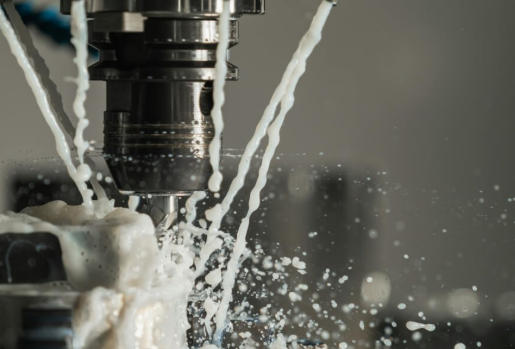
- Optimizing cutting fluids and fluid dynamics, since flow pressure and turbulence can deflect micro tools.
Machine construction, isolation, workholding, and fluid management must be engineered as an integrated system.
High‑resolution feedback systems have reduced servo drift, but micron‑level resolution is no longer sufficient for micro machining. To support sub‑micron tolerances, control systems now offer feedback resolutions in the 10–50 nanometer range.
However:
- Resolution only indicates the digital step size of the control; it does not guarantee real‑world accuracy.
- Mechanical factors like alignment, straightness, and perpendicularity of axes still determine volumetric accuracy.
Vertical machining centers optimized for micro work therefore focus on both resolution and volumetric alignment.
Accurate micro machining requires multiple axes to move in precise relationship. Volumetric accuracy accounts for parallelism, perpendicularity, and straightness of each axis across the working volume.
Effective micro machining platforms typically feature:
- Calibrated volumetric compensation tables.
- Rigid structures designed to minimize deformation under micro‑scale cutting forces.
OEMs should ask for measured volumetric accuracy data, not just linear positioning repeatability.
Precision workholding systems with 1 µm positional repeatability have been commercially available since the late 1980s, especially in EDM. These systems have since expanded into machining centers, grinders, and coordinate measuring machines.
For true micro machining:
- New workholding and tooling solutions provide sub‑micron repeatability to match higher machine resolution.
- Advanced systems can deliver roughly twice the accuracy of earlier generations, supporting smaller, more complex parts.
Robust sub‑micron tooling is now a requirement, not a luxury, for competitive micro manufacturing.
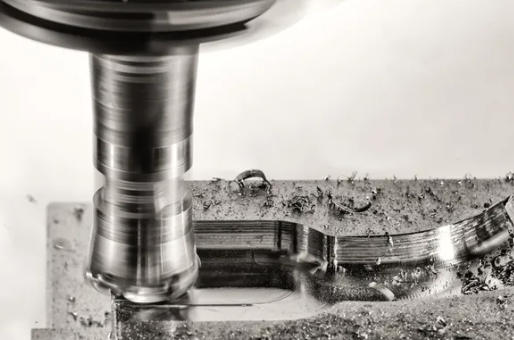
Micro milling uses very small end mills to remove material, generating high tool pressure relative to tool size and introducing new risk factors. Even slight axis movement or spindle error can destroy a tool or part instantly.
Critical considerations:
- Spindle stability to control thermal expansion, tool change variation, and vibration.
- Minimal run‑out at the tool tip to protect surface finish and dimensional accuracy.
Cutting at the particulate level amplifies every process instability.
One effective solution is a direct tool‑change spindle that eliminates traditional tool holders. This design reduces run‑out caused by toolholder variation and minimizes stack‑up errors, which is ideal for micro machining.
Additional enablers include:
- Spindle core cooling that pushes coolant through the spindle using centrifugal force, reducing thermal growth.
- Hybrid automatic tool length measurement systems that combine touch and non‑contact methods to locate tool tips accurately, even below 0.5 mm diameter.
These features contribute to sub‑micron precision over long production runs with multiple tool changes.
Wire EDM has been a cornerstone of precision manufacturing for decades, enabling non‑contact cutting of hard materials. Historically, it was used to produce spectacular demonstration parts, such as micro holes forming letters in a sewing needle.
Recent advances make possible:
- Automatic threading and cutting with 20 µm wire, achieving corner radii under 15 µm.
- Reliable threading in tight spaces, solving earlier problems with small hole access and hole proximity.
These capabilities significantly expand EDM's role in micro component production.
A major innovation is the horizontal inclination of the wire while using air and vacuum instead of fluid to thread the wire. This allows:
- Integration of a C‑axis for workholding and automated part loading.
- Efficient slug removal and improved automation in high‑mix production.
Using an oil dielectric rather than de‑ionized water provides:
- Smaller spark gaps thanks to higher insulation strength.
- Superior surface finishes and reduced corrosion risk during long unattended runs.
These design choices support both quality and unattended production in micro EDM.
Modern CNC die‑sinking EDM systems far surpass earlier manual platforms in both precision and productivity. For micro features, success depends on very small orbital motions that balance speed against achievable surface finish.
Typical micro EDM capabilities include:
- Electrodes as small as 6 µm for producing 11 µm diameter holes.
- Length‑to‑diameter ratios up to 100:1 using high‑pressure dielectric pumping (above 800 psi) and micro tubing down to 0.1 mm.
High‑pressure seals and precise rotational heads ensure stable performance at these extreme conditions.
To translate technology into repeatable, scalable production, OEMs and their partners should follow structured steps.
1. Define feature sizes, tolerances, and materials at the early design stage.
2. Match each feature to the most suitable process (micro milling, wire EDM, EDM sinking, or hybrid).
3. Validate thermal control, vibration isolation, and workholding strategy before volume production.
4. Qualify cutting tools or electrodes, including repeatability of tool setting and measurement.
5. Establish in‑process inspection routines for critical micro features to catch drift quickly.
This structured approach improves yield, lowers scrap, and shortens ramp‑up for new products.
Micron and sub‑micron manufacturing will continue to expand as products become more compact and integrated, creating both technical challenges and business opportunities for global OEMs. Success depends on tightly controlled environments, nanometer‑grade feedback, sub‑micron tooling, and carefully engineered processes tailored to micro‑scale features.
For overseas brand owners, wholesalers, and manufacturers seeking reliable OEM micro machining support, partnering with an experienced supplier capable of high‑precision metal, plastic, silicone, and stamping production can significantly reduce risk and time to market. Contact the engineering team to review drawings, tolerances, and annual volumes, and receive a tailored micro machining DFM proposal and quotation.
Most micro machined features are under 100 µm, with advanced systems capable of holes around 11 µm and corner radii below 15 µm.
Even small temperature changes cause structural expansion that can exceed allowed tolerances at the sub‑micron level, so machines need dedicated thermal enclosures and monitoring.
Micro wire EDM uses much smaller wire diameters, horizontal wire paths, and often oil dielectrics, enabling tighter radii, finer features, and more stable unattended cutting.
Yes, micro milling is often used for broader shapes while micro EDM finishes ultra‑fine features or deep, high‑aspect‑ratio holes on the same component.
OEMs should confirm sub‑micron workholding capability, nanometer‑grade feedback, environmental control, and proven experience with micro features in similar materials and applications.


