Views: 222 Author: Loretta Publish Time: 2025-12-20 Origin: Site
Content Menu
● What Does CNC Machining Mean?
>> From CAD Design to Finished Parts
>> CNC Milling
>> CNC Drilling, Boring, and Tapping
>> CNC Routing
>> Other Specialized CNC Processes
● Limitations of CNC Machining
● Typical CNC Machining Applications
● CNC Machining vs. 3D Printing and Injection Molding
>> Process and Performance Overview
● Cost Drivers in CNC Machining
>> Key Factors Affecting CNC Pricing
● Practical Design Tips for CNC-Friendly Parts
● When CNC Machining Is the Best Choice
● CNC Machining for International OEM Projects
● Take the Next Step With Reliable CNC OEM Support
>> 1. What is CNC machining mainly used for?
>> 2. What tolerances are usually achievable with CNC machining?
>> 3. Is CNC machining better for prototypes or mass production?
>> 4. What materials are most suitable for CNC machining?
>> 5. How long does CNC machining usually take?
CNC (Computer Numerical Control) machining is a highly automated subtractive manufacturing process that uses computer programs to control cutting tools and produce precise, repeatable parts from metal and plastic stock. For overseas OEM buyers, CNC machining is one of the most reliable ways to obtain high-accuracy custom components at scale with consistent quality and competitive lead times.[1]
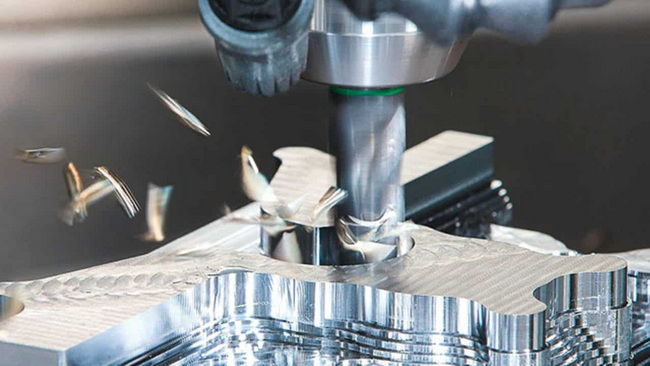
CNC machining is a computer-controlled manufacturing method that removes material from a solid workpiece to form the final geometry defined in a digital design. The machine follows coded instructions (mainly G-code and M-code) to control toolpaths, feed rates, spindle speeds, and tool changes with minimal manual operation.[1]
Key points:
- CNC stands for Computer Numerical Control and refers to automated control of machine tools by a computer.[1]
- It is a subtractive process, meaning material is cut away rather than added.[1]
- Typical CNC equipment includes milling machines, lathes, routers, drilling centers, grinders, EDM, laser and waterjet systems.[1]
The CNC machining process follows a clear digital-to-physical workflow from design through final inspection.[1]
1. CAD Design Creation
Engineers create a 2D drawing or 3D CAD model of the part, including dimensions, tolerances, and material requirements. The design must consider functional requirements, assembly interfaces, and manufacturability from the very beginning.[1]
2. CAM Programming and G-code Generation
CAM software converts the CAD model into toolpaths and generates G-code for motion control and M-code for auxiliary functions like coolant, tool change, and spindle on/off. Cutting parameters such as spindle speed, feed rate, step-over, and depth of cut are chosen to balance accuracy, productivity, and tool life.[1]
3. CNC Machine Setup
The machinist secures the raw material on the machine table or chuck, installs cutting tools, and sets work coordinate systems (WCS). Tool length and diameter offsets are measured, and an initial dry run (air cutting) is often used to confirm there are no collisions.[1]
4. Automated Machining Cycle
After validation, the machine executes the program and performs movements along the defined axes, controlling spindle speed, feeds, coolant flow, and automatic tool changes. The operator monitors cutting conditions, tool wear, chip evacuation, and alarms during machining.[1]
5. Inspection and Finishing
Once machining is complete, parts are inspected using calipers, micrometers, gauges, or CMM equipment to verify critical dimensions and tolerances. If needed, secondary operations such as deburring, polishing, heat treatment, coating, or marking are applied to meet final specifications.[1]
Different CNC machines are optimized for specific part geometries, tolerances, and production scenarios.[1]
CNC milling uses rotating multi-point cutting tools to remove material from a stationary or moving workpiece. The part is usually clamped on a table or fixture, and the tool moves along multiple axes to create complex shapes.[1]
- 3-axis milling handles most flat and prismatic parts with movement along X, Y, and Z.[1]
- 4-axis milling allows rotation of the part, improving efficiency for features around a single axis.[1]
- 5-axis milling can machine multiple faces and complex curved surfaces in a single setup, ideal for intricate components.[1]
Typical CNC milled parts include housings, brackets, jigs, fixtures, mold components, and complex mechanical parts.[1]
CNC turning rotates the workpiece while a stationary cutting tool removes material to form cylindrical or conical shapes. It is especially efficient for parts with rotational symmetry.[1]
- Common parts: shafts, pins, sleeves, bushings, spacers, threaded components, and flanges.[1]
- Advanced turn-mill centers combine turning and milling functions, enabling complex parts with cross holes, flats, and slots in one setup.[1]
CNC drilling and machining centers are used to create precise holes, bores, and internal threads.[1]
- Drilling takes care of straight-through or blind holes in predefined patterns.[1]
- Boring enlarges existing holes and improves roundness and surface finish.[1]
- Tapping generates internal threads for standard or custom fasteners.[1]
CNC routers are designed for high-speed cutting of softer materials such as wood, plastics, foam, composites, and some aluminum grades. They are widely used for panels, displays, signs, and large enclosures.[1]
- CNC grinding achieves extremely fine surface finishes and tight tolerances, often used for hardened steels and critical precision parts.[1]
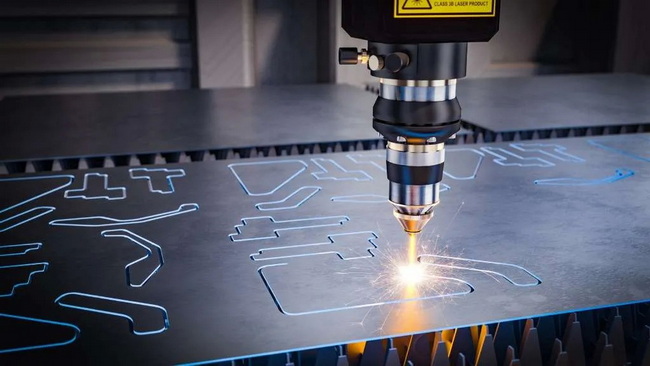
- CNC laser, plasma, and waterjet cutting cut profiles from sheet material without direct tool contact, reducing cutting forces.[1]
- EDM and wire EDM remove metal by electrical discharge, ideal for hard materials and complex internal geometries that are difficult to machine conventionally.[1]
One of the strengths of CNC machining is its compatibility with a wide range of materials, from standard metals to high-performance polymers.[1]
- Aluminum alloys (e.g., 6061, 7075) for lightweight structural parts and housings.[1]
- Carbon steels and alloy steels for mechanical components requiring strength and toughness.[1]
- Stainless steels (e.g., 304, 316) for corrosion-resistant parts in medical, food, and marine applications.[1]
- Copper, brass, and bronze for electrical, decorative, and wear-resistant applications.[1]
- Titanium alloys for aerospace, medical, and high-performance engineering parts.[1]
- ABS and PC for durable housings and functional prototypes.[1]
- POM (acetal) and nylon for wear-resistant, low-friction components.[1]
- PP, PE, and PVC for chemical-resistant and cost-effective parts.[1]
- PEEK and other high-performance plastics for high-temperature or chemically demanding environments.[1]
Material selection depends on desired mechanical properties, weight, thermal behavior, corrosion resistance, aesthetics, and cost targets.[1]
CNC machining offers several important advantages for OEM buyers seeking dependable production and global sourcing.[1]
- High precision and consistency: CNC machines can achieve tight tolerances repeatedly across multiple batches.[1]
- Strong flexibility: Changing to a new part often requires only a program update, tool change, and setup adjustment instead of new tooling.[1]
- Fast turnaround: No hard mold or die is required, which shortens development cycles significantly.[1]
- Broad process capability: CNC machining supports complex geometries, undercuts (with multiple setups), and detailed features like pockets, threads, and slots.[1]
- Wide material compatibility: Metals, plastics, and composites can all be machined on suitable equipment.[1]
Despite its strengths, CNC machining is not always the most economical or practical option.[1]
- Material waste: As a subtractive process, it generates chips and offcuts, which may increase material costs compared with near-net-shape processes.[1]
- Cost at very high volumes: For extremely large production runs, injection molding, die casting, or stamping can achieve lower per-part costs after tooling investment.[1]
- Geometric constraints: Very deep cavities, sharp internal corners, and ultra-thin walls can be difficult, slow, or costly to machine.[1]
- Cycle time for certain shapes: Parts with heavy material removal or many complex 3D surfaces may require long machining times.[1]
CNC machining is used across many industries for prototypes, tooling, and end-use parts.[1]
- Aerospace and defense: structural brackets, housings, turbine components, and tooling.[1]
- Automotive and transportation: engine components, transmission parts, brake components, and fixtures.[1]
- Medical and healthcare: implants, surgical instruments, diagnostic equipment components, and lab fixtures.[1]
- Electronics and communication: heat sinks, device enclosures, connectors, and precision molds for plastic components.[1]
- Industrial machinery: pump bodies, valve components, manifolds, gears, and automation modules.[1]
For overseas OEMs, CNC machining is particularly valuable for custom parts in new product development, engineering changes, and medium-volume production where flexibility and reliability are critical.[1]
When selecting a manufacturing process, engineers often compare CNC machining with 3D printing and injection molding based on cost, speed, and performance.[1]
Aspect | CNC Machining | 3D Printing | Injection Molding |
Process type | Subtractive; cuts material from solid stock | Additive; builds parts layer by layer | Forming; injects molten material into metal molds |
Best volume range | Prototypes to medium batches | Prototypes and low-volume complex parts | High-volume mass production |
Materials | Wide range of metals and plastics | Mainly plastics, resins, and some metals | Primarily plastics, with separate die casting for metals |
Tolerances | Tight, stable tolerances and fine surfaces | Moderate tolerances; surface finish depends on process | Good repeatability once molds are optimized |
Tooling cost | No hard mold; only fixtures and cutting tools | No tooling; mainly machine and material costs | High upfront mold cost, low part price at high volume |
Design changes | Flexible; quick program and setup updates | Very flexible; easy digital changes | Design changes can be expensive and slow due to new tooling |
CNC machining is often chosen when high precision, strong mechanical properties, and production-ready materials are required at low to medium volumes.[1]
Understanding the main cost drivers helps buyers optimize designs and RFQs for better pricing and lead times.[1]
- Material selection: Premium alloys and high-performance plastics are more expensive and may require slower cutting speeds.[1]
- Part complexity: Complex geometries, tight tolerances, and multi-axis operations increase programming effort and machining time.[1]
- Quantity: Larger quantities spread setup and programming costs across more pieces, reducing unit cost.[1]
- Tolerance and surface finish: Very tight tolerances or high cosmetic requirements increase inspection and finishing workload.[1]
- Secondary operations: Heat treatment, anodizing, plating, coating, and laser marking add process steps and cost.[1]
Designing with CNC machining in mind can significantly improve manufacturability and cost efficiency.[1]
- Use standard hole sizes that match common drill diameters to avoid special tools.[1]
- Add reasonable internal radii instead of sharp corners to reduce tool stress and machining time.[1]
- Avoid extremely thin walls and deep pockets, especially in softer metals and plastics, to minimize vibration and deformation.[1]
- Simplify geometry where possible and combine features intelligently to reduce the number of setups.[1]
- Specify tolerances only as tight as needed for function, rather than making all dimensions highly critical.[1]
CNC machining is an excellent option in several common scenarios for global OEM projects.[1]
- You need high-precision metal or plastic parts for functional testing or end use.[1]
- You want to avoid the high upfront tooling cost of injection molding or die casting while validating new designs.[1]
- You require flexible engineering changes during development without replacing molds.[1]
- Lead time is critical, and you need stable quality in small to medium batches.[1]
For overseas brands, wholesalers, and manufacturers, CNC machining supports a broad range of product strategies from prototype to production.[1]
- Rapid prototyping for new product development, functional tests, and assembly verification.[1]
- Bridge production before switching to injection molding, allowing market testing and design refinement.[1]
- Long-term small- and medium-batch supply for high-mix, lower-volume product lines that are not suitable for heavy tooling.[1]
By cooperating with a professional CNC machining partner, buyers can optimize materials, tolerances, and finishing processes to reduce risk and improve overall lifecycle cost.[1]
If your brand or factory is looking for a reliable CNC machining partner for high-precision metal and plastic parts, now is the right moment to evaluate your current projects and send your drawings for review. Share your 2D/3D files, quantities, and material requirements, and a dedicated engineering team can provide manufacturability feedback, cost-effective suggestions, and a detailed quotation to help you move from concept to stable production quickly and confidently.[1]
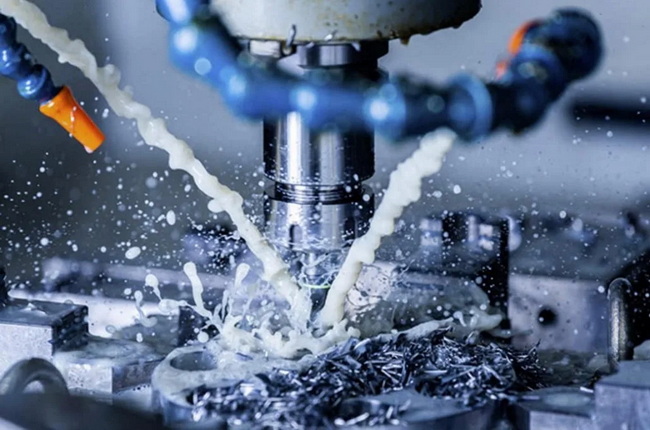
CNC machining is used to produce accurate metal and plastic parts for industries such as aerospace, automotive, medical, electronics, and industrial machinery.[1]
Depending on material, geometry, and machine capability, CNC machining commonly achieves dimensional tolerances in the range of ±0.01 mm to ±0.05 mm for production parts.[1]
CNC machining is ideal for prototypes and small to medium production runs and can be used for mass production when volumes are moderate and precision requirements are high.[1]
Aluminum, steels, stainless steels, copper alloys, and common engineering plastics such as ABS, POM, PC, and PEEK are widely used because they offer good machinability and stable mechanical performance.[1]
Lead time depends on part complexity, quantity, material, and finishing, but many CNC projects can move from approved drawings to finished parts within several working days.[1]
Hot Tags: Computer Numerical Control, Automated Machining System, Digital Manufacturing Basics, Precision Production Tech, Programmed Toolpaths, Industrial Automation Intro, Smart Manufacturing, Machining Fundamentals, Production Accuracy, Modern Manufacturing, China, custom, Auto CNC Machining, cnc machining online, cnc parts online, cnc turning online, 3D Printing Services, manufacturing company, manufacturers, suppliers, made in China, for sale, Customized, quotation, oem


