Views: 232 Author: U-Need Publish Time: 2026-07-02 Origin: Site
Content Menu
● Understanding Deformation in Precision Machining
● The 3 Root Causes of Machined Part Deformation
>> 1. Improper Clamping (Fixturing Errors)
>> 2. Incorrect Cutting Parameters
>> 3. Insufficient Cooling and Lubrication
● Why These Issues Are So Common in Global Supply Chains
● How U-Need Eliminates Deformation Risks
>> Our Process-Control Approach
>>> 1. Engineering Validation Before Production
>>> 2. Precision Fixturing Design
>>> 3. Parameter Optimization Database
● The Role of Residual Stress in Machining Deformation
>> Sources of Residual Stress:
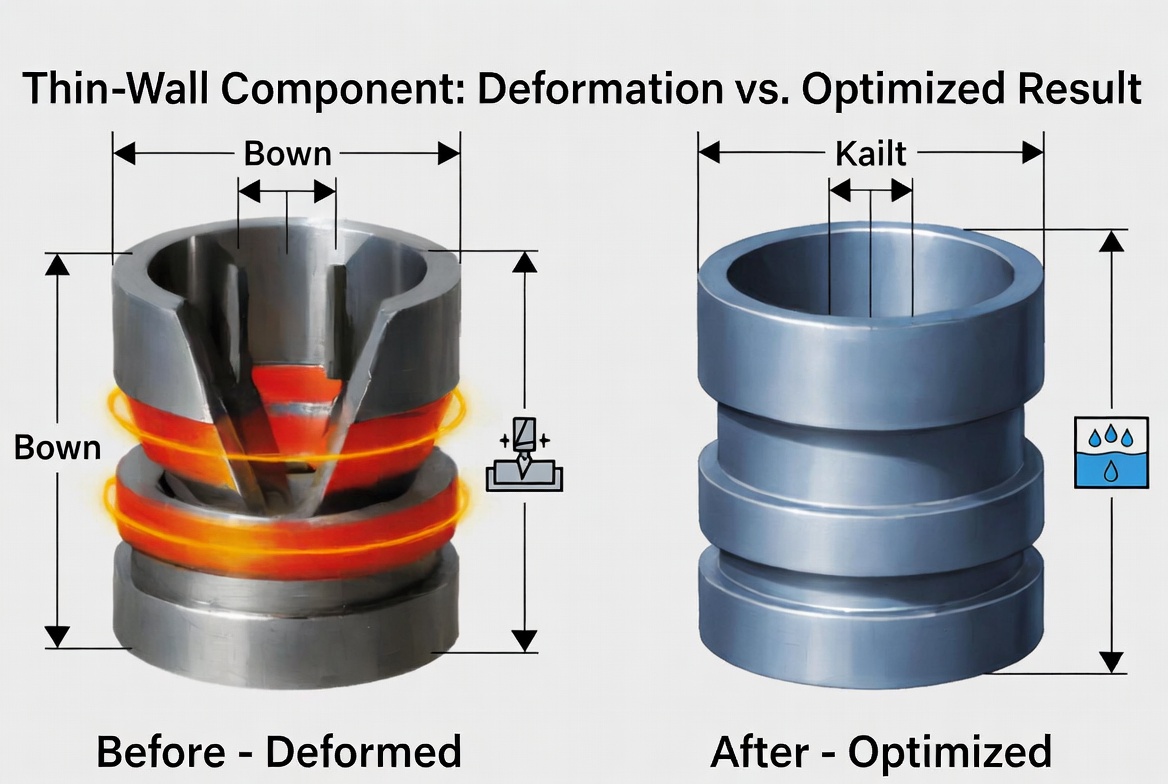
● Industry Case Study: Solving Deformation in Thin-Wall Components
>> Problem:
>> Result:
● Practical Checklist: How Buyers Can Avoid Deformation Issues
● Conclusion: Deformation Is Preventable with the Right Expertise
● Get Reliable Precision Parts Today
● FAQ
>> 1. What is the most common cause of machining deformation?
>> 2. How does heat affect machining accuracy?
>> 3. Can deformation be completely eliminated?
>> 4. Which materials are most prone to deformation?
>> 5. How do professional manufacturers prevent deformation?
In precision machining, even when using the same CAD drawings and identical materials, parts can still come out warped, dimensionally inaccurate, or inconsistent. This is a common frustration for global buyers working with CNC suppliers.
As a precision manufacturing partner in China, U-Need has worked with OEMs, distributors, and industrial brands worldwide. From our experience, over 90% of part deformation issues stem from just three root causes—yet they are often misunderstood or overlooked.
This article breaks down those causes, adds industry-backed insights, and shows how expert manufacturers systematically eliminate deformation risks.
Deformation refers to any unintended dimensional change that occurs during or after machining. This includes:
- Warping or bending
- Dimensional shrinkage or expansion
- Loss of flatness or roundness
- Surface distortion affecting tolerance
In high-precision industries such as automotive, aerospace, medical devices, and industrial equipment, even a deviation of ±0.01mm can lead to functional failure or assembly issues.
Key Insight: Deformation is not random—it is the result of mechanical stress, thermal influence, and process instability.
One of the most underestimated causes is incorrect workpiece clamping.
Two common mistakes:
- Over-clamping: Excessive force compresses the material, introducing internal stress that releases after machining.
- Under-clamping: Insufficient force allows vibration or movement, leading to deformation after cutting.
Example:
A thin aluminum plate clamped too tightly may appear flat during machining but springs back once released.
Best Practices Used by Experts:
- Use custom fixtures designed for part geometry
- Apply uniform clamping force distribution
- Use soft jaws or vacuum fixtures for delicate components
- Simulate clamping stress in CAM software

Cutting parameters directly influence heat generation and material stress.
Critical variables include:
- Cutting speed
- Feed rate
- Depth of cut
When parameters are too aggressive:
- Excessive heat builds up
- Material expands during machining
- Shrinks unevenly after cooling
This leads to thermal deformation.
Technical Note:
Thermal expansion can be estimated using:
ΔL=α⋅L⋅ΔT
Where:
ΔL: change in length
α: thermal expansion coefficient
ΔT: temperature change
Industry Insight:
Aluminum alloys are particularly sensitive due to their high thermal expansion coefficient, making parameter optimization critical.
Optimization Strategies:
- Use adaptive machining strategies
- Apply multi-pass finishing instead of heavy cuts
- Monitor tool wear to maintain consistency
- Use real-time machining data systems
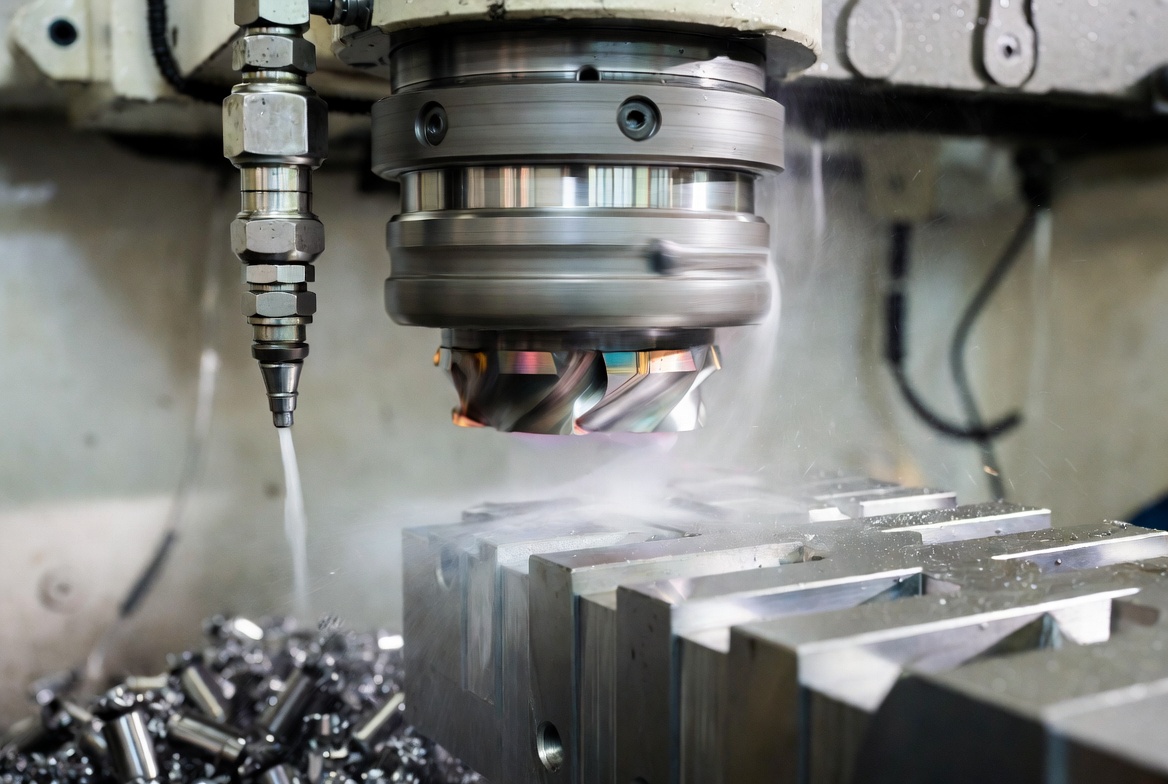
Cooling is not just about temperature—it's about process stability.
Common issues:
- Coolant not directed at the cutting zone
- Inconsistent coolant flow
- Incorrect coolant type
Consequences:
- Localized overheating
- Surface roughness deterioration
- Residual stress buildup
Advanced Cooling Methods:
- High-pressure coolant systems
- Minimum Quantity Lubrication (MQL)
- Cryogenic cooling for high-precision applications
From a B2B sourcing perspective, these problems often arise due to:
- Lack of process standardization across suppliers
- Cost-driven parameter compromises
- Inadequate engineering communication
- Limited in-process quality control
Many buyers focus on price and lead time, but overlook process capability, which directly affects part quality.
As a full-service precision manufacturing partner, U-Need integrates:
- Custom Precision Parts Machining
- Mold Manufacturing (Injection Molds, Stamping Dies, Cold-Forging Dies)
- Sheet Metal Fabrication (Laser Cutting, Bending, Stamping)
- DFM (Design for Manufacturability) analysis
- Stress and deformation simulation
- Material behavior assessment
- Custom fixtures tailored to part geometry
- Finite element analysis (FEA) for clamping force
- Modular fixturing systems for repeatability
- Material-specific cutting libraries
- Historical performance data
- AI-assisted parameter tuning
- Temperature sensors
- Tool wear tracking
- In-process inspection systems
One often overlooked factor is residual stress embedded in raw materials.
- Rolling or extrusion processes
- Heat treatment inconsistencies
- Material storage conditions
Even with perfect machining parameters, internal stress can release during cutting, causing:
- Unexpected bending
- Dimensional instability over time
- Pre-machining stress relief annealing
- Rough machining followed by rest period
- Symmetrical material removal strategies
Expert Tip: High-precision manufacturers often use a "rough → rest → finish" workflow to stabilize parts.
A European industrial client experienced consistent deformation in thin stainless steel housings.
- Warping after CNC milling
- Tolerance failure beyond ±0.05mm
- Over-clamping
- High-speed cutting generating excess heat
- Switched to vacuum fixturing
- Reduced cutting speed by 20%
- Introduced multi-stage finishing passes
- Added high-pressure coolant targeting
- Deformation reduced by 85%
- First-pass yield improved significantly
- Production consistency stabilized
When selecting a manufacturing partner, ask:
- Do they provide DFM analysis before production?
- Can they explain their fixturing strategy?
- Do they use real-time monitoring systems?
- How do they control thermal effects?
- Do they have experience with your material type?
Red Flag: Suppliers who cannot clearly explain their process controls often rely on trial-and-error.
Part deformation is not an unavoidable defect—it is a predictable and controllable outcome of machining variables.
The difference lies in:
- Process knowledge
- Engineering discipline
- Manufacturing experience
U-Need combines these elements to deliver high-precision, repeatable, and reliable components for global clients.
If you are facing deformation issues, inconsistent quality, or unreliable suppliers, it is time to work with a partner that understands the full manufacturing process.
Contact U-Need today to discuss your project and receive a professional engineering evaluation.
Improper clamping is the most common cause, especially when force distribution is uneven or excessive.
Heat causes materials to expand during cutting and contract after cooling, leading to dimensional inaccuracies.
While not always 100% avoidable, deformation can be minimized significantly with proper process control and engineering.
Aluminum and thin-wall stainless steel parts are particularly sensitive due to thermal expansion and structural flexibility.
They use a combination of optimized fixturing, controlled cutting parameters, effective cooling, and residual stress management.
1. U-Need Internal Engineering Insights (Based on provided source content) Internal Resource
2. ScienceDirect – Machining Deformation https://www.sciencedirect.com/topics/engineering/machining-deformation
3. Machining Doctor – Cutting Heat Knowledge Center https://www.machiningdoctor.com/knowledge-center/cutting-heat/
4. Engineering ToolBox – Linear Thermal Expansion Coefficients of Materials https://www.engineeringtoolbox.com/linear-expansion-coefficients-d_95.html
5. CTE Magazine – Reducing Machining Distortion https://www.ctemag.com/articles/reducing-machining-distortion
6. NIST – Residual Stress and Its Role in Manufacturing https://www.nist.gov/publications/residual-stress-and-its-role-manufacturing


