Views: 222 Author: Rebecca Publish Time: 2026-01-08 Origin: Site
Content Menu
● What Is EDM And Why It Matters
● Key Mechanisms: Spark Gap, Dielectric And HAZ
● Copper Electrodes: Pros, Cons And Finish Limits
● Graphite Electrodes: High Productivity With Finish Constraints
● How Electrode Size Influences Surface Finish
● Early Powder-Based Additives And Their Limitations
● DDM And HQSF: Next-Generation Additive Technology
● Why DDM Unlocks Ultra-Fine Graphite Finishes
● Dielectric Oil And Additive Suspension Engineering
● Impact On Heat-Affected Zone And Surface Integrity
● Industrial Applications: From Plastic Molds To Die-Casting
● Practical Performance Numbers: Conventional EDM vs DDM
● Implementation Considerations For OEMs And Suppliers
● Where To Use Additive EDM In Your Supply Chain
● Call To Action: Collaborate With A High-Precision OEM Partner
● FAQ: Additive Technology In EDM
>> Q1. What is the main advantage of additive-assisted EDM over conventional EDM?
>> Q2. Can graphite electrodes match copper finishes with modern additive systems?
>> Q3. Does using EDM additives always require two dielectric systems?
>> Q4. How does additive-assisted EDM affect mold and die life?
>> Q5. What should buyers check when choosing an EDM supplier using additives?
Electrical discharge machining (EDM) with additive technology and Diffused Discharge Machining (DDM) is transforming how molds, dies and precision components are finished by delivering ultra-fine surfaces, smaller heat-affected zones and shorter cycle times compared with conventional EDM. For global OEMs and brands that require stable, repeatable and cost-effective high-precision machining, understanding these advances is critical for process selection and supplier evaluation.

Electrical discharge machining is a non-contact machining method that removes material by controlled electrical discharges between an electrode and a conductive workpiece immersed in dielectric fluid. The spark energy melts or vaporizes tiny volumes of metal, while the dielectric flushes away molten material and debris from the spark gap.
- EDM is widely used in aerospace, medical, electronics, die-casting and plastic injection molding where complex shapes and hard materials are common.
- Because EDM is independent of material hardness, it is ideal for hardened tool steels and high-alloy materials that are difficult to mill or turn.
In ram EDM (die sinking EDM), a three-dimensional electrode progressively erodes a cavity into the workpiece that mirrors the electrode geometry, making it especially important for mold and die production.
For stable EDM performance, several physical mechanisms must be controlled precisely.
- The spark gap is a small space between electrode and workpiece filled with circulating dielectric oil, and its size directly affects surface finish and stability.
- During each discharge, the dielectric becomes ionized and extremely high temperatures melt or vaporize the workpiece surface locally.
When current stops, a collapsing gas bubble forces molten metal away from the surface, and most is flushed out while a small amount re-solidifies as a recast layer. Beneath this layer, the heat-affected zone (HAZ) forms where material is heated near the melting point then quenched rapidly by the dielectric, often producing a harder, more brittle white layer that is susceptible to micro-cracking.
Copper electrodes can achieve very fine finishes in conventional EDM, especially on small cavities.
- Copper has no granular structure, which allows smooth mirror-type finishes on small areas of about two square inches or less.
- As cavity size increases, thermal expansion and difficulty in controlling the electrode inside the cavity cause surface finish quality to deteriorate.
Copper also has important drawbacks that reduce its practicality in many EDM applications.
- Low melting temperature and thermal expansion limit roughing amperage to below 100 amps regardless of electrode size, making roughing inefficient.
- Copper promotes oxidation of dielectric oil, gradually degrading dielectric properties and slowing EDM cycle times.
- Copper is toxic to living tissue and cannot be expelled by the human body, which raises health and environmental concerns.
- Electrodes often require deburring before EDM, adding time and cost to the process.
For high-volume or large-cavity mold work, these limitations motivate the shift toward graphite electrodes and newer additive-based finishing methods.
Graphite has become a dominant electrode material in many markets because of its machinability, stability and current-carrying capability.
- Graphite offers a high vapor point, supports high-amperage roughing up to about 600 amps and is easy to machine into complex burr-free shapes.
- Its thermal stability means it does not grow significantly under heat, improving dimensional accuracy in deep or long burns.
However, graphite's grain structure introduces an inherent limit on achievable surface finish with conventional EDM.
- Typical conventional EDM with graphite delivers finishes between about 5–10 micrometers Rmax, representing the height between microscopic peaks and valleys.
- Even with fine grades, achieving better than about 4 micrometers Rmax becomes uneconomical because burn times rise sharply and ultra-fine graphite grades are costly.
The core issue is the interaction between grain size and the minimum spark gap required for a stable discharge. When graphite wear particles have sizes comparable to or larger than the target gap, they cause short circuits and unstable burning, which limits practical finish levels.
Regardless of electrode material, larger electrode areas make ultra-fine finishing more difficult.
- As electrode size grows, particles tend to concentrate in localized zones within the gap, and chip evacuation becomes more challenging.
- Localized chip clusters can cause sparks to fire through these concentrations, focusing energy into tiny spots and creating hard spots and pitting on the workpiece surface.
Increased electrode mass also raises electrical resistance and complicates maintaining a stable gap. This combination of effects makes it harder to achieve uniform finishes on large cavities with conventional EDM alone.
Powder-based dielectric additives were introduced primarily to improve EDM efficiency rather than to reach today's ultra-fine finish levels.
- Additives such as chrome and silicon can enhance fine finishing but often have high electrical resistance and relatively large particle sizes, which reduce machining speed.
- Their higher specific gravity causes them to sink toward the bottom of the cavity, leading to inconsistent additive distribution and poor sidewall finishes in deep features.
These early additive systems introduce several practical and environmental challenges.
- Many powders are expensive, difficult to dispose of and may be classified as toxic heavy metals.
- To prevent particles from clumping, surface agents or dispersants are required, which themselves can be toxic.
- Some additives only mask the surface by plating or pooling material on the part, while subsurface integrity issues remain.
Users often had to maintain two separate dielectric systems, one for roughing and another for finishing with additives, which complicates automation and unattended operation.
Diffused Discharge Machining represents a newer class of EDM finishing that uses conductive powders to deliberately split each spark into multiple smaller sparks inside the gap.
- DDM can increase pulse frequency at low output levels by several times, producing more and smaller discharges that improve finish uniformity.
- The process also increases discharge frequency over large areas where chip build-up has traditionally reduced consistency.
A prominent implementation uses a patented conductive powder mixed into the dielectric fluid to stabilize and guide the discharge.
- When the powder is evenly distributed in the spark gap and gap control is maintained, it forms a more conductive channel that allows very small sparks to fire evenly and consistently.
- DDM reduces secondary discharging and can provide machining performance improvements on the order of 20–30 percent while simultaneously improving surface finish and reducing HAZ depth.
These characteristics enable shorter cycle times, reduced polishing and improved surface integrity on tooling and precision components.
One of the most important advantages of DDM is that it allows graphite electrodes to reach finishes previously associated mainly with metallic electrodes.
- With high-quality graphite and DDM, ultra-fine finishes in the range of about 10–12 microinch are achievable without secondary polishing.
- Sidewall finishes benefit significantly because a properly engineered additive is designed not to sink or settle, maintaining even distribution throughout the cavity.
This performance relies on a complete system solution rather than just the powder alone.
- Machine construction, orbiting software and fluid management must work together to maintain stable suspension, control powder consumption and keep the spark gap consistent.
- Dielectric management uses oils with carefully selected viscosity to support both particle suspension and strong dielectric performance, while chip separation systems remove debris without stripping out the additive.
For OEMs and tooling buyers, such systems offer higher finish quality with fewer process steps and a clear cost and lead-time advantage.
The dielectric system is central to making additive-based EDM and DDM work reliably over time.
- Traditional EDM favors low-viscosity oil for improved flushing and faster chip settling.
- With additives, the oil must provide enough viscosity to keep particles suspended while maintaining the dielectric properties necessary for controlled discharges.
Additive properties are selected to improve process stability and consistency.
- Particles with low specific gravity remain suspended more easily, reducing settling and enabling consistent finishes even in deep cavities.
- When the powder does not tend to bind to itself, it stays dispersed with modest orbital motion, which reduces the need for additional surfactants and avoids clumping.
This engineering enables both roughing and finishing in a single dielectric system and removes the need for time-consuming changeovers between separate fluids.
While visible surface finish is important, subsurface integrity and HAZ depth are crucial for die and mold life.
- The standard EDM process leaves a recast layer plus a white layer beneath it that is martensitic, carbon-enriched and prone to micro-cracks.
- This hardened and brittle region can initiate cracks that propagate under cyclic loading or thermal shock in production environments.
Testing shows that DDM can produce a HAZ significantly thinner than that of conventional EDM and thinner than the HAZ produced by some older additive-based processes.
- A thinner hardened layer reduces the amount of polishing required to remove it, sometimes cutting manual polishing time dramatically.
- Reduced polishing preserves geometry and detail in small or complex features, which directly improves functional life and performance of molds and dies.
For high-precision components, this combination of surface finish and subsurface integrity reduces the risk of premature failure and improves long-term dimensional stability.
DDM-enhanced EDM has strong traction in industries where surface finish and precision drive performance and productivity.
- Plastic injection molding benefits from improved finishes on small to medium cavities and ribs that are difficult to hand-polish.
- Reduced hand finishing leads to better accuracy, lower labor cost and faster tool delivery.
Larger industries such as die-casting and automotive plastic injection molding also benefit from these improvements.
- On large tools, a reduced HAZ helps extend die life because surface cracks are less likely to propagate under exposure to hot molten metal and repeated thermal cycling.
- Conventional EDM on large cavities is limited to relatively coarse finishes, whereas DDM can significantly improve roughness values on similarly sized cavities.
These gains are especially important in global supply chains where production uptime, tooling longevity and part quality directly affect total cost.
The table below summarizes typical performance indicators comparing conventional EDM and DDM-based processes using the data presented earlier.
| Metric / Aspect | Conventional EDM | DDM-Type System |
|---|---|---|
| Typical graphite finish range | About 5–10 micrometers Rmax, roughly 35–70 microinch | Ultra-fine finishes down to around 10–12 microinch with graphite |
| Large cavity 12 in × 12 in | Economical limit around 15 micrometers Rmax | Improved to about 8 micrometers Rmax |
| Large cavity 20 in × 20 in | Limit around 20 micrometers Rmax | Improved to about 10 micrometers Rmax |
| HAZ depth | Baseline reference | Up to several times smaller than standard EDM and some older additive systems |
| Machining speed | Standard cycle times | Often about 20–30 percent faster in many hardened tool steels |
| Polishing requirement | Significant for high finishes | Polishing reduced and sometimes cut dramatically |
These improvements translate into lower total processing cost, reduced lead time and better tool performance for end users.
To use additive technology in EDM effectively, both buyers and manufacturers should address several practical points.
1. Machine capability
- Confirm that EDM equipment supports advanced discharge control, specialized orbiting and suitable dielectric systems compatible with additives.
- Ensure filtration and chip separation systems are designed to retain conductive powders while removing debris.
2. Process integration
- Use a single, well-designed dielectric system for both roughing and finishing to enable automation and unattended operation.
- Define clear parameter windows for conventional EDM and for additive-assisted finishing to maintain process stability across different tool steels and geometries.
3. Quality control
- Combine surface roughness measurements with metallographic inspection of HAZ depth and white layer characteristics.
- Track tool life and polishing time before and after adopting additive-assisted EDM to quantify return on investment.
When sourcing from partners, brands should verify that suppliers have both technical capability and process discipline to deliver consistent, repeatable results on critical parts.
For brands, wholesalers and manufacturers that outsource tooling and precision parts, additive-enhanced EDM is particularly valuable in several application scenarios.
- Small to medium plastic injection molds with intricate cavities, ribs and texturing that require excellent mold release.
- Die-casting molds for materials such as aluminum, zinc or magnesium where surface cracks directly affect casting quality and die life.
- Precision components in fields like aerospace, electronics and medical devices where surface integrity and geometry must be controlled tightly.
In these contexts, choosing a machining partner able to integrate advanced EDM technology with high-precision CNC machining, plastic molding, silicone molding and metal stamping provides a robust one-stop solution from prototype to mass production.
If your next project demands ultra-fine EDM finishes, long mold and die life and flexible OEM manufacturing, it is essential to cooperate with a supplier that combines advanced EDM capabilities with comprehensive machining and molding services. By working with a high-precision manufacturer that understands additive-assisted EDM, graphite electrode strategy and dielectric management, you can shorten development cycles, stabilize quality and reduce total cost across your product lifecycle. To discuss drawings, technical requirements or upcoming projects, contact a specialized OEM partner that offers integrated services in precision machining parts, plastic product manufacturing, silicone product manufacturing and metal stamping so that your products reach the market faster with stable and reliable quality.
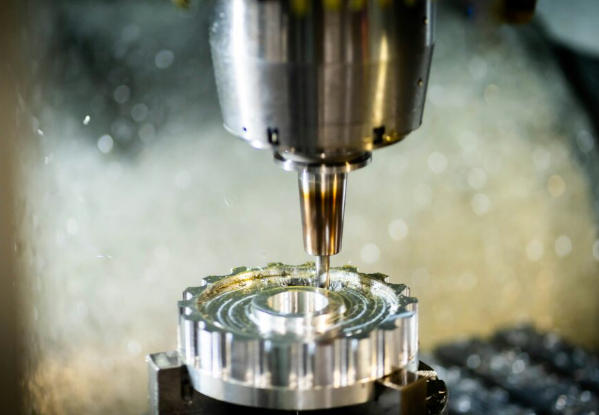
Additive-assisted EDM uses conductive powders to stabilize and diffuse the discharge, improving surface finish, reducing HAZ depth and increasing machining speed in many tool steels.
With high-quality graphite and carefully controlled additive-based processes, graphite electrodes can achieve ultra-fine finishes that historically were associated mainly with metallic electrodes, often without extra polishing.
Earlier powder additives often needed separate roughing and finishing dielectrics, but newer approaches allow roughing and finishing to run in a single optimized dielectric system.
By producing a thinner white layer and HAZ with fewer micro-cracks, additive-assisted EDM reduces the likelihood of surface crack propagation in service and can extend die life, especially in high-temperature applications.
Key checks include machine capability for advanced EDM processes, dielectric and filtration design, documented surface finish and HAZ data and proven reductions in polishing time and tool lead time on reference projects.


