Views: 222 Author: Rebecca Publish Time: 2026-01-14 Origin: Site
Content Menu
● What Is CNC Machining for Rapid Prototyping?
● From CAD Design to Finished CNC Prototype
>> Design-for-Manufacturing Review
>> CAM Programming and Toolpath Generation
>> CNC Setup and High-Precision Machining
>> Inspection, Testing, and Iterative Refinement
● Why CNC Machining Is Ideal for Rapid Prototyping
>> Key Benefits of CNC Rapid Prototyping
>> CNC Machining vs 3D Printing for Prototyping
>>> CNC Machining vs 3D Printing for Rapid Prototypes
● Materials Commonly Used in CNC Rapid Prototyping
>> Metal Materials for CNC Prototypes
>> Plastic and Polymer Materials
● Advanced Trends in CNC Rapid Prototyping
>> Smart Manufacturing and Digitalization
● How to Choose a CNC Rapid Prototyping Partner
>> Capability and Technical Strength
>> Service Scope and Lead Time
● Practical Checklist for Successful CNC Prototyping
● Take Action: Turn Your CAD Designs into High-Precision Prototypes
● Frequently Asked Questions (FAQ)
>> 1. What is CNC machining for rapid prototyping best suited for?
>> 2. How fast can CNC rapid prototyping deliver parts?
>> 3. Is CNC machining more expensive than 3D printing for prototypes?
>> 4. Which materials are most common for CNC rapid prototyping?
>> 5. Can CNC machined prototypes be used in low-volume production?
In modern product development, CNC machining for rapid prototyping bridges the gap between digital CAD models and physical parts that can actually be assembled, tested, and validated. Compared with other prototyping methods, it delivers tight tolerances, production-grade materials, and repeatable quality, often in just a few days.

CNC rapid prototyping uses computer-controlled milling, turning, and related processes to cut a part directly from a solid block of metal or plastic based on a 3D CAD model. Once the machining program is generated, the machine can repeat the same prototype, or its design iterations, quickly and consistently with minimal manual intervention.
Key characteristics:
- High dimensional accuracy suitable for functional and assembly testing
- Wide material options, including metals and engineering plastics
- Fast turnaround when paired with optimized toolpaths and high-speed CNC equipment
The process starts with a detailed 3D CAD model designed in software such as SolidWorks, AutoCAD, or Fusion 360. The model should accurately capture all critical features, tolerances, and mating interfaces to ensure the prototype matches the intended function.
Best practices:
- Define critical dimensions and tolerances only where necessary to avoid over-constraint and unnecessary cost
- Add process-friendly details such as chamfers, fillets, and fixturing features (for example positioning holes and clamping flats)
- Design with realistic minimum wall thicknesses and adequate tool access for milling and turning
Before any metal or plastic is cut, a design-for-manufacturing (DFM) review aligns CAD intent with real machining constraints. A professional CNC rapid prototyping supplier will flag risks such as impossible undercuts, overly sharp internal corners, or impractical tolerances.
Useful DFM checks:
- Tool access to deep pockets and internal features
- Internal corner radii that match realistic end mill diameters
- Wall thickness, ribs, and bosses checked for vibration or warpage during machining
Once the model is confirmed manufacturable, CAM software converts the CAD geometry into CNC programs. The programmer defines roughing, semi-finishing, and finishing strategies, along with tools, cutting parameters, and toolpath order.
Key CAM tasks:
- Selecting suitable cutting tools for the specific material and geometry
- Generating efficient toolpaths that balance cycle time, surface finish, and tool life
- Running simulation and collision detection to prevent crashes and scrap
The CNC operator mounts the raw material, installs tooling, and sets work offsets according to the CAM program. For complex prototypes, multi-axis machining centers minimize setups and improve accuracy across multiple faces.
Typical equipment and capabilities:
- 3-axis CNC milling for most prismatic parts, pockets, and slots
- CNC turning for shafts, bushings, and rotational components
- 5-axis CNC machining for intricate geometries, undercuts, and critical alignment across multiple surfaces
With optimized parameters and rigid fixturing, CNC machining can reach very fine surface finishes suitable for demanding industries such as medical and aerospace.
After machining, prototypes are inspected against the 3D model and drawings using various measuring tools. Any deviations guide either minor rework or the next design iteration, closing the loop between engineering and manufacturing.
Common inspection steps:
- Dimensional checks on critical features, hole positions, and interfaces
- Surface finish and flatness verification for sealing or sliding surfaces
- Assembly tests with mating parts to validate real-world fit and function
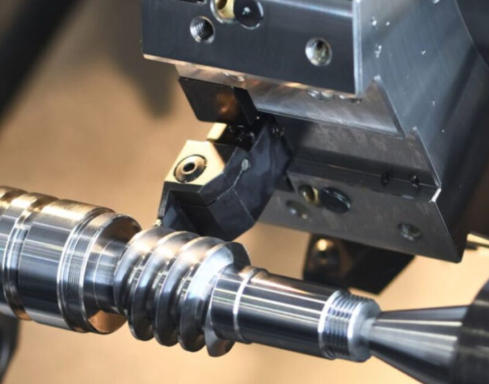
Compared with other prototyping methods, CNC machining aligns especially well with the needs of modern hardware development.
- Production-grade materials
CNC machining works directly with the same alloys and engineering plastics used in mass production, so prototypes behave like final products in mechanical tests.
- High dimensional accuracy
Rigid machines, accurate fixturing, and optimized toolpaths enable tight tolerances needed for sealing, alignment, and high-speed movement.
- Fast lead times for complex parts
Once CAD and CAM are ready, high-speed CNC machining can produce complex prototypes in days, supporting compressed development schedules.
- Excellent repeatability
When design changes are required, engineers can update the CAD and regenerate toolpaths, enabling quick iterations without new tooling.
Both CNC machining and 3D printing have a place in rapid prototyping, but they excel in different scenarios.
| Aspect | CNC Machining for Rapid Prototyping | 3D Printing for Prototyping |
|---|---|---|
| Material properties | Uses real metals and engineering plastics with full strength | Often uses polymers or sintered materials with lower strength |
| Dimensional accuracy | Very high accuracy and surface finish for functional parts | Good for concept models but tolerances may be looser |
| Geometry freedom | Limited by tool access and setups | Excellent for complex internal geometries and lattices |
| Lead time | Very fast once CAM is complete, ideal for functional parts | Fast for small and intricate shapes with minimal setup |
| Best use cases | Functional testing, fit checks, pre-production samples | Appearance models, early concept validation |
Material choice affects machinability, strength, weight, and cost of prototypes. CNC machining supports a broad palette of metals and plastics suitable for different industries and validation goals.
- Aluminum alloys (such as 6061, 7075)
Popular for lightweight structural parts and housings due to good machinability, high strength-to-weight ratio, and attractive finishes.
- Stainless steels
Used where corrosion resistance, hygiene, or high-temperature capability is critical, such as medical, food processing, and outdoor applications.
- Tool steels and alloy steels
Selected for high-load prototypes or components requiring wear resistance in demanding environments.
- ABS, PC, and PC-ABS
Common for enclosures, covers, and consumer product housings, balancing toughness and ease of machining.
- Nylon, POM (Delrin), and PEEK
Used for low-friction, high-stability parts such as gears, bushings, and high-performance components.
- Acrylic and other clear plastics
Suitable for transparent covers, light guides, and visual prototypes that must show internal structures.
Modern CNC rapid prototyping increasingly leverages high-speed machining and smart manufacturing technologies to boost efficiency and reliability.
High-speed machining uses elevated spindle speeds and optimized toolpaths to remove material quickly while maintaining accuracy. This is especially valuable for aluminum and certain plastics where rapid material removal does not compromise surface finish.
Advantages:
- Shorter cycle times and faster delivery for urgent builds
- Lower cutting forces, reducing part deformation on thin-walled features
- Improved surface finish, reducing or eliminating secondary polishing
Smart manufacturing tools such as AI-assisted toolpath optimization and digital twin simulations are transforming how prototypes are produced.
Key innovations:
- AI-powered optimization that adjusts feed and speed to reduce cycle time and extend tool life
- Digital twin simulations that model the machining process virtually to identify issues before cutting
- Integrated measurement and feedback that close the loop between CNC machines and metrology systems
For OEMs and R&D teams, these innovations translate into fewer iterations, less scrap, and more predictable lead times.
Selecting the right CNC rapid prototyping services provider is as important as selecting the right process or material.
A capable partner should provide:
- Modern 3-axis, 4-axis, and 5-axis machining centers
- Experience with both metal and plastic CNC prototypes across multiple industries
- Robust quality control, including in-process checks and final inspection reports when required
Evaluate whether the supplier can support your full development cycle, from first prototype to pre-production runs.
You should expect:
- Transparent quoting with clear pricing for different quantities and materials
- Rapid response, often with DFM feedback and quotations within a short time frame
- Value-added services such as anodizing, painting, polishing, or simple assembly
To maximize the value of CNC prototyping machining, follow these steps:
1. Clarify your prototype objectives
Define whether the prototype is for fit-check, mechanical testing, appearance review, or pilot production so that tolerances and finishes match real needs.
2. Prepare clean and complete CAD files
Ensure the 3D model is fully constrained, with all critical features defined and no missing or overlapping surfaces.
3. Provide 2D drawings for critical features
Use 2D drawings to clarify tolerances, threads, surface finishes, and special notes that may not be obvious from the 3D model.
4. Discuss materials, quantities, and deadlines early
Share your preferred material, expected order volumes, and desired delivery dates so the supplier can suggest the most cost-effective approach.
5. Request DFM feedback before machining
Invite your CNC supplier to raise manufacturability issues and alternative suggestions to prevent delays and rework.
6. Plan for multiple iterations
Reserve time and budget for several design rounds, especially for complex assemblies or new mechanisms.
When development schedules are tight and product quality is non-negotiable, CNC machining for rapid prototyping gives your team a reliable path from CAD to functional parts. By combining strong DFM practices, the right materials, and an experienced CNC partner, you can reduce risk, shorten lead times, and accelerate your journey from prototype to market-ready product.
If you are a brand owner, wholesaler, or manufacturer looking for OEM CNC prototypes and small-batch production, U-NEED can support your projects with multi-axis CNC machining, plastic and silicone parts manufacturing, and metal stamping for complete assemblies. Share your CAD files and project requirements with U-NEED today to receive a tailored DFM review and CNC rapid prototyping quote, and start turning your concepts into high-precision finished products now.
It is ideal for functional prototypes, fit and assembly trials, and pre-production samples where you need production-grade materials and tight tolerances. It is especially useful when prototypes must closely match final mass-produced parts.
With prepared CAD files and an efficient supplier, simple CNC prototypes can often be quoted quickly and delivered in a few days, depending on complexity and finishing requirements. More complex, multi-axis parts may require slightly longer but still fit within accelerated development cycles.
For basic concept models, 3D printing can be cheaper. However, for functional parts, higher quantities, or prototypes that must mirror final production performance, CNC machining often provides better overall value because it uses real production materials and offers superior accuracy.
Aluminum alloys, stainless steels, and engineering plastics such as ABS, PC, nylon, and POM are widely used. These materials offer a good balance of machinability, strength, stability, and cost for prototypes in many industries.
Yes. Many companies extend CNC prototypes into bridge production or low-volume runs to support market testing, pilot builds, or early customer shipments. This approach reduces risk and buys time before investing in expensive mass-production tooling.
1. https://jlccnc.com/blog/cnc-machining-for-rapid-prototyping-from-cad-design-to-high-precision-finished-products
2. https://www.fictiv.com/articles/cnc-machining-for-prototyping
3. https://www.pacific-research.com/cnc-for-rapid-prototyping-can-get-your-product-to-market-faster-prl/
4. https://global.processingmfg.com/allproduct/cnc-rapid-prototyping/
5. https://ecoreprap.com/blog/cnc-machining-for-rapid-prototyping/


