Views: 222 Author: Rebecca Publish Time: 2026-01-25 Origin: Site
Content Menu
● What Makes a Good Custom Enclosure
● CNC Machining for Enclosures
>> When CNC Machined Enclosures Excel
>> Limitations of CNC Machined Enclosures
>> Best Fit CNC Enclosure Use Cases
>> Where Sheet Metal Enclosures Are Strong
>> Limitations of Sheet Metal Enclosures
>> Best Fit Sheet Metal Enclosure Use Cases
● CNC Machining vs Sheet Metal Enclosures: Side by Side Comparison
● Hybrid Enclosure Strategy: Combining CNC and Sheet Metal
● Design Guidelines for CNC Enclosures
● Design Guidelines for Sheet Metal Enclosures
● Industry Applications: Where Each Process Wins
● How to Decide Between CNC and Sheet Metal for Your Next Enclosure
● Lead Time, Cost, and Supply Chain Considerations
● Why Work with a One Stop CNC and Sheet Metal Partner
● Take the Next Step for Your Custom Enclosure Project
● FAQ
>> Q1. Which is better for highly complex enclosure designs, CNC or sheet metal
>> Q2. Can I combine CNC and sheet metal in a single enclosure product
>> Q3. How should I choose materials for prototype versus mass production enclosures
>> Q4. What is the typical lead time for CNC and sheet metal enclosures
>> Q5. When should I move from CNC prototypes to sheet metal production
Designing custom enclosures for electronics and industrial equipment is no longer just about making a box; it is about precision, heat management, certification readiness, and fast iteration from prototype to mass production. In this guide, you will learn when to choose CNC machined enclosures, when sheet metal enclosures make more sense, and how a hybrid strategy can lower cost while maintaining performance.

A high performing enclosure must do more than protect components from dust and impact. Engineers typically evaluate enclosure designs around five core dimensions:
- Precision and tolerances for PCBs, connectors, seals, and moving parts.
- Material and thermal performance including heat dissipation, rigidity, and corrosion resistance.
- Production cost and scalability from prototype to medium and large batches.
- Aesthetics and brand feel such as surface finish, color, and perceived quality.
- Lead time and design flexibility to support fast iteration before and after product launch.
Both CNC machining and sheet metal fabrication can satisfy these criteria, but they do so differently and are not interchangeable in every project.
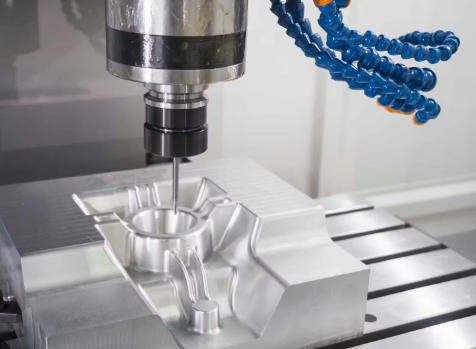
CNC machining is ideal for high precision, complex 3D enclosures where every interface, hole, and surface must closely match the 3D model. Typical tolerance capability is around ±0.01 mm, which makes CNC suitable for tight fit connectors, sealing grooves, and high precision mounting bosses.
Key strengths include:
- Tight tolerances and repeatability across low to medium volume batches.
- Complex 3D forms such as internal cavities, fillets, and curved surfaces without extra forming tools.
- Flexible material options, including aluminum, stainless steel, copper, titanium, and engineering plastics such as ABS, nylon, and polycarbonate.
- Premium finishes like anodizing, polishing, bead blasting, or functional coatings on machined surfaces.
Even though CNC machining is versatile, it is not always the most cost efficient choice.
Typical constraints are:
- Higher unit cost for large, thin walled, or very large housing geometries due to long machining times and material removal.
- Need for multiple setups or special fixtures for complex hollow structures, which can increase programming and tooling cost.
- Less economical for very high volumes of simple box style enclosures where sheet metal fabrication is more efficient.
- Precision sensor housings and control modules in automotive, robotics, and aerospace.
- Medical device shells requiring biocompatible materials and tight dimensional control.
- Small batch prototype electronic enclosures where the design may change frequently and dimensional accuracy is critical.
When functional performance, high precision, and complex geometry matter more than the lowest unit price, CNC machining is usually the safer choice.
Sheet metal fabrication is the most efficient route for flat panels, bent boxes, cabinets, and standardized housings. These parts are typically produced from cold rolled steel, aluminum sheet, or stainless steel in relatively thin gauges.
Key advantages include:
- High production efficiency for medium to large batches using bending, punching, and laser cutting.
- Good structural rigidity for larger boxes and cabinets once bends, flanges, and ribs are added.
- Lower cost per unit for simple, repeated enclosure geometries compared with CNC machining.
Sheet metal has clear limits that affect what you can build.
Common drawbacks are:
- Difficult to achieve complex 3D curves or deep internal cavities in a single piece.
- Precision on mating surfaces is limited by bending and tolerance stack up, so secondary machining may be needed for critical interfaces.
- Minimum wall thickness and bend radius constraints can restrict designs for very compact or miniaturized enclosures.
- Electrical cabinets, server racks, and industrial control panels.
- Protective covers, brackets, and chassis for machinery and factory equipment.
- Cost optimized electronic housings where geometry is mostly flat and bent rather than fully sculpted.
For repeated orders where geometry is stable and the design is mainly flat panels and bends, sheet metal enclosures provide an economical, scalable solution.
The table below summarizes how CNC machining and sheet metal fabrication perform across key decision factors.
| Factor | CNC machining enclosure | Sheet metal enclosure |
|---|---|---|
| Precision and tolerance | Very high, typically around ±0.01 mm, suitable for tight interfaces and sealing features. | Medium; bending and forming can cause minor distortion, especially on thin sheets. |
| Geometry complexity | Excellent for complex 3D shapes, internal pockets, and curved surfaces. | Best for flat panels, bends, simple boxes, and flanged structures. |
| Material options | Wide range of metals such as aluminum, stainless steel, titanium, and plastics like ABS, nylon, PC. | Thin gauge steel, stainless, and aluminum sheets with more limited thickness options. |
| Single unit cost | Higher due to longer machine time and greater material removal. | Lower, especially for standard box designs and repeated parts. |
| Cost behavior with volume | Cost per part decreases with volume but often remains higher for very large runs. | Stable and very competitive for medium to large batches. |
| Material waste | More waste in the form of chips from subtractive machining. | Minimal waste when parts are efficiently nested in sheet stock. |
| Surface finish | Smooth machined surfaces, precise engravings, and high end cosmetic finishes. | Often requires powder coating, painting, or laser engraving for aesthetics and protection. |
| Lead time | About 3 to 5 days for enclosures with moderate complexity and finishing. | About 2 to 4 days for straightforward bent designs, longer for complex multi bend parts. |
| Ideal volume range | Prototypes, low to medium volume, high value assemblies. | Medium to high volume, cost sensitive enclosure programs. |
Many of the most cost effective enclosure systems today are neither purely machined nor purely sheet metal. A hybrid strategy takes advantage of each process:
- Use sheet metal for large outer panels, doors, and non critical structural surfaces.
- Use CNC machining for precision mounting plates, interface panels, heatsink components, or complex joints.
This hybrid approach delivers several benefits:
- Fast prototyping and stable mass production by reusing the same interface geometry while updating only sheet metal covers when cosmetic changes are needed.
- Lower total system cost while preserving high precision where it matters, such as connector plates or sealing surfaces.
A typical example is an industrial controller in which the main cabinet is formed from sheet metal, while the front panel holding buttons, displays, and connectors is a CNC machined plate.
Clear design rules improve manufacturability, reduce cycle time, and help avoid repeated engineering changes.
Consider the following best practices:
- Maintain consistent wall thickness where possible to reduce deformation and vibration during machining.
- Avoid extremely deep pockets with very high depth to diameter ratios; consider splitting the design into multiple parts.
- Use fillets instead of sharp internal corners to suit standard cutting tool diameters and reduce tool wear.
- Reserve sufficient material around threads, bosses, and mounting points to maintain strength and prevent cracking.
Providing clean 3D models in STEP or IGES format, along with basic tolerance and surface requirements, allows machining suppliers to quote accurately and plan the right tooling from the start.
Sheet metal design focuses heavily on bending, forming, and assembly. Following a few key rules can dramatically improve consistency and reduce rework.
Practical guidelines include:
- Choose uniform wall thickness and standard sheet gauges to simplify purchasing and reduce cost.
- Respect minimum bend radius and keep sufficient distance between bends and nearby holes or cutouts to prevent cracks and deformation.
- Integrate tabs, slots, and self clinching hardware for quick and repeatable assembly rather than relying on complex custom brackets.
- Plan finishing from the start, including powder coating or painting, and specify any masking areas for grounding or electrical contact points.
Thoughtful sheet metal design lets you achieve strong, rigid structures while keeping part counts low and assembly time reasonable.
Different industries naturally favor different enclosure strategies depending on their performance, cost, and certification requirements.
- Consumer electronics
- CNC machining is ideal for precise prototypes, premium housings, internal mounts, and connector plates.
- Sheet metal is suitable for flat or bent cases, standardized housings, and chassis for larger batches.
- Industrial automation and control
- CNC machining is used for custom brackets, actuator housings, and precise interface blocks for sensors or HMIs.
- Sheet metal is common for electrical cabinets, DIN rail boxes, protective covers, and machine guards.
- Medical devices
- CNC machining suits instrument housings, implantable device cases, and high precision mechanical parts made from titanium or stainless steel.
- Sheet metal works well for external covers, stands, frames, and non contact structures around diagnostic or laboratory equipment.
- Automotive and transportation
- CNC machining is preferred for sensor housings, high precision mounts, and thermal management components.
- Sheet metal is used for brackets, dashboards, heat shields, and larger structural panels.
- Aerospace and aviation
- CNC machining supports load bearing enclosures, fasteners, and structural frames in high strength alloys.
- Sheet metal provides lightweight non structural panels, covers, and access doors.
Mapping which enclosure components truly require CNC and which can be switched to sheet metal is often the key to a reliable and cost effective product architecture.
You can follow the simple sequence below when choosing between CNC machining and sheet metal fabrication for a new enclosure.
1. Define function and environment
Clarify whether the enclosure needs sealing, impact resistance, vibration resistance, or EMI shielding.
2. Evaluate geometry
If you need complex 3D curves, deep pockets, or integrated heatsinks, prioritize CNC machining.
If most surfaces are flat and bent, start by evaluating sheet metal.
3. Set tolerance and interface requirements
For tight connector alignment, optical paths, or sealing grooves, CNC is usually necessary.
For general protective covers and non critical surfaces, sheet metal tolerances are often sufficient.
4. Estimate batch size and budget
For prototypes and small runs, CNC machining provides flexibility and accuracy.
For stable medium to large orders of similar parts, sheet metal generally offers better unit cost.
5. Consider long term scaling and redesigns
If frequent updates are expected, keep precision interfaces in CNC machined parts while using sheet metal for outer shells and visible surfaces to allow cosmetic changes with minimal re tooling.
This structured approach helps both engineering and purchasing teams reach a balanced decision that considers performance, cost, and future scalability.
Beyond engineering performance, enclosure choices influence your supply chain, MOQ, and delivery reliability.
Typical patterns include:
- CNC machined enclosures often require about 3 to 5 days for machining and surface finishing, depending on geometry and quantity.
- Sheet metal enclosures may be produced in about 2 to 4 days for straightforward boxes and panel designs once programs and tooling are in place.
- Complex multi bend sheet metal parts or hybrid assemblies that include both CNC and sheet metal steps will need additional setup and inspection time.
Working with a partner that offers both CNC machining and sheet metal fabrication simplifies coordination, reduces the risk of communication gaps between different factories, and speeds up engineering changes when the design evolves.
A manufacturing partner capable of CNC machining, sheet metal fabrication, and hybrid assembly can support the full product life cycle, from early prototype to stable series production. Such a partner typically provides:
- Design for manufacturability reviews before production, helping you prevent problems rather than fixing them later.
- Fast and transparent quoting based on your 3D files, drawings, and material requirements.
- Short lead times for both prototypes and small batch runs, enabling quick design iterations.
- A wide range of metals, plastics, and finishes matched to electronics, industrial machinery, medical devices, and other demanding applications.
For overseas brand owners, wholesalers, and equipment manufacturers, this one stop model reduces communication friction and makes it easier to manage enclosure projects as product portfolios expand.
If you are planning a new custom electronic enclosure or industrial housing and are still deciding between CNC machining and sheet metal fabrication, the most effective next step is to share your 3D files and basic requirements with a manufacturing partner that can offer both processes. By reviewing your design, batch size, and performance targets, a professional engineering team can advise you whether CNC, sheet metal, or a hybrid solution is the best fit and where cost savings are possible without compromising quality. Contact your manufacturing partner now, upload your CAD models, and request a detailed process recommendation and quotation so you can move your enclosure project from concept to production with confidence.
Contact us to get more information!
For highly complex 3D curves, deep internal cavities, and critical sealing or optical paths, CNC machining is usually the better option. Sheet metal is more appropriate for flat or bent designs where geometry is simpler and precision requirements are moderate.
Yes, combining both processes in one design is common and often very effective. A typical approach is to use sheet metal for the main box or cabinet and CNC machined parts for precision interface panels, heatsinks, or structural inserts.
For functional prototypes, metals such as aluminum or stainless steel and plastics like ABS or PC are good choices because they balance machinability and performance. For stable mass production of structural panels and aesthetic covers, steel or aluminum sheet is usually more cost effective while still providing adequate strength and finish options.
CNC machining typically delivers enclosure parts in about 3 to 5 days, depending on complexity and finishing requirements. Sheet metal parts can often be produced in about 2 to 4 days for straightforward designs, though complex bending or tighter tolerances may extend this time.
A common practice is to start with CNC prototypes to validate fit, function, and user feedback. Once the design is stable and batches increase, many companies move to sheet metal for the main enclosure components while keeping critical precision features as CNC machined parts to maintain accuracy and reduce total cost.


