Views: 242 Author: U-Need Publish Time: 2026-07-17 Origin: Site
Content Menu
● What Is Galvanized Sheet Metal?
● How Galvanization Protects Steel
● Main Types of Galvanization Processes
>> Hot-Dip Galvanization (HDG)
>> Pre-Galvanization (Mill Galvanized Coils)
● Key Applications of Galvanized Sheet Metal
>> Automotive and Transportation
>> Telecom and Power Infrastructure
>> Electrical Equipment and Appliances
● Benefits and Limitations: What Engineers Should Really Consider
>> Durability and Coating Thickness
>> Coating Reliability and Metallurgical Bond
>> Lifecycle Cost and Total Cost of Ownership
>> Turnaround Time and Supply Chain
>> Complete Coverage and Edge Protection
● Practical Design and Fabrication Tips for Galvanized Sheet Metal
● Can You Paint or Weld Galvanized Sheet Metal?
>> Painting Galvanized Sheet Metal
>> Welding Galvanized Sheet Metal
● How Galvanized Sheet Metal Compares to Stainless Steel
● U-Need: Precision Galvanized Sheet Metal and Custom Parts From China
>> Why Work With a Specialist Partner?
● Partner With U-Need for Galvanized Sheet Metal Projects
● FAQs About Galvanized Sheet Metal
Galvanized sheet metal remains one of the most reliable materials for modern industrial and structural applications, but many engineers and buyers still underestimate how much performance and lifecycle cost depend on choosing the right galvanization process and supplier. This in-depth guide combines hands-on manufacturing experience with up-to-date industry insights to help you specify, source, and use galvanized sheet metal more confidently—while introducing how U-Need can support your precision sheet metal and custom parts projects from China. [lakshmipadmanaban]
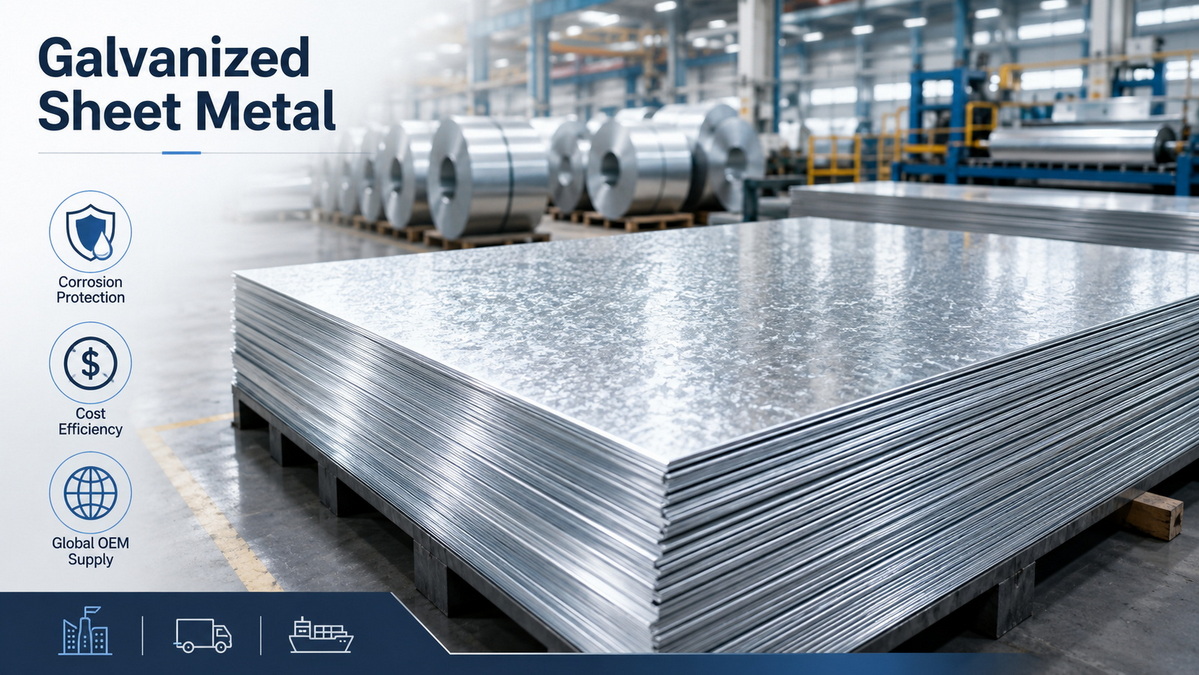
Galvanized sheet metal is carbon steel sheet that has been coated with a layer of zinc to protect it from corrosion and extend its service life. The zinc layer acts both as a physical barrier and as a sacrificial anode, meaning it will corrode before the underlying steel does when exposed to moisture, chemicals, or outdoor environments. [lakshmipadmanaban]
Because of this dual protection mechanism, galvanized sheet metal is widely used in automotive structures, building façades, telecom enclosures, electrical housings, and countless industrial components where long-term reliability is critical. [lakshmipadmanaban]
From a technical standpoint, galvanization works through three primary mechanisms. [lakshmipadmanaban]
- The zinc coating blocks corrosive substances such as oxygen, water, and acidic contaminants from contacting the steel surface. [lakshmipadmanaban]
- When the coating is damaged, zinc sacrifices itself electrochemically, corroding instead of the steel and preventing rapid rusting of the base metal. [lakshmipadmanaban]
- Zinc generally corrodes faster than steel, but in a controlled way; adding passivation layers such as chromate can further slow zinc corrosion and stabilize the surface. [lakshmipadmanaban]
In practice, the long‑term performance of galvanized sheet metal depends heavily on proper pretreatment (cleaning, degreasing, removing oxides) and post‑treatment (passivation, inspection, sometimes light oiling). Poor surface preparation can lead to uneven coating, bare spots, or premature failure—issues you only discover years later on site. [lakshmipadmanaban]
Different galvanization processes produce different coating structures, thicknesses, and surface finishes, which directly impact weldability, paint adhesion, and forming behavior. [lakshmipadmanaban]
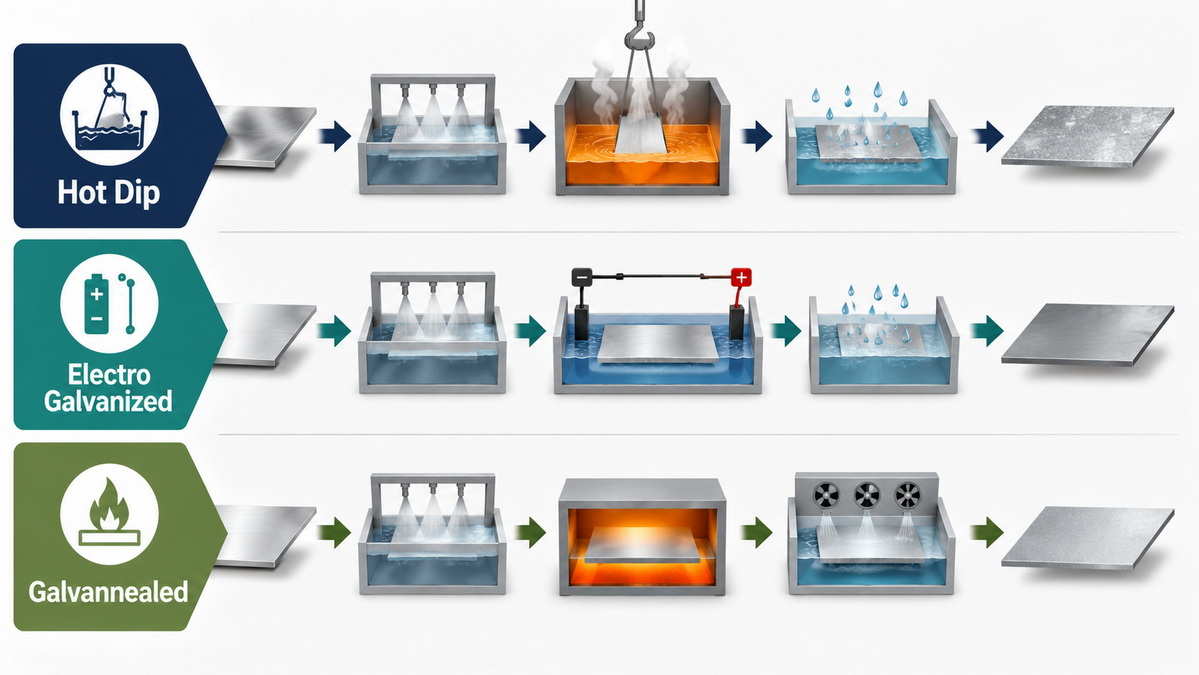
Hot-dip galvanization immerses cleaned steel in a bath of molten zinc at around 460 °C (860 °F). A metallurgical bond forms between zinc and steel, and as the coated part cools, zinc reacts with oxygen and carbon dioxide to form a protective zinc carbonate layer. [lakshmipadmanaban]
- Typical appearance: spangled, crystalline surface that many buyers associate with "classic" galvanized steel. [lakshmipadmanaban]
- Advantages: thick, robust coating, excellent outdoor durability, relatively economical for structural and general industrial use. [lakshmipadmanaban]
Electro-galvanization uses an electrolyte bath and electric current to deposit zinc ions uniformly onto the steel surface. This process offers tight control of coating thickness and an exceptionally smooth finish. [lakshmipadmanaban]
- Typical appearance: bright, uniform coating with minimal spangle. [lakshmipadmanaban]
- Advantages: precise thin coatings, ideal where dimensional accuracy, fine stamping detail, or cosmetic quality matter (e.g., consumer electronics panels, interior automotive parts). [lakshmipadmanaban]
Galvannealing combines hot‑dip galvanizing with in‑line annealing to diffuse zinc into the steel surface, creating a matte gray coating. [lakshmipadmanaban]
- Typical appearance: non‑reflective, matte gray finish optimized for paint and weldability. [lakshmipadmanaban]
- Advantages: excellent paint adhesion, good welding behavior, widely used in automotive body panels and formed parts that require subsequent coating. [lakshmipadmanaban]
Pre‑galvanization is performed at the steel mill, typically on coils or long sections, using a continuous hot‑dip process. The strip is cleaned, passed through molten zinc, and recoiled for high‑volume supply. [lakshmipadmanaban]
- Typical appearance: similar to hot‑dip, often with lighter coatings depending on specification. [lakshmipadmanaban]
- Advantages: high throughput, consistent quality on coils used for roll forming, stamping, or laser cutting downstream. [lakshmipadmanaban]
> Expert tip (manufacturing perspective): For complex sheet metal fabrication involving laser cutting, CNC punching, and tight bending radii, pre‑galvanized coils with carefully controlled coating thickness often deliver the best balance between corrosion resistance, edge quality, and forming consistency for OEM projects.
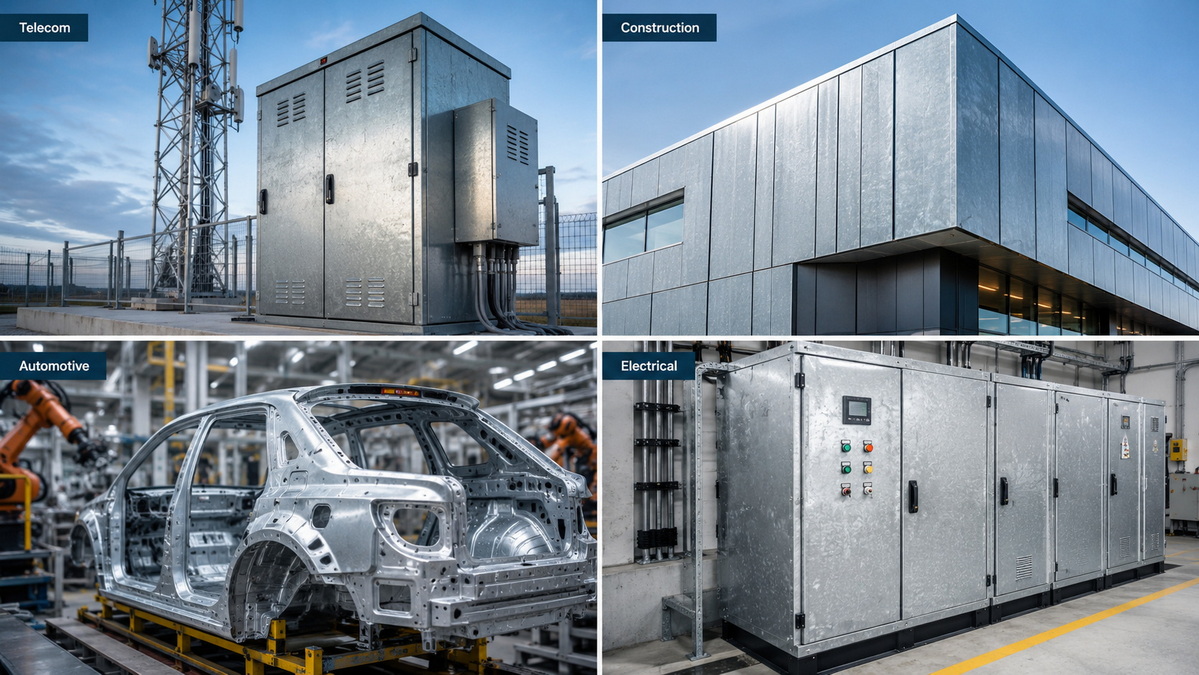
Galvanized sheet metal enables engineers to design lighter structures with adequate corrosion protection and predictable maintenance intervals. Typical application clusters include: [lakshmipadmanaban]
Automotive manufacturers have relied on galvanized bodies and structural components for decades to support anti‑rust warranties and lifecycle performance targets. Galvannealed and hot‑dip galvanized panels are common in body‑in‑white structures, underbody elements, and brackets exposed to road spray. [lakshmipadmanaban]
Telecom cabinets, equipment boxes, and support structures often use galvanized sheet metal to withstand outdoor exposure, condensation, and sometimes coastal environments. The goal is to reduce maintenance frequency and risk of failure in mission‑critical networks. [lakshmipadmanaban]
Many electrical housings and appliance casings are produced from galvanized steel sheet for both corrosion resistance and structural stiffness. In some cases, internal components such as mounting plates and brackets are also galvanized, especially where condensation or humidity is a concern. [lakshmipadmanaban]
In construction, galvanized sheet metal appears in roofing, façade systems, flashings, HVAC ducting, and interior framing elements. Its durability and metallic shine make it suitable for both functional and aesthetic roles in modern architecture. [lakshmipadmanaban]
The original article highlights several benefits of galvanized sheet metal—durability, reliable coating, cost-effectiveness, fast turnaround, and complete coverage. From a practical engineering and sourcing perspective, each of these deserves closer examination. [lakshmipadmanaban]
With an average zinc coating of around 85 microns, hot‑dip galvanized steel can protect structures for several decades under typical atmospheric exposure. The actual service life, however, depends on environment class (rural, urban, industrial, marine), coating thickness, and maintenance. [lakshmipadmanaban]
- In mild environments, properly specified HDG components can remain functional for 50+ years before major refurbishment. [lakshmipadmanaban]
- In coastal or chemical environments, engineers should consider thicker coatings, additional paint systems, or duplex protection to maintain performance. [eoxs]
Unlike paint, the galvanized coating becomes part of the steel via metallurgical reaction, which makes chipping or peeling far less likely under mechanical impact. This integrated bond helps ensure consistent protection, particularly on edges, corners, and complex shapes that are hard to paint evenly. [lakshmipadmanaban]
While initial galvanization costs are competitive, the real advantage shows up in lifecycle cost analysis. [lakshmipadmanaban]
- Galvanized components often require minimal maintenance compared to painted structures, reducing labor and downtime over 10–30 years. [eoxs]
- As painting costs and labor rates continue to rise globally, many buyers find that specifying galvanized sheet metal at the outset is more economical than repainting unprotected steel repeatedly. [eoxs]
For standard parts and structures, galvanizing itself can be completed within roughly 24 hours once the steel is properly prepared, with typical plant lead times of a few days. In real projects, however, total lead time is dominated by upstream fabrication and logistics, which is why integrated providers who combine sheet metal fabrication, machining, and galvanization can shorten project timelines. [lakshmipadmanaban]
Because galvanized coatings grow metallurgically on all exposed surfaces, they can deliver very strong coverage even on sharp edges, welds, and internal corners. This is critical when components face cyclic loading, vibration, or mechanical impact, where unprotected edges are the first points of failure. [lakshmipadmanaban]
To get the best performance from galvanized sheet metal, designers and fabricators should follow some practical guidelines drawn from real manufacturing projects.
- Use appropriate grades and thicknesses of base steel for the mechanical loads; galvanization improves corrosion resistance, not structural strength.
- Design drain holes and venting for complex welded assemblies so molten zinc can flow freely during hot‑dip galvanizing. [tiecas]
- Avoid sharp internal corners or tight gaps that trap flux or prevent uniform coating coverage. [tiecas]
- Agree early on coating thickness, surface finish requirements, and any post‑processing (painting, powder coating, passivation) with your manufacturing partner.
When working with globally distributed supply chains, partnering with a precision manufacturing provider that understands both European/US standards and practical Chinese fabrication workflows can significantly reduce risk and rework.
Two of the most common engineering questions are whether galvanized sheet metal can be painted or welded. The short answer to both is "yes"—with proper process control.
Paint does not naturally adhere well to fresh zinc surfaces because of the inert, sometimes oily nature of the coating. To promote adhesion: [lakshmipadmanaban]
1. Remove dirt, grease, and loose white rust through cleaning or light abrasion. [lakshmipadmanaban]
2. Wipe the surface with white vinegar or an appropriate etching solution to increase surface energy. [lakshmipadmanaban]
3. Apply a compatible primer designed for galvanized substrates before top‑coating. [eoxs]
This sequence helps paint bond effectively to galvanized sheet metal, enabling cosmetic finishes or color‑coding without compromising corrosion performance.
Welding galvanized steel is common in sheet metal fabrication, but it must be performed with strict safety protocols. [lakshmipadmanaban]
- The zinc coating near the weld area burns off, producing fumes; proper ventilation and fume extraction are essential.
- After welding, the exposed steel should be repaired using zinc‑rich paint or localized re‑galvanizing where feasible to restore corrosion protection. [eoxs]
For components such as gratings or mesh, welding galvanized sheet metal is a standard practice when the process is controlled carefully. [lakshmipadmanaban]
Engineers often ask whether they should specify galvanized sheet metal or stainless steel for corrosion‑critical parts. The best choice depends on environment, mechanical requirements, and cost. [lakshmipadmanaban]
| Aspect | Galvanized Sheet Metal | Stainless Steel (General) |
|---|---|---|
| Corrosion mechanism | Sacrificial zinc coating | Passive chromium oxide |
| Typical service life | Decades in mild environments | Very long, even in harsh environments |
| Initial material cost | Lower in most markets | Higher, especially premium grades |
| Maintenance | Low, occasional inspection | Very low, mainly cleaning |
| Weldability and forming | Good with proper process | Very good, but work‑hardening matters |
| Aesthetics | Metallic, spangled or matte | Uniform metallic, brush/polish options |
For large structural and general industrial uses, galvanized sheet metal is usually the more cost‑effective choice, while stainless steel is reserved for highly aggressive chemical or hygiene‑critical environments.
As global brands push for better cost control and faster innovation cycles, they increasingly rely on specialized manufacturing partners that can manage both materials and processes end‑to‑end. U‑Need is a China‑based precision manufacturing company that helps overseas OEMs, distributors, and manufacturers develop and scale projects using galvanized sheet metal and other metal solutions.
U‑Need provides:
- Custom precision parts machining for brackets, housings, structural subcomponents, and specialty fasteners.
- Mold manufacturing including injection molds, stamping dies, and cold‑forging dies to support high‑volume production. [uneedpm]
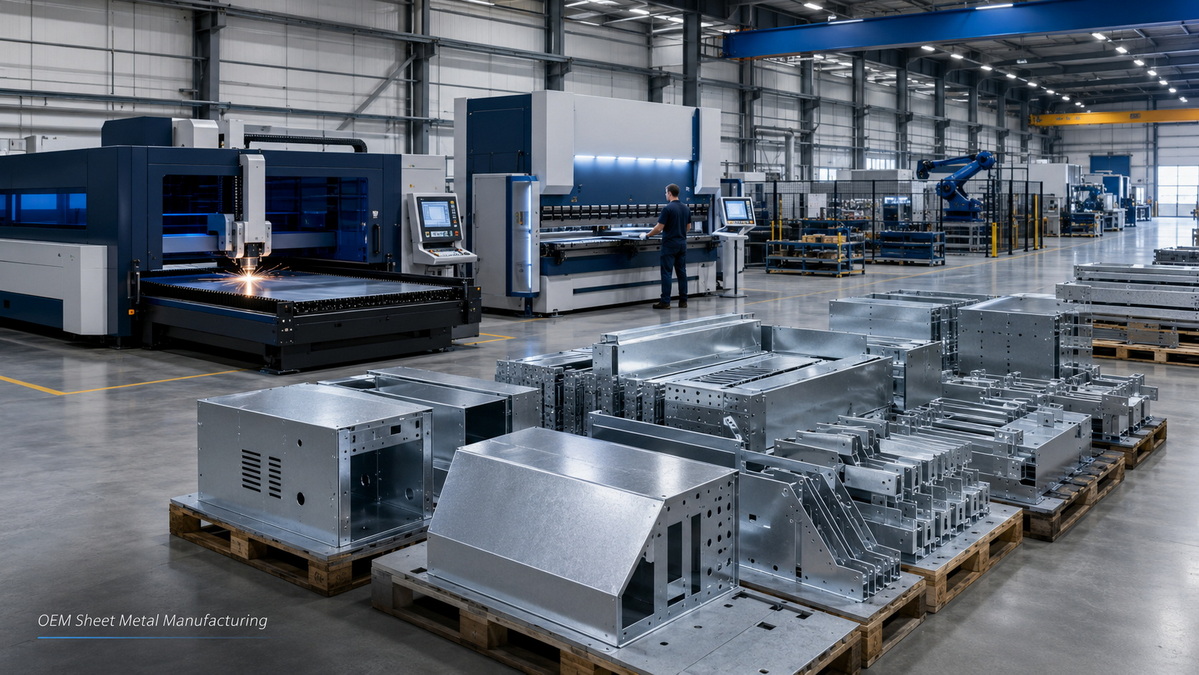
- Sheet metal fabrication (laser cutting, bending, stamping) optimized for galvanized coils and plates, with downstream assembly and finishing.
By combining these capabilities, U‑Need can support projects from prototype to mass production, aligning material choice, coating strategy, and fabrication sequence with your engineering requirements.
From a user experience perspective, buyers value manufacturing partners who provide more than capacity—they expect guidance, transparency, and repeatable quality. [uneedpm]
- Clear technical communication helps engineers avoid specification errors that compromise coating quality.
- Integrated quality control across machining, sheet metal, and galvanization reduces inconsistencies between batches.
- Punctual delivery and competitive pricing are essential for global supply chains; U‑Need explicitly emphasizes these values in its corporate philosophy. [uneedpm]
For B2B buyers evaluating Chinese suppliers, prioritizing partners who combine technical expertise with proactive support often leads to smoother projects and better long-term outcomes.
If you are planning a new product line or infrastructure project that involves galvanized sheet metal, working with an experienced precision manufacturing partner can significantly de‑risk design, production, and global logistics.
U‑Need can help you:
- Validate material and coating choices for your specific environment and industry.
- Optimize part geometry for manufacturability across laser cutting, bending, stamping, and machining.
- Scale from prototypes to large‑volume production with consistent quality and on‑time delivery. [uneedpm]
To explore options for galvanized sheet metal components, OEM housings, or custom precision parts, reach out to U‑Need's engineering team with your drawings and requirements so they can provide a detailed manufacturing proposal and quotation.
Q1. How long does galvanized sheet metal last outdoors?
In typical non‑marine environments, properly specified galvanized sheet metal can remain functional for several decades, often 40–50 years or more before major refurbishment is required. [eoxs]
Q2. Is galvanized sheet metal suitable for coastal applications?
It can be used in coastal regions, but engineers should consider thicker coatings, duplex systems (galvanizing plus paint), or alternative materials depending on salt exposure and maintenance plans. [eoxs]
Q3. Does galvanizing affect the mechanical strength of steel?
Galvanizing primarily improves corrosion resistance rather than base mechanical strength; design loads should still be calculated based on the underlying steel grade and thickness. [lakshmipadmanaban]
Q4. Can laser cutting damage the galvanized coating?
Laser cutting inevitably exposes bare steel at cut edges; these edges should be treated or protected depending on environment and coating strategy, which is why many projects rely on experienced sheet metal suppliers for process planning. [tiecas]
Q5. How should I choose between hot‑dip and electro‑galvanized sheet metal?
Hot‑dip is generally preferred for heavy‑duty outdoor applications needing thick coatings, while electro‑galvanized sheet metal suits precision parts, cosmetic surfaces, and components that will be painted later. [lakshmipadmanaban]
1. RapidDirect. "Galvanized Sheet Metal: Must‑Known Facts and Practices." [Link]. [lakshmipadmanaban]
2. EOXS. "SEO Tips for Boosting Online Visibility of Steel Products." [Link]. [eoxs]
3. Tiecas. "A Guide to Writing Industrial Blogs." [Link]. [tiecas]
4. Aha/Elliance. "Manufacturing Marketing Agency Shares Best Practices in Industrial Blogging." [Link]. [aha.elliance]
5. U‑Need. "Our Values | Precision Manufacturing | U‑Need." [Link]. [uneedpm]


